

Nutrition is a primary, modifiable driver of enamel strength and gum health for every member of your household. The foods your family eats daily either feed the bacteria that cause cavities or help rebuild and protect teeth. Here is what matters most right now:
- Cut frequent sugary snacks between meals to four or fewer sugar exposures per day
- Prioritize calcium-rich foods like cheese, yogurt, and milk at meals and snack time
- Time sweet treats with meals rather than spreading them across the day
- Replace sugary drinks with water, especially fluoridated tap water
The rest of this guide explains why these steps work, how to adapt them for every age in your household, and what to do when dental problems are already affecting how your family eats.
Table of Contents
- How does food affect tooth enamel, cavities, and gums?
- What nutrients should your family prioritize for strong teeth?
- Which foods and daily habits actually protect teeth?
- What foods and habits raise dental risk, and how do you reduce the damage?
- How should you structure meals and snacks to protect your family's teeth?
- How do nutrition needs differ by age and situation?
- When poor oral health limits what your family can eat
- What do dentists and hygienists actually recommend?
- Key Takeaways
- The part most families get wrong
- Cwddentalgroup supports your family's dental health in Tallahassee
- Authoritative sources and further reading
How does food affect tooth enamel, cavities, and gums?
The core mechanism is straightforward: bacteria in dental plaque feed on fermentable carbohydrates and produce organic acids as a byproduct. When plaque pH drops below 5.5, the critical threshold, enamel begins to dissolve. This is called demineralization, and it happens every single time fermentable carbohydrates enter the mouth.
Remineralization is the repair side of that equation. Saliva delivers calcium and phosphate back to enamel surfaces between acid attacks. The problem is timing: if acid attacks come too frequently, saliva never gets a full recovery window. That is why eating frequency matters as much as total sugar quantity.
A few points families often miss:
- Fermentable carbohydrates go beyond candy. Crackers, chips, and dried fruit are highly cariogenic because they stick to teeth and feed bacteria longer than many obvious sweets.
- Saliva is your mouth's built-in defense. It buffers acid, delivers minerals, and has antimicrobial properties. Anything that reduces saliva flow, including certain medications and mouth breathing, raises cavity risk.
- Acidic foods are not automatically erosive. The buffering minerals in food change the net effect. Yogurt has a low pH but can be non-erosive because its calcium and phosphate content neutralizes the acid before it damages enamel.
- Gum health follows a similar pattern. Anti-inflammatory dietary patterns are associated with lower periodontal inflammation, while ultra-processed foods drive the chronic inflammation that underlies gum disease.
What nutrients should your family prioritize for strong teeth?
The impact of diet on dental health comes down to a handful of nutrients that either build tooth structure or protect it from breakdown.
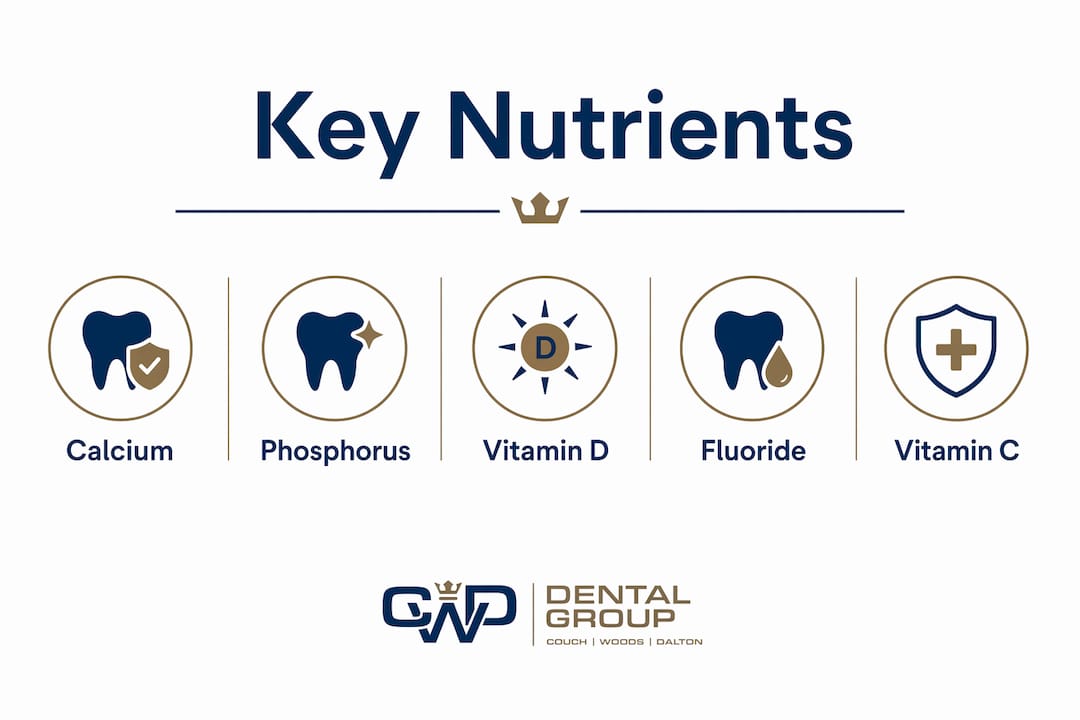
| Nutrient | Role in oral health | Family food sources | Quick tip |
|---|---|---|---|
| Calcium | Builds and remineralizes enamel | Milk, cheese, yogurt, fortified plant milks | Add a slice of cheese to after-school snacks |
| Phosphorus | Works with calcium to harden enamel | Eggs, meat, fish, nuts, beans | Most kids get enough through protein-rich meals |
| Vitamin D | Helps absorb calcium; supports enamel formation | Fatty fish, fortified milk, sunlight | A daily fortified milk habit covers most kids |
| Vitamin K2 | Directs calcium into teeth and bones | Fermented foods, egg yolks, some cheeses | Hard to get from diet alone; ask your dentist |
| Vitamin C | Maintains gum tissue and collagen | Citrus, bell peppers, strawberries, broccoli | Pair citrus with a meal to limit acid exposure |
| Protein | Supports tooth structure and tissue repair | Poultry, fish, legumes, dairy | Adequate protein matters most during tooth development |
| Fluoride | Strengthens enamel against acid attack | Fluoridated tap water, fluoride toothpaste | Tap water is the easiest, lowest-cost source |
For picky eaters, the most practical move is doubling down on dairy. Cheese and plain yogurt deliver calcium, phosphorus, and protein in one package, and most kids will eat them. For families watching costs, canned fish, dried beans, and fortified store-brand milk cover the same nutritional ground as pricier options.
Pro Tip: If your child refuses plain milk, blend it into smoothies with banana and a handful of spinach. The calcium and vitamin D are identical, and most kids never notice the spinach.
Which foods and daily habits actually protect teeth?

Crunchy fruits and vegetables stimulate saliva flow, which mechanically clears food debris and neutralizes acids. That is a meaningful protective effect, not just a general wellness claim.
Protective foods worth building into your family's routine:
- Cheese: Raises mouth pH after a meal and delivers calcium directly to enamel surfaces
- Plain yogurt: High in calcium and phosphorus; the buffering effect offsets its low pH
- Crunchy vegetables (carrots, celery, cucumber): Stimulate saliva and scrub tooth surfaces
- Whole fruits: Better than juice because fiber slows sugar release and chewing drives saliva production
- Nuts: Low in fermentable carbohydrates and rich in minerals
- Water: Rinses away food particles and, when fluoridated, actively strengthens enamel
Simple habit swaps that make a real difference: drink water after anything sweet, offer cheese or a small handful of nuts after a sugary treat, and keep a bowl of cut vegetables accessible at snack time. Families following oral hygiene routines that pair good food choices with brushing see the strongest results.
Observational studies also show that anti-inflammatory dietary patterns reduce gum bleeding and lower the odds of periodontitis. Practically, that means more vegetables, whole grains, and lean protein, and fewer ultra-processed snacks.
What foods and habits raise dental risk, and how do you reduce the damage?
Statistic to know: Research reviewed by StatPearls found that limiting sugar to four or fewer exposures daily is associated with low caries rates. Children who consumed sugars four to five times per day were at significantly higher risk of having a high cavity rate than those with the lowest intake frequency.
High-risk items and why they cause harm:
- Sugary drinks (soda, juice, sports drinks): Deliver sugar and acid in repeated sips, keeping plaque pH suppressed for extended periods
- Sticky snacks (gummy candy, fruit leather, dried fruit): Cling to grooves and between teeth, extending bacterial acid production well past the snack itself
- Frequent grazing: Each snack resets the acid clock; three meals plus one snack is far safer than six small eating occasions spread across the day
- Acidic beverages (lemonade, flavored sparkling water): Erode enamel directly, independent of sugar content
- Bedtime bottles with milk, formula, or juice: Sugars pool around teeth for hours during sleep, causing rapid early childhood caries
Warning for parents of infants: Nighttime bottles containing milk, formula, or fruit juice significantly raise caries risk because sugars remain in prolonged contact with teeth during sleep. If your infant needs a bottle at bedtime, fill it with water only.
Warning for parents of teens: Energy drinks combine high sugar content with extreme acidity. Many teens drink them daily as a study or sports habit. The combination of acid erosion and frequent sugar exposure accelerates enamel loss faster than soda alone.
Immediate harm-reduction steps: pair sweet foods with meals rather than between them, rinse with water after acidic drinks, and never send sports drinks as everyday school hydration.
How should you structure meals and snacks to protect your family's teeth?
Timing is the variable most families overlook. Every eating occasion triggers an acid attack that lasts roughly 20–30 minutes. Three meals and one planned snack means four acid exposures. Six grazing occasions means six, and the enamel never fully recovers between them.
A practical daily routine:
- Breakfast: Include dairy (milk, yogurt, or cheese) alongside any carbohydrates; finish with water
- Mid-morning: If a snack is needed, choose cheese, nuts, or raw vegetables rather than crackers or fruit snacks
- Lunch: Pair any sweet item with the meal, not after it; drink water, not juice
- After-school snack: One planned snack, ideally with protein and calcium; avoid sticky or sugary options
- Dinner: Include a calcium-rich food; finish with water or a small piece of cheese
- Bedtime: Brush after the last meal; nothing to eat or drink except water after brushing
Sample snack ideas that balance enjoyment and dental safety:
- Apple slices with peanut butter (the protein and fat slow sugar absorption)
- Cheese cubes with whole-grain crackers
- Plain yogurt with fresh berries
- Carrot and celery sticks with hummus
- A small handful of mixed nuts
- Hard-boiled eggs
- Cucumber rounds with cottage cheese
Pro Tip: Replace dessert with a small cheese plate on most evenings. It sounds fussy, but kids adapt quickly, and the calcium hit right before brushing is genuinely useful for enamel remineralization overnight.
The back-to-school dental checklist from Cwddentalgroup covers snack and hydration planning for the school year in more detail.
How do nutrition needs differ by age and situation?
Infants and toddlers
Never put an infant to bed with a bottle containing anything other than water. Milk, formula, and juice all carry sugars that pool around erupting teeth for hours. Transition from bottle to open cup by 12–18 months. For more on infant dental care, early feeding habits set the trajectory for childhood cavity risk.
- Introduce a variety of vegetables before sweet fruits to shape flavor preferences early
- Avoid adding sugar to foods during the first two years
- Begin wiping gums and early teeth after each feeding
Young children (ages 3–8)
- Structure snacks; avoid all-day grazing
- Make fluoridated tap water the default drink
- Model the eating habits you want them to adopt; children mirror parental food choices more than most parents realize
- Low-cariogenic snacks like cheese and fresh fruit should be the norm, not the exception
Teens
- Sports drinks are for actual athletic competition, not everyday hydration
- Braces wearers need to avoid sticky and hard foods that trap debris and damage brackets; soft calcium-rich options like yogurt and smoothies work well
- Frequency control matters more at this age because teens often graze independently
Older adults
Dry mouth (xerostomia) is common with age and with many medications. Reduced saliva flow dramatically raises cavity risk. Practical steps: sip water frequently, chew sugar-free xylitol gum to stimulate saliva, and choose nutrient-dense soft foods (cooked vegetables, eggs, yogurt, fish) when chewing is difficult. For age-appropriate dental care across the full family, regular checkups help catch dry-mouth-related decay early.
People with braces or appliances
Sticky foods (caramel, gummy candy, dried fruit) and hard foods (raw carrots, hard pretzels) are off the list. Safe calcium-rich alternatives include soft cheese, yogurt, milk, cooked leafy greens, and smoothies made with fortified milk.
When poor oral health limits what your family can eat
The relationship between nutrition and oral health runs both ways. Parental education and family-level interventions are among the strongest predictors of children's long-term dental outcomes, but the reverse is also true: dental pain, missing teeth, and ill-fitting prosthetics reduce the ability to eat nutrient-dense foods.
When oral disease limits chewing, families tend to shift toward soft, processed, high-sugar foods because they are easier to eat. That dietary shift worsens both oral and systemic health. The cycle is self-reinforcing.
Key finding: A systematic review found that poor oral health reduces the ability to eat nutrient-dense foods, and that diet quality and oral health are bidirectionally linked, with each affecting the other over time.
Practical steps when oral health is already limiting nutrition:
- See a dentist promptly for pain or chewing difficulty; delaying care worsens the nutritional impact
- While awaiting treatment, prioritize nutrient-dense soft foods: smoothies with fortified milk, scrambled eggs, cooked fish, soft cooked vegetables, yogurt
- Ask your dentist about pediatric dental treatments if a child is avoiding foods due to tooth pain
What do dentists and hygienists actually recommend?
The evidence base here is solid. Western dietary patterns produce signs of gingivitis and caries earlier than most systemic diseases, which gives dental teams a real prevention window. The ADA's guidance emphasizes that reducing sugar frequency is as important as reducing total sugar amount, consistent with the WHO recommendation to keep free sugars below 10% of total daily energy intake.
In practice, dental teams integrate nutrition support through:
- Dietary screening: Asking about snack frequency, sugary drink habits, and meal patterns at preventive visits
- Tailored counseling: Giving families specific swaps rather than generic "eat less sugar" advice
- Topical fluoride: Applied at checkups to strengthen enamel against acid attack
- Xylitol recommendations: Sugar-free xylitol gum after meals reduces Streptococcus mutans counts and stimulates saliva
- Dietitian referrals: For families where nutrition-driven disease is severe or where socioeconomic barriers limit food access
- Preventive dentistry services: Sealants and fluoride treatments that complement dietary changes
"Dentists can use early oral changes as a practical screening opportunity to trigger broader dietary counseling before systemic diseases appear." — Nutrients, PMC
Cwddentalgroup incorporates nutrition-focused conversations into preventive family visits in Tallahassee, helping parents understand the specific dietary patterns driving their children's cavity risk and offering practical, household-level guidance.
Key Takeaways
Nutrition is the most modifiable factor in family dental health, and limiting sugar frequency to four or fewer daily exposures is the single highest-impact change most families can make.
| Point | Details |
|---|---|
| Limit sugar frequency | Keep eating occasions to four or fewer per day; frequency drives cavity risk more than total sugar amount. |
| Prioritize calcium and vitamin D | Cheese, yogurt, milk, and fortified plant milks support enamel remineralization at every age. |
| Time sweets with meals | Pairing sweet foods with meals limits acid attacks; between-meal sugary snacks are the highest-risk habit. |
| Hydrate with water | Fluoridated tap water rinses teeth, buffers acid, and actively strengthens enamel. |
| Cwddentalgroup for local support | Families in Tallahassee can book preventive visits at Cwddentalgroup for nutrition-focused dental counseling and same-day emergency care. |
The part most families get wrong
Most nutrition advice for dental health focuses on what to cut out. Cut the soda, cut the candy, cut the juice. That framing is not wrong, but it misses the more powerful lever: structure.
A child who eats a candy bar once at lunch does far less enamel damage than one who grazes on "healthy" crackers and dried mango all afternoon. The crackers stick. The dried fruit sticks. The acid clock resets with every handful. Parents who switch to whole-food snacks but allow all-day grazing often see no improvement in cavity rates, and they cannot figure out why.
The other thing families underestimate is the bidirectional trap. Once a child has dental pain, they avoid crunchy vegetables and raw fruit. They default to soft, processed food. Their nutrition gets worse. Their teeth get worse. Getting ahead of that cycle with a preventive visit, before pain starts, is genuinely the highest-return move available to any family.
Cwddentalgroup supports your family's dental health in Tallahassee
Nutrition-driven dental problems rarely announce themselves until they are already expensive to fix. Cwddentalgroup offers Tallahassee families a practical alternative to waiting: same-day emergency appointments for acute pain and preventive visits where the team addresses the dietary habits driving your household's cavity risk directly.

From pediatric care to treatment for older adults managing dry mouth, the practice covers the full family under one roof. If a tooth is causing pain that is affecting how someone in your household eats, the emergency dental team is available the same day. For families who want to get ahead of problems before they start, a routine preventive visit is the place to begin. Schedule your visit and bring your questions about nutrition and your family's teeth.
Authoritative sources and further reading
These are the primary sources behind the recommendations in this guide:
- Diet and Nutrition to Prevent Dental Problems, StatPearls/NCBI Bookshelf: The most thorough clinical review of sugar, fermentable carbohydrates, and caries mechanisms; covers all age groups and includes dietary guidelines for families.
- Oral Health, Harvard T.H. Chan School of Public Health Nutrition Source: Accessible, evidence-based summary of foods that protect and harm teeth; good for sharing with older children and teens.
- Nutrition and Oral Health, American Dental Association: ADA's clinical guidance on sugar frequency, erosion, and buffering; the professional standard for U.S. dental practice.
- Nutrition and Oral Health, HRSA: Federal guidance with particular depth on infant and early childhood feeding risks, including bottle feeding and early caries prevention.
- Healthier Smile: Diet and Oral Health, Nutrients/PMC: Peer-reviewed review linking Western dietary patterns to early-onset gingivitis and caries; useful for understanding the systemic-oral health connection.
- Systematic Review: Nutrition and Oral Health, Springer: Covers the bidirectional relationship between diet quality and oral health outcomes, with strong evidence on parental education as a predictor of children's dental health.
- How to Prevent Cavities Between Checkups, Starboard Dental: Practical, family-friendly tips on nutrition-based cavity prevention that complement the clinical guidance above.