

Family oral hygiene routines are defined as the consistent, daily dental care practices shared across all household members to protect teeth, prevent disease, and build lifelong health behaviors. The role of oral hygiene routines in a family extends far beyond clean teeth. Research confirms that supervised twice-daily brushing starting at ages 2–3 reduces adolescent cavity rates by about 8 percentage points. Professional guidelines recommend brushing for two minutes twice daily with a soft-bristled brush held at a 45-degree angle. Cwddentalgroup treats family involvement not as optional but as the foundation of effective dental care.
How do early childhood oral hygiene routines affect long-term dental health?
Early routines produce measurable results well into adolescence. A study of 2,941 children found that 48.6% who brushed twice daily developed caries by ages 14–15, compared to 56.8% among those who brushed less often. That 8-percentage-point gap represents thousands of cavities prevented simply by starting a consistent habit early.
The mechanism is straightforward. Regular brushing removes plaque, disrupts bacterial colonies, and limits the acid attacks that erode enamel. When children brush at the same times each day, they also internalize the behavior as non-negotiable, which makes it far easier to sustain without parental reminders as they get older.
Parental attitude shapes outcomes just as much as frequency. Poor maternal engagement with brushing correlates directly with higher decay scores in preschoolers, with statistically significant results (p < 0.05). A parent who treats brushing as a chore to rush through communicates exactly that to a watching child.
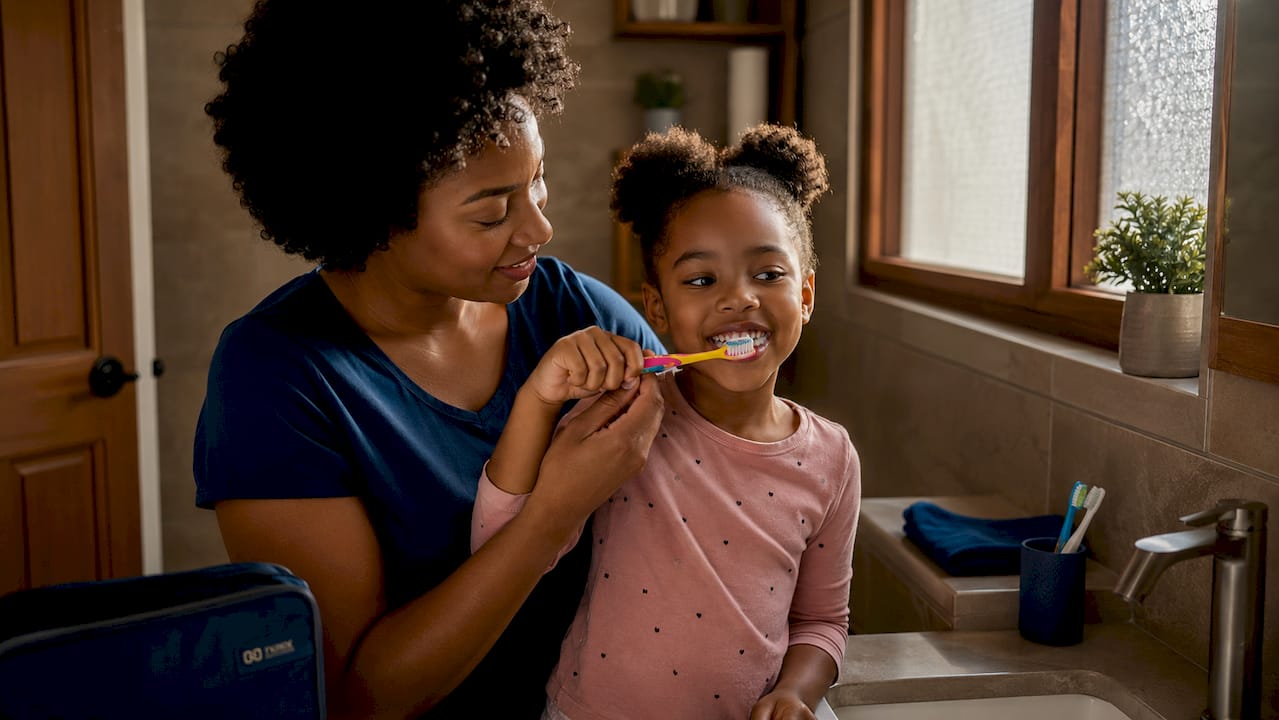
Supervision matters until children develop the manual dexterity to clean effectively on their own. Professional guidelines recommend supervising brushing until ages 7–9. Before that age, most children lack the fine motor control to reach back molars or maintain consistent pressure, leaving plaque in the spots most likely to develop cavities.
Socioeconomic factors also influence outcomes. Families with fewer resources face real barriers to consistent dental care, from access to fluoride toothpaste to scheduling dental visits. Acknowledging this reality matters because it shifts the conversation from blame to practical support. Simple, low-cost strategies like habit stacking and shared brushing time level the playing field more than expensive products.
| Age group | Supervision level | Key focus |
|---|---|---|
| 0–2 years | Full parental control | Wipe gums; introduce brush at first tooth |
| 2–6 years | Parent brushes, child watches | Technique modeling, fluoride toothpaste |
| 6–9 years | Parent assists and checks | Correct angle, back molars, two-minute duration |
| 9+ years | Spot checks | Independence with accountability |
Pro Tip: Set a two-minute timer on your phone and brush alongside your child every morning. Children copy what they see, and your technique becomes their template.
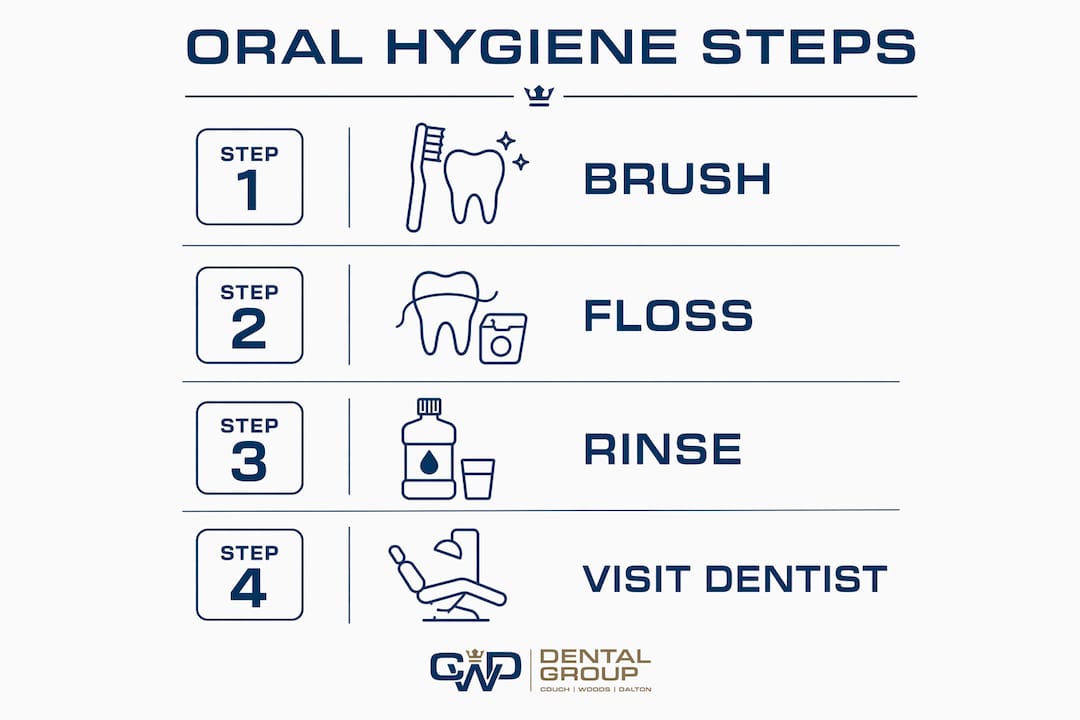
What practical strategies help families build lasting oral hygiene routines?
Consistency beats perfection every time. Families who link brushing to existing daily triggers like bedtime stories, after-dinner cleanup, or morning breakfast maintain routines far longer than those who rely on willpower alone. This approach, called habit stacking, removes the decision from the equation entirely.
The most effective family strategies share one trait: they reduce friction. When brushing requires no extra thought or negotiation, it happens. When it requires effort, it gets skipped.
- Brush together as a household. Treating brushing as a group activity improves children's technique through direct observation and creates natural accountability. Adults who brush in front of their kids model the correct angle, duration, and rinsing sequence without saying a word.
- Use a two-minute timer or song. Children who have a clear endpoint brush longer and more thoroughly. A favorite 120-second song works just as well as a dedicated timer app.
- Keep spare toothbrushes accessible. One set in each bathroom, one in a travel bag, and one at a grandparent's house removes the "I forgot" excuse entirely.
- Replace toothbrushes every 3–4 months. Worn bristles clean less effectively. Replacing brushes on schedule is one of the simplest ways to maintain brushing quality without changing any other behavior.
- Use a family reward chart. Track consistency, not perfection. Missing one night matters far less than the overall pattern. Celebrating streaks builds motivation without creating shame around occasional misses.
Pro Tip: Attach a small whiteboard to the bathroom mirror and let kids check off their brushing each day. Visual progress is a stronger motivator than verbal praise alone.
For a detailed breakdown of each step in a daily oral hygiene routine, Cwddentalgroup's resource library covers technique, product selection, and age-specific adjustments in plain language.
How does coordinated family dental care improve oral health outcomes?
A single dental provider who knows your family's full history delivers better preventive care than rotating between multiple offices. Family dental homes enable earlier detection of inherited dental vulnerabilities, from enamel defects to jaw alignment tendencies, and allow personalized care plans that adapt as children grow.
The American Academy of Pediatric Dentistry recommends a child's first dental visit by age 1 or within six months of the first tooth appearing. That early visit establishes a baseline, builds familiarity with the dental environment, and gives parents direct guidance on brushing technique and diet. Children who visit a dentist early show less anxiety and more cooperation at later appointments.
Coordinated care also means professional services like fluoride treatments, dental sealants, and targeted cleanings get applied at the right developmental moments. Sealants applied to permanent molars shortly after eruption, typically between ages 6 and 12, reduce cavity risk in those teeth significantly. These are not generic services. They are timed interventions that only work when a provider knows where each child is in their development.
Shared anxieties are another reason family coordination matters. When a parent has dental anxiety, children often absorb it. A provider who understands the family dynamic can address both the parent's and child's concerns together, reducing avoidance behavior that leads to delayed care and worse outcomes. For families weighing the benefits of a family dentist, centralized care consistently outperforms fragmented appointments across multiple providers.
What role do nutrition and daily habits play in family dental health?
Diet and oral hygiene work together. Brushing twice daily cannot fully compensate for a diet high in frequent sugar exposure. Frequent snacking and sipping sugary drinks increase the number of acid attacks on enamel throughout the day, each one lasting roughly 20 minutes after sugar contact.
Families can reduce cavity risk through diet without eliminating treats entirely. The key is frequency, not quantity. Eating a cookie with lunch causes one acid attack. Nibbling cookies across three hours causes many. Grouping snacks, drinking water after eating, and choosing less sticky foods like cheese or raw vegetables over gummy candies all reduce cumulative acid exposure.
- Limit sipping throughout the day. Juice, sports drinks, and flavored waters cause repeated acid exposure. Water is the only drink that does not trigger an acid attack.
- Group snacks into defined times. Two or three snack windows per day cause far less damage than constant grazing.
- Add flossing to the evening routine. Flossing removes food and plaque from between teeth where brushing cannot reach. Starting children on flossing when teeth begin to touch, typically around age 2–3, builds the habit before resistance develops.
- Introduce mouthwash for older children. Fluoride mouthwash adds a protective layer for children aged 6 and up. It takes 30 seconds and meaningfully reduces cavity risk in children with high sugar exposure.
- Address teen-specific challenges directly. Teens with braces need interdental brushes and floss threaders to clean around brackets. Teens with busy schedules benefit from travel-sized kits in their backpacks so brushing after lunch becomes practical, not aspirational.
Parents who model healthy food choices reinforce the same message as brushing together. When children see adults choosing water over soda and fruit over candy, the behavior registers as normal rather than restrictive. For age-appropriate dental care guidance across every developmental stage, Cwddentalgroup offers detailed resources for parents navigating these transitions.
Key Takeaways
A consistent family oral hygiene routine, built on supervised early brushing, parental modeling, coordinated dental care, and diet awareness, produces measurable reductions in cavities and establishes lifelong dental health habits.
| Point | Details |
|---|---|
| Start brushing early | Supervised twice-daily brushing by age 2–3 reduces adolescent cavity rates by about 8 percentage points. |
| Supervise until age 7–9 | Children lack the motor control for effective independent brushing before this age. |
| Brush as a family | Group brushing improves children's technique through direct observation and builds routine accountability. |
| Coordinate dental care | A single family dental provider tracks history and delivers timed preventive interventions more effectively. |
| Manage diet alongside hygiene | Limiting snack frequency and drinking water after eating reduces acid attacks that brushing alone cannot prevent. |
What I've learned from watching families build these habits
The families who succeed long-term are not the ones with the most elaborate systems. They are the ones who decided brushing is simply not up for debate, the same way putting on shoes before leaving the house is not up for debate.
The biggest mistake I see is parents treating oral hygiene as a battle to win rather than a norm to establish. When brushing becomes a nightly negotiation, children learn that it is optional with enough resistance. When it is just what happens after dinner, the negotiation never starts.
Flexibility matters more than people expect. A family that brushes at 7:30 PM on school nights and 9:00 PM on weekends is doing far better than one with a rigid 8:00 PM rule that falls apart every Friday. Routines survive real life when they bend without breaking.
The professional relationship piece is underrated. Families who see the same dental team consistently report that their children are calmer, more cooperative, and more willing to report problems early. That trust is built over years of low-stakes visits, not manufactured in a single appointment. Cwddentalgroup's approach to family oral health reflects exactly this: consistent, familiar care builds the foundation that makes everything else work.
The one thing I would tell every parent: your child is watching you brush. Make it worth watching.
— Kayle
Cwddentalgroup's approach to family dental care in Tallahassee
Building strong family oral hygiene habits is easier when you have a dental team that knows your family by name and by history.

Cwddentalgroup offers custom family care plans that include exams, professional cleanings, fluoride treatments, dental sealants, and hands-on guidance for parents on technique and diet. The team works with young children, teens, and adults under one roof, making it practical to schedule the whole family in a single visit. For urgent situations, same-day emergency care is available without the long waits that derail family schedules. If you are ready to build a dental home that grows with your family, Cwddentalgroup in Tallahassee is the place to start.
FAQ
When should a child start brushing their teeth?
Brushing should begin as soon as the first tooth appears, typically around 6 months. A parent should handle all brushing until the child can demonstrate consistent technique, usually around age 7–9.
How long should children brush their teeth?
Children and adults should brush for two full minutes, twice daily. Using a timer or a two-minute song helps children reach the full duration consistently.
Does parental attitude really affect a child's dental health?
Research confirms it does. Poor maternal engagement with brushing correlates with higher decay scores in preschoolers, showing that a parent's approach to oral hygiene directly shapes a child's outcomes.
How often should toothbrushes be replaced?
Toothbrushes should be replaced every 3–4 months, or sooner if bristles appear frayed. Worn bristles clean less effectively and reduce the benefit of brushing regardless of technique.
What is the best way to get kids to brush without a fight?
Brush together as a family at the same time each day and treat it as a fixed event rather than a request. Group brushing reduces resistance because children follow adult behavior when it is modeled consistently.