
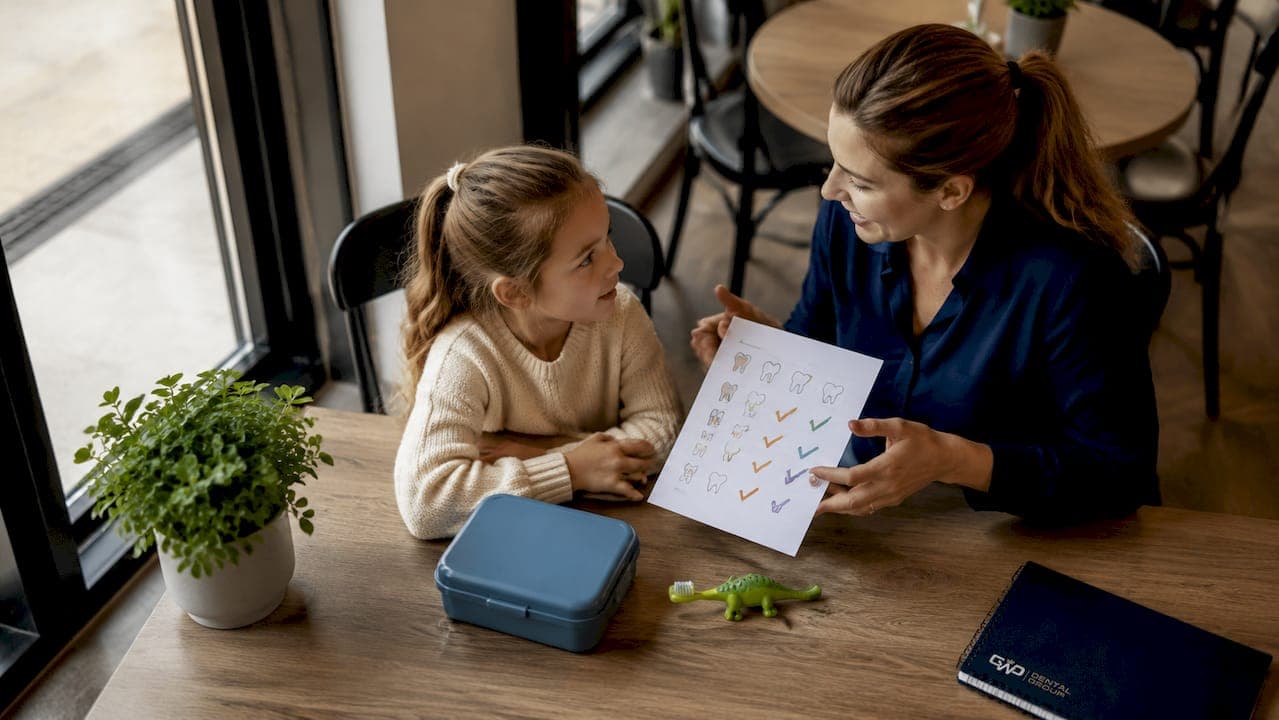
A thorough back to school dental checklist is the single most effective tool for preventing cavities, dental emergencies, and missed school days before the new year begins. Routine check-ups every six months catch problems before they become painful, and the window before school starts is the best time to act. Brushing twice daily with fluoride toothpaste, scheduling a professional cleaning, and fitting a sports mouthguard are the three non-negotiable pillars of back to school oral health. Cwddentalgroup recommends parents treat this checklist as a yearly ritual, not an afterthought.
1. Back to school dental checklist: start with a scheduled exam
Scheduling 30–60 days before school starts gives you enough time to complete any needed treatment without disrupting the first week of class. Late summer is peak demand for dental offices, and appointment slots fill fast. Parents who wait until the week before school often find nothing available for weeks.
A complete back-to-school exam should include a professional cleaning, a full check-up, digital X-rays if the dentist recommends them, a fluoride treatment, and dental sealants for cavity-prone molars. Each of these serves a distinct purpose. Sealants, for example, physically block bacteria from settling into the deep grooves of back teeth, where most childhood cavities form.
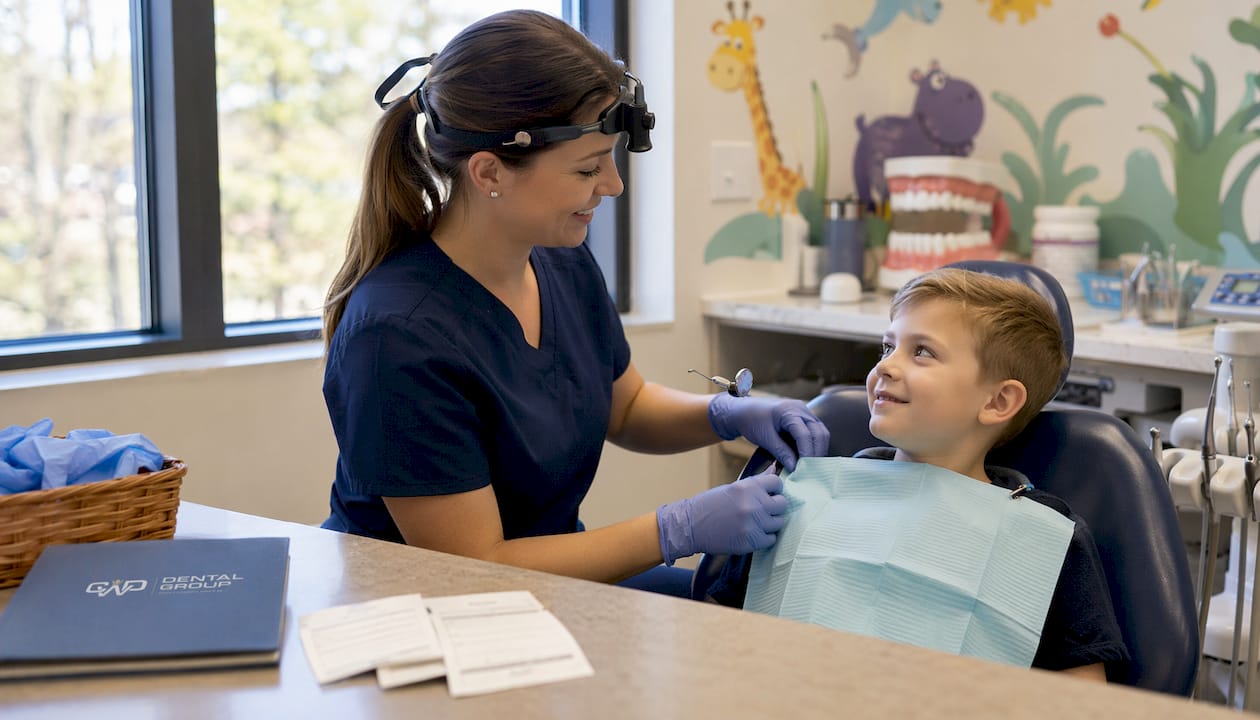
Pro Tip: Book your child's appointment in june or july. Dental offices in late august are booked solid, and completing treatment 2–3 weeks before school gives the mouth time to heal before the first bell rings.
2. How to prepare your child for the dentist visit
Dental anxiety is real, and it starts young. Books, videos, and role-play at home normalize the experience before your child ever sits in the chair. Let younger children "practice" by opening wide and counting each other's teeth at home.
Talk to your child about what will happen step by step. Use neutral, factual language rather than words like "hurt" or "shot." Children who know what to expect cooperate better and leave with a more positive memory of the visit. That positive memory makes the next appointment easier. Check out this preventive dental visit guide for a full preparation checklist you can walk through together.
3. Daily brushing: the non-negotiable foundation
Brushing twice daily for two minutes with a pea-sized amount of fluoride toothpaste (1,000–1,500 ppm for children aged 3 and older) is the standard of care recommended by dental professionals. Two minutes sounds simple, but most children stop after 30–40 seconds without supervision.
Here is what an effective brushing routine looks like:
- Brush once in the morning after breakfast and once before bed
- Use a soft-bristled brush sized for your child's mouth
- Apply a pea-sized amount of fluoride toothpaste
- Cover all surfaces: outer, inner, and chewing surfaces of every tooth
- Replace the toothbrush every 3–4 months, or sooner if bristles splay
Parents should supervise brushing until children are 7–10 years old. Young children lack the hand coordination to clean effectively on their own. Supervision is not about distrust. It is about catching the spots they consistently miss, usually the back molars and the gumline.
Pro Tip: After brushing, teach your child to spit, not rinse. Rinsing immediately washes away the fluoride film that keeps protecting teeth for hours after brushing.
4. Flossing: when to start and how to make it stick
Flossing should begin as soon as two teeth touch, which typically happens between ages 2 and 6. Most parents skip this step because it feels difficult with small mouths. Floss picks designed for children make the process faster and less frustrating for both parent and child.
Once children reach their early teens, they can usually floss independently. Until then, a parent or caregiver should handle it. One session per day, before bedtime, is the target. The goal is to disrupt the bacterial film between teeth before it hardens into tartar overnight.
5. Sports mouthguards: protecting teeth on the field
Student athletes need a mouthguard before the sports season starts, not after the first injury. Custom-fitted mouthguards reduce dental trauma risk during both contact and non-contact sports. A knocked-out permanent tooth is a dental emergency that can mean a lifetime of restorative work.
There are three types of mouthguards worth knowing:
- Custom-fitted: Made by a dentist from an impression of your child's teeth. Best fit, best protection, most comfortable for extended wear
- Boil-and-bite: Softened in hot water and molded at home. Decent protection, widely available at sporting goods stores
- Stock: Pre-formed, no customization. Least protective and often uncomfortable enough that children remove them during play
Dentists emphasize custom mouthguards over generic options for active children because a poor fit means the guard shifts during impact, reducing protection and increasing the chance a child will simply not wear it.
Pro Tip: Check the mouthguard at the start of each sports season. A guard that fit last year may not fit a child whose jaw is still growing. Signs it needs replacing include visible cracks, thinning material, or a loose fit.
6. School lunch and snack choices that protect teeth
Diet is the most underrated item on any dental hygiene checklist for kids. Sugary and high-carbohydrate snacks feed the bacteria that produce acid and cause cavities. The frequency of snacking matters as much as the sugar content. Every time a child eats, the mouth enters an acid cycle that lasts about 20 minutes.
| Food type | Effect on teeth | Better alternative |
|---|---|---|
| Gummy candy, fruit snacks | Sticks to enamel, feeds bacteria | Fresh fruit, apple slices |
| Crackers, chips | Breaks down into sugar, gets trapped | Cheese cubes, veggie sticks |
| Sports drinks, juice | High acid and sugar content | Water, plain milk |
| Yogurt with added sugar | Moderate risk | Plain yogurt with fruit |
| Cheese, raw vegetables | Stimulates saliva, neutral pH | Already the best choice |
Calcium-rich foods like cheese and plain yogurt actively support enamel strength. Crunchy fruits and vegetables like apples and carrots increase saliva flow, which naturally rinses the teeth. Water is the best drink for teeth at any age. It rinses food particles away and, if fluoridated, adds a small protective benefit throughout the day.
7. Building the at-home oral health routine before school starts
The two weeks before school is the right time to lock in a consistent routine, not the first week of class when schedules are already chaotic. A dental care routine by age helps parents calibrate expectations. What works for a 6-year-old differs significantly from what a 12-year-old can manage independently.
Set a fixed brushing time tied to an existing habit, such as right after breakfast and immediately before reading before bed. Habit stacking works. Children who brush at the same time every day are far less likely to skip it. A two-minute sand timer or a brushing app can help younger children stay on track without turning it into a battle.
8. Emergency preparedness: what to do when something goes wrong
Dental emergencies happen at school. A tooth gets knocked out during recess, a filling cracks during lunch, or a child develops sudden severe pain. Share your dentist's contact information with the school nurse at the start of every year, along with your child's insurance details and any known dental conditions.
Every parent should know the signs of a dental emergency:
- A knocked-out permanent tooth (handle by the crown, not the root, and get to a dentist within 30 minutes)
- Severe or persistent toothache that does not resolve
- Visible swelling in the jaw, gum, or face
- A broken or cracked tooth with sharp edges
- Bleeding that does not stop after 10 minutes of pressure
Schedule a follow-up dental check-up six months after the back-to-school visit to maintain continuity. Children in orthodontic treatment need additional monitoring, since braces create more surfaces where plaque accumulates. Keep your dentist's emergency line saved in your phone.
Key takeaways
A complete back to school dental checklist covers scheduling, daily hygiene, sports protection, diet, and emergency planning before the first day of school.
| Point | Details |
|---|---|
| Schedule early | Book dental exams 30–60 days before school starts to allow time for treatment and healing. |
| Supervise brushing | Children need parental oversight of brushing technique until ages 7–10. |
| Fit a mouthguard | Custom-fitted mouthguards offer the best protection for student athletes before the season begins. |
| Choose tooth-friendly foods | Limit sugary and sticky snacks; prioritize cheese, water, and crunchy vegetables. |
| Prepare for emergencies | Share dentist contact and insurance details with the school nurse every fall. |
Why I think most parents underestimate the timing problem
Most parents I talk to treat the dental visit as one more item to check off in the last frantic week before school. That timing is the single biggest mistake on the list. If a cavity needs a filling, or a mouthguard needs to be custom-made, or a child needs two appointments instead of one, there is no buffer. The child starts school with an unresolved dental issue, and the next available appointment is weeks away.
The other thing I have seen consistently: parents who supervise brushing get dramatically better results than those who hand a toothbrush to a 7-year-old and walk away. Children are not being lazy. They genuinely do not have the fine motor control to clean their back teeth properly until around age 9 or 10. Supervision is not optional at that age. It is the difference between a clean mouth and a cavity forming quietly for six months.
Good dental habits built before age 10 tend to stick. The research on this is consistent. Children who establish strong oral health habits early have fewer cavities, fewer missed school days, and more confidence. That is not a small return on 10 minutes a day and one dental appointment per semester.
Start the checklist in june. Book the appointment. Supervise the brushing. The rest follows.
— Kayle
Cwddentalgroup is ready for your child's back-to-school visit
Cwddentalgroup serves families in Tallahassee with a full range of pediatric dental services, from routine cleanings and fluoride treatments to sealants and orthodontic evaluations. Appointments are available before the school year starts, so your child's oral health is covered before the first bell.

Same-day scheduling is available for families who need to move fast. And if something goes wrong during the school year, Cwddentalgroup's emergency dental care means you will never be left waiting when it matters most. Call or book online to get your child's back-to-school dental appointment on the calendar today.
FAQ
How often should my child see the dentist?
Children should visit the dentist every six months for a routine exam and cleaning. This schedule catches cavities and developmental issues early, before they cause pain or require more complex treatment.
When should I book a back-to-school dental appointment?
Book at least 30–60 days before school starts. This gives enough time to complete any necessary treatment and allows the mouth to heal before the school year begins.
What age should kids start flossing?
Children should start flossing as soon as two teeth touch, typically between ages 2 and 6. A parent should handle flossing until the child has the coordination to do it independently, usually around age 10.
Does my child need a mouthguard for school sports?
Any child participating in contact or non-contact sports benefits from a mouthguard. A custom-fitted guard made by a dentist offers the best protection and is more likely to stay in place during activity.
What foods should my child avoid for better oral health?
Limit gummy candy, fruit snacks, crackers, chips, and sports drinks. These foods either stick to teeth or break down into sugars that feed cavity-causing bacteria. Water, cheese, and raw vegetables are the best choices for protecting teeth throughout the school day.