

Routine dental check-ups are professional preventive visits designed to detect oral disease early, remove plaque and tartar, and protect your overall health at every stage of life. The role of dental check-ups every age plays is not cosmetic. It is clinical. The American Dental Association (ADA) and Cleveland Clinic both confirm that regular dental exams identify silent problems like cavities, gum disease, and oral cancer before they require costly, painful treatment. Studies also link periodontal disease to systemic conditions including heart disease and diabetes, which means your mouth is a window into your broader health. How often you need a check-up depends on your age, risk profile, and dental history.
What is the role of dental check-ups at every age?
Dental check-ups serve a different purpose depending on where you are in life. For a toddler, a visit establishes a dental home and catches early decay. For a 45-year-old, it screens for gum disease and oral cancer. For a 70-year-old managing multiple medications, it monitors dry mouth and root decay. The common thread is prevention and early detection. Waiting until something hurts means the disease has already progressed.
Cigna confirms that dental exams detect early disease and support oral hygiene improvements that patients cannot achieve on their own. This diagnostic function goes well beyond cleaning. Your dentist reviews existing restorations, checks bite alignment, examines soft tissue, and takes X-rays to see what no mirror can show. Each visit builds a clinical record that makes the next visit more informative.

The frequency of these visits is not one-size-fits-all. The NCQA reports that individualized recall intervals ranging from 3 to 12 months are recommended based on patient risk. That range matters. A child with a high sugar diet and a history of cavities needs to be seen every three months. A healthy adult with no decay history may do well with annual visits.
How do dental check-ups benefit children and infants differently than adults?
Children's teeth are not just smaller versions of adult teeth. They are developing structures that set the foundation for permanent dentition, jaw growth, and speech. The American Academy of Pediatric Dentistry (AAPD) recommends the first dental exam by the time the first tooth erupts or by age 1, whichever comes first. Most parents wait until age 3 or later. That gap is where early childhood caries take hold.
The NCQA data is direct: 46% of children aged 2 to 19 have untreated or treated caries-related decay. That is nearly half of all American children. Early dental visits interrupt this pattern by establishing a baseline for caries risk assessment and scheduling follow-up care accordingly.
Key benefits of pediatric dental check-ups include:
- Fluoride varnish application. The USPSTF endorses fluoride varnish for children from primary tooth eruption through age 5, applied every 3 to 6 months based on caries risk. This single intervention measurably reduces decay incidence.
- Dental sealants. Applied to the chewing surfaces of back teeth, sealants block bacteria from settling into grooves. Learn more about sealant protection for kids and how they work during routine visits.
- Oral hygiene education. Dentists and hygienists teach brushing and flossing techniques appropriate for each developmental stage, which parents can reinforce at home.
- Caries risk assessment. Each visit updates the child's risk profile, which directly determines when the next appointment should be scheduled.
Pro Tip: Start dental care for infants before the first tooth appears by wiping gums with a clean cloth after feedings. This reduces bacterial load and makes the first dental visit far less stressful for both child and parent.
What are the check-up benefits and recommended frequency for teens and adults?
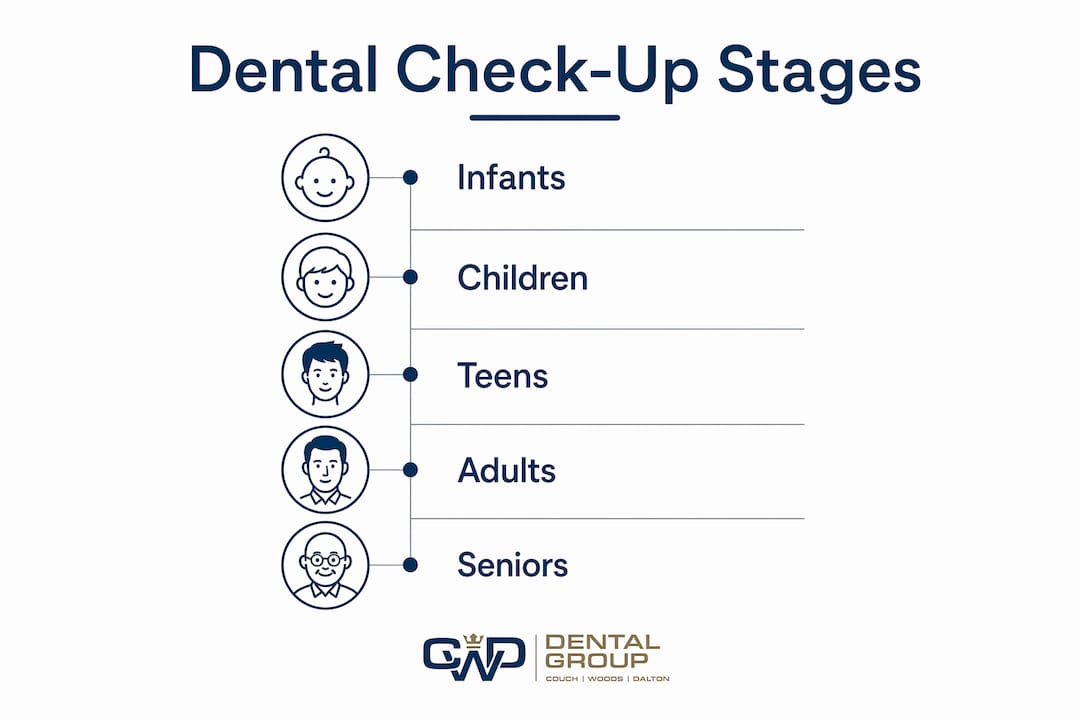
Adolescents and adults face a different set of oral health challenges. Teens deal with orthodontic changes, wisdom tooth eruption, and increased sugar consumption. Adults accumulate years of wear, old restorations that need monitoring, and growing exposure to risk factors like tobacco use, alcohol, and stress-related grinding.
The Cleveland Clinic recommends cleanings every six months as a standard starting point, adjusted based on individual risk. That twice-yearly schedule is not arbitrary. It reflects the average time it takes for plaque to mineralize into tartar, which only professional instruments can remove. Missing a cleaning cycle allows tartar to accumulate at the gumline, triggering inflammation and the early stages of periodontal disease.
Here is what a standard adult dental check-up covers:
- Full mouth examination. Your dentist checks every tooth surface, the gums, tongue, cheeks, and throat for signs of disease or abnormality.
- Periodontal probing. Gum pocket depths are measured to detect early or advancing gum disease before it causes bone loss.
- Oral cancer screening. Visual and tactile examination of soft tissues identifies suspicious lesions. Oral cancer caught at stage one has a survival rate above 80%.
- Diagnostic X-rays. Bitewing and periapical X-rays reveal decay between teeth, bone levels, and root health that no visual exam can detect.
- Professional cleaning. Scaling removes calculus above and below the gumline. Polishing removes surface stains. Your daily oral hygiene routine becomes far more effective after a professional cleaning removes what brushing leaves behind.
Pro Tip: Tell your dentist about any new medications, health diagnoses, or lifestyle changes at every visit. Conditions like diabetes, acid reflux, and sleep apnea all have oral manifestations that change how your care should be managed.
How should dental care change for seniors and older adults?
Aging introduces a set of oral health risks that most people do not anticipate until they are already dealing with them. Seniors face higher rates of periodontal disease, root decay, tooth loss, and oral cancer. Many also take multiple medications that cause dry mouth, which dramatically increases cavity risk because saliva is the mouth's primary defense against bacteria.
The connection between oral health and systemic disease becomes more pronounced with age. Periodontal disease is linked to heart disease and diabetes, two conditions that are already more common in older adults. Dental visits at this stage are as much about managing overall health as they are about teeth.
Key considerations for senior dental check-ups include:
- More frequent monitoring. Seniors with periodontal disease or systemic conditions often need visits every 3 to 4 months rather than every 6.
- Medication review. Dentists assess whether current prescriptions are contributing to dry mouth, gum overgrowth, or altered healing.
- Denture and implant assessment. Existing prosthetics need regular evaluation for fit, function, and signs of underlying bone changes.
- Nutritional impact. Tooth loss and oral pain directly affect what seniors can eat, which affects nutrition and quality of life. Maintaining dental health preserves the ability to eat a varied, healthy diet.
| Age group | Recommended visit frequency | Primary focus |
|---|---|---|
| Infants and toddlers (0 to 3) | Every 3 to 6 months | Caries risk, fluoride varnish, parent education |
| Children and teens (4 to 17) | Every 6 to 12 months | Sealants, orthodontic monitoring, hygiene habits |
| Adults (18 to 64) | Every 6 months | Periodontal health, restorations, cancer screening |
| Seniors (65 and older) | Every 3 to 6 months | Gum disease, dry mouth, systemic health links |
How do dentists tailor check-up intervals based on individual risk?
The twice-yearly rule is a population-level guideline, not a clinical prescription. Dentists use dynamic risk assessment after every exam to set the next recall interval. This is the most clinically sound approach to age-specific dental care, and it is what separates a good dental practice from a great one.
Cigna confirms that recall periods range from 3 months to more than 12 months depending on clinical findings. The factors that push someone toward more frequent visits include active gum disease, a history of multiple cavities, smoking, uncontrolled diabetes, dry mouth, and poor home care compliance. Factors that allow longer intervals include consistently clean exams, no decay history, excellent home care, and low systemic disease burden.
The NCQA supports this model, noting that optimal recall intervals are determined dynamically after each exam rather than set in advance. This approach reduces unnecessary visits for low-risk patients and catches problems faster in high-risk ones. It also makes dental care more cost-efficient over time.
Pro Tip: Ask your dentist at the end of every visit: "Based on what you found today, when should I come back?" The answer should be specific to your exam results, not a default six-month reminder. If your dentist cannot give you a risk-based reason for the interval, that is worth discussing.
A dental cleaning checklist from Y-Brush outlines how professional and at-home care work together to maintain oral health between visits. The two are not interchangeable. Professional cleanings remove what brushing cannot, and home care slows the return of what the dentist removed.
Key takeaways
Dental check-ups are the single most effective tool for preventing oral disease across every life stage, and their frequency must be personalized to each patient's clinical risk profile.
| Point | Details |
|---|---|
| Start early with kids | First dental visit by age 1 or first tooth eruption sets the foundation for lifelong oral health. |
| Fluoride varnish saves teeth | Professional fluoride application every 3 to 6 months measurably reduces childhood caries. |
| Adults need more than cleaning | Every adult exam includes cancer screening, periodontal probing, and X-rays beyond routine polishing. |
| Seniors need more frequent visits | Medication effects, gum disease, and systemic health links require check-ups every 3 to 4 months for many older adults. |
| Risk-based scheduling beats defaults | Recall intervals from 3 to 12 months should reflect your actual clinical findings, not a calendar default. |
Why I think most families underestimate what a dental visit actually does
Most people walk into a dental check-up thinking it is a cleaning with a quick look around. After years of working in and around dental care, I can tell you that framing sells the visit short. A well-run dental exam is a diagnostic process. The periodontal probing alone can catch bone loss years before a patient feels any pain. The oral cancer screening takes two minutes and can save a life.
What I have seen consistently is that families who establish a dental home early for their children and stick to risk-based scheduling have dramatically fewer dental emergencies as those kids grow up. The pattern holds into adulthood. Patients who show up consistently, communicate honestly about their health changes, and follow through on recommended intervals spend less time in the chair for restorative work and more time walking out with a clean bill of health.
The families who struggle most are the ones who treat dental visits as optional until something hurts. By then, a cavity has become a root canal, or early gum disease has become bone loss. Prevention is not a luxury. It is the cheaper, less painful option in every case.
My advice is simple: treat your dental check-up as a partnership. Bring your medication list. Ask questions. Tell your dentist what has changed in your health since the last visit. The more information your dentist has, the more precisely they can protect you. That is how you get the most out of every appointment at every age.
— Kayle
How Cwddentalgroup supports your family's dental health
Cwddentalgroup provides comprehensive dental care for patients of all ages in Tallahassee, from a child's first exam to senior periodontal maintenance. Their team builds individualized care plans based on each patient's risk profile, so your recall interval reflects your actual clinical needs rather than a generic schedule.

For families juggling busy schedules, Cwddentalgroup offers flexible appointment times and same-day emergency care when urgent issues arise. Whether you need a routine check-up, a pediatric first visit, or immediate attention for a dental problem, their practice is built to respond. Visit their emergency dental services page for urgent care options, or schedule a visit today to start your family's personalized dental care plan.
FAQ
How often should children see the dentist?
Children should have their first dental visit by age 1 or when the first tooth erupts, per the American Academy of Pediatric Dentistry. After that, visit frequency ranges from every 3 to 12 months based on the child's individual caries risk.
What happens during a routine adult dental check-up?
A standard adult exam includes a full mouth examination, periodontal probing, oral cancer screening, diagnostic X-rays, and a professional cleaning. The Cleveland Clinic confirms that preventive services during visits also include review of existing restorations and adjunct treatments as needed.
Why do seniors need more frequent dental visits?
Seniors face higher rates of gum disease, root decay, dry mouth from medications, and oral cancer, all of which require closer monitoring. Many older adults benefit from visits every 3 to 4 months rather than the standard six-month interval.
Can I go to the dentist just once a year if my teeth feel fine?
Feeling fine does not mean disease is absent. Cavities, gum disease, and oral cancer often cause no pain in early stages. A dental health checklist can help you track your oral health between visits, but it does not replace professional diagnosis.
What factors make someone high-risk for dental problems?
High-risk factors include a history of frequent cavities, active or past gum disease, smoking, diabetes, dry mouth, poor home care habits, and a high-sugar diet. Patients with these factors typically need check-ups every 3 to 4 months rather than every 6 to 12.