
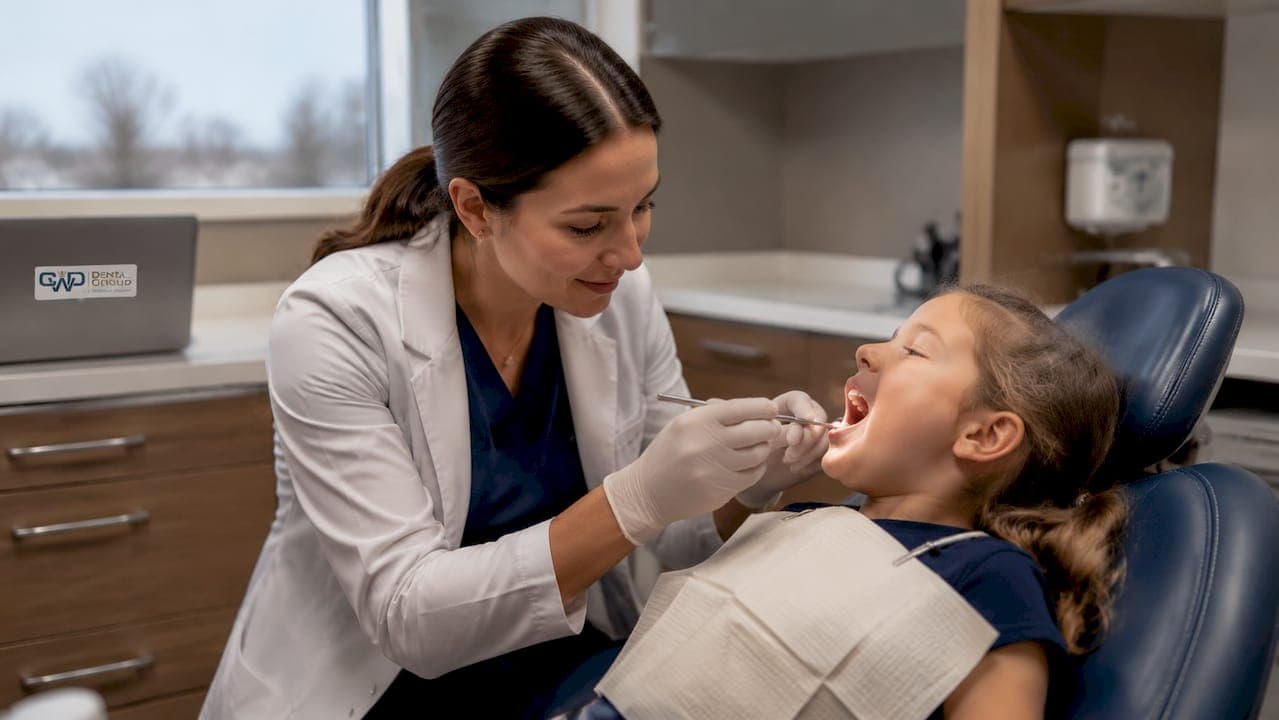
Pediatric dental treatments are defined as preventive and restorative procedures specifically designed to protect, repair, and guide the development of children's teeth from infancy through adolescence. The American Academy of Pediatrics recommends the first dental visit by age one or within six months of the first tooth eruption. Knowing the full range of types of pediatric dental treatments helps you make confident decisions, ask the right questions, and avoid the costly consequences of delayed care. This guide covers every major treatment category, from fluoride varnish to sedation, so you walk into your child's next appointment fully prepared.
1. Types of pediatric dental treatments: an overview
Children's dental care divides into two broad categories: preventive and restorative. Preventive treatments stop problems before they start. Restorative treatments fix damage that has already occurred. The most effective approach combines both, starting early and staying consistent. Understanding where each procedure fits helps you prioritize what your child actually needs at each stage of development.
2. Fluoride varnish
Fluoride varnish is the single most widely used preventive treatment in pediatric dentistry. All children receive fluoride varnish every six months until age five, with high-risk children receiving applications every three months. That frequency matters because enamel in primary teeth is thinner and more vulnerable to acid attack than adult enamel. The varnish is painted directly onto teeth in seconds, sets on contact with saliva, and releases fluoride steadily over several hours.
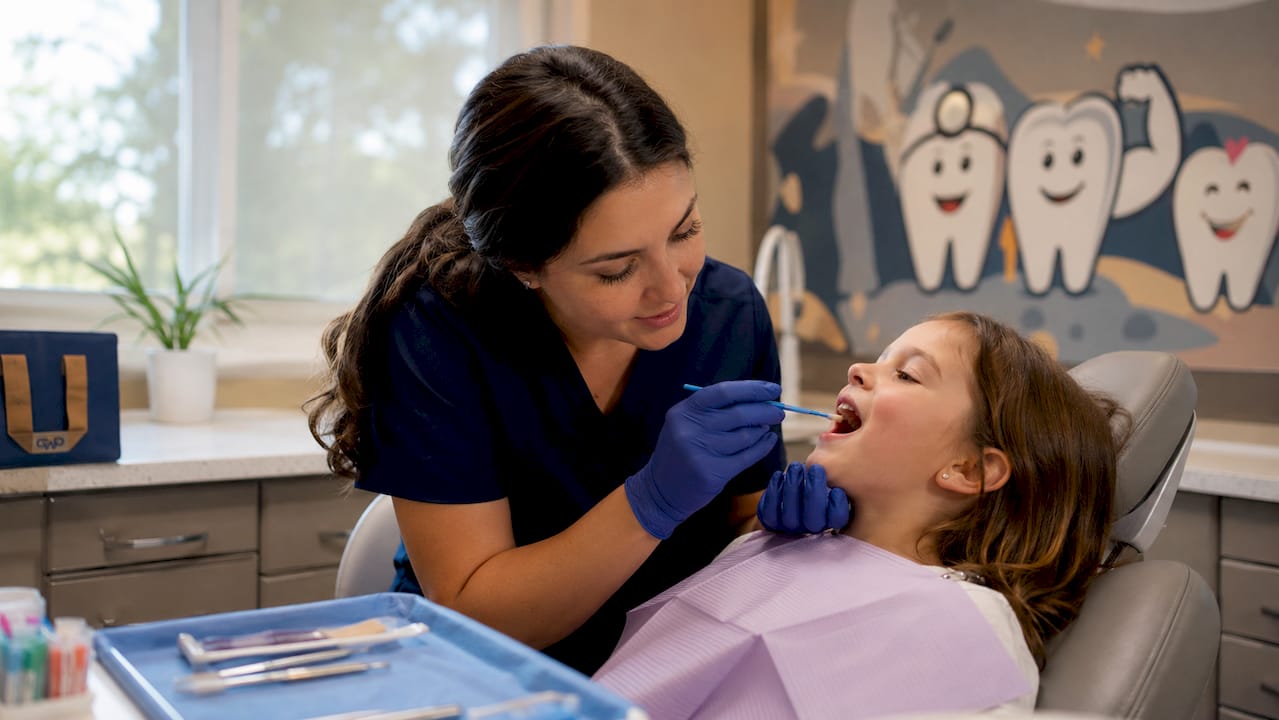
One detail most parents miss: fluoride varnish is categorized as a preventive care service and is fully covered by most public and private health insurance plans. That means cost is rarely a barrier. Pediatricians also apply fluoride varnish at well-child visits, which is particularly valuable for families who have not yet established a dental home. This pediatrician-applied fluoride approach bridges the gap for infants who have not yet seen a dentist.
Pro Tip: Ask your child's pediatrician at every well-child visit whether fluoride varnish was applied. Many parents assume it was included and it was not.
3. Dental sealants
Dental sealants are thin plastic coatings applied to the chewing surfaces of back molars to prevent decay in grooves where toothbrush bristles cannot reach. The application takes less than five minutes per tooth and requires no drilling. Sealants are most effective when applied as soon as the first permanent molars erupt, typically around age six, and again when the second molars arrive around age twelve.
The protective effect is significant. Molars sealed early are far less likely to develop cavities compared to unsealed teeth, making sealants one of the highest-return investments in children's dental care. Most dental insurance plans cover sealants on permanent molars for children under fourteen. For a deeper look at how sealants fit into a broader preventive dentistry plan, the approach is consistent: apply early, reapply if the sealant chips, and combine with fluoride for maximum protection.
4. Routine check-ups and professional cleanings
Twice-yearly dental check-ups are the foundation of preventive dentistry for kids. At each visit, the dentist examines tooth development, checks for early signs of decay, assesses bite alignment, and reviews oral hygiene habits with both parent and child. Professional cleanings remove tartar buildup that brushing at home cannot address, particularly along the gumline and between teeth.
These visits also serve as a relationship-building opportunity. Children who attend regular appointments from an early age develop significantly less dental anxiety than those who only visit when something hurts. The check-up is also when the dentist decides whether fluoride varnish, sealants, or X-rays are needed, making it the central coordination point for all other pediatric dental procedures.
5. Tooth-colored and amalgam fillings
When a cavity forms, a filling is the standard restorative response. Pediatric dentists use three main materials: composite resin (tooth-colored), glass ionomer, and silver amalgam. Composite resin is the most common choice for visible teeth because it matches tooth color and bonds directly to enamel. Glass ionomer releases fluoride after placement, making it useful for high-risk patients or areas that are difficult to keep dry. Silver amalgam is durable and cost-effective, though less frequently used today due to cosmetic concerns.
For parents researching cavity treatment for kids, the material choice depends on the tooth's location, the size of the cavity, and your child's cooperation level. A small cavity in a baby molar may be treated differently than one in a permanent tooth. The goal in both cases is to remove decay, restore function, and preserve the tooth for as long as it is needed.
Pro Tip: Baby teeth matter even though they fall out. A decayed primary tooth that is lost too early can cause permanent teeth to shift and create crowding that requires orthodontic treatment later.
6. Stainless steel and zirconia crowns
Crowns are placed when a tooth is too damaged for a filling to hold. Stainless steel crowns are the most common option for primary molars because they are durable, placed in a single visit, and hold up well through the remaining life of the baby tooth. Zirconia crowns are a tooth-colored alternative that parents increasingly request for front teeth where appearance matters more.
Both crown types restore full chewing function and, critically, maintain the space that the permanent tooth will eventually occupy. Losing that space prematurely leads to crowding and misalignment. Crowns are also placed after pulp therapy to protect the treated tooth from fracture. The decision between stainless steel and zirconia typically comes down to location, cost, and insurance coverage.
7. Pulp therapy: pulpotomy and pulpectomy
Pulp therapy is the pediatric equivalent of a root canal, though the process and goals differ. A pulpotomy removes infected pulp tissue from the crown of the tooth while leaving the root pulp intact, then seals the space and places a crown. It is used when decay has reached the nerve but the roots are still healthy. A pulpectomy goes further, removing pulp from the entire root canal system, and is used when infection has spread deeper.
Both procedures save the tooth from extraction, which matters because premature loss of a primary tooth disrupts the spacing and alignment of permanent teeth. Parents sometimes question whether saving a baby tooth is worth the effort. The answer is almost always yes, because the alternative creates more complex and expensive problems down the line.
8. Tooth extractions
Extraction is the last resort in children's dental care, used when a tooth is too damaged to save, when overcrowding requires removal for orthodontic reasons, or when a baby tooth is blocking a permanent tooth from erupting properly. The procedure itself is straightforward, but the follow-up matters enormously. When a primary tooth is extracted early, a space maintainer is typically placed immediately to prevent neighboring teeth from drifting.
Parents should know that extraction without a space maintainer is an incomplete treatment plan. The gap left by a missing tooth is not neutral. Adjacent teeth begin shifting within weeks, and the consequences compound over time.
9. Space maintainers
Space maintainers hold open the gap left by a prematurely lost primary tooth, preventing neighboring teeth from crowding into the space before the permanent tooth erupts. They come in fixed and removable versions. Fixed band-and-loop maintainers are cemented to adjacent teeth and require no cooperation from the child. Removable maintainers look similar to a retainer and are used for older children who can manage them responsibly.
The timing of space maintainer placement is critical. Ideally, it is placed at the same appointment as the extraction. Waiting even a few weeks allows measurable tooth movement. Early intervention here directly reduces the complexity and cost of any orthodontic treatment your child may need later.
10. Early orthodontic assessments
The American Association of Orthodontists recommends an orthodontic evaluation by age seven. At this point, the child has a mix of primary and permanent teeth, giving the orthodontist a clear picture of how the jaw and bite are developing. Early evaluation does not mean early braces. It means identifying problems while the jaw is still growing and intervention is simpler.
Interceptive orthodontics, sometimes called Phase I treatment, uses appliances like palate expanders or partial braces to guide jaw growth and correct bite issues before all permanent teeth arrive. This phase typically runs six to twelve months and is followed by a resting period before Phase II treatment, if needed, begins. The benefit is that Phase II treatment is often shorter and less involved when Phase I addressed the underlying structural issue first.
11. Sedation options for anxious children
Pediatric sedation options range from mild nitrous oxide to full general anesthesia, selected based on the child's age, anxiety level, and the complexity of the treatment required. The right sedation plan makes the difference between a traumatic experience and a manageable one.
The main options include:
- Nitrous oxide (laughing gas): Inhaled through a small mask, nitrous oxide reduces anxiety quickly and wears off within minutes after the mask is removed. It is safe for most children and requires no recovery time.
- Oral sedation: A liquid or pill medication given before the appointment produces a deeper calming effect. The child remains conscious but relaxed. A parent or caregiver must drive home afterward.
- IV sedation and general anesthesia: Reserved for extensive treatment, very young children, or those with significant special needs. Administered in a clinical setting with full monitoring, it allows the dentist to complete multiple procedures in a single visit safely.
Sedation is not a sign that something went wrong. It is a clinical tool that protects children from the psychological harm of a frightening dental experience.
12. Comparing treatments: which option fits your child's situation?
Choosing among the types of dental treatments for kids depends on your child's decay risk, age, and current dental condition. This comparison helps clarify the decision:
| Treatment | Purpose | Invasiveness | Best for |
|---|---|---|---|
| Fluoride varnish | Prevent enamel decay | None | All children, every 6 months |
| Dental sealants | Block decay in molar grooves | Minimal | Ages 6 and 12 at molar eruption |
| Composite filling | Restore cavities | Low | Small to medium cavities |
| Stainless steel crown | Restore severely damaged teeth | Moderate | Extensive decay in primary molars |
| Pulpotomy | Save infected tooth | Moderate | Decay reaching the nerve |
| Space maintainer | Preserve eruption space | Low | After premature tooth loss |
| Nitrous oxide sedation | Reduce anxiety | None | Mildly anxious children |
Pro Tip: Most insurance plans cover 100% of preventive services like fluoride varnish and sealants. Scheduling these first costs you nothing and may prevent the need for more expensive restorative work.
Key takeaways
Preventive pediatric dental treatments, starting with fluoride varnish by age one, are the most cost-effective way to protect children's oral health and reduce the need for restorative procedures.
| Point | Details |
|---|---|
| Start visits by age one | The first dental visit by age one enables early risk assessment and preventive counseling. |
| Fluoride varnish is fully covered | Most insurance plans cover fluoride varnish as a preventive service, making it cost-free for families. |
| Sealants protect permanent molars | Apply sealants at ages six and twelve when molars erupt to block the most cavity-prone surfaces. |
| Crowns and pulp therapy save teeth | Restorative options preserve primary teeth that would otherwise be extracted prematurely. |
| Sedation is a clinical tool | Nitrous oxide to general anesthesia ensures children receive necessary treatment without psychological harm. |
What I've learned after years of watching parents navigate pediatric dental care
The single most common mistake I see parents make is waiting. They wait until a tooth hurts. They wait until the child complains. They assume baby teeth do not matter because they fall out anyway. By the time they arrive at the dentist, a simple fluoride application has become a crown, or a crown has become an extraction.
The research is unambiguous: delaying the first dental visit misses the window for early counseling and preventive treatment that reduces overall treatment costs. That is not a theoretical benefit. It is a measurable difference in how much you spend and how much your child goes through.
What I also find underappreciated is the role of the pediatrician. Most parents do not know that their child's doctor can apply fluoride varnish at a well-child visit. For families who have not yet found a pediatric dentist, that visit is a genuine safety net. Use it.
My honest advice: treat the first dental visit as a wellness appointment, not an emergency response. The dentist's job at that visit is not to drill anything. It is to assess risk, build trust with your child, and give you a clear picture of what preventive care looks like for the next twelve months. That conversation is worth more than any single treatment.
— Kayle
When your child needs urgent dental care in Tallahassee
Dental emergencies in children happen fast. A knocked-out tooth, a severe toothache, or a broken crown requires immediate attention, not a week-long wait for an appointment.

Cwddentalgroup offers same-day emergency dental appointments for children in Tallahassee, with a team experienced in pediatric care and sedation options for anxious kids. Whether your child needs urgent restorative treatment or you want to establish a dental home with a practice that prioritizes comfort, Cwddentalgroup delivers the kind of care that makes children feel safe and parents feel confident. Visit Cwddentalgroup to schedule an appointment or call for same-day availability.
FAQ
What age should a child first see a dentist?
The first dental visit should occur by age one or within six months of the first tooth erupting. Early visits allow for risk assessment, preventive treatment, and parental counseling before problems develop.
Are dental sealants safe for children?
Dental sealants are safe, non-invasive, and applied without drilling. They are thin resin coatings bonded to molar surfaces that significantly reduce cavity risk in the most decay-prone teeth.
Does my child need a crown on a baby tooth?
Yes, when decay is extensive or a tooth has undergone pulp therapy, a crown protects the tooth and maintains space for the permanent tooth. Losing a primary molar early without a crown or space maintainer leads to crowding.
What sedation is used for children at the dentist?
Sedation options range from nitrous oxide for mild anxiety to oral sedation and general anesthesia for complex procedures or very young children. The choice depends on the child's age, anxiety level, and treatment scope.
How do I know if my child needs a space maintainer?
A space maintainer is recommended whenever a primary tooth is lost before the permanent tooth is ready to erupt. Your pediatric dentist will assess the gap and the development stage of the underlying permanent tooth to determine whether one is needed.