
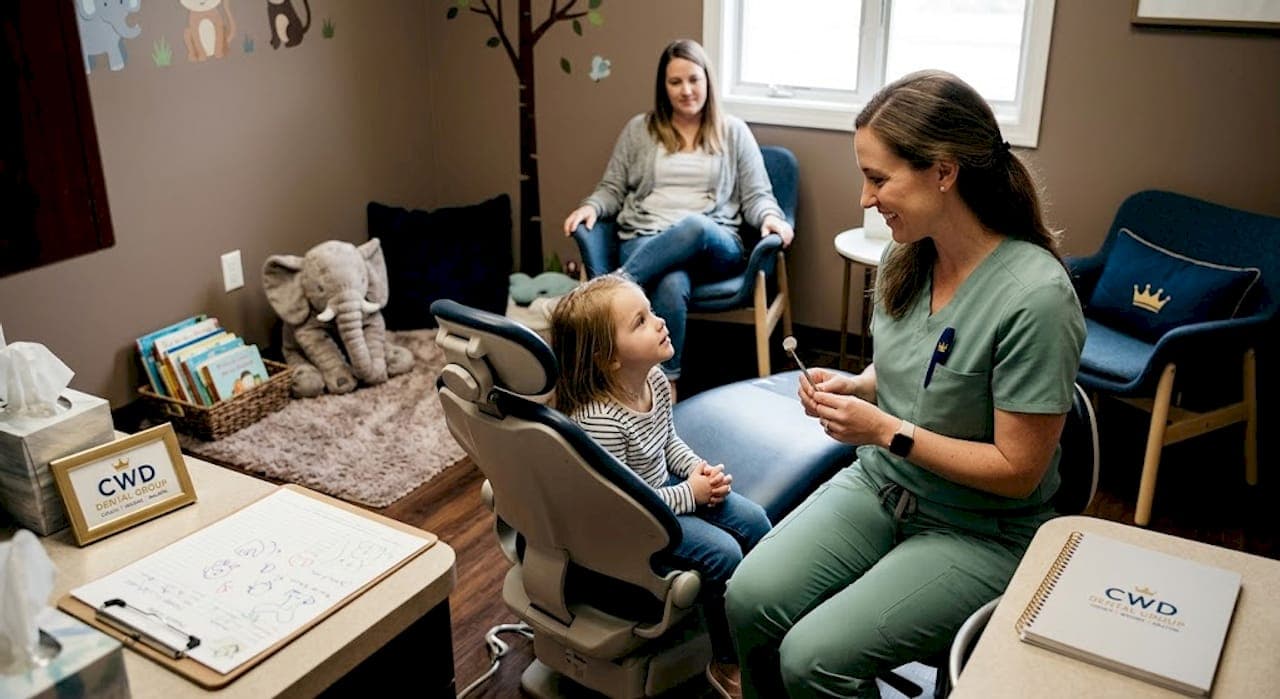
Most parents assume pediatric dentistry is just about filling cavities in small mouths. That assumption leads to delayed first visits, missed warning signs, and preventable problems that follow kids into adulthood. What is pediatric dentistry, really? It's a specialized branch of dental medicine focused on the complete oral development of children from infancy through their teenage years. It covers everything from monitoring jaw growth to managing oral habits that could reshape a child's bite. This guide breaks down what pediatric dental care actually involves, why it matters far beyond the teeth themselves, and how to use it proactively.
Table of Contents
- Key takeaways
- What is pediatric dentistry and how it differs from general dentistry
- Core pediatric dental services explained
- Why the dental home model matters
- Signs your child needs dental care sooner
- Preventive strategies by age group
- My take on what parents consistently get wrong
- Pediatric dental care at Cwddentalgroup
- FAQ
Key takeaways
| Point | Details |
|---|---|
| First visit by age one | Schedule your child's first dental visit by their first birthday or within 6 months of the first tooth erupting. |
| More than cavity treatment | Pediatric dentistry monitors jaw growth, speech development, and oral habits alongside routine dental care. |
| Prevention is the core strategy | Fluoride varnish and dental sealants together offer stronger cavity protection than either treatment alone. |
| Warning signs matter early | Colored spots on teeth, persistent bad breath, and thumb-sucking past age three all warrant a dental visit. |
| The dental home pays off | Establishing ongoing care with one pediatric dentist builds trust, catches problems early, and educates parents. |
What is pediatric dentistry and how it differs from general dentistry
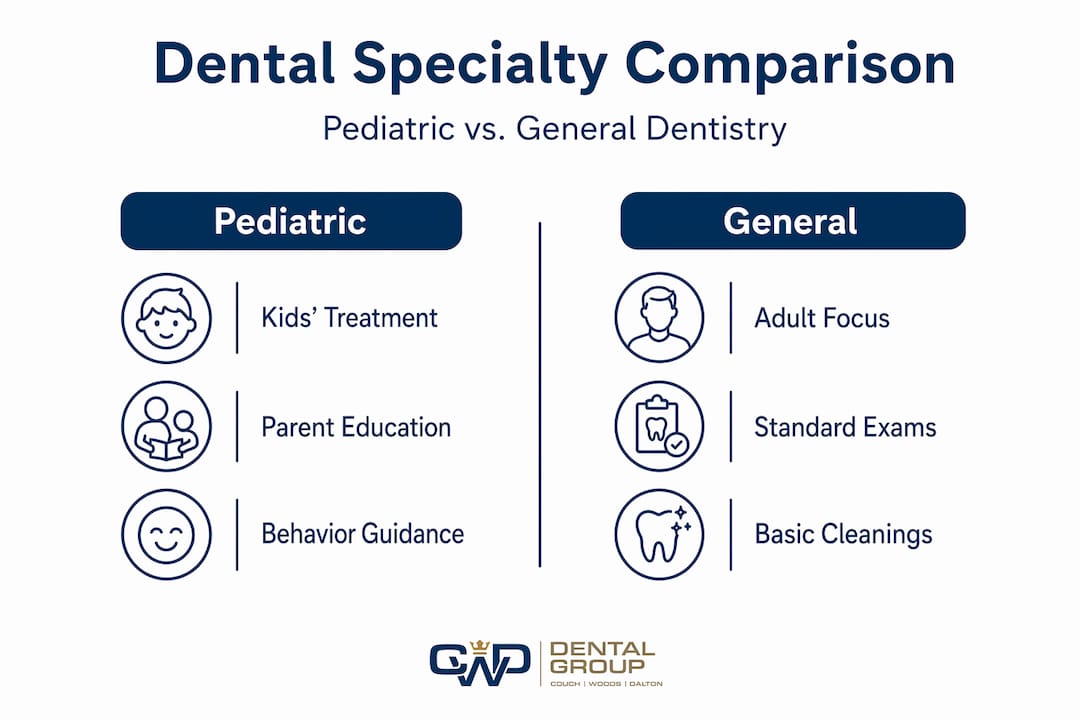
Pediatric dentistry is a recognized dental specialty requiring two to three years of additional training beyond dental school. That extra training covers child psychology, growth and development, behavior management, and the treatment of children with special health care needs. A general dentist can treat children, but a pediatric dentist has studied how a child's mouth, jaw, and facial structure change from birth through adolescence.
The scope of pediatric dental care is broader than most parents realize. Here's what it specifically covers:
- Age range: Newborns through teenagers, including young adults with special health care needs
- Developmental monitoring: Tracking tooth eruption patterns, jaw alignment, and craniofacial growth at every stage
- Behavior management: Using proven techniques to make dental visits comfortable and non-traumatic for children
- Preventive care: Fluoride applications, sealants, oral hygiene instruction, and dietary counseling
- Parent education: Teaching caregivers how to clean infant gums, when to stop pacifier use, and how to prevent baby bottle tooth decay
- Special needs care: Adapting treatment for children with medical, physical, or developmental conditions
Pediatric dentists specialize not only in dental treatment but also in behavior management techniques that make dental visits less traumatic for children. That distinction matters enormously. A child who has a frightening dental experience early on is far more likely to avoid dental care as an adult. Pediatric dentists are trained to prevent that cycle from starting.
The focus on parent education is also a defining feature. At every visit, a good pediatric dentist teaches you something specific about your child's oral development, not just what they found and fixed.

Core pediatric dental services explained
Routine checkups in a pediatric dental office look different from adult visits. The dentist is not just checking for cavities. They are assessing tooth eruption timing, watching for crowding, evaluating bite development, and looking for signs of habits that could affect jaw structure over time.
Here are the core pediatric dental services you can expect:
- Fluoride varnish: Applied directly to teeth, fluoride varnish strengthens enamel and dramatically reduces cavity risk. Fluoride varnishes adhere quickly to enamel surfaces and are considered preventive care by insurance without cost sharing, meaning they're typically free for families.
- Dental sealants: A thin protective coating painted onto the chewing surfaces of back molars. Sealants applied before decay occurs protect back molars by creating a barrier against bacteria, saving future treatment costs.
- X-rays: Used to detect cavities between teeth, monitor root development, and check for impacted teeth that aren't visible yet.
- Orthodontic screening: Early identification of bite problems, crowding, or jaw discrepancies that benefit from timely intervention.
- Trauma management: Children fall. Pediatric dentists are trained to handle chipped, cracked, or knocked-out teeth with protocols designed for developing mouths.
- Oral habit counseling: Guidance on when and how to address thumb-sucking, pacifier use, and tongue-thrusting before they cause lasting structural changes.
For a deeper look at how cavity treatment for kids works in a pediatric setting, the approach is quite different from adult fillings, both in technique and in the materials used.
Pro Tip: Ask your pediatric dentist to show you exactly how to brush your child's teeth at each visit. The technique changes as more teeth erupt, and most parents are using a method that's one developmental stage behind.
Why the dental home model matters
The American Academy of Pediatrics and the American Dental Association both recommend that children establish a dental home by their first birthday or within 6 months of the first tooth erupting. That's earlier than most parents expect.
The dental home is not just a location. It's an ongoing relationship between your child, your family, and a dental team that knows your child's complete oral health history. That continuity matters because children's mouths change rapidly. A dentist who has seen your child at six months, one year, and two years can spot a deviation from their personal baseline far more accurately than a dentist seeing them for the first time at age five.
"Early pediatric dental visits serve as more than examination points; they establish trust, educate parents, and create a proactive dental care culture." Source: PMC, Advancing Pediatric Oral Health
Early intervention in pediatric dentistry is critical for monitoring craniofacial growth, managing oral habits, and preventing developmental issues that affect speech and eating. That's not a minor point. A child whose tongue-thrusting habit goes unaddressed can develop a speech impediment that requires years of therapy to correct. Catching it at age two is a completely different conversation than catching it at age seven.
Routine visits also catch the silent problems. Cavities between baby teeth often cause no pain until they're severe. Routine dental visits monitor eruption patterns, jaw growth, enamel strength, and help detect conditions like cavities and bite issues before they escalate.
Signs your child needs dental care sooner
Waiting for your child to complain about tooth pain is one of the most common mistakes parents make. Children often cannot articulate dental discomfort clearly, and by the time they do, the problem has usually progressed. Children may not verbalize pain clearly, and early tooth decay can present as "funny feelings" or colored spots before pain develops.
Watch for these specific warning signs:
- White, brown, or dark spots on teeth. These are early indicators of decay, not just staining. White spots in particular signal enamel demineralization, the stage just before a cavity forms.
- Tooth sensitivity to hot, cold, or sweet foods. Any consistent sensitivity in a child deserves professional evaluation, not a wait-and-see approach.
- Persistent bad breath. Occasional morning breath is normal. Bad breath that doesn't resolve after brushing can indicate gum disease, decay, or chronic mouth breathing.
- Thumb-sucking or pacifier use past age three. Prolonged thumb-sucking and mouth breathing can negatively impact jaw growth and tooth alignment, requiring pediatric dental monitoring.
- Mouth breathing during sleep. Consistent open-mouth breathing can affect facial development and may indicate airway or orthodontic issues worth addressing early.
Pro Tip: Take a photo of any spot or discoloration you notice on your child's teeth before the appointment. It helps the dentist compare changes over time and gives you a record if the issue resolves between visits.
Preventive strategies by age group
Preventive care in pediatric dentistry is not one-size-fits-all. What works for a toddler is different from what a ten-year-old needs. Here's how the approach shifts across developmental stages:
| Age group | Key preventive strategy | Clinical notes |
|---|---|---|
| 0 to 12 months | Fluoride varnish, gum wiping | Pediatricians apply fluoride varnish starting at 6 months when dental access is limited |
| 1 to 3 years | Fluoride toothpaste, diet counseling | Limit sugary drinks; establish brushing routine with rice-grain amount of fluoride paste |
| 4 to 6 years | Continued fluoride varnish, sealant readiness | First molars begin erupting; sealants become relevant |
| 6 to 12 years | Dental sealants on permanent molars, orthodontic screening | Highest cavity risk period; sealants are most impactful now |
| 13 to 18 years | Continued monitoring, wisdom tooth assessment | Dietary habits and oral hygiene independence become the focus |
The combination approach is worth highlighting specifically. Combining fluoride varnish with dental sealants enhances cavity prevention effectiveness over either alone, especially in high-risk children. For families with a history of dental problems or children with dietary habits that increase risk, using both treatments together is the standard of care, not an upgrade.
For detailed information on the children's fluoride treatment process and safety profile, the research is clear that it is one of the most cost-effective preventive tools available to families today.
My take on what parents consistently get wrong
I've spent years watching parents navigate their children's dental health, and the pattern I see most often is this: parents treat the dentist as a repair shop rather than a development partner. They come in when something hurts or looks wrong, and they're surprised when the problem turns out to be months or years in the making.
What I've learned is that the parents whose kids have the best outcomes are not the ones who found the fanciest practice. They're the ones who showed up consistently, asked questions at every visit, and followed through on the small things at home. Brushing technique. Diet adjustments. Stopping the pacifier at the right time.
The other thing I've seen is how much children's dental anxiety is shaped by their parents' anxiety. If you walk into the appointment nervous and apologetic, your child reads that. Pediatric dentists are trained to manage this, but you can make their job much easier by framing dental visits as normal, even exciting, from the very first one.
The real benefit of pediatric dentistry isn't any single treatment. It's the cumulative effect of a child who grows up knowing their mouth, trusting their dentist, and carrying healthy habits into adulthood. That's a return on investment that shows up decades later.
— Kayle
Pediatric dental care at Cwddentalgroup
If you're in the Tallahassee area and looking for a dental team that genuinely understands children's oral health, Cwddentalgroup offers pediatric dental services designed around comfort, accessibility, and real clinical expertise.

From routine checkups and fluoride treatments to early orthodontic screening and parent education, the team at Cwddentalgroup brings the kind of patient-centered care that makes a difference for families. And when the unexpected happens, because children fall and accidents occur, their same-day emergency dental care means you won't be left waiting when your child needs help fast. Scheduling is straightforward, the staff is warm, and the practice is built around making dental care something families actually want to keep up with.
FAQ
What is pediatric dentistry in simple terms?
Pediatric dentistry is a dental specialty focused on the oral health of children from birth through adolescence. It covers preventive care, developmental monitoring, and treatment tailored to children's unique needs.
When should a child first see a pediatric dentist?
The American Academy of Pediatrics recommends a child's first dental visit by their first birthday or within six months of their first tooth coming in. Earlier visits allow for preventive care and parent education before problems develop.
What do pediatric dentists do differently from general dentists?
Pediatric dentists complete two to three years of specialized training beyond dental school, focusing on child development, behavior management, and the treatment of special health care needs. They also use child-specific techniques and equipment.
Are dental sealants safe for kids?
Yes. Dental sealants are a thin, safe coating applied to the chewing surfaces of back molars to prevent cavities. They are widely recommended for school-aged children and are considered a standard preventive treatment.
How often should children visit the dentist?
Most children benefit from dental visits every six months, though children at higher cavity risk may need appointments every three to four months. Your pediatric dentist will recommend a schedule based on your child's specific needs.
Recommended
- Happy Teeth, Happy Kids Top Dental Tips Every Parent Needs — CWD Dental Group
- Happy Teeth, Happy Kids: Discovering a Great Children's Dentist — CWD Dental Group
- Stopping Tooth Decay Modern Cavity Treatments for Children — CWD Dental Group
- Dental care for infants: Essential 1st for healthy smiles — CWD Dental Group