

Diastema, the clinical term for a gap between teeth, is one of the most common reasons adults seek cosmetic dental treatment. 99.7% of adults consider their smile an important social asset, which explains why gaps between teeth get fixed cosmetically far more often than for purely medical reasons. Cosmetic diastema closure addresses confidence, appearance, and in many cases, real functional concerns like bite alignment and speech clarity. Understanding why people choose treatment, and which options actually work, helps you make a decision grounded in both aesthetics and long-term oral health.
Why gaps between teeth get fixed cosmetically
The decision to close a gap is almost always driven by how a smile makes someone feel. Gaps affect first impressions, professional interactions, and personal confidence in ways that are hard to quantify but easy to recognize. The social weight of a smile is well documented, and cosmetic dental gap treatment has grown directly in response to that reality.
Functional reasons also push people toward treatment. Gaps can affect speech, particularly the pronunciation of sibilant sounds like "s" and "z." Wider spaces between teeth can also create areas where food traps easily, increasing the risk of decay and gum irritation over time. Closing a gap, whether cosmetically or orthodontically, often improves both how a smile looks and how it functions day to day.

The distinction between cosmetic masking and biological correction matters here. Orthodontic closure physically moves teeth to their correct positions, addressing the root cause of the gap. Bonding and veneers cover the gap visually without changing tooth position. Both approaches are valid, but the right choice depends on the cause, the size of the gap, and what the patient actually wants from treatment.
What causes gaps between teeth?
Knowing the cause of a gap directly affects which cosmetic treatment will last. A gap that returns six months after bonding is almost always a sign that the underlying cause was never addressed.
The most common causes include:
- Genetics and jaw-tooth size mismatch. When the jaw is proportionally larger than the teeth, natural spacing appears. This is the most common cause of diastema in the upper front teeth.
- Oversized labial frenum. The labial frenum is the small band of tissue connecting the upper lip to the gum. When it is too large, it physically blocks the two front teeth from closing together. A minor laser procedure called a frenectomy is often required before gap closure to prevent the gap from reopening.
- Habits like tongue thrusting and thumb sucking. Persistent pressure from the tongue or thumb pushes front teeth forward and apart over time.
- Gum disease and bone loss. Active periodontal disease destroys the bone that supports teeth, causing them to shift and create gaps. Patients should undergo a periodontal assessment before any cosmetic work to rule out active disease, since gum disease directly undermines the durability of any restoration.
- Missing teeth. When a tooth is lost, neighboring teeth drift toward the empty space. Missing teeth cause gaps that require prosthetic solutions like implants or bridges rather than surface cosmetic treatments.
Each cause points toward a different treatment path. A gap from genetics responds well to bonding or veneers. A gap from gum disease requires periodontal treatment first. Skipping this diagnostic step is the most common reason cosmetic gap treatments fail.
What are the main tooth gap cosmetic options?
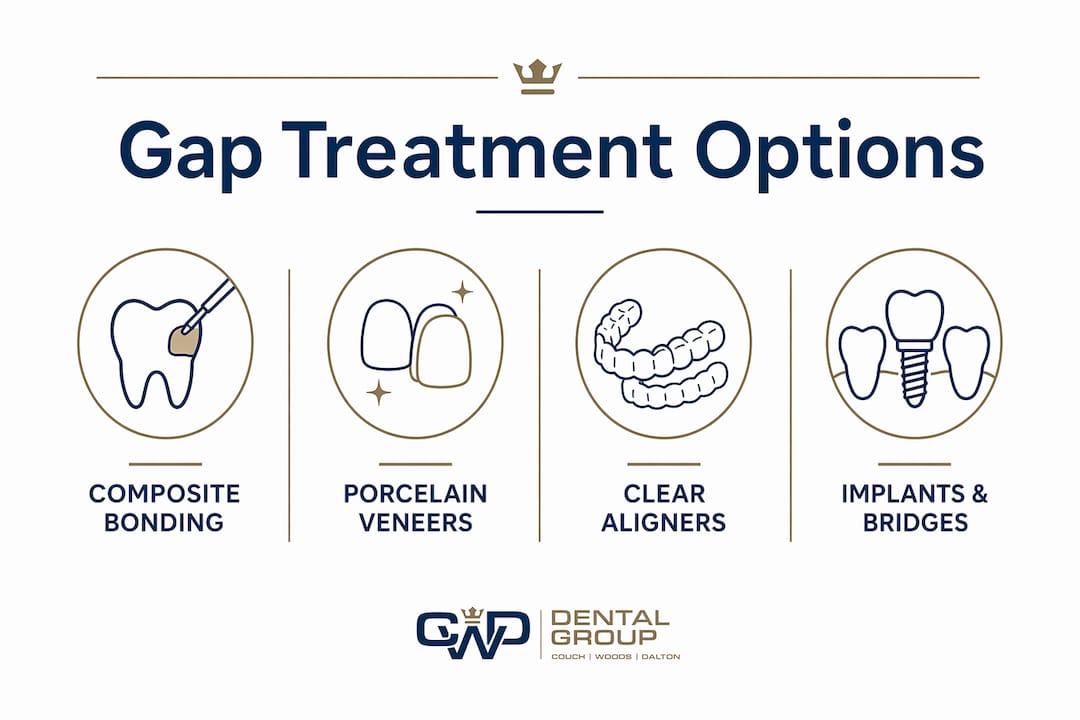
Four primary treatment categories cover the full range of gap sizes and patient goals. They differ in how invasive they are, how long they last, and what they actually do to the tooth structure.
| Treatment | Best for | Duration | Longevity |
|---|---|---|---|
| Composite bonding | Gaps under 1.5–3mm | Single 30–60 min visit | 5–7 years |
| Porcelain veneers | Small to medium gaps with color or shape concerns | 2–3 visits | 15+ years |
| Clear aligners or braces | Gaps over 2–3mm, bite issues | Months to years | Permanent with retainers |
| Implants or bridges | Gaps from missing teeth | Multiple visits | 10–20+ years |
Composite bonding is the fastest tooth gap cosmetic option. A dentist applies tooth-colored resin directly to the teeth, sculpts it to close the gap, and hardens it with a curing light. The entire process takes one appointment. The tradeoff is durability. Bonding lasts 5–7 years before it chips or stains and needs replacement.
Porcelain veneers are thin ceramic shells bonded to the front surface of teeth. They close gaps while simultaneously correcting color, shape, and minor alignment issues. Veneers last 15 years or more with proper care, making them a strong long-term option for patients who want a complete aesthetic upgrade alongside gap closure. Learn more about cosmetic dental procedures to see how veneers compare to other options.
Clear aligners and traditional braces are the only treatments that physically move teeth. This matters for gaps larger than 2–3mm, where bonding or veneers would create teeth that look unnaturally wide. Attempting to close large gaps with bonding risks an unnatural aesthetic result. Orthodontics takes longer but produces anatomically correct outcomes and improves bite function at the same time.
Implants and bridges address gaps caused by missing teeth. An implant replaces the tooth root with a titanium post and a crown on top. A bridge spans the gap using adjacent teeth as anchors. Both are prosthetic solutions, not cosmetic surface treatments, and they require a different clinical evaluation process.
Pro Tip: Ask your dentist to photograph your smile before treatment and use digital imaging to preview the result. Seeing the expected outcome before committing to veneers or bonding prevents surprises and helps you communicate exactly what you want.
What are the real benefits and limitations of closing a gap?
The benefits of fixing tooth gaps go well beyond appearance. Confidence is the most cited reason patients seek treatment, and the research supports it. A smile's social importance is recognized across professional and personal contexts, and patients consistently report higher self-esteem after gap closure. Improved speech clarity and easier oral hygiene are functional gains that compound over time.
The limitations are real and worth understanding before you commit:
- Relapse is a genuine risk. Orthodontic relapse is common without lifelong retainer wear. Bonding and veneers require periodic replacement. Neither outcome is a failure, but both require ongoing commitment.
- Cosmetic masking does not fix the cause. Bonding over a gap caused by gum disease will fail when the disease progresses. The restoration sits on a compromised foundation.
- Bite changes need monitoring. Closing a gap changes how teeth contact each other. A dentist needs to check the bite carefully after treatment to avoid creating new pressure points.
The longevity of bonding versus orthodontics is one of the most practical factors in choosing a treatment. Bonding costs less upfront but accumulates replacement costs over a decade. Orthodontics costs more initially but delivers results that last indefinitely with retainer use. Understanding this tradeoff upfront prevents regret later.
Cosmetic dentistry also improves bite and smile function in ways that go beyond aesthetics. Patients who close gaps through orthodontics often report easier chewing and reduced jaw tension as secondary benefits.
How do you choose the right cosmetic method for your gap?
The right treatment depends on four factors: gap size, underlying cause, your lifestyle, and how much maintenance you are willing to commit to long term.
- Get a clinical evaluation first. A dentist needs to measure the gap, assess the cause, and check for gum disease or bone loss before recommending any treatment. A periodontal and bite assessment is the non-negotiable first step. Skipping it is how patients end up with restorations that fail within a year.
- Match the treatment to the gap size. Bonding suits gaps under 1.5–3mm; orthodontics is the better choice for anything wider. This is not a preference, it is an anatomical reality.
- Be honest about your lifestyle. Bonding chips if you bite hard foods or grind your teeth. Veneers require avoiding habits that stress the ceramic. Orthodontic retainers must be worn every night indefinitely. Each treatment demands something from you.
- Weigh speed against durability. Bonding delivers results in one visit. Orthodontics takes months or years. If you need a fast result for a specific event, bonding is practical. If you want a permanent solution, orthodontics or veneers are the better investment.
- Consider whether cosmetic masking is appropriate. Masking a gap is acceptable when the cause is purely genetic and the gap is small. When the cause is gum disease, missing teeth, or a large frenum, biological correction must come first.
Pro Tip: If you are considering clear aligners, ask specifically whether your gap size and bite qualify. Not all gaps respond to aligner therapy alone, and a dentist who evaluates your full bite will give you a more accurate treatment plan than one who only looks at the gap.
If you notice signs beyond aesthetics, such as shifting teeth or gum tenderness, check the signs you need a dental check-up before pursuing cosmetic work.
Key Takeaways
Cosmetic gap closure works best when the treatment matches the gap's cause, size, and the patient's long-term maintenance commitment.
| Point | Details |
|---|---|
| Cause determines treatment | Identify whether the gap stems from genetics, gum disease, or missing teeth before choosing any cosmetic option. |
| Gap size guides method | Bonding suits gaps under 1.5–3mm; orthodontics is required for wider gaps to avoid unnatural results. |
| Longevity varies widely | Bonding lasts 5–7 years, veneers 15+ years, and orthodontics is permanent with consistent retainer wear. |
| Health check comes first | A periodontal assessment before cosmetic work prevents restoration failure caused by active gum disease. |
| Maintenance is ongoing | Every cosmetic option requires some form of long-term commitment, from retainers to periodic bonding replacement. |
My honest view on gap closure and patient choice
I have seen patients walk in convinced they need veneers when what they actually needed was a retainer check after orthodontic relapse. I have also seen patients who spent years avoiding smiling because a dentist told them their gap was "just cosmetic" and not worth treating. Both situations reflect a failure to center the patient's actual experience.
A gap between teeth is not a defect. Diastema is a natural variation, and closing it should be patient-driven, not something a dentist pushes because it is a profitable procedure. The right question is not "should this gap be closed?" but "does closing this gap serve this patient's confidence, health, and long-term wellbeing?"
What I find consistently true is that the best treatment balances lifestyle, aesthetics, and long-term health rather than defaulting to the fastest or cheapest option. A thorough evaluation, honest expectations, and a clear maintenance plan produce results that patients are still happy with a decade later. Anything less is a shortcut that usually costs more in the long run.
— Kayle
Cwddentalgroup's approach to cosmetic gap treatment
Cwddentalgroup serves patients in Tallahassee with a full range of cosmetic dental services, including bonding, veneers, and orthodontic consultations for gap closure. Every treatment plan starts with a personalized evaluation that accounts for gap size, underlying cause, and patient goals.

The team at Cwddentalgroup prioritizes same-day appointments for urgent concerns, so patients with shifting teeth or sudden gap changes do not wait weeks for answers. If you are ready to explore your options, the emergency and cosmetic dental team at Cwddentalgroup can assess your smile and outline a treatment path that fits your life. Financing options are also available to make cosmetic care accessible without financial stress. Explore cosmetic financing options to plan ahead before your consultation.
FAQ
What is diastema and is it a health concern?
Diastema is the clinical term for a gap between teeth, most commonly the upper front teeth. It is not always a health concern, but gaps caused by gum disease or missing teeth require medical treatment before any cosmetic work.
How long does composite bonding last on a tooth gap?
Composite bonding typically lasts 5–7 years before it chips or stains and needs replacement. Patients who grind their teeth or bite hard foods may need replacement sooner.
Can clear aligners close any size gap?
Clear aligners work well for small to moderate gaps, but gaps larger than 2–3mm often require traditional orthodontics or a combination of approaches. A clinical evaluation determines whether aligners alone will produce a natural result.
Do I need a retainer after orthodontic gap closure?
Retainer wear after orthodontic gap closure is required indefinitely. Without consistent retainer use, teeth drift back toward their original positions, and the gap can reopen over time.
Is a gap between teeth always worth closing?
Not always. Gaps that do not affect confidence, function, or oral health do not require treatment. The decision to close a gap should be driven by the patient's own goals, not cosmetic pressure.