
Most people assume cosmetic dentistry is about vanity. Fix your teeth, look better, done. But that framing misses most of what cosmetic dentistry actually does. What is cosmetic dentistry explained fully? It's a branch of dental care that improves the appearance of your teeth, gums, and bite while often delivering real health benefits along the way. From teeth whitening and veneers to laser gum contouring and BOTOX, these treatments can change how you look, how you feel, and how well your mouth actually functions.
Table of Contents
- Key takeaways
- What is cosmetic dentistry, and why does it matter
- Common cosmetic dental procedures and how they work
- Benefits of cosmetic dentistry beyond appearance
- What to consider before starting cosmetic treatment
- My take on where cosmetic dentistry is heading
- See what Cwddentalgroup can do for your smile
- FAQ
Key takeaways
| Point | Details |
|---|---|
| More than aesthetics | Cosmetic dentistry improves oral health, bite function, and self-confidence alongside appearance. |
| Wide range of procedures | Treatments include whitening, veneers, crowns, composite fillings, gum contouring, and BOTOX. |
| Technology drives precision | Digital imaging and laser tools improve accuracy and reduce recovery time for most procedures. |
| Provider choice matters | Selecting a dentist with specific cosmetic training directly affects your results and satisfaction. |
| Costs vary widely | Most cosmetic treatments are not covered by insurance, so planning and consultation are critical. |
What is cosmetic dentistry, and why does it matter
Cosmetic dentistry is a specialty area focused on improving the look of your teeth, gums, and overall smile. Unlike general dentistry, which prioritizes diagnosing and treating disease, cosmetic dentistry addresses how your mouth looks and feels. Unlike restorative dentistry, which rebuilds damaged or missing teeth for function, cosmetic dentistry often blends both goals. A crown, for example, can be both restorative and cosmetic depending on the material and placement.
The goal is not perfection for its own sake. Cosmetic dentistry enhances smile aesthetics while also improving confidence and social interactions. That's a meaningful combination. Research consistently shows that people who feel good about their smiles report higher self-esteem and greater comfort in professional settings.
Understanding cosmetic dentistry also means recognizing its overlap with oral health. Crooked teeth are harder to clean. Cracked enamel exposes dentin to bacteria. Uneven gums can trap plaque in ways that accelerate decay. Many cosmetic treatments address these structural problems at the same time they improve appearance. That's the part most people don't expect.
Pro Tip: Before booking any cosmetic consultation, get a full dental exam first. Treating decay or gum disease before cosmetic work protects your investment and prevents complications down the line.
Common cosmetic dental procedures and how they work
This is where cosmetic dentistry for beginners gets concrete. There are six procedures you'll encounter most often, and each one serves a specific purpose.
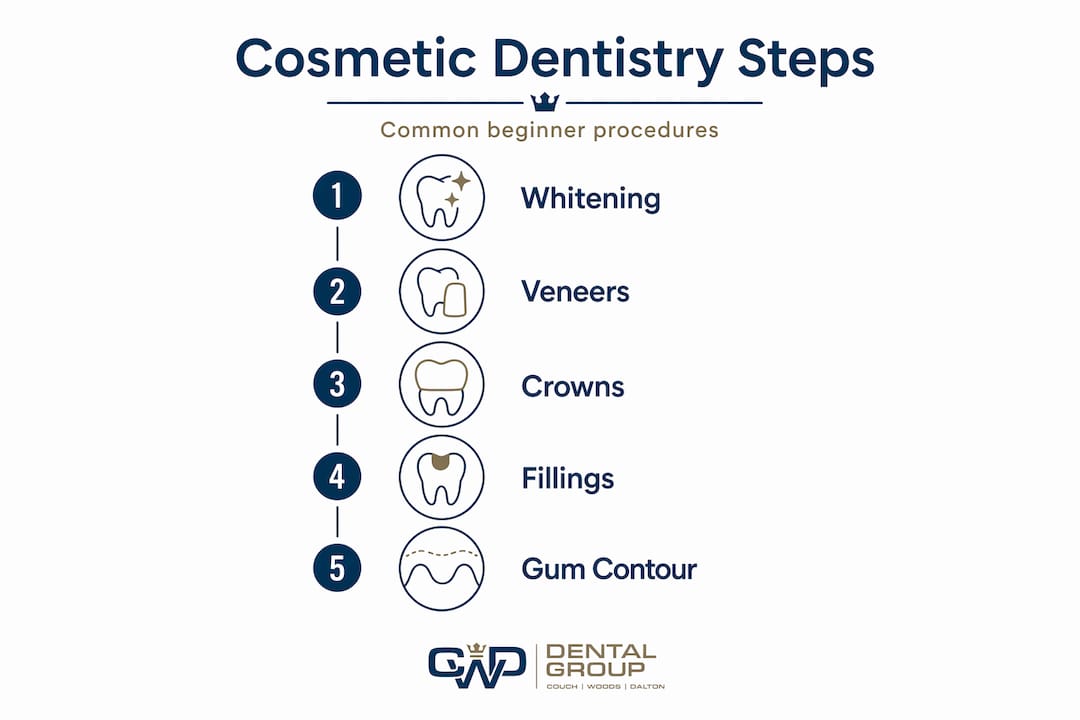
Teeth whitening is the most requested cosmetic treatment. Professional whitening delivers results that over-the-counter strips simply cannot match. In-office treatments use higher-concentration bleaching agents activated by light or heat, producing noticeable changes in a single appointment.
Porcelain veneers are thin shells bonded to the front surface of teeth. They correct discoloration, chips, minor misalignment, and gaps. Veneers are a long-term commitment since a small amount of enamel is removed during preparation, but they're among the most transformative procedures available.
Dental crowns cap a damaged or weakened tooth entirely. When made from porcelain or ceramic, they blend with surrounding teeth while restoring full function. Crowns are one of the clearest examples of cosmetic and restorative dentistry working together.
Composite fillings replace old metal amalgam fillings with tooth-colored resin. The result is a natural look without the gray shadow that metal fillings cast through enamel. They bond directly to the tooth, which often requires less drilling than traditional fillings.
Gum contouring reshapes the gum line to correct a "gummy" smile or uneven tissue. Laser-assisted gum contouring offers reduced recovery time and higher precision than traditional surgical methods. The laser seals tissue as it works, which minimizes bleeding and speeds healing.
BOTOX is newer to dental offices but increasingly common. Dental BOTOX manages jaw tension and reduces gummy smiles by relaxing the muscles that pull the upper lip too high. It also treats bruxism, the habit of grinding teeth, by reducing the force of jaw muscle contractions.
Here's a quick comparison of the most common procedures by purpose and recovery time:
| Procedure | Primary goal | Typical recovery |
|---|---|---|
| Teeth whitening | Brighten stained enamel | None |
| Porcelain veneers | Reshape and recolor teeth | 1 to 2 weeks sensitivity |
| Dental crowns | Restore and protect damaged teeth | 1 to 2 weeks |
| Composite fillings | Replace metal fillings naturally | Minimal |
| Gum contouring | Reshape uneven gum tissue | 1 to 2 weeks |
| BOTOX | Reduce jaw tension and gummy smiles | Minimal |
Digital imaging and laser technology have changed how precisely these procedures are planned and executed. Digital scans replace messy impressions. Computer-aided design lets dentists preview results before a single instrument touches your tooth.
Pro Tip: Ask your dentist to show you a digital preview or mock-up before committing to veneers or gum contouring. Seeing the planned result helps you set realistic expectations and make adjustments before treatment begins.
Benefits of cosmetic dentistry beyond appearance
The benefits of cosmetic dentistry go well past what you see in the mirror. This is the section that surprises most people who come in thinking they just want whiter teeth.
Cosmetic treatments improve oral function by straightening teeth, repairing chips and cracks, and reshaping gums to reduce bacteria-prone areas. That's a direct contribution to long-term dental health, not just aesthetics.
Here's what patients consistently report after cosmetic treatment:
- Improved confidence in social settings. People smile more freely when they're not self-conscious about their teeth. That shift affects job interviews, first dates, and everyday conversations.
- Better oral hygiene habits. Patients who invest in cosmetic work tend to take better care of their teeth afterward. The investment creates motivation.
- Easier cleaning. Straighter teeth and reshaped gums eliminate the tight angles and pockets where plaque builds up fastest.
- Protection from further damage. Veneers and crowns seal cracked or weakened enamel, preventing decay from reaching the inner tooth structure.
- Reduced jaw pain. BOTOX and bite correction procedures address grinding and misalignment that cause chronic headaches and jaw soreness.
- Psychological relief. Studies link smile satisfaction to measurable reductions in social anxiety. For people who've hidden their teeth for years, the psychological shift after treatment can be significant.
The functional angle matters most when you're evaluating whether a procedure is worth pursuing. A veneer that covers a crack also prevents that crack from deepening. Gum contouring that improves your smile line also removes tissue that was trapping bacteria. These aren't side benefits. They're core reasons to consider treatment.
What to consider before starting cosmetic treatment
Getting cosmetic work done without the right preparation leads to disappointment. Here's how to approach it the right way.
1. Choose a qualified provider. Cosmetic dentists with specific training and experience in aesthetic procedures deliver better outcomes. Ask about their credentials, how many similar procedures they've performed, and whether they use digital planning tools.
2. Understand what's covered. Most cosmetic procedures are not covered by dental insurance because they're classified as elective. There are exceptions, such as crowns placed for functional reasons, but you should budget for out-of-pocket costs. Many practices offer financing plans.
3. Know the risks. Veneers require enamel removal, which is permanent. Whitening can cause temporary sensitivity. Poorly placed crowns can affect your bite. Understanding what can go wrong helps you ask the right questions and choose a provider who addresses those risks directly.
4. Ask the right questions during your consultation. Before committing, ask your dentist these specifics:
- How many times have you performed this procedure?
- What does the recovery look like for my specific case?
- Can I see before-and-after photos of similar patients?
- What happens if I'm not satisfied with the result?
5. Set realistic expectations. Cosmetic dentistry can produce dramatic results, but it works within the limits of your existing anatomy. A good provider will tell you what's achievable and what isn't, rather than promising outcomes they can't deliver.
Pro Tip: Finding a qualified cosmetic dentist near you is easier when you search specifically for providers who list cosmetic training alongside their general credentials. Membership in organizations like the American Academy of Cosmetic Dentistry is a useful signal.
My take on where cosmetic dentistry is heading
I've watched cosmetic dentistry shift from a niche service to a central part of modern dental care over the past decade. What strikes me most isn't the technology, though the precision of digital imaging and laser tools is genuinely impressive. It's the change in how patients think about their mouths.
People used to come in asking for whiter teeth. Now they come in asking how their smile fits their face. That's a different conversation, and it reflects how the field has matured. BOTOX integrated into dental care for facial harmony isn't a trend. It's a recognition that the mouth doesn't exist in isolation. Jaw tension, lip position, and facial symmetry all interact with dental aesthetics in ways that a teeth-only approach misses.
What I've learned from observing patient outcomes is that the practices with the best results are the ones that customize aggressively. They don't have a standard veneer case. They have your veneer case, planned around your face shape, skin tone, and bite pattern. That level of personalization is what separates genuinely good cosmetic dentistry from work that looks fine in photos but feels wrong in person.
Managing expectations honestly is the other piece. Patients who understand what a procedure can and cannot do are almost always more satisfied than those who arrive with an idealized outcome in mind. The best cosmetic dentists spend as much time on that conversation as they do on the technical planning.
— Kayle
See what Cwddentalgroup can do for your smile

Cwddentalgroup brings together cosmetic expertise and patient-centered care in Tallahassee, offering treatments from professional whitening and veneers to gum contouring and BOTOX. The team uses advanced technology to plan every procedure with precision, and same-day appointments mean you're never waiting when something urgent comes up. Whether you're exploring cosmetic options for the first time or ready to move forward with a specific treatment, the process starts with a conversation. Schedule your visit to talk through your goals with a provider who takes the time to get the details right. And if you're dealing with a dental issue that needs attention now, Cwddentalgroup's emergency dental care in Tallahassee is available when you need it most.
FAQ
What is cosmetic dentistry in simple terms?
Cosmetic dentistry is a branch of dental care focused on improving the appearance of your teeth, gums, and smile. Many procedures also deliver functional health benefits, such as easier cleaning and protection from further tooth damage.
What are the most common cosmetic dental procedures?
The most common cosmetic dental procedures include teeth whitening, porcelain veneers, dental crowns, composite fillings, gum contouring, and BOTOX. Each addresses different aesthetic and functional concerns.
Does cosmetic dentistry improve oral health?
Yes. Many cosmetic treatments strengthen enamel, reduce bacteria-prone areas, and correct structural issues that contribute to decay. The health benefits are often as significant as the aesthetic improvements.
How much does cosmetic dentistry cost?
Costs vary widely by procedure and provider. Most cosmetic treatments are not covered by insurance, so out-of-pocket expenses are common. Many dental practices offer financing to make treatment more accessible.
How do I choose a good cosmetic dentist?
Look for a dentist with specific cosmetic training, documented experience with your desired procedure, and the use of digital planning tools. Reviewing before-and-after photos and asking detailed questions during a consultation are the most reliable ways to evaluate a provider.
Recommended
- Cosmetic dental procedures: Top 7 for a Radiant Smile — CWD Dental Group
- Don't Just Wish for a Good Cosmetic Dentist, Find One: Your Local Search Made Easy — CWD Dental Group
- Cosmetic and Advanced Dentistry: Unlock Your Perfect Smile 2025 — CWD Dental Group
- Advanced Cosmetic & Family Dentistry: 2025 Future Smile — CWD Dental Group