
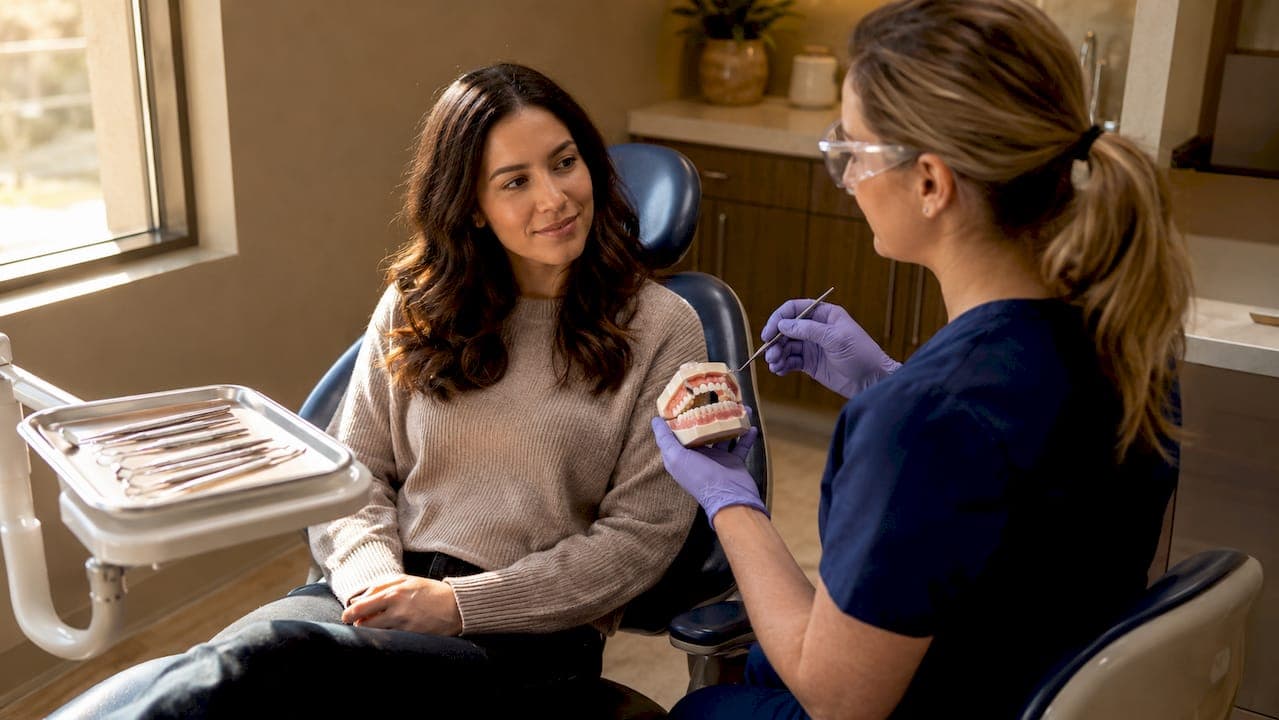
Cosmetic dentistry improves bite function by reshaping, aligning, and restoring teeth to create balanced occlusal forces across your entire mouth. Most people associate cosmetic procedures with aesthetics alone, but the clinical reality is that veneers, dental crowns, clear aligners like Invisalign, and bonding all directly influence how your upper and lower teeth meet. That contact point, called occlusion, governs everything from chewing efficiency to jaw muscle strain. Understanding how cosmetic dentistry improves bite mechanics gives you a clearer picture of what these procedures can and cannot do, and why a thorough bite evaluation belongs at the start of any treatment plan.
How cosmetic dentistry improves bite alignment and function
Cosmetic dentistry corrects bite problems by modifying tooth shape, height, and position so that upper and lower teeth meet evenly under chewing forces. This is not a secondary benefit. It is a core function of well-planned restorative and cosmetic work. When teeth are uneven, worn, or misaligned, certain teeth absorb far more pressure than they should. Over time, that imbalance causes accelerated wear, muscle fatigue, and joint strain.
The range of cosmetic procedures available today addresses bite issues at different levels of severity. Veneers add or remove surface material to change how teeth contact each other. Crowns rebuild tooth height lost to wear or decay. Clear aligners physically move teeth into better positions. Bonding fills gaps and reshapes edges that create uneven contact. Each of these tools, used correctly, contributes to what dentists call a stable occlusion.
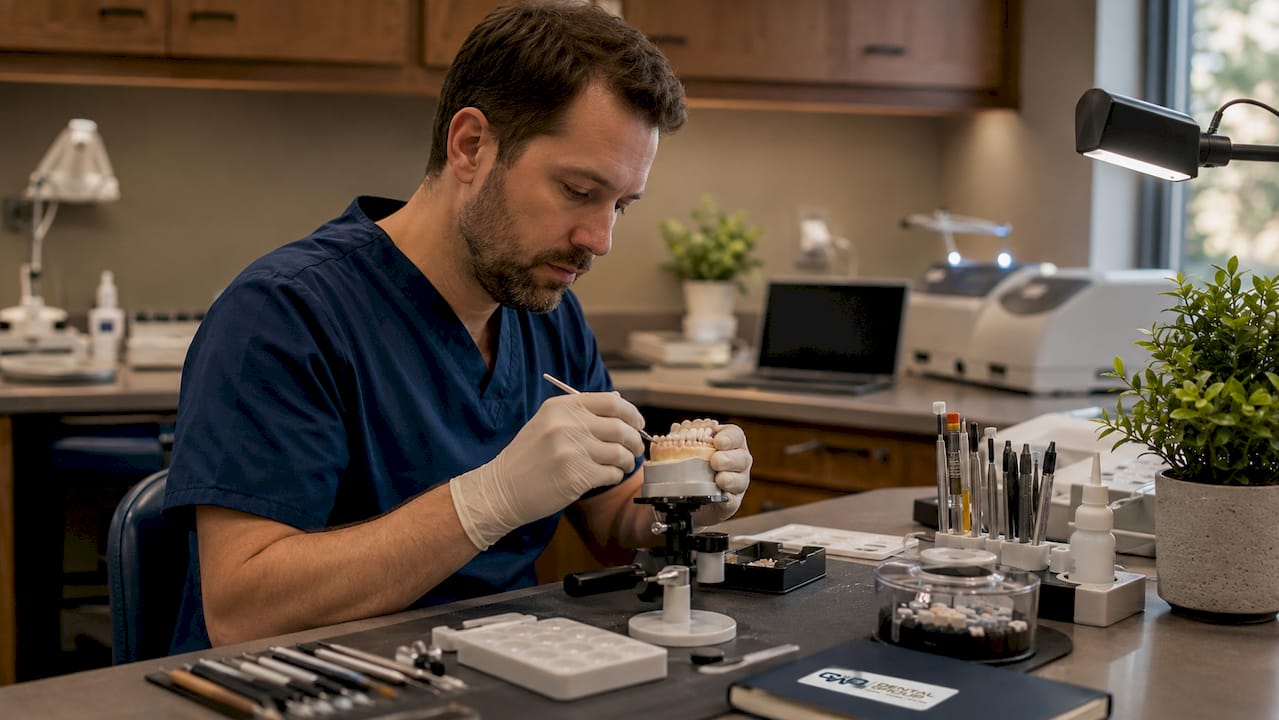
Bite evaluation is not optional in this process. A dentist who skips functional analysis before placing cosmetic restorations is setting the work up to fail. The evaluation maps how your jaw moves during speaking and chewing, identifies high-pressure contact points, and determines whether cosmetic work alone can solve the problem or whether orthodontic movement is needed first.
Which bite problems can cosmetic dentistry effectively address?
Bite problems affect 60 to 70 percent of the general population, making them far more common than most patients realize. That prevalence matters because it means a large share of people seeking cosmetic improvements already have some degree of bite imbalance, whether they know it or not.
Cosmetic dentistry handles a specific range of bite issues well:
- Minor crowding and spacing. Small gaps or slight overlaps that affect how teeth meet can be corrected with veneers, bonding, or clear aligners without full orthodontic treatment.
- Uneven tooth wear. Years of grinding or an imbalanced bite erode tooth surfaces unevenly. Crowns and veneers restore lost height and reestablish proper contact.
- Bite height loss. When back teeth wear down, the front teeth take on more force than they are designed to handle. Rebuilding posterior height with crowns redistributes that load correctly.
- Edge irregularities. Chipped or jagged tooth edges create uneven contact points. Bonding and contouring smooth these out and restore balanced occlusion.
Cosmetic dentistry is not the right tool for severe skeletal misalignments, significant jaw discrepancies, or complex malocclusions like a pronounced underbite or crossbite. Those cases require orthodontics, orthopedic appliances, or in some situations, surgical correction. A skilled dentist will tell you clearly which category your bite falls into before recommending any cosmetic work.
What cosmetic treatments are used to correct bite problems?
The table below compares the primary cosmetic procedures used to improve bite function, showing what each one corrects and its typical treatment timeline.
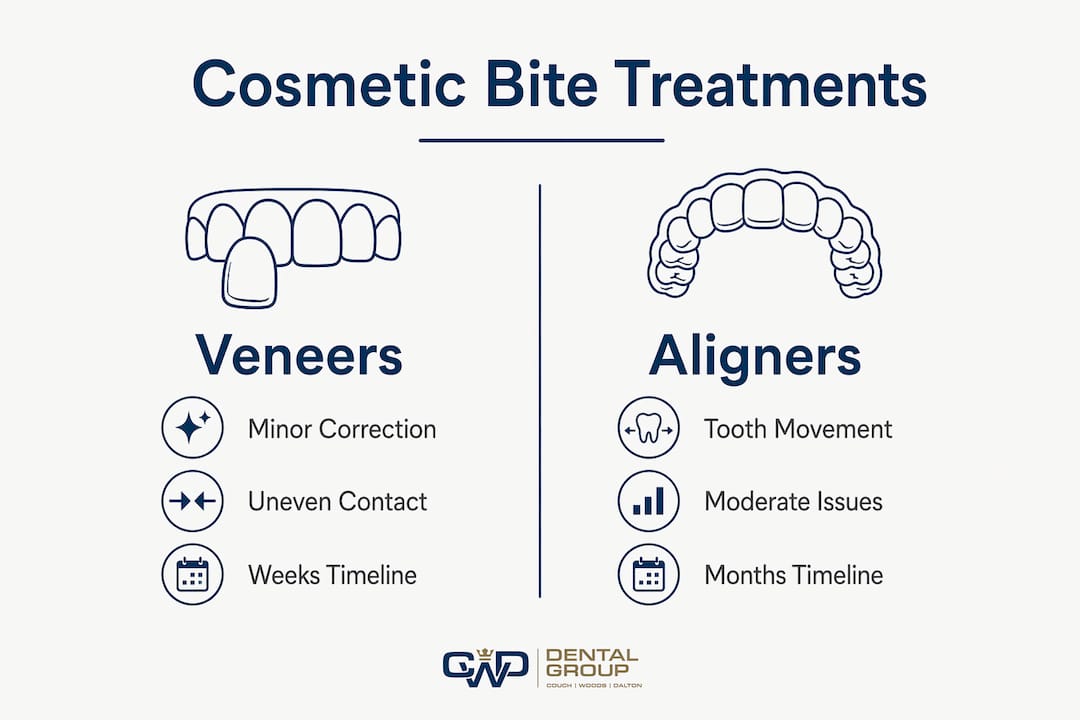
| Treatment | Bite problem addressed | Typical timeline |
|---|---|---|
| Dental veneers | Uneven contact, minor misalignment, worn edges | 2 to 3 appointments |
| Dental crowns | Lost tooth height, structural damage, severe wear | 2 appointments |
| Invisalign clear aligners | Crowding, spacing, mild to moderate misalignment | 6 to 18 months |
| Dental bonding | Edge irregularities, small gaps, minor reshaping | 1 appointment |
| Combination therapy | Complex cases needing alignment then restoration | Variable |
Dental veneers work by adding a thin layer of porcelain to the front surface of a tooth, which changes its shape and the angle at which it contacts opposing teeth. This is precise work. Dentists use thin colored bite paper to identify high-pressure contact points, then adjust by fractions of a millimeter to distribute forces evenly. That level of precision is what separates a veneer that lasts 15 years from one that chips within three.
Dental crowns are the stronger option when a tooth has lost significant height or structural integrity. A crown encases the entire visible portion of the tooth, rebuilding it to the correct height and shape. This is particularly effective for patients whose back teeth have worn down from grinding, because restoring posterior height takes pressure off the front teeth.
Clear aligners like Invisalign address the root cause of many bite problems by physically moving teeth into better positions before any restorative work is placed. Combining Invisalign with veneers or crowns is a common approach for patients who need both alignment correction and surface restoration.
Pro Tip: If your dentist recommends veneers without first discussing your bite, ask specifically about envelope of function testing. That single question will tell you a great deal about the quality of care you are receiving.
Why bite evaluation must come before cosmetic work
Over 70 percent of cosmetic consultations skip evaluation of the envelope of function, which maps how the jaw moves during speaking and chewing. That omission is the leading cause of veneer fractures and debonding within three to five years of placement. Skipping this step does not save time. It transfers the cost of failure onto the patient.
The risks of bypassing bite evaluation include:
- Veneer fractures from concentrated lateral stress on an unstable bite
- Debonding caused by forces the adhesive was not designed to handle
- TMJ strain from restorations that alter jaw position without accounting for joint health
- Accelerated wear on opposing natural teeth that now contact restorations at the wrong angle
"Cosmetic dentistry should work within a stable bite. It cannot create a stable bite alone. Patients with jaw instability require stabilization first." — Bite problems and cosmetic dentistry
Functional dentistry experts recommend a stabilization phase using custom therapeutic orthotics before any cosmetic reshaping in patients with active jaw pain or instability. Therapeutic orthotics differ from standard night guards. They are designed to guide the jaw to a healthy, repeatable position, calming the neuromuscular system so the dentist can plan restorations accurately.
Diagnostic wax-ups are another critical planning tool. A wax-up is a physical or digital model of the planned restorations built on a cast of your actual teeth. It shows whether veneers or crowns can achieve the desired result without removing excessive tooth structure, and it reveals when orthodontic movement is needed before cosmetic work begins. Skipping this step is how patients end up with restorations that look good in photos but fail functionally within a few years.
What are the functional and aesthetic benefits of bite correction?
When bite correction is done well, the benefits extend well beyond appearance. Here is what patients consistently experience after cosmetic dentistry that properly addresses occlusal balance:
- Even force distribution. Balanced bite forces reduce wear on individual teeth and prevent the kind of localized damage that leads to fractures and expensive repairs down the line.
- Reduced TMJ discomfort. Balanced bite forces after cosmetic dentistry reduce joint strain and TMJ discomfort, supporting long-term oral health in ways that purely aesthetic work cannot.
- Improved chewing efficiency. Teeth that meet correctly grind food more effectively, which reduces digestive strain and makes eating more comfortable.
- Clearer speech. Tooth position affects how certain sounds are formed. Correcting alignment often resolves subtle speech issues patients had not connected to their bite.
- Greater self-confidence. 85 to 90 percent of patients report improved self-confidence and long-term oral stability after cosmetic procedures that correct bite imbalances. That figure reflects outcomes when the functional component is addressed alongside aesthetics.
Correcting bite imbalances through cosmetic dentistry also prevents long-term joint strain and TMJ discomfort, converting what looks like a smile makeover into a genuine preventative health measure. That reframing matters for patients who are weighing the investment.
Cosmetic dentistry vs. orthodontics for bite correction
The comparison between cosmetic dentistry and traditional orthodontics for bite correction is not a competition. They solve different problems, and the best outcomes often combine both.
| Factor | Cosmetic dentistry | Traditional orthodontics |
|---|---|---|
| Treatment speed | Weeks to a few months | 12 to 36 months |
| Bite problems addressed | Mild to moderate | Mild to severe |
| Invasiveness | Minimal to moderate tooth preparation | Non-invasive tooth movement |
| Best for | Surface correction, worn teeth, minor gaps | Skeletal misalignment, significant crowding |
| Cost range | Varies by procedure and number of teeth | Varies by case complexity |
Veneers and crowns cannot move teeth. They can only change the shape and height of teeth that are already in a given position. That is a meaningful limitation. If your bite problem stems from teeth being in the wrong location rather than the wrong shape, cosmetic work alone will not fix it and may actually make it worse by adding material to teeth that are already in a problematic position.
Clear aligners occupy a middle ground. Invisalign moves teeth physically, which makes it a functional orthodontic tool, but it is typically used for mild to moderate cases. Severe skeletal discrepancies still require traditional braces or surgical intervention.
Pro Tip: Ask your dentist for a diagnostic wax-up before committing to veneers or crowns. It costs relatively little compared to the restorations themselves and can prevent thousands of dollars in premature failures.
What I've learned about bite-first cosmetic planning
After years of watching patients navigate cosmetic dentistry decisions, the pattern I see most often is this: patients focus entirely on aesthetics, and dentists who want to close a case quickly let them. The result is beautiful work that starts failing within a few years, and a patient who blames the materials rather than the process.
The dentists who consistently produce lasting results share one habit. They treat bite stabilization as non-negotiable before placing any cosmetic restoration. They use diagnostic wax-ups. They test the envelope of function. They refer out for orthodontic movement when the case calls for it rather than trying to compensate with thicker veneers. That discipline is not common, but it is the standard you should hold any provider to.
My honest advice: if a consultation runs 20 minutes and ends with a veneer quote, walk out. A proper cosmetic consultation that accounts for bite takes significantly longer and involves jaw movement analysis, bite paper testing, and a discussion of whether stabilization is needed first. That process protects your investment and your long-term oral health. The confidence and stability patients feel after well-planned cosmetic work is real, but it only comes when the functional foundation is solid.
Patients who push back on the bite evaluation step are, in my experience, the ones who end up back in the chair with chipped veneers two years later. The evaluation is not an upsell. It is the reason the work lasts.
— Kayle
Improve your bite and smile with Cwddentalgroup
Cwddentalgroup offers a full range of cosmetic and restorative dental services in Tallahassee, including veneers, dental crowns, clear aligners, and bonding, all planned around a thorough bite evaluation. The team at Cwddentalgroup prioritizes functional analysis before any cosmetic work begins, so your restorations are built to last and perform correctly from day one. Whether you are dealing with worn teeth, minor misalignment, or simply want a smile that looks and functions better, Cwddentalgroup's patient-centered approach means you get a treatment plan tailored to your specific bite and aesthetic goals. Same-day appointments are available for urgent concerns. Explore cosmetic dentistry services and take the first step toward a bite and smile that work together.
Key takeaways
Cosmetic dentistry improves bite function by restoring tooth height, reshaping contact surfaces, and aligning teeth to distribute occlusal forces evenly across the mouth.
| Point | Details |
|---|---|
| Bite evaluation is non-negotiable | Skipping functional analysis causes veneer fractures and debonding within 3 to 5 years. |
| Veneers and crowns reshape occlusion | These restorations change how teeth contact each other, directly affecting bite balance and force distribution. |
| Clear aligners address root causes | Invisalign moves teeth physically, making it the right tool when misalignment rather than tooth shape is the problem. |
| Stabilization precedes cosmetics | Patients with jaw instability need therapeutic orthotics before cosmetic work to protect the investment. |
| Outcomes extend beyond aesthetics | 85 to 90 percent of patients report improved confidence and long-term oral stability after bite-correcting cosmetic procedures. |
FAQ
Can veneers fix a bad bite?
Veneers can correct mild bite issues caused by uneven tooth surfaces or minor misalignment, but they cannot move teeth. Severe bite problems require orthodontic treatment or surgical correction before veneers are placed.
How long does cosmetic bite correction take?
Treatment time depends on the procedures involved. Bonding and veneers take two to three appointments over a few weeks, while clear aligners like Invisalign typically require six to eighteen months for meaningful bite correction.
What happens if bite issues are not addressed before cosmetic work?
Untreated bite imbalances cause concentrated lateral stress on restorations, leading to chips, cracks, and debonding. Veneers placed on an unstable bite often fail within three to five years rather than lasting fifteen or more.
Is cosmetic dentistry or orthodontics better for bite correction?
The right choice depends on the cause of the bite problem. Cosmetic dentistry works best for surface-level corrections and worn teeth, while orthodontics addresses tooth position. Combining both produces the best outcomes for complex cases.
Does improving bite alignment also improve smile appearance?
Yes. Correcting bite alignment through cosmetic procedures improves both function and aesthetics simultaneously, creating a more harmonious smile while reducing wear, muscle strain, and joint discomfort.