

Cosmetic dental bonding longevity is defined as the expected lifespan of a tooth-colored composite resin restoration applied to improve a tooth's shape, color, or structure. Understanding what is cosmetic dental bonding longevity matters because the procedure lasts between 3 and 10 years, averaging 5–7 years before touch-ups become necessary. That range is wide for a reason. Tooth location, daily habits, and aftercare routines all push the number up or down. Modern composite materials have improved durability significantly, but bonding remains a semi-permanent solution. It is reversible, conservative, and well-suited for patients who want cosmetic improvement without permanent tooth alteration.
What is cosmetic dental bonding longevity, and what drives it?
Cosmetic dental bonding longevity describes how long a direct composite resin restoration holds its shape, color, and bond to the tooth surface before needing repair or replacement. Clinical studies report survival rates of 80–90% for direct composite restorations, which is a strong baseline for a procedure completed in a single visit. Front teeth consistently outlast back teeth because they absorb less chewing force.
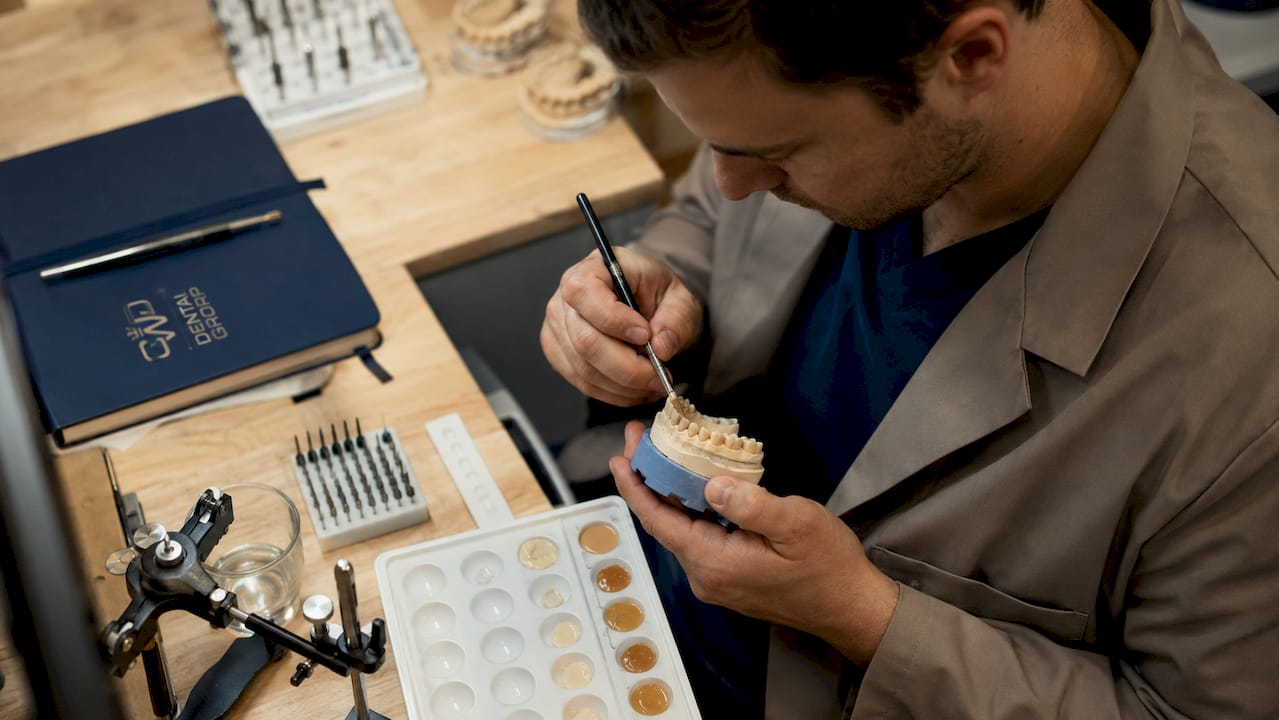
The procedure itself takes 30–90 minutes per tooth and involves sculpting composite resin directly onto the tooth surface, then hardening it with a blue curing light. No laboratory work is required. That speed and simplicity make bonding one of the most accessible cosmetic dental procedures available today.
Bonding is not permanent. Patients who understand this from the start make better decisions about care and timing. The goal is to maximize the lifespan through smart habits, not to treat it as a one-time fix.
What factors influence the lifespan of cosmetic dental bonding?
Several variables determine whether your bonding lasts three years or ten. Some are within your control. Others depend on the skill of the dental professional placing the restoration.
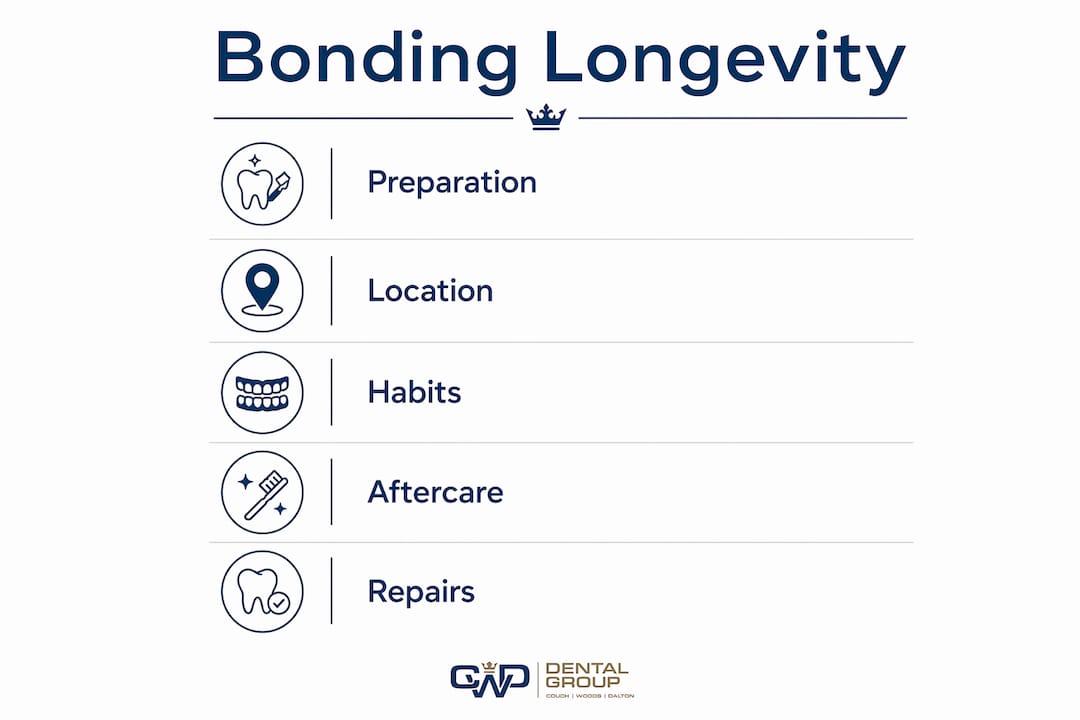
Tooth location and bite force play the biggest role. Bonding on front teeth faces less grinding pressure than bonding on molars. Back teeth absorb the full force of chewing, which accelerates wear and increases the risk of chipping.
Oral habits are the most common cause of early failure. Biting nails, chewing ice, opening packages with your teeth, or grinding during sleep all stress the resin. Edge-to-edge biting habits can reduce bonding longevity by up to 40%, which is a significant reduction for a procedure that already has a finite lifespan.
Diet also matters. Coffee, tea, red wine, and dark berries stain composite resin faster than natural enamel. Hard foods like crusty bread, raw carrots, and hard candy create micro-fractures over time.
Professional technique is a factor patients often overlook. Proper light curing and isolation during placement preserve bond strength and shape. Failures within 12 months frequently trace back to poor technique rather than patient behavior.
- Avoid biting hard objects, ice, or fingernails
- Limit staining beverages, especially in the first 48 hours after placement
- Wear a night guard if you grind or clench your teeth
- Schedule professional cleanings every six months
- Ask your dentist to use composite-safe polishing tools
Pro Tip: Request that your dentist use a rubber dam or isolation technique during bonding placement. Better isolation during curing produces a stronger bond and a longer-lasting result.
How does dental bonding compare to other cosmetic treatments in longevity?
Bonding occupies a specific position in the cosmetic dentistry spectrum. It is less durable than veneers or crowns but far more conservative and easier to repair. Understanding where it sits helps you decide whether it fits your goals.
| Treatment | Typical lifespan | Enamel removal | Repairability |
|---|---|---|---|
| Composite bonding | 3–10 years | Minimal | Easy, same visit |
| Porcelain veneers | 10–20 years | Moderate | Requires lab work |
| Dental crowns | 10–15+ years | Significant | Replacement needed |
| Dental implants | Decades | N/A (replaces tooth) | Complex |
Bonding lasts 4–10 years compared to veneers at 10–20 years, but bonding allows color adjustment and repair without major tooth alteration. That reversibility is a genuine advantage. Veneers require removing a thin layer of enamel, which is a permanent change. Bonding does not. If your cosmetic goals shift, bonding can be adjusted, replaced, or removed without compromising the underlying tooth structure.
For patients who want to test a cosmetic change before committing to veneers, bonding serves as a lower-stakes starting point. The cosmetic dental bonding lifespan is shorter, but the cost and commitment are also lower. That trade-off suits many patients well, particularly those making minor corrections to chipped, gapped, or discolored teeth.
Cost is another differentiator. Bonding typically costs $300–$600 per tooth. Veneers run significantly higher and require multiple visits. For patients prioritizing budget and reversibility, bonding delivers strong value within its lifespan.
What aftercare and maintenance practices maximize cosmetic dental bonding longevity?
Aftercare is the single biggest variable you control. Patients who follow a consistent maintenance routine extend their bonding lifespan well beyond the average. Patient compliance with aftercare instructions correlates directly with fewer repairs and longer-lasting results.
- Avoid biting hard objects. Ice, pen caps, hard candy, and fingernails all create stress fractures in composite resin. This is the most common cause of early chipping.
- Use a night guard. Grinding and clenching during sleep generate more force than normal chewing. A custom night guard from your dentist protects bonding from this sustained pressure.
- Limit staining foods and drinks. Coffee, tea, and red wine discolor composite resin over time. Rinsing with water after consuming these beverages slows staining. Avoid them entirely for the first 48 hours after placement.
- Schedule professional cleanings every six months. Regular cleanings remove buildup that can degrade the bond at the resin-tooth margin. Ask your hygienist to note that you have bonded teeth before they begin.
- Request composite-safe polishing. Ultrasonic scalers and harsh air abrasives damage composite resin surfaces. Professional polishing with the right tools preserves the surface finish and extends the aesthetic life of the restoration.
- Brush gently with a non-abrasive toothpaste. Whitening toothpastes with abrasive particles scratch composite resin and accelerate surface dulling.
Pro Tip: Ask your dentist to re-polish your bonding at each checkup visit. This takes only a few minutes and restores surface luster, which keeps the restoration looking fresh between replacements.
For patients who want a broader picture of maintaining cosmetic dental results, teeth whitening maintenance follows many of the same principles, particularly around staining foods and professional care intervals.
When and why do cosmetic dental bonding repairs become necessary?
Bonding does not fail all at once. It degrades gradually, and knowing the warning signs helps you act before a minor issue becomes a full replacement.
Common reasons for repair include:
- Chipping or fracturing at the edges, often from biting hard objects
- Surface staining that polishing cannot fully reverse
- Roughness or texture changes indicating surface wear
- Visible gaps forming between the resin and the tooth margin
- Color mismatch as the resin ages and the surrounding tooth changes
Minor touch-ups typically become necessary within 3–5 years. Full replacements are more common at the 5–10 year mark. Approximately 12% of patients require repair within 12 months, usually due to edge biting habits or placement issues. That figure drops sharply for patients who follow aftercare guidance consistently.
Repair is straightforward. A dentist adds new composite resin to the affected area, shapes it, and cures it in the same visit. Full replacement follows the same process as the original placement. Neither procedure requires anesthesia in most cases, and neither permanently alters the tooth. That ease of repair is one of the genuine advantages of dental bonding compared to more permanent restorations.
Regular checkups are the best early-warning system. A dentist who monitors your bonding at each visit catches edge gaps and surface wear before they escalate. Patients who skip checkups often arrive with damage that requires full replacement rather than a simple touch-up.
Key takeaways
Cosmetic dental bonding lasts 3–10 years on average, and proper aftercare, professional technique, and consistent monitoring are the three factors that push results toward the longer end of that range.
| Point | Details |
|---|---|
| Typical lifespan | Bonding lasts 3–10 years, averaging 5–7 years before repairs are needed. |
| Biggest risk factor | Edge biting and grinding can reduce bonding longevity by up to 40%. |
| Aftercare priority | Avoid hard objects, limit staining drinks, and use a night guard to extend lifespan. |
| Professional cleaning | Request composite-safe polishing tools at every cleaning to protect the surface. |
| Repair is easy | Minor chips and gaps are repaired in a single visit without altering the tooth. |
What I've learned about setting realistic expectations for bonding
Patients often arrive expecting bonding to behave like a veneer. It does not, and that gap in expectations causes more disappointment than the procedure itself ever would.
Bonding is best understood as a maintainable, semi-permanent solution. Think of it like a quality paint job on a house. It looks great, protects what is underneath, and lasts for years with care. But it will need refreshing. That is not a flaw. That is the nature of the material.
What surprises me most is how much patient behavior drives outcomes. Modern composites achieve 87% color stability after five years, which is genuinely impressive. Yet I see patients undo that durability within 18 months by chewing ice or skipping cleanings. The material is not the weak link. Habits are.
The patients who get the most from bonding are the ones who treat it as a partnership with their dentist. They show up for checkups, they ask questions, and they follow through on aftercare. Patients report 91% satisfaction at 12 months when technique and aftercare are both strong. That number tells you the procedure works. What it does not tell you is that the patient did their part too.
My advice: go into bonding with clear eyes. Ask your dentist what to expect at your specific tooth location. Ask about your grinding risk. Get a night guard if there is any doubt. And schedule your follow-up before you leave the office. The patients who do those things consistently get results that last.
— Kayle
Cosmetic bonding care at Cwddentalgroup
Cwddentalgroup offers cosmetic dental bonding with the kind of attention to technique and aftercare that directly affects how long your results last. The team in Tallahassee walks every patient through a personalized care plan before and after placement, covering everything from diet adjustments to night guard recommendations.

Same-day appointments mean you are not waiting weeks to address a chip or surface change. Whether you need a first-time consultation, a touch-up, or a full replacement, Cwddentalgroup's team handles it in one visit whenever possible. You can also reach out to their dental care team for urgent bonding concerns. Ready to get started? Schedule a visit and get a personalized cosmetic plan built around your goals and timeline.
FAQ
How long does dental bonding last on average?
Dental bonding lasts between 3 and 10 years, with most patients averaging 5–7 years before needing touch-ups or replacement. Front teeth typically outlast back teeth due to lower bite force.
Is dental bonding permanent?
Dental bonding is not permanent. It is a reversible, semi-permanent procedure that preserves natural enamel and can be repaired, adjusted, or removed without permanently altering the tooth.
What habits shorten cosmetic dental bonding lifespan?
Biting hard objects, chewing ice, grinding teeth, and consuming staining beverages regularly are the most common habits that shorten bonding lifespan. These behaviors can reduce longevity by up to 40%.
How do I know when my bonding needs repair?
Signs include visible chipping at the edges, surface roughness, staining that polishing cannot remove, or a gap forming between the resin and the tooth. Your dentist can spot early wear at routine checkups before it requires full replacement.
Does dental bonding require special cleaning at the dentist?
Bonded teeth need composite-safe cleaning tools. Ultrasonic scalers and abrasive air polishers damage the resin surface, so always inform your hygienist that you have bonded teeth before your cleaning begins.