

Cosmetic dentistry financing options are structured payment solutions that let patients spread the cost of elective dental procedures over time instead of paying everything upfront. Cosmetic dentistry is almost never covered by insurance, which means the full financial burden lands on you. Treatments range from roughly $1,800 for mild Invisalign cases to over $40,000 for full-mouth implant restorations. Understanding your financing options before you sit in the chair is the difference between getting the smile you want and walking away because the price shocked you. This cosmetic dentistry financing options guide covers every major payment path, the traps to avoid, and how to match the right plan to your specific procedure.
What are the common financing options for cosmetic dentistry?
Dental financing plans fall into four main categories: third-party financing providers, in-house dental office plans, personal loans or lines of credit, and credit cards. Each works differently depending on your credit profile, the size of your treatment, and how fast you want to pay it off.
Third-party financing providers
Third-party platforms like CareCredit and Sunbit connect patients with lenders who specialize in healthcare costs. Sunbit approves up to 87% of applicants with credit scores as low as 500. That approval rate is unusually high for any lending product, which makes third-party platforms the go-to option for patients who have been turned down elsewhere. Terms typically run 6–60 months, and promotional zero-percent periods are common on shorter plans.
In-house dental office payment plans
In-house plans are arranged directly with your dental practice. These plans generally require a 25–50% down payment and usually skip the credit check entirely. Short-term in-house plans commonly span 2–6 months. Longer plans covering 6–12 months require higher down payments and may carry a small finance fee. Auto-pay enrollment is almost always required.

Personal loans and lines of credit
Bank and credit union personal loans work well for mid-range to large procedures. Personal lines of credit in 2026 often carry rates of 6.5%–12.5% depending on your credit profile. That range is lower than most credit cards and far lower than deferred-interest financing gone wrong. Personal loans also give you a fixed monthly payment, which makes budgeting straightforward.
Credit cards and healthcare credit cards
Standard credit cards are best for smaller procedures. Costs in the $500–$1,200 range fit well with cards that offer grace periods, letting you avoid interest entirely if you pay in full each month. Healthcare-specific credit cards offer promotional zero-percent periods but carry the deferred-interest risk covered in detail below.
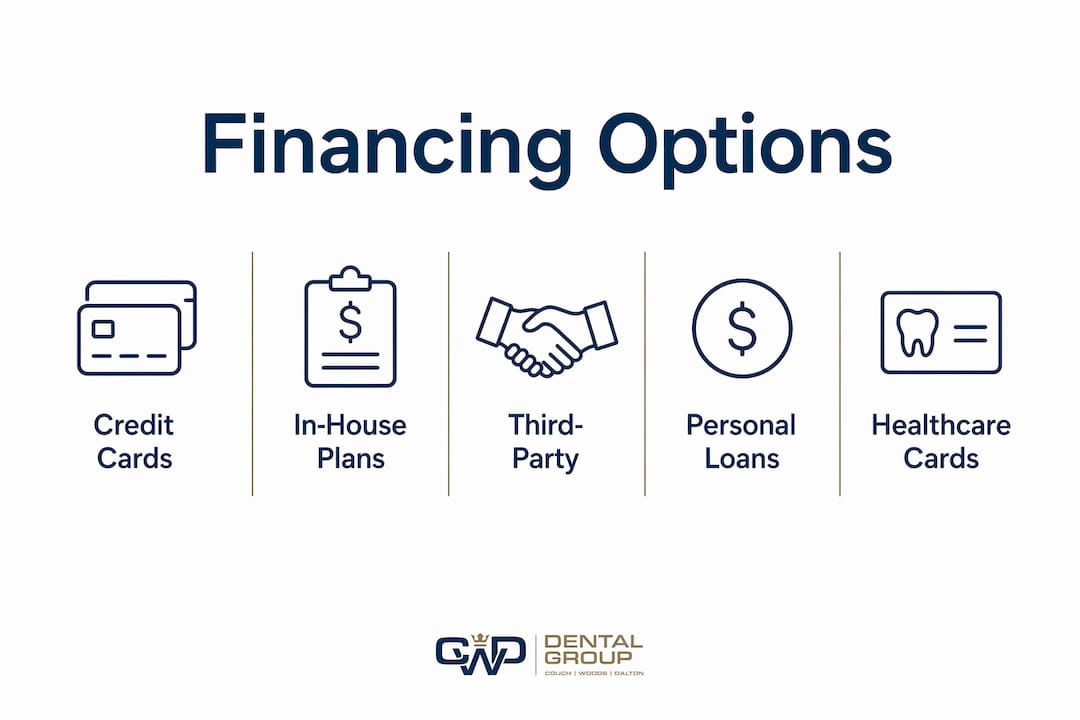
| Financing type | Typical APR | Credit check | Best for |
|---|---|---|---|
| Third-party provider | 0%–29.99% promo/standard | Yes, flexible | Mid to large procedures |
| In-house office plan | 0%–low fee | Usually none | Smaller or declined cases |
| Personal loan | 6.5%–20% | Yes, standard | Large, single-phase treatments |
| Credit card | 0% promo / 20%+ standard | Yes | Small procedures under $1,500 |
How do you match financing to your procedure and budget?
The right financing plan depends on what procedure you are getting and what the total treatment will actually cost, not just the headline price.
Procedure cost ranges and what they mean for financing
A single dental implant runs $3,000–$6,000. A full arch All-on-4 implant restoration costs $20,000–$30,000 per arch. Porcelain veneers typically fall in the $1,000–$2,500 per tooth range, and a full smile makeover can easily exceed $15,000. Cosmetic treatments often cost 10–20% more than initial estimates once you add exams, temporary restorations, digital imaging, and follow-up visits. That gap matters when you are choosing a loan amount or setting up a payment plan.
Pro Tip: Ask your dental office for a comprehensive fee quote that itemizes every phase of treatment before you apply for financing. A quote that only covers the final restoration will leave you short.
Matching procedure complexity to financing type
| Procedure | Estimated cost | Recommended financing approach |
|---|---|---|
| Invisalign (mild case) | $1,800–$4,000 | In-house plan or healthcare credit card |
| Porcelain veneers (4–6 teeth) | $4,000–$15,000 | Third-party provider or personal loan |
| Single implant | $3,000–$6,000 | Personal loan or third-party provider |
| Full-arch implants (All-on-4) | $20,000–$30,000 per arch | Layered financing: personal loan plus third-party |
| Smile makeover | $15,000–$40,000+ | Layered financing across multiple plan types |
Staged treatments like implants or full smile makeovers require financing that covers the entire treatment timeline, not just the final restoration. Financing that covers all treatment phases reduces payment surprises and aligns with the reality of multi-appointment procedures. Choosing a loan term shorter than your treatment timeline creates a cash flow problem mid-procedure. Match the loan length to the full treatment calendar, not just the first appointment.
The benefits of aesthetic dental treatments are well documented, from improved confidence to measurable oral health gains. Understanding the full scope of those benefits helps you decide whether a larger financing commitment makes sense for your situation.
What are the key pitfalls in cosmetic dentistry financing?
Most financing mistakes come down to three problems: misunderstanding interest terms, underestimating total costs, and choosing a plan that does not fit the full treatment timeline.
The deferred-interest trap
Deferred interest is the most dangerous feature in cosmetic dental loans. Promotional financing can charge retroactive interest on the original purchase amount if you miss the payoff deadline, not just on the remaining balance. Typical promotional periods run 6–24 months. Miss the deadline by even one day and you may owe interest at 20–30% APR calculated back to day one of the loan. That can add hundreds or thousands of dollars to your bill.
"Zero-percent deferred-interest offers require strict adherence to payment deadlines. Failure to pay in full on time leads to retroactive interest, often at high APRs, applying to the entire purchase amount, not just the outstanding balance."
Pro Tip: Set a calendar reminder 60 days before your promotional period ends. That gives you time to pay off the balance or transfer it to a lower-rate option before retroactive interest kicks in.
Hidden vendor fees and cash discounts
Dental offices pay a vendor fee of 5–14% to process third-party financing. That cost often gets built into procedure pricing. Paying cash or using an in-house plan can sometimes unlock a discount because the practice saves on processing fees. Ask your dental office directly whether a cash or in-house plan discount is available. Not every practice offers one, but many will negotiate when asked.
Underestimating total treatment costs
Patients frequently underestimate total treatment costs because financing quotes often cover only the restoration phase. Temporaries, adjustments, digital scans, and retainer maintenance add 10–20% to the overall cost. Budget for the full number, not the promotional headline.
- Always request a written, itemized quote covering every treatment phase.
- Confirm whether your financing covers preparatory procedures like bone grafts or gum contouring.
- Ask about auto-pay requirements and whether missing a payment triggers a penalty rate.
- Clarify whether treatment delays affect your payment schedule or loan terms.
How do you apply and manage cosmetic dentistry financing successfully?
Getting approved is only the first step. Managing the plan through a multi-month or multi-year treatment takes equal attention.
- Request a comprehensive fee quote. Get every cost in writing before you apply for any financing. Total treatment fees can run 10–20% higher than phase-one estimates.
- Check your credit before applying. Third-party providers like Sunbit approve applicants with scores as low as 500, but better scores unlock lower rates. Pull your credit report and dispute any errors before you apply.
- Prepare your down payment. In-house plans require 25–50% upfront. Have that cash ready before your first appointment so treatment is not delayed.
- Set up auto-pay from day one. Most in-house and third-party plans require it. Setting it up immediately prevents missed payments that could trigger penalty rates.
- Monitor your balance monthly. Track your payoff progress against your promotional period deadline. If you are behind pace, increase your monthly payment or arrange a balance transfer.
- Plan for treatment delays. Implants and staged procedures sometimes require healing time between phases. Confirm with your lender how a delay affects your payment schedule.
Pro Tip: Use a layered financing approach for large treatments. Cover the preparatory phase with an in-house plan and the main restoration with a third-party provider. Layered financing strategies improve approval odds and keep monthly payments manageable across the full treatment.
For a broader look at how to plan dental spending across your household, the dental care budget planning guide from Cwddentalgroup breaks down annual cost management strategies that work alongside any financing plan.
Key Takeaways
Matching your financing plan to the full cost and timeline of your cosmetic dental treatment is the single most effective way to avoid financial surprises and keep monthly payments manageable.
| Point | Details |
|---|---|
| Know your total cost | Request an itemized quote covering all phases, not just the final restoration. |
| Match plan to procedure size | Small procedures fit credit cards; large treatments need personal loans or layered plans. |
| Avoid deferred-interest traps | Set payment reminders 60 days before promotional periods end to prevent retroactive interest. |
| Ask about cash discounts | Dental offices pay 5–14% in vendor fees; cash or in-house plans may unlock savings. |
| Layer your financing | Combining in-house and third-party plans improves approval odds for complex treatments. |
What I've learned about financing cosmetic dental work
The most common mistake I see patients make is treating financing as an afterthought. They fall in love with a treatment plan, then scramble to find a payment option that fits. That backwards approach leads to rushed decisions and expensive mistakes.
The layered financing strategy is genuinely underused. Most patients assume they need one plan for one procedure. In reality, combining a short-term in-house plan for preparatory work with a longer third-party loan for the main restoration gives you more flexibility and often a lower blended interest rate. It also reduces the risk of one large deferred-interest deadline derailing your entire budget.
The other thing I feel strongly about: monthly payment size is not the right metric for evaluating a financing plan. A low monthly payment on a long loan at high interest costs far more than a higher payment on a shorter, lower-rate loan. Run the total cost calculation, not just the monthly number. Your future self will thank you.
Open communication with your dental provider matters more than most patients realize. Practices want to keep patients in treatment. If you ask directly about cash discounts, adjusted timelines, or in-house plan flexibility, you will often find more room than you expected. The cosmetic dentistry overview from Cwddentalgroup is a useful starting point for understanding what treatments are available and what realistic cost ranges look like before you walk into that conversation.
— Kayle
Cwddentalgroup's approach to cosmetic dental financing
Cwddentalgroup serves patients in Tallahassee, FL, with a patient-centered approach that includes transparent cost discussions and flexible payment options designed to fit real budgets.
Whether you are considering veneers, implants, or a full smile makeover, the team at Cwddentalgroup walks you through total treatment costs before you commit to any financing plan. Same-day appointments mean you can get answers fast, without waiting weeks for a consultation. The practice offers a range of cosmetic and restorative services alongside routine care like professional teeth cleaning, making it easy to manage all your dental needs in one place. Contact Cwddentalgroup to schedule a consultation and get a clear, itemized quote for your treatment.
FAQ
Does insurance cover cosmetic dentistry procedures?
Cosmetic dentistry is almost never covered by dental insurance because procedures like veneers, implants, and Invisalign are classified as elective. Patients are responsible for the full treatment cost, which makes financing options the primary tool for managing payments.
What credit score do I need for dental financing?
Credit requirements vary by financing type. Third-party platforms like Sunbit approve applicants with scores as low as 500, while bank personal loans typically require scores above 650. In-house dental office plans usually skip the credit check entirely.
What is deferred interest and why is it risky?
Deferred interest means a lender holds interest charges during a promotional period and applies them retroactively to the original purchase amount if you do not pay in full by the deadline. Missing that deadline can trigger 20–30% APR on the entire original balance, not just what remains.
How do I avoid surprise costs in cosmetic dental treatment?
Request a written, itemized fee quote that covers every phase of treatment before signing any financing agreement. Total costs often run 10–20% higher than initial estimates once exams, temporaries, and follow-up visits are included.
Is a layered financing approach better than a single plan?
For treatments over $5,000 or procedures with multiple phases, layered financing outperforms a single plan. Combining an in-house plan for smaller preparatory costs with a third-party loan for the main restoration improves approval odds and keeps each monthly payment lower.