
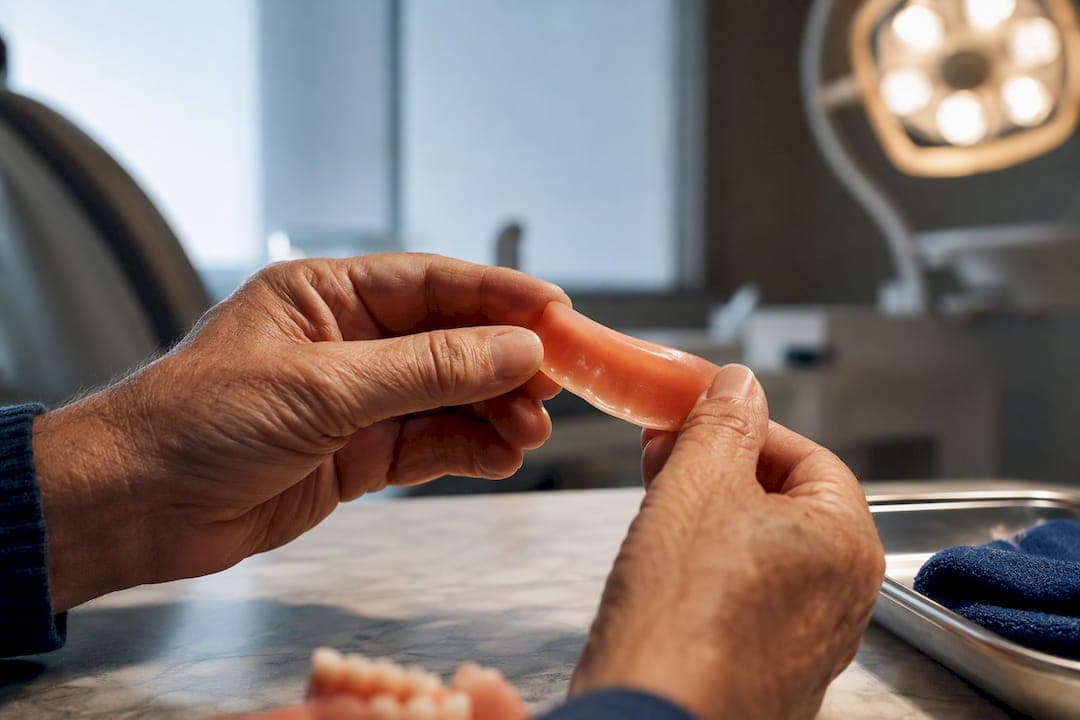
If your dentures feel loose, take them out, rinse off any old adhesive, and check both the denture and your gums for irritation. A thin layer of zinc-free denture adhesive can hold you over for a day or two, but it's a stopgap, not a fix. Book a dental exam soon. Lasting solutions almost always mean a reline, repair, replacement, or an implant-supported denture.
TL;DR:
- Dentures loosen gradually due to jawbone shrinkage and material wear, making regular adjustments or replacements necessary over time.
- Applying zinc-free denture adhesive temporarily can stabilize a loose denture, but it does not address underlying fit issues.
- Minor irritation or cracks can often be fixed chairside, but significant bone loss requires relining, rebasing, or implant-supported dentures for a lasting solution.
- Denture problems that include sores, persistent pain, swelling, or a suddenly worsened fit need immediate professional evaluation instead of home remedies.
- Home fixes such as household glue or DIY reline kits can cause irreversible damage, complicate repairs, and should be replaced by professional dental treatment.
Table of Contents
- Why Dentures Loosen and What Signs to Watch For
- Safe At-Home Steps to Stabilize Loose Dentures Temporarily
- Professional Solutions for Loose Dentures
- Warning Signs That Need Prompt Dental Care
- What CWD Dental Group Sees in Denture Patients
- A Clinician's Warning About DIY Denture Fixes
- Get Your Loose Denture Checked at CWD Dental Group
- Sources
- FAQ
Why Dentures Loosen and What Signs to Watch For
Dentures rarely fail all at once. They loosen gradually because the jawbone that holds them keeps changing shape long after teeth are gone. Once teeth are extracted, the bone underneath starts to shrink, a process called bone resorption. The ridge that once cradled a snug denture gets flatter and narrower, so a base that fit perfectly five years ago now rocks or slides.
Material wear plays a role too. Acrylic bases flatten and lose their crisp edges, and denture teeth wear down unevenly from years of chewing. Weight loss, illness, medication changes, and reduced saliva production can also loosen the seal between denture and tissue, since suction depends partly on a healthy moisture layer.
Watch for these signs that your fit has changed:
- Slipping or clicking when you talk, laugh, or yawn
- Trouble chewing certain foods you used to eat without thinking
- Slurred or altered speech
- Sore spots, redness, or ulcers on your gums
- Reaching for adhesive more often than you used to
Safe At-Home Steps to Stabilize Loose Dentures Temporarily
Before you reach for a fix, clean the denture thoroughly and rinse your mouth to clear away food debris and old adhesive residue. A denture that's still coated in yesterday's adhesive won't seat properly no matter what you apply next.
Here's the safe short-term sequence:
- Remove the denture and brush it with a denture-specific cleaner, never regular toothpaste, which can scratch the surface.
- Rinse your gums and check for redness, swelling, or sores.
- Apply a small amount of zinc-free denture adhesive following the package directions. Zinc-based adhesives have been linked to nerve problems with prolonged heavy use, so zinc-free is the safer default.
- Stick to soft foods cut into smaller pieces, and chew evenly on both sides of your mouth to avoid tipping the denture.
Adhesives are a temporary aid, not a repair. The American Dental Association notes that adhesives can stabilize a well-fitting denture short-term, but leaning on them to mask a poor fit can irritate gums and mask worsening bone loss underneath.
Pro Tip: Never use household glue, superglue, or a pharmacy "reline" kit to patch a loose denture. These products can warp the base, trap bacteria against your gums, and make a professional repair far more complicated later.
Professional Solutions for Loose Dentures
A quick adjustment often solves minor irritation. If a denture rubs a pressure point or has a small crack, your dentist can smooth or bond it chairside in one visit. That's the cheapest and fastest fix, but it only works when the base itself still fits reasonably well.
When the fit has drifted further, relining becomes the standard answer. A soft reline adds a cushioning layer for patients with sensitive or thinning tissue and tends to need replacing sooner. A hard reline reshapes the fitting surface with a more durable material and holds up longer for patients whose gums have stabilized. Both restore contact between denture and ridge without the cost of a new set.
Rebasing goes a step further, replacing the entire base while keeping the existing teeth, which makes sense when the base has worn out but the teeth are still in good shape. Full replacement is the right call once a denture is old, cracked, or simply too far gone to salvage. Clinic guidance commonly points to somewhere between five and ten years as the typical lifespan before major rebuilding or a new set makes more sense than another repair.
For chronic instability from advancing bone loss, implant-supported overdentures offer the strongest long-term fix. Implants anchor the denture directly to the jawbone, which restores chewing force and helps preserve bone that would otherwise keep shrinking. Clinicians weigh several factors before recommending a path:
- Age and condition of the current denture
- Health of the soft tissue and gums
- How much bone has already been lost
- Budget and how much stability the patient actually wants
Warning Signs That Need Prompt Dental Care
Some denture problems can't wait for a routine appointment. Sores or ulcers that don't heal within a few days, persistent pain, swelling, or any sign of infection all call for prompt evaluation, not another round of adhesive.
Reaching for adhesive multiple times a day, or a fit that suddenly worsens, is a clinical red flag for significant bone or tissue change rather than a simple comfort issue. A cracked or broken denture also needs professional attention immediately, since a compromised base can shift unpredictably and injure soft tissue. If any of these apply, recognizing when a dental visit can't wait matters more than trying another home remedy.
A dental exam for a loose denture typically checks fit against the current ridge shape, evaluates soft tissue health, reviews your bite, and may include imaging to assess bone levels before recommending next steps.
What CWD Dental Group Sees in Denture Patients
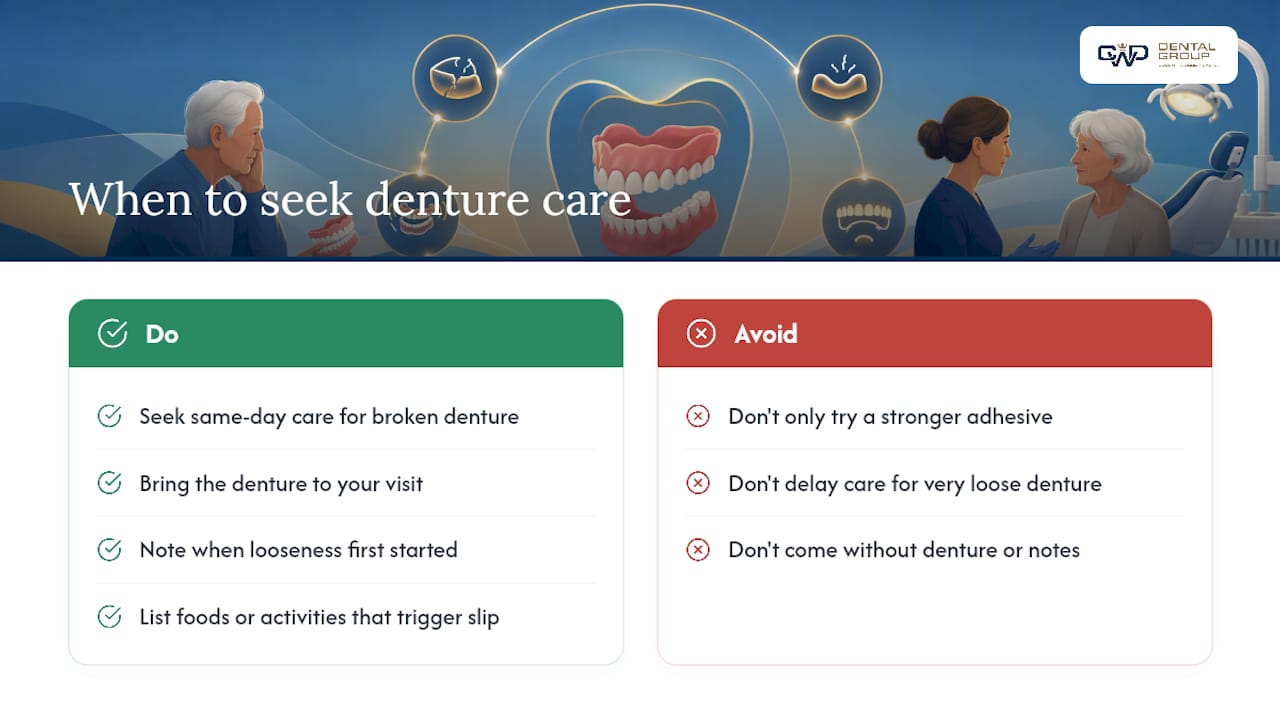
Dental patients often report that dentures that used to fit securely begin to slip during meals or conversation. Some dental providers offer same-day emergency visits so a broken or badly fitting denture does not have to wait days for attention.
Reaching for adhesive more than once or twice a day is treated as a signal worth investigating, not just a nuisance to manage with a stronger tube. Bring the denture itself to your appointment, along with notes on when the looseness started and which foods or activities trigger it. That detail helps the exam move faster and points toward whether an adjustment, reline, or implant conversation makes the most sense.
Author bio: Kayle covers practical dental care topics for CWD Dental Group, drawing on clinic guidance and published dental research to translate clinical options into plain language.
A Clinician's Warning About DIY Denture Fixes
Household glue and pharmacy reline kits feel like a fast fix, but they're often irreversible. Glue residue and distorted acrylic can turn a simple reline into a full rebase, and sometimes force a replacement that wasn't otherwise necessary.
Handle dentures over a towel or a basin of water, never a hard countertop, and skip hot water, which warps the base. A quick adjustment solves pressure points and small chips. A slipping fit that keeps getting worse points toward a reline or, further down the line, implants for anyone tired of adhesive altogether.
— Kayle
Get Your Loose Denture Checked at CWD Dental Group
Some dental practices offer same-day emergency appointments for denture problems, helping patients avoid long wait times while managing with adhesive alone.

Bring the denture in, along with a quick note on when the slipping started and what makes it worse. The team checks the fit against your current ridge, examines your gums for irritation, and recommends the least invasive option that will actually hold, whether that's an adjustment, a reline, or a conversation about implant-supported dentures for a more permanent answer. If cost is a concern, it's worth reviewing what insurance typically covers for implant procedures before your visit. Schedule a same-day emergency evaluation and stop treating a loose denture as something to just manage.
Sources
For more on adhesive use and denture maintenance, see the American Dental Association's denture guidance. Readers researching prosthetics abroad can also compare approaches in this guide to dental prosthetics in Germany.
This article is general information, not a substitute for advice from a qualified doctor. Consult a qualified healthcare professional about your own circumstances before acting on anything here.
- Denture Care and Maintenance | American Dental Association
- Denture Care Guide: How to Fix Loose Dentures for Comfort | Cypress Smiles Dental
- Fixing Loose Dentures: Ultimate Relief | Lemont Dental Clinic
FAQ
How can I fix my loose dentures at home?
Clean the denture and your gums thoroughly, then apply a small amount of zinc-free adhesive as a short-term aid while you schedule a dental exam. Home fixes only mask the problem; they don't correct the underlying fit.
What can I do if my dentures are too loose?
Stick to soft foods, use zinc-free adhesive sparingly, and avoid DIY reline kits or household glue, which can damage the base and complicate professional repair. See a dentist promptly, since persistent looseness usually signals bone or tissue changes that need a reline, rebase, or replacement.
Can loose dentures be fixed?
Yes. Options range from a quick chairside adjustment to a soft or hard reline, a full rebase, replacement, or implant-supported overdentures, depending on the denture's age and how much the jawbone has changed.
What is the best thing to use for loose dentures?
For short-term stability, a zinc-free denture adhesive applied according to package directions is the safest option. For a lasting fix, a professional reline or, for chronic looseness, implant-supported dentures deliver far more durable results than any adhesive.
When should I see a dentist about a loose denture?
See a dentist promptly if you notice sores that won't heal, persistent pain or swelling, a cracked denture, or if you find yourself reaching for adhesive multiple times a day. Some dental offices offer same-day emergency appointments for such situations.