
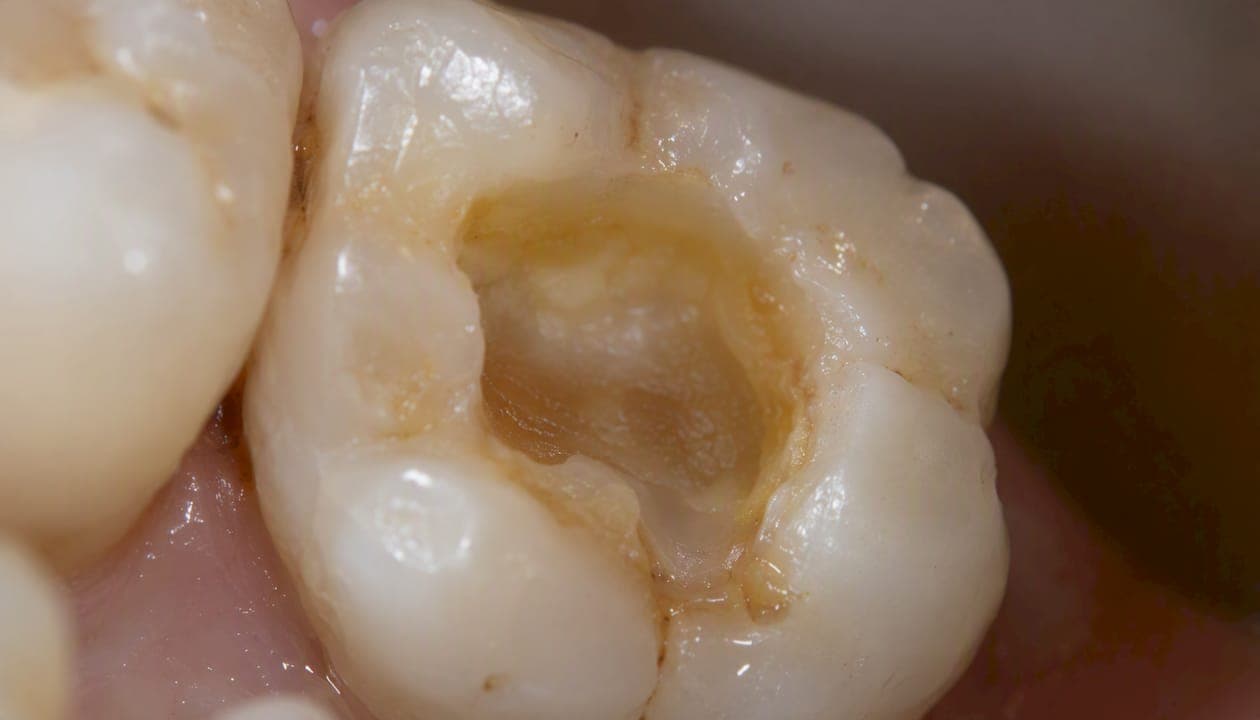
A lost filling leaves your tooth exposed and usually requires prompt dental attention. Call your dentist as soon as possible and protect the tooth in the meantime. The inner layer of your tooth, the dentin, is now open to bacteria, temperature, and pressure. Without the filling, decay may reach the pulp, turning what was a simple repair into a more complex procedure like root canal or extraction.
Three things to know right now:
- Infection risk is real. An exposed cavity traps food and bacteria, accelerating decay toward the nerve. Prompt care keeps the treatment simple.
- Some symptoms make it an emergency. Fever, facial swelling, uncontrolled pain, or a sharp edge cutting your cheek means you need same-day care, not a routine appointment.
- Same-day appointments are available. CWD Dental Group offers same-day emergency slots in Tallahassee, so you don't have to wait days in pain.
Pro Tip: Rinse with warm salt water immediately after losing a filling. It won't fix anything, but it clears debris and reduces bacterial load while you arrange care.
Key Takeaways
A lost filling exposes dentin and pulp to bacteria, and prompt dental care, ideally within 24–72 hours, prevents decay progression, infection, and the need for more invasive treatment.
| Point | Details |
|---|---|
| Urgency depends on symptoms | Fever, swelling, or severe pain means same-day care; mild sensitivity allows a few days. |
| Protect the tooth immediately | Use dental wax or an OTC temporary kit; rinse with warm salt water after meals. |
| Delay raises treatment complexity | Waiting converts a simple filling into a possible root canal, crown, or extraction. |
| Call your dentist first | Most practices triage by phone and can book urgent slots or direct you to alternatives. |
| CWD Dental Group | Offers same-day emergency appointments in Tallahassee for lost fillings and urgent dental needs. |
Table of Contents
- Why do fillings fall out in the first place?
- Is a lost filling a dental emergency?
- What to do right now before you see a dentist
- What your dentist will likely do at the appointment
- What happens if you wait too long?
- When should you call for same-day emergency dental care?
- How to prevent future filling failure
- What a local emergency dentist wants you to know
- CWD Dental Group is ready when you lose a filling
- Sources
Why do fillings fall out in the first place?
Fillings don't last forever, and they rarely fail without a reason. Understanding the cause helps you and your dentist decide what comes next.
Wear and material fatigue are the most common culprits. Composite and amalgam restorations typically last many years under normal use. Repeated chewing forces gradually weaken the bond between the filling and the tooth wall.
Recurrent decay is the second major cause. Bacteria work their way under the filling margin, softening the tooth structure beneath. When enough of that support erodes, the filling loosens and pops out. This is why a lost filling often signals that more decay is present, not just a missing plug.
Bonding or cement failure can happen when moisture contaminated the placement, or when the original technique left micro-gaps. Cold drinks, hot food, and acidic beverages accelerate this breakdown over time.
Trauma and bruxism put sudden or chronic excess force on restorations. A bite into a hard piece of ice or a popcorn kernel can dislodge even a well-bonded filling. Nighttime teeth grinding (bruxism) applies the same kind of stress repeatedly, often without the patient realizing it.
One distinction matters here: temporary fillings fail faster by design. They use weaker cement intentionally, meant to hold for weeks, not years. If a temporary filling falls out, treat it as more urgent than a lost permanent one, because the tooth underneath is often mid-treatment and more vulnerable.
Is a lost filling a dental emergency?
Not always, but the answer depends entirely on your symptoms, not on the fact that the filling is gone.
The Cleveland Clinic defines a dental emergency as any situation involving severe uncontrolled pain, persistent swelling, fever, uncontrolled bleeding, or sharp edges causing ongoing soft-tissue injury. An emergency room can provide pain medication and antibiotics, but it cannot replace a filling. For definitive care, you need a dentist.
Red flags that require same-day dental care:
- Fever or facial swelling (signs of spreading infection)
- Throbbing pain that disrupts sleep or won't respond to over-the-counter medication
- A sharp edge actively cutting your tongue, cheek, or gum
- Visible redness or swelling spreading toward the jaw or neck
- Difficulty swallowing or opening your mouth
Most lost fillings are urgent but not life-threatening. Mild sensitivity to air or cold, with no swelling and manageable discomfort, usually allows a day or two to arrange an appointment. Triage decisions hinge on symptom severity, not the mere presence of a missing restoration.
What to do right now before you see a dentist
These steps won't replace treatment, but they reduce pain and lower the chance of further damage in the hours before your appointment.
- Save the filling fragment if you find it. Bring it to the dentist. It won't be re-cemented, but it helps the dentist assess the original size and material.
- Rinse gently with warm salt water to clear food debris from the cavity. Do this after every meal until you're seen.
- Avoid chewing on that side. Pressure on an exposed tooth accelerates sensitivity and risks fracturing weakened walls.
- Cover a sharp edge with dental wax (sold at most pharmacies) or a small piece of sugarless gum as a temporary measure. Temporary OTC filling kits like Dentemp can protect the hole for a few days. Never use household adhesives, super glue, or anything not labeled for dental use.
- Manage pain with ibuprofen or acetaminophen per the standard dosing on the label. Check Mayo Clinic's ibuprofen guidance if you have kidney issues, take blood thinners, or are pregnant. An ice pack applied to the outside of your cheek for 15–20 minutes can also reduce swelling.
- Go to urgent care or the ER only if your dental office is unreachable and you have systemic signs: fever, spreading swelling, or difficulty breathing or swallowing.
Pro Tip: When you call your dentist, describe your symptoms specifically: "I have swelling below my jaw and pain rated 8 out of 10." That language triggers triage protocols and gets you a same-day slot faster than saying "I lost a filling."
What your dentist will likely do at the appointment
The treatment depends on how much tooth structure remains and whether decay has reached the pulp.
Replacement filling is the simplest outcome. If the cavity is clean, the tooth walls are intact, and there's no sign of pulp involvement, the dentist removes any new decay and places a new composite or amalgam restoration. This is a single appointment.
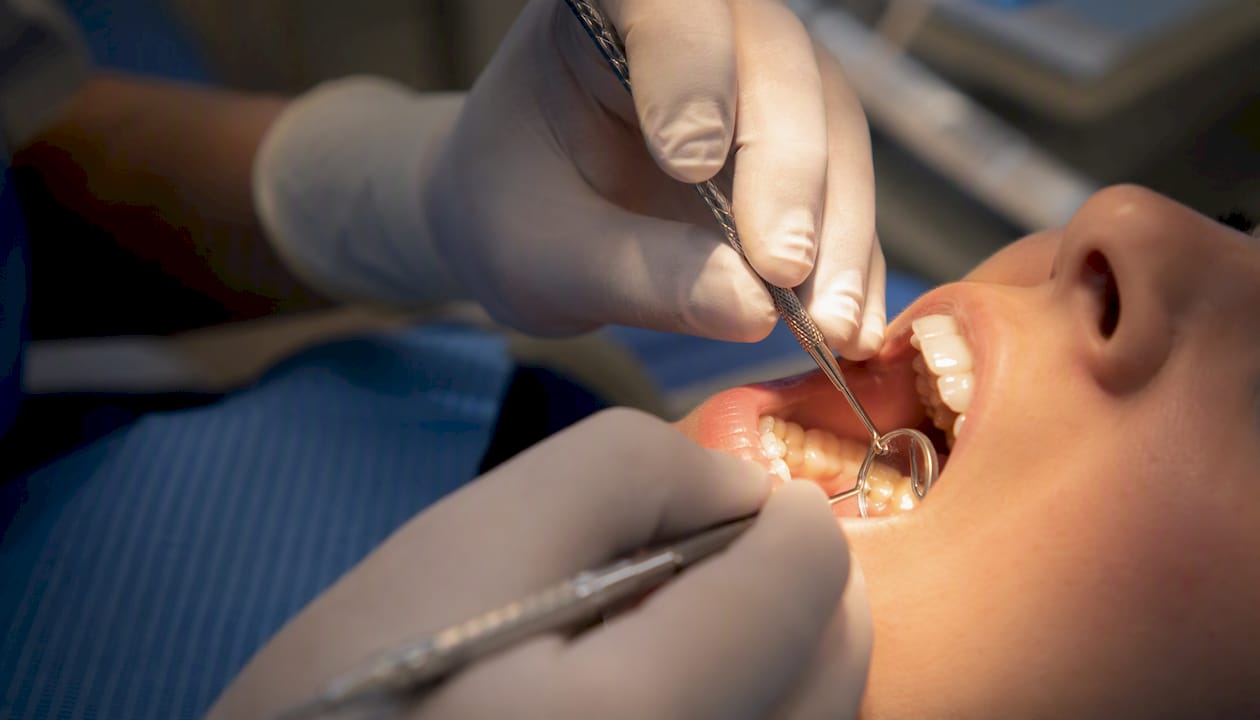
Onlay or crown becomes necessary when a large portion of the tooth is missing or the remaining walls are thin and at risk of fracturing. A crown protects the entire tooth surface; an onlay covers one or more cusps without capping the whole tooth.
Root canal therapy is indicated when decay has reached the pulp, or when there's persistent infection. The dentist removes the infected tissue, seals the canals, and typically places a crown afterward. According to MSD Manuals, antibiotics support treatment when systemic signs are present, but they don't resolve the infection source. Definitive procedures do.
Extraction is the last resort when the tooth is unsalvageable. After healing, replacement options include a dental implant, bridge, or partial denture.
| Scenario | Likely Treatment |
|---|---|
| Small cavity, intact walls, no infection | Direct composite or amalgam filling |
| Large cavity or cracked walls | Onlay or full crown |
| Decay reached the pulp | Root canal, then crown |
| Tooth unsalvageable | Extraction, then implant or bridge |
| Systemic signs (fever, swelling) | Antibiotics plus definitive procedure |
What happens if you wait too long?
Delaying care after losing a filling isn't just uncomfortable. It changes the treatment you'll need and the cost you'll face.
- Decay accelerates. The American Dental Association notes that unchecked decay under a lost filling can convert a simple restoration into a root canal or extraction. Dentin is softer than enamel and decays faster once exposed.
- Food impaction worsens the problem. Every meal packs debris into the open cavity, feeding the bacteria already present.
- Infection can spread. A localized abscess can develop within days. Dental infections can progress to deep-space infections and may require hospital admission or referral to an oral surgeon. That's a significant escalation from a missing filling.
- Costs rise sharply. A replacement filling costs a fraction of a root canal and crown. Every week of delay narrows the window for the simpler fix.
- Soft-tissue injury compounds. A sharp filling edge can lacerate your tongue or cheek repeatedly, creating open sores that are painful and prone to secondary infection.
The pattern is consistent: the longer the tooth sits unprotected, the more invasive and expensive the repair becomes.
When should you call for same-day emergency dental care?
Use this decision flow to triage your situation:
| Symptoms | Recommended Action |
|---|---|
| Fever, facial swelling, difficulty swallowing | Same-day care or ER immediately |
| Severe throbbing pain, sleep disruption, sharp edge cutting tissue | Same-day emergency appointment |
| Moderate sensitivity, no swelling, manageable pain | Urgent appointment within 24–72 hours |
| Mild sensitivity only, no pain at rest | Schedule within a few days |
Cigna recommends calling your dentist first regardless of severity. Many practices maintain emergency lines and can triage you over the phone, book an urgent slot, or direct you to a dental urgent care clinic. University dental urgent care programs, like those at the University of Washington and University of Maryland, handle immediate needs such as temporary fillings and extractions, then refer patients for definitive care.
Pro Tip: If your regular office is closed, check their voicemail for an after-hours emergency number before driving to an ER. Most dental practices that offer after-hours emergency care list that number on their outgoing message.
How to prevent future filling failure
Once the tooth is repaired, a few habits significantly reduce the chance of losing another filling.
- Avoid hard and sticky foods around restored teeth. Ice, hard candy, and chewy caramel are the most common mechanical causes of filling loss.
- Wear a night guard if you grind. Bruxism puts more force on restorations than any food. A custom guard from your dentist distributes that load and extends the life of every filling and crown you have.
- Keep up with recall visits. Your dentist can spot a failing filling margin before it becomes a lost filling. Catching it early means a simple repair, not a crown.
- Treat decay early. A small cavity filled promptly stays a small cavity. Waiting until it hurts usually means the decay has already reached dentin or pulp.
- Watch for bite changes. A filling that feels high after placement stresses the restoration and the opposing tooth. Tell your dentist immediately if your bite feels off.
After a repair, expect some sensitivity for a few days. If sensitivity worsens after a week, or if you develop swelling or throbbing, call your dentist. That's not normal post-treatment soreness.
What a local emergency dentist wants you to know
The patients who do best are the ones who call early and describe what they're feeling. A lost filling by itself rarely requires a middle-of-the-night ER visit, but the symptoms that can follow it sometimes do.
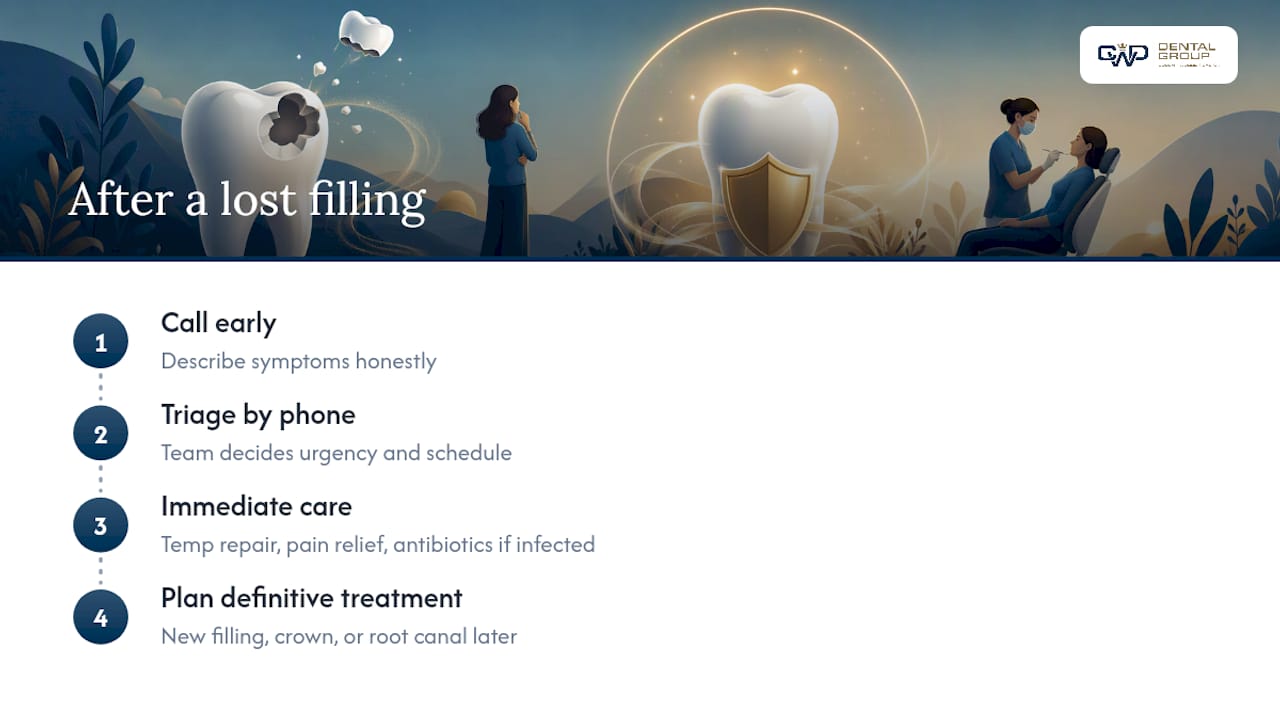
When you come in for a same-day visit, the first priority is stopping pain and stabilizing the tooth. That might mean a temporary restoration, pain control, or starting antibiotics if there's an infection. Definitive treatment, whether a new filling, a crown, or a root canal, gets planned at that visit or the next, once the acute problem is under control. The goal of the first appointment is to make sure nothing gets worse while you wait for the full repair.
Call the office, describe your symptoms honestly, and let the team triage you. That one phone call is usually all it takes to get the right level of care on the right timeline.
CWD Dental Group is ready when you lose a filling
When a filling comes out, the last thing you need is a week-long wait. CWD Dental Group offers same-day emergency appointments in Tallahassee for exactly this situation: a tooth that's exposed, sensitive, and needs attention now.

When you call, have your symptoms ready: pain level, any swelling, how long ago the filling came out, and which tooth. The team triages over the phone and gets you into the right appointment slot. On arrival, you'll receive a clinical exam, X-rays if needed, pain control, and a temporary stabilization if the definitive repair can't happen the same day. Insurance is handled at the front desk, and the care team walks you through every step before it happens.
Book your same-day emergency dental appointment at CWD Dental Group online or by phone. Don't leave an exposed tooth unprotected longer than necessary.
Sources
- What Is a Dental Emergency and Where To Go for Care
- Dental emergencies: overview and clinical guidance (NCBI Bookshelf)
- Dental
- Overview of dental emergencies — MSD Manuals
This article is general information, not a substitute for advice from a qualified doctor. Consult a qualified healthcare professional about your own circumstances before acting on anything here.