

Tooth pain that disrupts your sleep, causes facial swelling, or comes with a fever is a dental emergency, not a problem you can wait out. Understanding why tooth pain needs urgent care starts with recognizing that a throbbing toothache often signals active infection, nerve damage, or structural failure inside the tooth. Left untreated, these conditions escalate fast. A localized abscess can spread to your jaw, neck, or airway within days. Symptoms like swelling near your eye or throat, difficulty swallowing, or a fever above 101°F require either a same-day dental appointment or a trip to the emergency room immediately.
What are the dental emergency signs that mean you need care now?
Not every toothache is an emergency. But specific toothache emergency signs tell you the situation has moved beyond routine discomfort into territory that demands same-day attention.
The clearest warning signs include:
- Persistent throbbing pain that wakes you at night. A throbbing "heartbeat" sensation inside the tooth signals nerve inflammation or nerve death. Over-the-counter medications like ibuprofen or acetaminophen will not touch this pain. That is your signal that the tooth structure has failed and infection is progressing.
- Facial or gum swelling. Swelling along your jaw, cheek, or gum line indicates an abscess forming. If the swelling is moving toward your eye or under your jaw, the infection is spreading beyond the tooth.
- Fever. A fever with dental pain means your immune system is fighting an infection that has gone systemic. This is not a wait-and-see situation.
- Difficulty breathing, swallowing, or opening your mouth. These are critical red flags for airway compromise. Call 911 or go to the emergency room immediately.
- A pimple or boil on your gum. This is a fistula, a drainage point for a deep infection. It looks minor but confirms active bacterial spread beneath the surface.
- Uncontrolled bleeding after trauma. If you have knocked out or cracked a tooth and bleeding will not stop after 10 minutes of firm pressure, seek care right away.
Pro Tip: Never press or poke swollen gum tissue to test the area. Manipulating an abscess pushes bacteria deeper into soft tissue and can accelerate spread toward your airway.
Constant throbbing pain that disrupts sleep requires same-day professional dental attention to prevent progression to a full abscess. If you recognize two or more of these signs together, do not wait for a scheduled appointment.

Urgent dental care vs. the ER: which one do you need?
Knowing where to go is just as important as knowing when to go. The two options serve very different purposes, and choosing the wrong one wastes time and money.
| Situation | Go to the ER | Go to urgent dental care |
|---|---|---|
| Difficulty breathing or swallowing | Yes | No |
| Fever above 101°F with swelling | Yes | If mild, dental first |
| Severe facial swelling near eye or neck | Yes | No |
| Throbbing pain, no systemic symptoms | No | Yes |
| Abscess with localized swelling | No | Yes |
| Knocked-out tooth, no airway risk | No | Yes |
| Uncontrolled bleeding after trauma | Yes | No |
Medical ERs treat airway threats and systemic infection with IV antibiotics and drainage, but they do not perform root canals, fill cavities, or restore damaged teeth. You will leave the ER with stabilized vitals and a referral to a dentist. That means two visits, higher costs, and longer wait times, often four to eight hours in a busy ER versus under an hour at an urgent dental clinic.
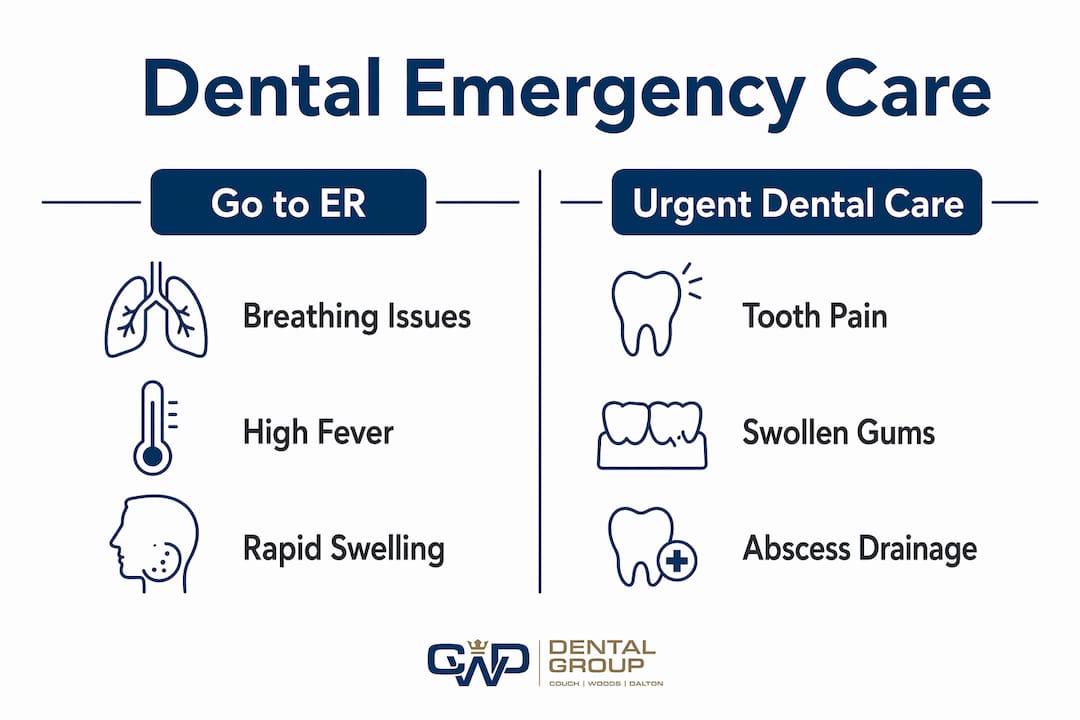
Urgent dental care focuses on diagnosing the source of infection, draining abscesses, prescribing antibiotics, managing pain, and performing definitive procedures like root canal therapy or extraction on the same visit. For the vast majority of tooth pain emergencies, a dental office is the faster, cheaper, and more effective choice. The ER is the right call only when your airway, breathing, or systemic stability is at risk.
Why delaying treatment turns a fixable problem into a serious one
Waiting even 24–48 hours when you have an active dental infection is a gamble with real consequences. Here is how the situation typically progresses without treatment:
- Localized infection becomes an abscess. Bacteria inside the tooth multiply and push into surrounding bone and tissue. Pain intensifies and swelling grows.
- Bone loss begins. The infection destroys the bone supporting the tooth. Once significant bone is lost, saving the tooth becomes much harder, sometimes impossible.
- The abscess spreads. Dental infections can travel along tissue planes into the jaw, neck, and chest. Ludwig's angina, a rapidly spreading infection of the floor of the mouth, is a life-threatening complication that starts as an untreated tooth abscess.
- Systemic infection sets in. Fever accompanying a tooth abscess signals that bacteria have entered the bloodstream. Sepsis is a possible outcome and requires hospitalization.
- Tooth loss becomes unavoidable. Delaying treatment often converts a tooth that could have been saved with a root canal into one that requires extraction due to advanced tissue and bone damage.
The difference between a root canal and an extraction is often just a matter of hours. Early intervention preserves your natural tooth structure and avoids the cost and complexity of implants or bridges later.
Pro Tip: If you cannot reach a dentist immediately, take ibuprofen at the maximum labeled dose to reduce inflammation, rinse gently with warm salt water, and avoid hot or cold foods. These steps manage discomfort but do not treat the infection. Get to a dentist as soon as possible.
Most dental practices reserve same-day emergency slots specifically to prevent rapid infection escalation, including on weekends. Call your dental office first thing in the morning and describe your symptoms clearly. Swelling, fever, and sleep disruption will move you to the front of the line.
What happens during a same-day emergency dental appointment?
Knowing what to expect removes a major barrier for people who hesitate to call. A same-day emergency visit typically lasts about 30 minutes and follows a clear sequence focused on identifying the pain source and stabilizing the situation fast.
Here is the typical process:
- Phone triage. When you call, the front desk asks about your symptoms, pain level, swelling, and fever. This determines how quickly you are seen and what the team prepares.
- Insurance and health history review. Arriving with your insurance card and a list of current medications speeds this step significantly. Mention any allergies to antibiotics like penicillin or amoxicillin.
- Urgent exam and imaging. The dentist takes targeted X-rays of the affected area to locate the infection source, assess bone levels, and determine whether the tooth is salvageable.
- Immediate treatment. Depending on findings, treatment may include abscess drainage, a prescription for antibiotics and pain medication, root canal therapy to remove infected nerve tissue, or extraction if the tooth cannot be saved. You can learn more about emergency extraction procedures if that is a likely outcome.
- Follow-up plan. The dentist schedules a follow-up to complete any multi-visit treatment, confirm the infection has cleared, and discuss restorative options if a tooth was removed.
Bring a list of your symptoms, when they started, and what makes the pain better or worse. The more specific you are, the faster the team can act. Do not downplay your pain to seem polite. Accurate symptom reporting directly affects the treatment you receive.
Key takeaways
Tooth pain that includes swelling, fever, or sleep disruption is a dental emergency that requires same-day care to prevent infection spread, tooth loss, and life-threatening complications.
| Point | Details |
|---|---|
| Act on emergency signs immediately | Swelling, fever, throbbing pain, and sleep disruption all signal urgent dental care is needed. |
| Choose the right care setting | Go to the ER only for airway threats; urgent dental care handles most tooth pain emergencies faster and at lower cost. |
| Delay causes irreversible damage | Waiting even 48 hours can turn a treatable infection into bone loss, tooth extraction, or systemic illness. |
| Same-day appointments are available | Most dental offices hold emergency slots; call early, describe symptoms clearly, and you will be seen quickly. |
| Never manipulate swollen tissue | Pressing or poking an abscess drives bacteria deeper and accelerates dangerous spread. |
The cost of waiting: what I have seen in practice
I have treated patients who waited three days with a swollen jaw because they assumed the pain would pass. By the time they came in, what started as a treatable abscess had spread into the surrounding bone. The tooth was gone. In two cases, patients needed hospital admission for IV antibiotics because the infection had moved into the neck.
The hesitation is understandable. Emergency dental visits feel disruptive and expensive. But the math works against waiting. A root canal costs a fraction of a dental implant. An urgent dental visit costs a fraction of an ER stay. And no dollar figure covers the risk of a spreading infection reaching your airway.
The other misconception I hear constantly is that antibiotics alone will fix the problem. They will not. Antibiotics reduce the bacterial load and buy time, but they cannot drain an abscess or remove infected nerve tissue. The source of infection must be physically addressed by a dentist. Finishing a course of antibiotics and feeling better does not mean the problem is resolved.
If you are reading this at 2 a.m. with a throbbing jaw, take ibuprofen, do not poke the swelling, and call a dental office the moment they open. If you have a fever above 101°F or any trouble breathing or swallowing, go to the ER now. Do not wait to see if it gets better. It will not.
— Kayle
Get same-day emergency dental care in Tallahassee
Cwddentalgroup provides same-day emergency appointments for patients in Tallahassee experiencing severe tooth pain, swelling, or infection. The team handles everything from abscess drainage and root canal therapy to emergency extractions, all with a focus on fast relief and clear communication.
If you are dealing with tooth pain that is keeping you up at night or causing facial swelling, do not wait for a routine appointment. Cwddentalgroup holds emergency slots specifically for urgent cases. Call the office, describe your symptoms, and get seen the same day. You can also review the full range of urgent dental services available in Tallahassee to understand your options before you call.
FAQ
What counts as a dental emergency?
A dental emergency is any tooth pain accompanied by swelling, fever, difficulty swallowing, or pain that disrupts sleep. These symptoms indicate active infection or structural damage that requires same-day professional treatment.
Can a tooth infection go away on its own?
A tooth infection does not resolve without treatment. Without drainage and either root canal therapy or extraction, the infection spreads to surrounding bone and tissue, increasing the risk of tooth loss and systemic illness.
Should I go to the ER or a dentist for tooth pain?
Go to the ER if you have a fever above 101°F, difficulty breathing or swallowing, or rapid swelling under your jaw or near your eye. For all other urgent tooth pain, a same-day dental appointment is faster, less expensive, and provides definitive treatment the ER cannot.
How long does an emergency dental visit take?
A same-day emergency appointment typically lasts about 30 minutes. The visit covers a health history review, targeted X-rays, and immediate treatment such as drainage, antibiotics, or root canal therapy.
Will antibiotics cure a tooth abscess?
Antibiotics reduce infection and relieve symptoms temporarily, but they do not eliminate the source. A dentist must physically treat the infected tooth through drainage, root canal therapy, or extraction for the problem to fully resolve.