

Emergency tooth extraction is the immediate removal of a tooth that is causing severe pain, infection, or trauma, where any delay risks spreading bacteria to your jaw or bloodstream. Unlike a routine extraction scheduled weeks in advance, this procedure happens the same day you present with an urgent problem. Dentists classify it as a dental emergency when the tooth cannot be saved and poses a direct threat to your health. Understanding what is emergency tooth extraction, why it happens, and what to expect can reduce anxiety and help you act fast when every hour counts.
What is emergency tooth extraction and when is it needed?
Emergency tooth extraction is defined as the unplanned removal of a tooth requiring same-day or next-day treatment to stop pain, infection, or physical damage from worsening. The American Dental Association recognizes urgent tooth removal as a distinct category of emergency dental care, separate from elective procedures. The core goal is stabilization: stop the infection, relieve the pain, and protect surrounding teeth and tissue.
The most common triggers fall into three categories.
- Severe infection or abscess: Bacteria reach the pulp (the nerve and blood vessel center of the tooth), causing pulpitis or a pocket of pus called an abscess. The infection can spread to your jaw, neck, and bloodstream, leading to sepsis if untreated.
- Trauma or fracture: A broken tooth from a fall, sports injury, or accident may split below the gum line, making repair impossible.
- Advanced decay: Decay that has destroyed most of the tooth structure and reached the nerve often cannot be saved with a crown or root canal.
Signs you need an emergency extraction
Recognizing the warning signs early is the difference between a straightforward extraction and a hospital stay. Watch for these red flags:
- Throbbing pain that does not respond to over-the-counter medication like ibuprofen or acetaminophen
- Visible swelling in your jaw, cheek, or neck
- Fever above 101°F combined with dental pain
- A bad taste or pus draining near the tooth
- Difficulty opening your mouth fully
Life-threatening symptoms like swelling that affects your breathing or difficulty swallowing require an immediate ER visit, not a dental office. For localized severe pain without airway involvement, call an emergency dentist directly. Hospitals manage pain and infection with antibiotics, but ER staff rarely perform actual tooth extractions. You will still need a dentist for the definitive procedure.
Pro Tip: If you are unsure whether your situation is a dental emergency or a medical one, review the signs of a dental emergency before calling. Airway involvement always means 911 first.
Simple vs. surgical: how the tooth extraction procedure works
The tooth extraction procedure falls into two types, and the one your dentist chooses depends on the condition and position of the tooth.
Simple extraction
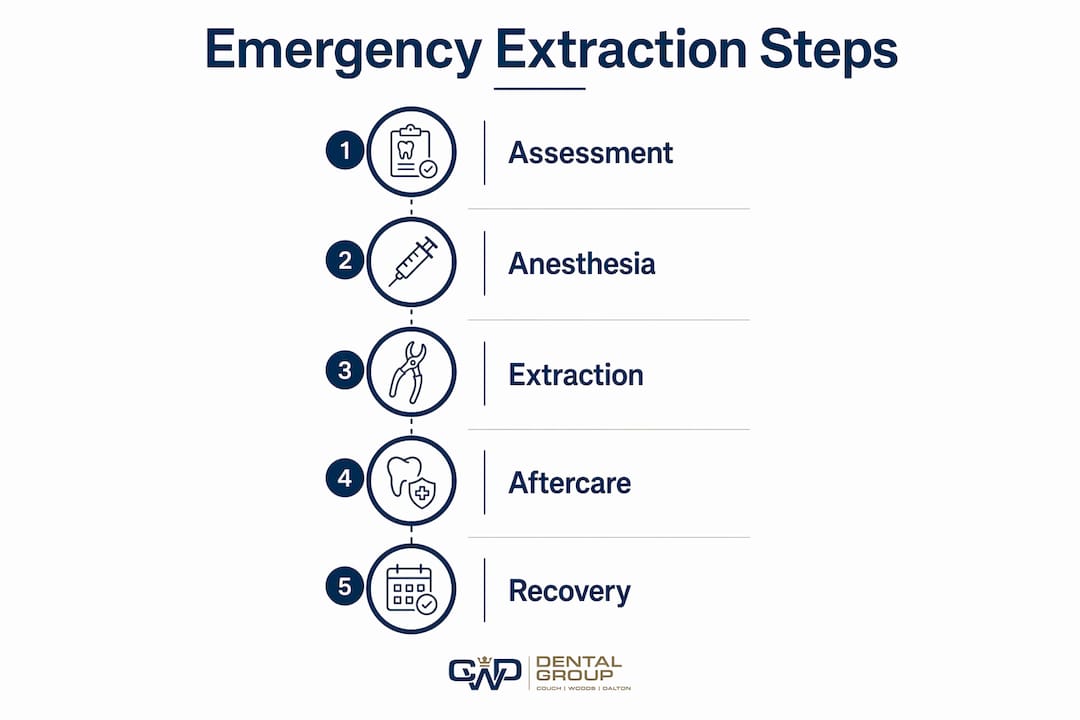
A simple extraction applies to teeth that are fully visible above the gum line and structurally intact enough to remove in one piece. Here is what happens step by step:
- The dentist injects a local anesthetic into the gum tissue around the tooth.
- Once the area is numb, a tool called an elevator loosens the tooth from its socket.
- Forceps grip the tooth and rock it back and forth to widen the socket.
- The tooth is lifted out cleanly, and gauze is placed to control bleeding.
The entire process typically takes 20–40 minutes from anesthetic injection to gauze placement.
Surgical extraction
A surgical extraction is required when a tooth is broken at the gum line, impacted (trapped beneath the gum), or has curved roots that prevent simple removal. Surgical extraction involves making an incision in the gum, sometimes removing a small amount of bone, and occasionally sectioning the tooth into pieces before removal. Anesthesia options expand for surgical cases. Simple extractions use a local injection, while surgical removal may require IV sedation or general anesthesia depending on complexity.

| Feature | Simple Extraction | Surgical Extraction |
|---|---|---|
| Tooth position | Fully visible | Impacted or broken below gum |
| Anesthesia | Local injection | Local, sedation, or IV anesthesia |
| Incision required | No | Yes |
| Bone removal | Rarely | Sometimes |
| Recovery time | 1–3 days | 3–7 days or longer |
One detail most patients do not know: severe infection can reduce the effectiveness of local anesthetics. Infected tissue is more acidic, and that acidity weakens anesthetic agents. Dentists often prescribe antibiotics before a complex extraction to reduce infection levels and improve pain control during the procedure.
Pro Tip: Tell your dentist about all medications you take, including blood thinners like warfarin or aspirin. These affect bleeding during and after the procedure and may require a modified protocol.
Risks, complications, and aftercare for tooth extraction
Every surgical procedure carries risk, and tooth removal is no exception. Knowing what to watch for helps you recover faster and catch problems early.
Common risks after extraction
- Dry socket: The most frequent complication. The blood clot that forms in the empty socket is essential for healing. If it dislodges, the exposed bone causes intense pain, typically starting 3–5 days after extraction.
- Infection: Bacteria can re-enter the socket. Signs include increasing pain after day 3, swelling, and fever.
- Prolonged bleeding: Some oozing is normal for 24 hours. Bleeding that soaks through gauze repeatedly after that needs attention.
- Nerve sensitivity: Lower jaw extractions occasionally cause temporary numbness in the lip or chin.
Recovery timeline and aftercare
Initial socket healing takes 1–2 weeks for most patients. Full bone healing takes several months, but you will feel normal within two weeks in most cases.
| Recovery Phase | What to Expect | Key Action |
|---|---|---|
| Hours 1–24 | Bleeding, swelling, numbness | Bite gauze, apply ice pack, rest |
| Days 2–3 | Peak swelling and soreness | Take prescribed pain medication, soft diet |
| Days 4–7 | Swelling decreases | Rinse gently with warm salt water |
| Week 2 | Tissue closing over socket | Resume normal diet gradually |
Avoid straws, smoking, and vigorous rinsing for at least 72 hours. All three actions create suction or pressure that can dislodge the blood clot and trigger dry socket. The goal of aftercare for tooth extraction is simple: protect that clot and keep the area clean without disturbing it.
The primary aim of emergency extraction is to stabilize your oral health and stop infection, not to restore appearance. Replacement options like implants, bridges, or partial dentures come later, once healing is complete.
Cost of emergency extraction and how to prepare
The cost of emergency extraction varies widely based on tooth type, procedure complexity, and whether you visit a public clinic or private practice. A simple extraction at a community health center may cost significantly less than the same procedure at a private dental office. Surgical extractions, particularly for impacted wisdom teeth, carry higher fees due to anesthesia and operating time. Emergency dental fees range from nominal public clinic rates to full private costs, and payment is often required at the time of service.
Most dental insurance plans cover a portion of extraction costs, especially when the procedure is medically necessary. Call your insurer before your appointment to confirm your coverage level and any deductible requirements. Many private practices also offer payment plans or financing through services like CareCredit.
What to bring to your emergency appointment
Preparation speeds up triage and gets you into the chair faster. Well-prepared patients receive faster and more effective emergency care, according to UCSF School of Dentistry.
- A complete list of current medications, including supplements
- Your dental and medical insurance cards
- A summary of any known allergies, especially to anesthetics or antibiotics
- Contact information for your primary care physician if you have systemic conditions like diabetes or heart disease
Pro Tip: Take photos of the affected tooth and any visible swelling before your appointment. Visual documentation helps the dentist assess progression and make faster treatment decisions.
For patients managing decayed teeth that may be approaching the point of extraction, early intervention almost always reduces both cost and complexity. A dental health checklist reviewed annually can catch problems before they become emergencies.
Key takeaways
Emergency tooth extraction is the most time-sensitive dental procedure, and acting within hours rather than days directly determines whether infection stays local or spreads systemically.
| Point | Details |
|---|---|
| Definition and urgency | Emergency extraction removes a tooth same-day to stop pain, infection, or trauma from worsening. |
| Two procedure types | Simple extractions use forceps under local anesthesia; surgical extractions require incisions and sometimes sedation. |
| Biggest recovery risk | Dry socket from blood clot loss causes intense pain and is prevented by avoiding straws, smoking, and hard rinsing. |
| When to go to the ER | Swelling affecting breathing or difficulty swallowing requires 911 or an ER, not a dental office. |
| Preparation matters | Bringing your medication list, insurance cards, and allergy history speeds triage and improves care quality. |
What i have learned treating dental emergencies
The patients who struggle most with emergency extractions are not the ones with the worst teeth. They are the ones who waited the longest. I have seen straightforward infections turn into multi-day hospital admissions because someone spent a week managing pain with ibuprofen instead of calling a dentist. Dental pain is not a signal to manage. It is a signal to act.
The second thing I have noticed is how much patient anxiety affects the procedure itself. Patients who arrive tense and unprepared often experience more discomfort, not because the procedure is worse, but because anxiety lowers pain tolerance and makes it harder for anesthetics to work effectively. The patients who ask questions, understand the steps, and arrive with their medical history ready consistently report better experiences.
There is also a widespread misconception that dental pain will resolve on its own. Sometimes it does, temporarily, because the nerve dies. That is not healing. That is the infection progressing silently, and it often means a more complex surgical extraction later rather than a simple one now.
My honest recommendation: if you have had tooth pain for more than 48 hours, do not wait for it to get worse. The same-day extraction process is far less complicated when the infection is still contained. Follow-up care for a replacement tooth matters too. An empty socket left untreated for months causes bone loss and shifts neighboring teeth out of alignment.
— Kayle
Get same-day emergency dental care in tallahassee
Cwddentalgroup offers same-day emergency appointments for patients experiencing severe tooth pain, infection, or trauma in Tallahassee, Florida. The clinical team at Cwddentalgroup includes experienced dentists like Dr. Chance Dalton and Dr. Toni Collins, both committed to fast, compassionate care without the long waits typical of other practices. Whether you need a simple extraction or a more complex surgical removal, Cwddentalgroup handles urgent cases with the same thoroughness as scheduled procedures.

If you are in pain right now, do not wait. Contact Cwddentalgroup's emergency dentist team to book your appointment today and get the relief you need as quickly as possible.
FAQ
What is emergency tooth extraction exactly?
Emergency tooth extraction is the same-day or urgent removal of a tooth that is causing severe pain, infection, or structural damage that cannot wait for a routine appointment. The procedure is either simple or surgical depending on the tooth's condition.
How long does an emergency extraction take?
A simple emergency extraction typically takes 20–40 minutes from anesthetic injection to completion. Surgical extractions involving incisions or bone removal take longer, often 45–90 minutes depending on complexity.
What are the signs you need an emergency extraction?
Key signs include throbbing pain unresponsive to over-the-counter medication, visible jaw or cheek swelling, fever combined with tooth pain, and pus or a bad taste near the tooth. Difficulty swallowing or breathing requires an ER visit immediately.
Can i eat before an emergency tooth extraction?
For simple extractions under local anesthesia, eating a light meal beforehand is generally fine. If sedation or IV anesthesia is planned, your dentist will instruct you to fast for several hours before the procedure.
How do i avoid dry socket after extraction?
Avoid straws, smoking, and vigorous rinsing for at least 72 hours after the procedure. These actions can dislodge the blood clot in the socket, which is the primary cause of dry socket and the intense pain that follows.