
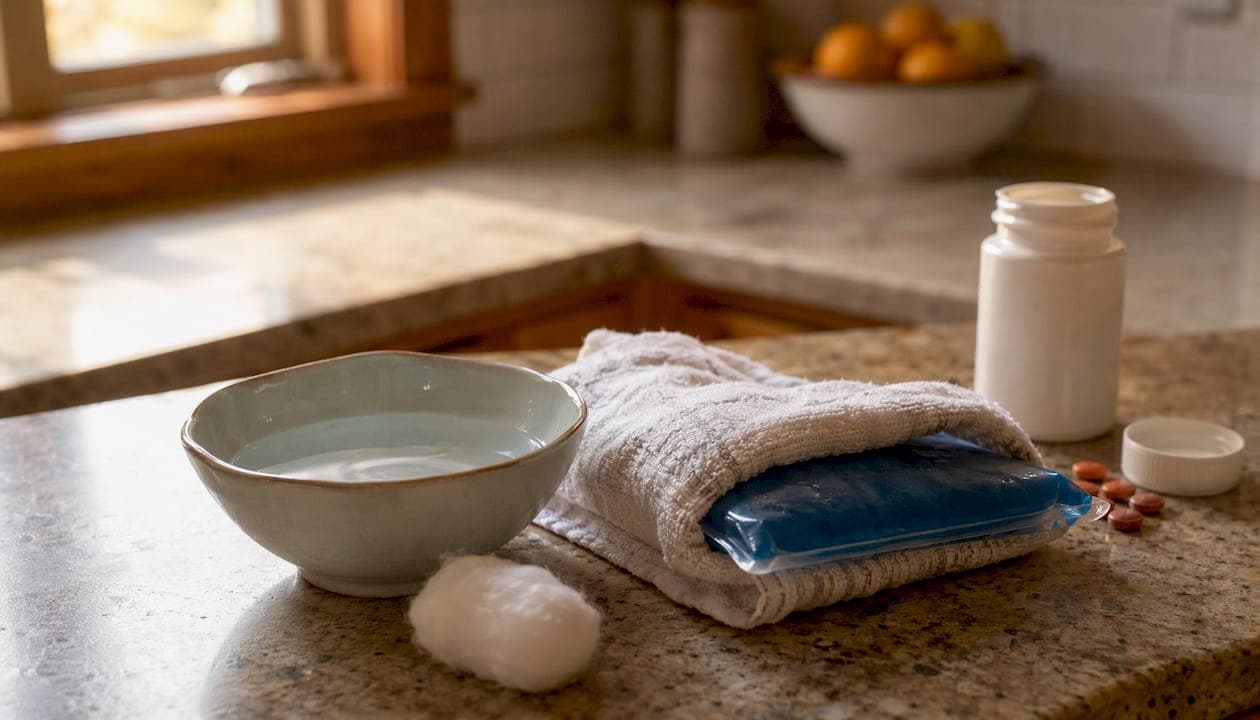
Do these clinician-backed steps right now to control severe toothache pain at home until you can see a dentist. Start with a warm saltwater rinse, gently floss around the sore tooth to clear any trapped food, and take an appropriate over-the-counter pain reliever. The American Dental Association's living guideline supports NSAIDs like ibuprofen (400 mg) or naproxen (440 mg) as the first choice, alone or paired with acetaminophen, before anything stronger. Mayo Clinic's first-aid guidance backs the same sequence: rinse, floss, medicate, and apply cold if there's swelling.
Here's the order that works, in the next 5 to 15 minutes:
- Rinse with warm salt water (½ teaspoon salt in 8 ounces of water) and swish for 30 to 60 seconds.
- Floss carefully around the painful tooth to dislodge trapped food or debris.
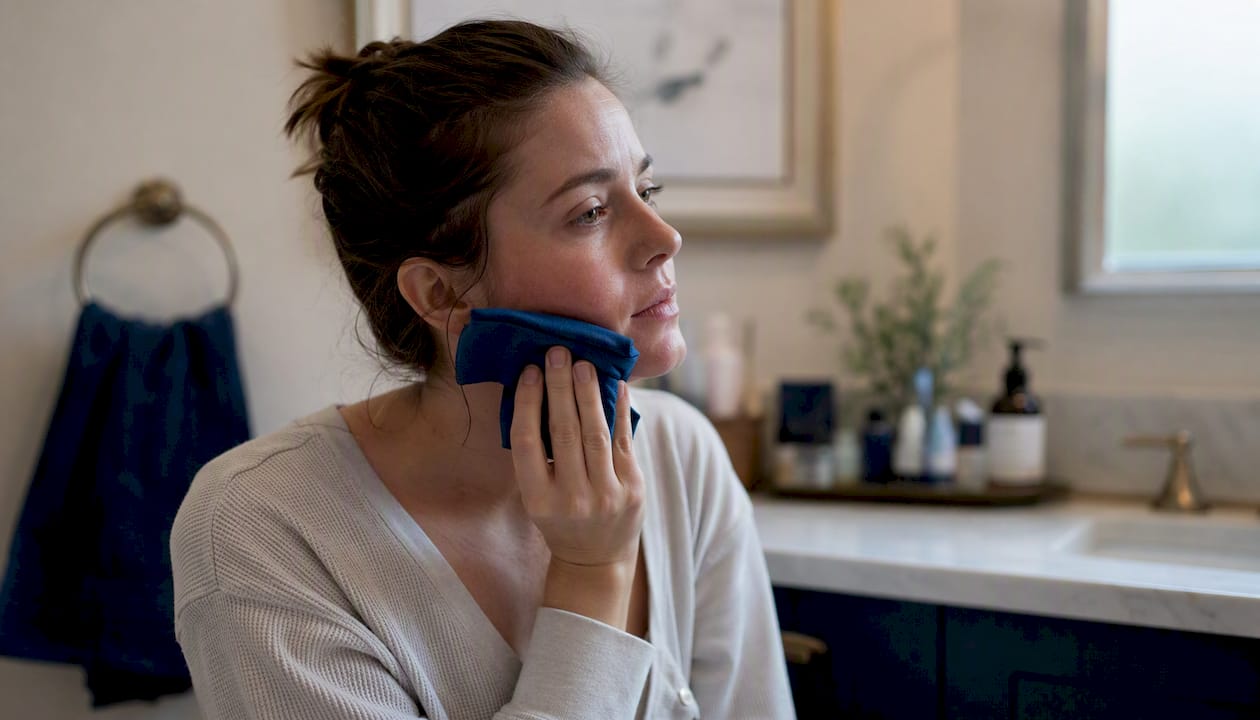
- Apply a cold compress to the outside of your cheek if there is swelling or recent trauma to the tooth.
- Take an appropriate dose of ibuprofen or naproxen, or acetaminophen if NSAIDs are not safe for you.
- Avoid chewing on the affected side and skip very hot or cold foods until the pain settles.
- Call your dentist today if you notice swelling, fever, or pain that doesn't ease within a day.
Pro Tip: Ice works better in short bursts than one long application. Hold a cold compress against your cheek for 15 to 20 minutes, then give your skin a break for 20 minutes before repeating. Continuous cold can numb the skin without doing much for the deep ache, and it raises your risk of frostbite on the surface.
None of this fixes what's actually wrong with the tooth. A cavity, cracked filling, or abscess needs a dentist to resolve. But getting the pain under control safely buys you time and comfort until CWD Dental Group or your own dentist can see you.
Key Takeaways
Controlling a severe toothache at home means combining saltwater rinses, careful flossing, cold compresses, and correctly dosed NSAIDs or acetaminophen while avoiding benzocaine overuse and topical aspirin until a dentist can treat the actual cause.
| Point | Details |
|---|---|
| Start with the basics | Warm saltwater rinse, gentle flossing, and a cold compress handle most of the immediate pain and swelling. |
| Follow ADA dosing guidance | Ibuprofen 400 mg or naproxen 440 mg, alone or with acetaminophen, is the recommended first-line pain approach. |
| Respect the benzocaine warning | Avoid benzocaine gels in children under 2 and never exceed package dosing due to methemoglobinemia risk. |
| Know the two red flags that mean go now | Spreading facial swelling and difficulty breathing or swallowing both call for emergency care immediately. |
| Home care is a bridge, not a cure | CWD Dental Group offers same-day emergency appointments to treat the underlying cause once pain is stabilized. |
Table of Contents
- How to Control Severe Toothache at Home Step by Step
- What Home Remedies Actually Help, and Which Ones Don't
- Which OTC Pain Relievers Actually Work for Tooth Pain
- Is It Safe to Use Numbing Gel or Clove Oil on a Tooth?
- When Severe Tooth Pain Becomes a Medical Emergency
- What to Bring to Your Emergency Dental Appointment
- Why Same-Day Dental Care Actually Solves the Problem
- Get Same-Day Relief When Home Care Isn't Enough
- Sources
How to Control Severe Toothache at Home Step by Step
Knowing the steps is one thing. Doing them correctly is what actually moves the needle on pain. Here's the technique behind each one.
- Mix and use the saltwater rinse properly. Dissolve ½ teaspoon of salt in 8 ounces of warm (not hot) water, per NHS guidance. Swish it around the painful area for 30 to 60 seconds, then spit. Don't swallow it. Repeat every two to three hours as needed. Salt water pulls fluid out of inflamed gum tissue and rinses away bacteria sitting in the pocket around the tooth, which is part of why it shows up in nearly every clinical first-aid protocol for toothache.
- Floss gently, not aggressively. Trapped food between teeth is one of the most common causes of sudden, sharp tooth pain, and it's often fixable in seconds. Slide the floss down slowly on either side of the tooth rather than snapping it into the gum line. If flossing triggers sharp, shooting pain rather than relief, stop. That's usually a sign the problem is inside the tooth, not between it and its neighbor, and further poking won't help.
- Use cold correctly, and know when heat is wrong. A cold compress or a bag of frozen peas wrapped in a towel works on 20-minutes-on, 20-minutes-off cycles. Cold is the right call for swelling or a recent injury to the tooth. Skip heat entirely on an actively painful or swollen tooth. Heat can accelerate the spread of infection near an abscess, which is the opposite of what you want while waiting for care.
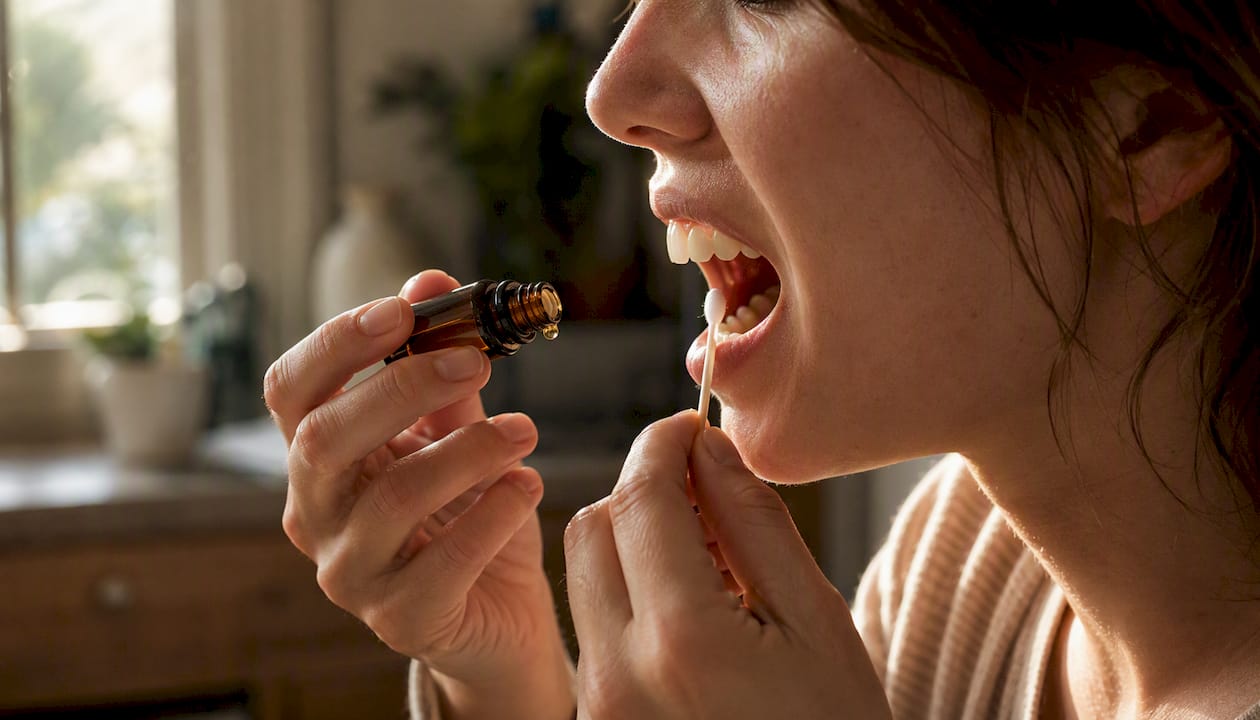
- Try a short-term local application if you have the ingredients. A small cotton ball dabbed with a drop of clove oil and pressed gently against the sore tooth (not the gum) can provide brief numbing for some people, thanks to eugenol, a natural compound with mild anesthetic properties. Test it on the inside of your cheek first if you've never used clove oil, since some people react to it. A cooled, damp peppermint tea bag held against the area works on a similar principle for milder sensitivity.
- Support your body while you wait. Stick to soft, room-temperature foods, sip water frequently, and chew exclusively on the opposite side of your mouth. Dehydration and low blood sugar both tend to make pain feel worse than it is.
A few things to actively avoid: never place aspirin directly against your gum. It seems like a logical shortcut since aspirin is a painkiller, but clinical case reports document chemical burns on gum tissue from this exact habit. Aspirin is meant to be swallowed, not applied topically. Skip rubbing alcohol, vanilla extract in large amounts, or any household chemical near the site too. They can irritate soft tissue without doing anything for the actual source of pain.
What Home Remedies Actually Help, and Which Ones Don't
People try a long list of things when a toothache hits at 2 a.m. and the dentist's office doesn't open for six hours. Some of these have real backing. Others are folklore that occasionally does more harm than good.
Warm saltwater rinse remains the most consistently recommended home remedy across clinical sources, and for good reason: it's cheap, safe, and mildly antiseptic. Diluted hydrogen peroxide rinse is another reasonable option. Mix equal parts 3% hydrogen peroxide and water, swish briefly, and spit, according to WebMD's guidance on toothache remedies. It can reduce bacteria and calm inflammation, but never swallow it, and treat it as a short-term adjunct rather than a fix.
Cold compresses help with swelling and trauma-related pain specifically. They do less for pain caused by decay or infection without swelling. Clove oil has a real mechanism (eugenol has documented numbing properties) but the effect is short-lived and inconsistent from person to person.
Garlic paste is popular online because garlic contains allicin, a compound with some antimicrobial activity in lab settings, but there's no strong clinical evidence it meaningfully treats an active toothache in the mouth, and the raw paste can irritate soft tissue. Vanilla extract dabbed on the gum is mostly anecdotal. It contains a small amount of alcohol, which may provide fleeting numbness, but the effect is minor.
Elevated head position while lying down is a small, legitimate trick. Throbbing tooth pain often worsens when blood pools toward your head, so an extra pillow at night can measurably reduce nighttime pain spikes.
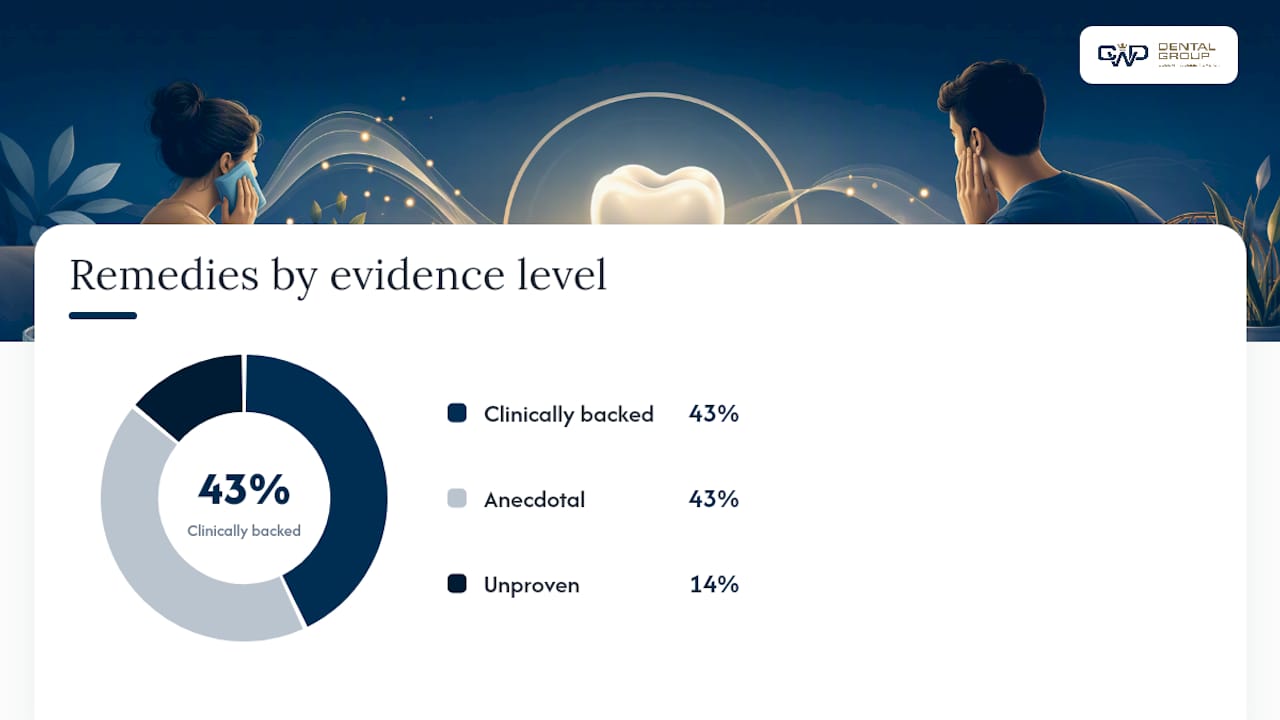
| Remedy | Likely benefit | Evidence level |
|---|---|---|
| Warm saltwater rinse | Antiseptic, reduces inflammation | Clinician-supported |
| Diluted hydrogen peroxide rinse | Antiseptic adjunct | Clinician-supported, short-term only |
| Cold compress | Reduces swelling from trauma | Clinician-supported for swelling/injury |
| Clove oil | Mild, temporary numbing | Anecdotal with plausible mechanism |
| Elevated head position | Reduces nighttime throbbing | Anecdotal, low risk |
| Garlic paste | Claimed antimicrobial | Unproven for active toothache |
| Vanilla extract | Mild, brief numbing | Anecdotal, weak effect |
| Aspirin on gums | None; causes tissue burns | Avoid |
Pro Tip: Match the remedy to what's actually happening. If you see swelling, cold compresses and saltwater rinses are your priority. If the pain is sharp and triggered by hot or cold food with no visible swelling, you're likely dealing with sensitivity or a cracked tooth, and clove oil or a desensitizing approach makes more sense than ice.
Which OTC Pain Relievers Actually Work for Tooth Pain
The clearest, best-supported answer here comes from the ADA's evidence-based clinical practice guideline: NSAIDs, specifically ibuprofen or naproxen, work better than opioids for most acute dental pain, and they should be your starting point. Acetaminophen is the alternative when NSAIDs aren't safe for you, and combining the two under guidance can outperform either one alone.
Check every other medication and cold or flu product you're taking before you double up. Acetaminophen hides in a surprising number of combination products, and stacking doses without noticing is one of the most common ways people accidentally exceed the daily limit. If you're pregnant, over 65, on blood thinners, or managing kidney or liver disease, talk to a pharmacist before combining any of these, since dosing and safety margins shift for those groups.
A 2024 ADA clinical practice summary reinforces that opioids should stay off the table for routine dental pain and only enter the conversation when NSAIDs and acetaminophen genuinely aren't controlling things. When a dentist does prescribe an opioid, guidance calls for the lowest dose for the shortest span, rarely more than three days. That's a meaningful shift from how dental pain was managed a decade ago, and it reflects a broader move toward opioid-sparing care across medicine.
Before taking anything, run through a quick mental checklist: any known drug allergies, what else you've taken in the last six hours, and whether your age or any condition changes the safe dose. When in doubt, a pharmacist can answer this in under a minute, no appointment needed.
Is It Safe to Use Numbing Gel or Clove Oil on a Tooth?
Topical benzocaine products, the numbing gels sold for toothaches and teething, carry a genuine safety warning that's easy to miss on the box. The FDA and pharmacy safety alerts have flagged benzocaine for its link to methemoglobinemia, a rare but serious condition where blood loses its ability to carry oxygen properly. A University of Utah pharmacy safety alert specifically warns against using benzocaine in children under 2 years old, and adults should stick strictly to package dosing rather than reapplying frequently for lasting relief.
Symptoms of methemoglobinemia include pale or bluish skin, lips, or nail beds, shortness of breath, fatigue, and rapid heart rate. If any of these appear after using a numbing gel, stop the product and seek medical attention immediately. This applies with extra weight to anyone with existing heart or lung conditions, who face a higher risk from reduced oxygen-carrying capacity.
Clove oil is the gentler alternative, and it's worth reaching for first. Dab a small amount on a cotton ball, dilute it with a carrier oil like olive oil if you have sensitive tissue, and hold it against the tooth rather than the gum for a few minutes at a time. Stop immediately if you notice burning, swelling, or a rash.
A short list of what never belongs near a sore tooth: aspirin pressed against the gum, undiluted essential oils, rubbing alcohol, or excessive reapplication of any numbing gel chasing relief that isn't lasting. None of these solve the underlying problem, and several can cause a second injury on top of the first.
When Severe Tooth Pain Becomes a Medical Emergency
Home care has limits, and knowing exactly where those limits sit matters more than any remedy on this list. NHS guidance draws a clear line: see a dentist if pain lasts more than two days, or immediately if you notice swelling, fever, or difficulty breathing.
Watch for these red flags:
- Swelling that spreads to your face, neck, or under your jaw.
- Difficulty breathing, swallowing, or opening your mouth fully.
- A fever, especially above 101°F, alongside tooth pain.
- Pain that keeps worsening after 24 to 48 hours despite proper OTC dosing.
- A foul taste or visible drainage coming from the gum near the tooth.
- Swelling severe enough to distort your face or affect your speech.
Spreading facial swelling combined with breathing or swallowing trouble is not a "call the dentist tomorrow" situation. That combination can signal a deep space infection tracking toward your airway, and it needs an emergency room, not a next-day appointment. Call 911 or head straight to the ER, and don't drive yourself if breathing feels compromised.
For everything short of that, same-day emergency dental care is the right call. Before you go anywhere, jot down what you've taken and when, so whoever treats you (a triage nurse, an ER doctor, or your dentist) has the full picture and won't accidentally have you double up on a medication you already took.
What to Bring to Your Emergency Dental Appointment
A little preparation turns a rushed, painful appointment into a fast, effective one. Bring a list of every medication you're currently taking, including supplements, plus any known drug allergies. Write down when your pain started, what it feels like (throbbing, constant, or triggered by hot and cold), and whether you've noticed swelling, fever, or drainage.
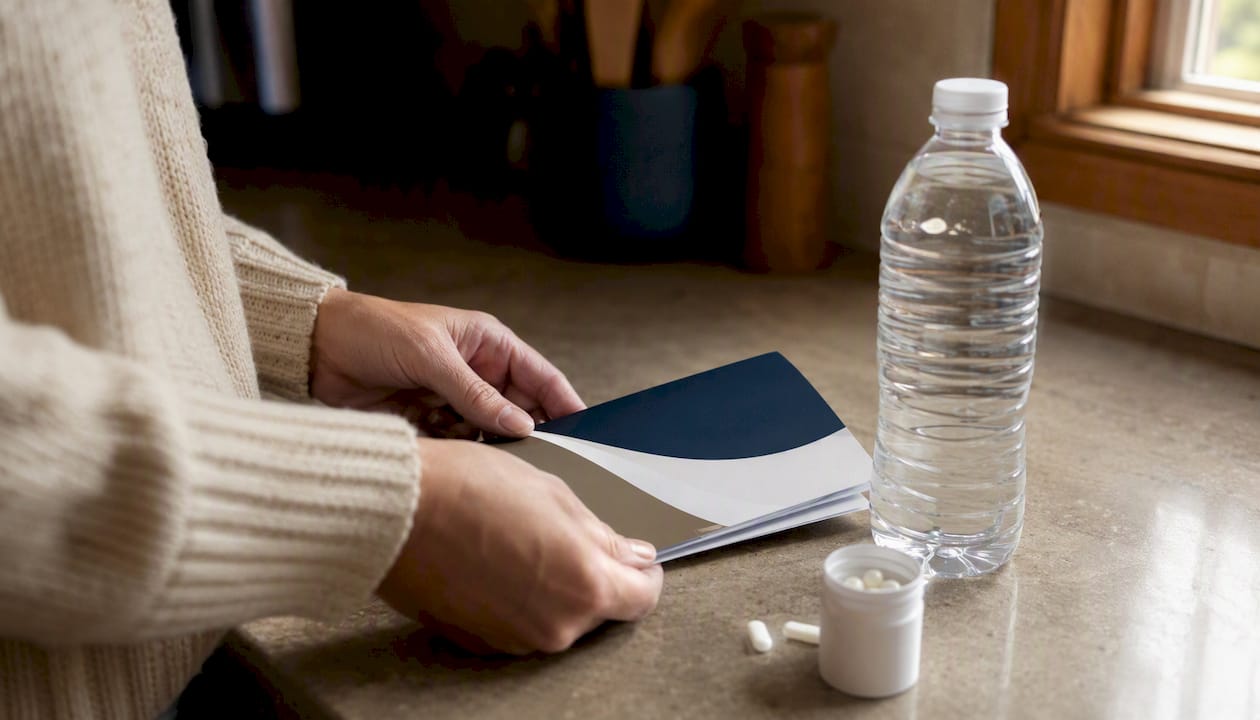
Keep a simple timeline of what you've tried at home and when: the saltwater rinse, the last dose of ibuprofen, the ice pack. This prevents your dentist from prescribing something that duplicates what's already in your system, and it helps them figure out how the pain has changed over time. If you've noticed visible swelling, a quick photo on your phone from a few hours earlier can show your dentist how quickly things are progressing.
When you call to book, ask directly whether same-day appointments are available and what the practice needs from you before you arrive. Many same-day emergency dentists will do a quick phone triage to figure out whether you need to come in immediately or whether a next-morning slot is safe. It's also fine to ask about anesthesia options and rough cost expectations before you get there. If you're unsure whether what you're dealing with counts as urgent, this guide on distinguishing a dental emergency from routine pain can help you decide how fast to move.
Why Same-Day Dental Care Actually Solves the Problem
Everything covered so far manages pain. None of it treats what's causing it. A same-day emergency dental visit does both, which is the real distinction between home care and professional care.
At an emergency visit, a dentist typically starts with a quick exam and an X-ray to pinpoint the source, whether that's decay reaching the nerve, a cracked tooth, or an abscess. If there's an abscess, draining it is often what actually breaks the pain cycle. Antibiotics alone rarely resolve a dental infection long-term because the bacteria are sitting inside a pocket that needs physical drainage or root canal therapy to fully clear. From there, treatment might mean a temporary restoration to get you comfortable, a root canal referral, or an extraction if the tooth can't be saved.
A toothache that keeps you up at night is rarely a hygiene problem you can rinse away. It's usually a structural one, a crack, a deep cavity, or an infection, that needs a dentist's hands and equipment to actually fix. Home remedies buy time. They don't buy resolution.
CWD Dental Group offers same-day emergency appointments specifically because delayed dental infections don't stay contained. What starts as a sore tooth can progress to facial swelling or a spreading infection within days if left untreated, which is part of why urgent scheduling matters as much as the treatment itself. If you're dealing with a cracked tooth or you're not sure whether your symptoms qualify as an emergency, that's exactly the kind of call a same-day visit is built to sort out quickly.
Same-day care makes the most sense when pain is severe, swelling is present, or a tooth has been physically damaged. A routine appointment is fine for mild, intermittent sensitivity with no swelling or fever. When you do come in for an emergency visit, expect a short intake about your symptoms and medications, an X-ray, and a conversation about your treatment options before anything happens, so you're never caught off guard about what comes next.
A realistic look at pain, priorities, and what patients actually want
Most people dealing with severe tooth pain aren't hoping for zero pain. They're hoping for manageable pain and a plan. That distinction matters because it shapes how you should think about home care from the start: the goal of rinsing, flossing, icing, and dosing correctly is to get through the next several hours, not to solve the problem yourself. The ADA's own research backs up something worth knowing if you're worried about pain medication choices: most patients, when given the option, prefer nonopioid approaches and are relieved to learn NSAIDs work as well or better for this specific kind of pain. That preference isn't a compromise. It's usually the right call clinically, too.
There's an emotional weight to a bad toothache that doesn't get talked about enough. It disrupts sleep, concentration, and mood in a way that feels disproportionate to "just a tooth," and people sometimes feel like they're overreacting by seeking urgent care for it. They're not. Pain that keeps you up, that radiates into your jaw or ear, or that doesn't respond to proper OTC dosing is your body telling you the home remedies have done what they can do. The fix at that point isn't a stronger remedy. It's a dentist.
Get Same-Day Relief When Home Care Isn't Enough
Every step in this guide is designed to hold you over, not to replace an actual diagnosis. When rinsing, icing, and proper OTC dosing stop being enough, CWD Dental Group in Tallahassee offers same-day emergency appointments specifically so you're not stuck waiting days while an infection or cracked tooth gets worse.
Calling ahead gets you a quick phone triage to figure out how urgent your situation is and whether you should come in right away or the next morning. From there, the team handles what home care can't: urgent exams, extractions when a tooth can't be saved, referrals for root canal therapy, and prescriptions for antibiotics or stronger analgesics when the situation calls for it. Patients consistently point to the practice's straightforward communication about cost and insurance before treatment starts, which matters when you're already stressed about pain. If you're weighing whether your symptoms need a walk-in visit, this overview of how emergency dental visits are handled walks through what to expect start to finish.
If your pain fits any of the red flags covered earlier, don't wait it out with another dose of ibuprofen. Request a same-day emergency appointment and get the actual source of the pain treated today.
Sources
These are the sources behind the dosing guidance, technique steps, and safety warnings covered above, worth bringing up if you want to talk through options with your dentist directly.
- Evidence-based clinical practice guideline for the pharmacologic management of acute dental pain in adolescents, adults, and older adults: A report from the American Dental Association Science and Research Institute, the University of Pittsburgh, and the University of Pennsylvania - PMC
- Toothache: First aid - Mayo Clinic
- Toothache - NHS
- 2024 ADA clinical practice guidelines summary (WVU-hosted PDF)
- Benzocaine over-the-counter products can increase risk of serious or life‑threatening conditions - Pharmacy Services (University of Utah)
This article is general information, not a substitute for advice from a qualified doctor. Consult a qualified healthcare professional about your own circumstances before acting on anything here.