
Why a cracked tooth is a dental emergency
A cracked tooth becomes a true dental emergency the moment it causes severe or persistent pain, exposes the inner pulp, produces swelling, or leaves the tooth feeling loose. At that point, you are not dealing with a cosmetic inconvenience. You are dealing with a pathway for bacteria to reach the nerve, the root, and eventually your bloodstream.
The core risk is pulp involvement. The pulp is the soft tissue at the center of your tooth that contains nerves and blood vessels. Once a crack reaches it, bacteria can colonize the space rapidly, triggering infection that a dentist cannot reverse with simple monitoring. A cracked tooth with pulp exposure carries a high risk of irreversible damage and abscess formation, even when the initial pain feels manageable.
Knowing the difference between a crack you can watch and one that demands same-day care is the most useful thing you can take from this article. These are the signs that push a crack into emergency territory:
- Severe pain that does not ease after a few minutes
- Pain that wakes you up at night or persists without biting
- Visible swelling in the gum, jaw, or face
- A tooth that feels loose or shifts when you press it
- Bleeding around the tooth that does not stop
- Fever or a bad taste in your mouth, which can signal abscess
- Sudden relief from pain after days of intense aching (this can mean nerve death, not healing)
If any of these apply to you right now, do not wait for a routine appointment. Dental emergency symptoms like these require same-day evaluation.
How to recognize the symptoms and causes of a cracked tooth
Not every crack announces itself with dramatic pain. Cracked tooth syndrome is notorious for its inconsistent, easy-to-dismiss symptoms, which is exactly why people delay care longer than they should.
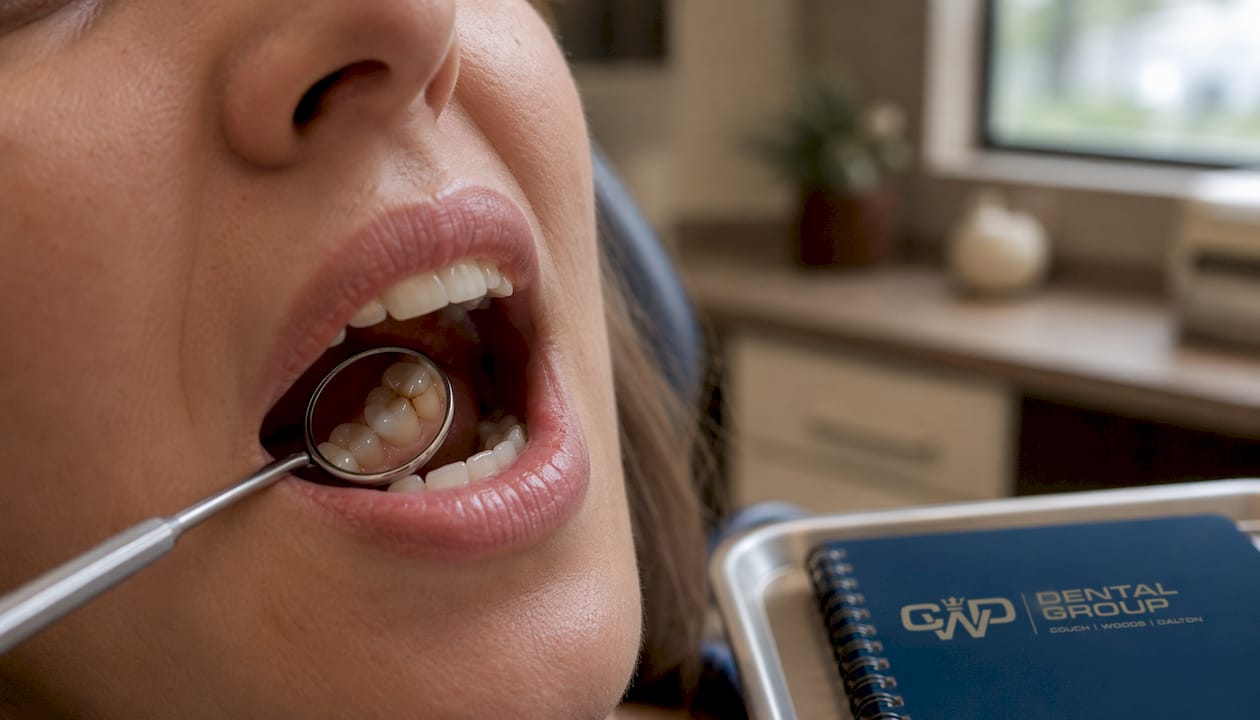
The most telling symptom is a sharp, sudden pain when you bite down and then release pressure. That pain on release is a diagnostic clue: the crack flexes under load and springs back, briefly pinching the pulp tissue. Cold sensitivity that lingers for more than a few seconds, a dull ache that comes and goes, and difficulty pinpointing which tooth hurts are all classic presentations. If the crack has already reached the pulp, you may notice a continuous ache that worsens with heat and disturbs sleep.
Common symptoms:
- Sharp pain on biting, especially when releasing pressure
- Sensitivity to cold, heat, or sweet foods
- Intermittent aching that is hard to localize
- Gum tenderness or swelling near one tooth
- A visible line or chip on the tooth surface
Common causes:
- Occlusal forces from chewing hard foods like ice, popcorn kernels, or hard candy
- Bruxism (teeth grinding), which applies sustained pressure, especially overnight
- Dental trauma from a fall, sports injury, or vehicle accident
- Large existing fillings that weaken the surrounding tooth structure
- Age-related changes that reduce the tooth's natural elasticity
Minor superficial cracks called craze lines typically affect only the outer enamel and do not require urgent care. The problem is that craze lines can deepen over time with continued chewing forces, and there is no reliable way to predict which ones will progress without a professional assessment.
How dentists diagnose a cracked tooth
Diagnosing a cracked tooth is genuinely difficult. Standard dental X-rays often miss cracks entirely because a fracture plane running vertically through a tooth does not show up on a two-dimensional image. This is one reason patients sometimes visit multiple providers before getting a clear answer.
Dentists use several tools to locate and assess a crack. A thorough patient history comes first: when the pain started, what triggers it, whether it is constant or intermittent. From there, the clinical examination typically involves:
- Visual examination with magnification: A dental loupe or microscope can reveal surface cracks invisible to the naked eye.
- Fiber-optic transillumination: Light passed through the tooth highlights crack lines by showing where light transmission breaks down.
- Bite tests: Biting on a small stick or cotton roll isolates the specific cusp causing pain, helping localize the crack.
- Periodontal probing: A narrow probe checks for deep pockets around the tooth, which can indicate a crack extending below the gumline.
- CBCT imaging: Cone beam computed tomography is the gold standard when conventional imaging is insufficient. It provides a three-dimensional view that reveals crack depth and direction with far greater accuracy than a standard X-ray.
The challenge is that even experienced clinicians can find cracked tooth syndrome difficult to confirm on the first visit. Patients sometimes describe symptoms that overlap with gum disease, a failing filling, or sinus pressure. A systematic approach, combining multiple diagnostic tools, is what separates an accurate diagnosis from a missed one.
Pro Tip: If your dentist suspects a crack but cannot confirm it visually, ask specifically about fiber-optic transillumination or a CBCT scan before accepting a "wait and see" recommendation. Early detection dramatically improves your treatment options.

Treatment options for a cracked tooth
Treatment depends almost entirely on how deep the crack runs and whether the pulp is involved. There is no single protocol that fits every case, but the progression from minor to severe follows a clear path.
-
Monitoring (craze lines only): Superficial enamel cracks with no symptoms and no pulp involvement may simply be watched at regular checkups. No active treatment is needed unless symptoms develop.
-
Dental bonding or composite repair: For small cracks that have not reached the pulp, a tooth-colored composite resin can seal the fracture and restore the tooth's shape. This works best on front teeth with minor chips.
-
Dental crown: A crown covers the entire tooth and prevents the crack from flexing under biting pressure. This is the most common treatment for a cracked molar or premolar. Placing a crown early, before pulp involvement, gives the tooth its best long-term chance. Research on cracked teeth stabilized with cuspal coverage shows an 11% failure rate requiring endodontic therapy, which underscores the value of acting before the crack progresses.
-
Root canal therapy: When the crack has reached the pulp and caused irreversible pulpitis or infection, root canal treatment removes the damaged tissue, cleans the canal, and seals it. A crown typically follows to protect the remaining structure. This is a common emergency cracked tooth treatment when pain is severe or an abscess is present.
-
Extraction: If the crack extends through the pulp chamber floor or runs below the gumline, the tooth is often unrestorable. Extraction followed by an implant or bridge becomes the only viable path. This outcome is far more likely when treatment is delayed.
The timeline matters. A crack caught at the crown stage can often be resolved in one or two appointments. A crack that has progressed to abscess may require root canal therapy, antibiotics, and multiple visits, with extraction still possible if the infection has spread too far.
What happens if you delay treatment for a cracked tooth
Waiting on a cracked tooth is not a neutral decision. Every day the crack remains untreated, chewing forces can drive it deeper, and bacteria have more opportunity to colonize the exposed tissue.
Bacteria that penetrate through a crack cause progressively worsening infection. What starts as pulp irritation becomes pulp necrosis, then an abscess, then potentially a spreading infection that moves into the jawbone, the neck, or the facial spaces. A dental abscess that reaches the bloodstream can become life-threatening, and that is not hyperbole. Harvard Health notes that bacteria from an abscess can travel to the brain or heart.
One particularly deceptive pattern: the pain stops on its own. This feels like good news, but it often means the nerve has died from the infection rather than the tooth healing. Nerve death from infection progression allows the infection to continue silently, destroying bone and tissue without the warning signal of pain. By the time symptoms return, the damage is far more extensive.
The risks of delay, in plain terms:
- The crack deepens and becomes unrestorable
- Pulp infection develops, requiring root canal therapy
- An abscess forms, causing severe swelling and systemic risk
- The tooth requires extraction, which is more expensive and complex to restore
- Infection spreads to adjacent teeth, bone, or soft tissue
Tooth pain that needs urgent dental care rarely resolves on its own. The underlying structural damage does not repair itself.
Home care and temporary pain relief before your appointment
Getting to a dentist quickly is the priority. While you are waiting for your appointment, a few measures can reduce pain and protect the tooth from further damage.
- NSAIDs for pain: Ibuprofen (Advil, Motrin) or naproxen (Aleve) reduce both pain and inflammation more effectively than acetaminophen alone for dental pain. Follow the package dosing instructions and do not exceed the recommended amount.
- Cold compress: Apply a cold pack wrapped in a cloth to the outside of your cheek for 15–20 minutes at a time to reduce swelling.
- Salt water rinse: Dissolve half a teaspoon of salt in eight ounces of warm water and rinse gently. This helps keep the area clean without irritating the crack.
- Preserve any dislodged fragment: If a piece of tooth breaks off, store it in milk or saliva and bring it to your appointment. Do not let it dry out.
- Avoid the affected side: Do not chew on the cracked tooth. Stick to soft foods and chew on the opposite side until you are seen.
- Skip temperature extremes: Very hot or very cold food and drinks will likely trigger sharp pain and may worsen sensitivity.
Pro Tip: Over-the-counter dental cement (sold at most pharmacies as Dentemp or a similar product) can temporarily cover a sharp edge or exposed area until your appointment. It is not a treatment, but it can protect the area and reduce sensitivity for a day or two.
If you cannot reach your regular dentist, finding an after-hours emergency dentist quickly is worth the effort. Emergency rooms can provide pain medication or antibiotics, but ER staff cannot perform definitive dental repairs. You will still need a dentist for the actual treatment.
How dental professionals handle cracked tooth emergencies
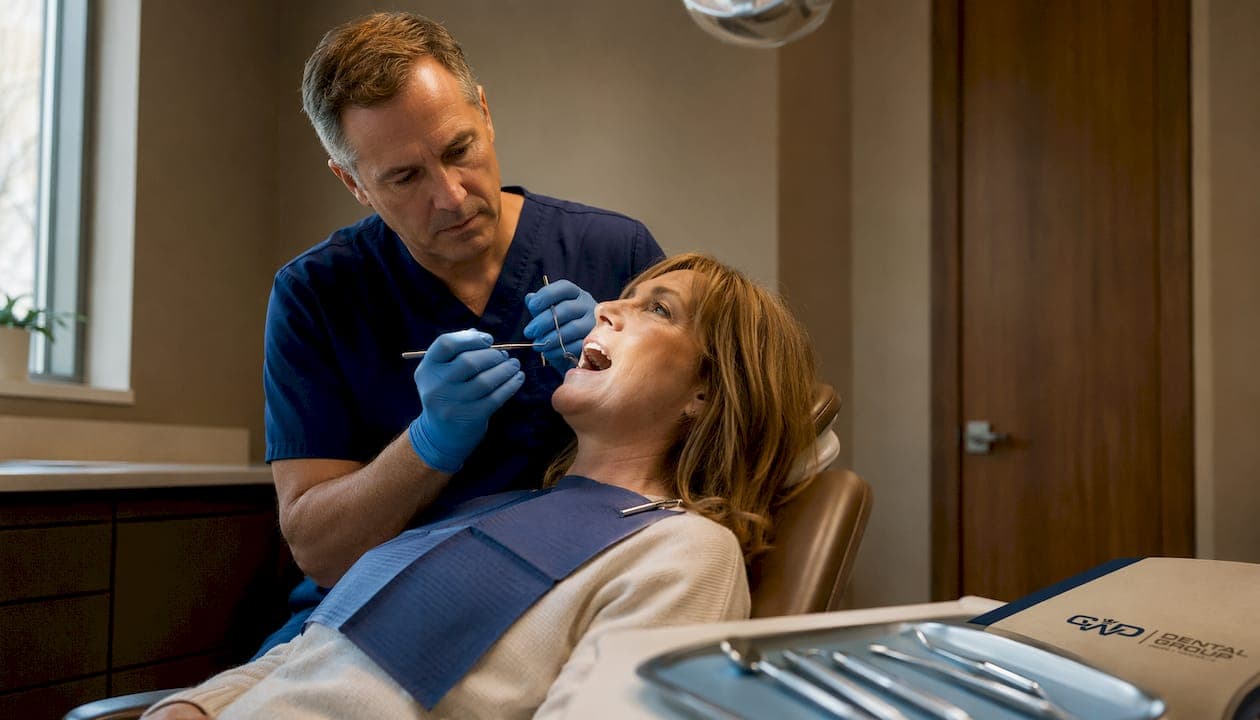
When a patient arrives at Cwddentalgroup with a suspected cracked tooth, the first goal is accurate diagnosis, not just pain management. The clinical team takes a full history, performs a visual exam with magnification, and uses bite tests and transillumination to localize the crack before recommending any treatment. That sequence matters because treating the wrong tooth, or treating a crack at the wrong stage, leads to poor outcomes.
Cwddentalgroup offers same-day emergency appointments for patients in Tallahassee, which means you do not have to manage a worsening crack over a weekend or wait days for an opening. Same-day access is not just a convenience feature. For a crack approaching the pulp, 24–48 hours can be the difference between saving the tooth with a crown and losing it to an abscess.
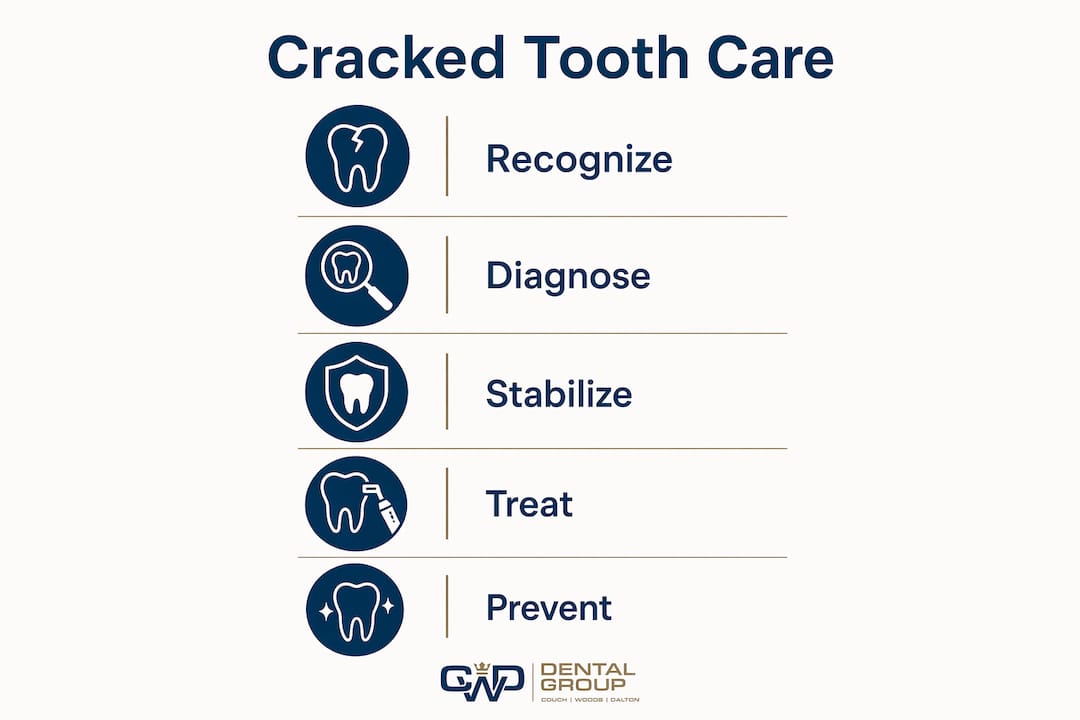
The clinical approach at Cwddentalgroup follows current evidence-based protocols: stabilize the crack to stop flexing, assess pulp vitality, and choose the least invasive treatment that gives the tooth a realistic long-term prognosis. For patients with bruxism, a custom night guard is often part of the follow-up plan to prevent future fractures.
Patients who are anxious about emergency visits can expect the team to walk through every step before starting. Cwddentalgroup's approach centers on keeping patients informed and comfortable, not rushing through a procedure because it is urgent. For a detailed look at how same-day dental emergencies are managed clinically, the protocols are consistent across well-equipped practices: triage, stabilize, treat, and follow up.

If you are in Tallahassee and dealing with a cracked tooth right now, Cwddentalgroup's emergency dental team is available for same-day appointments. Do not wait for the pain to get worse before calling.
Key Takeaways
A cracked tooth is a dental emergency when it causes severe pain, swelling, looseness, or signs of infection, and delaying care turns a treatable crack into a potential tooth loss.
| Point | Details |
|---|---|
| Emergency signs to act on | Severe pain, swelling, looseness, fever, or sudden pain relief all require same-day dental evaluation. |
| Craze lines vs. deep cracks | Superficial craze lines rarely need urgent care, but any crack causing symptoms warrants professional assessment. |
| Diagnosis requires more than X-rays | Fiber-optic transillumination and CBCT imaging are often needed because cracks are frequently invisible on standard X-rays. |
| Delayed treatment escalates risk | Bacteria entering through a crack can cause abscess, nerve death, and potentially life-threatening systemic infection. |
| Home care buys time, not a cure | NSAIDs, cold compresses, and salt water rinses manage symptoms temporarily; only a dentist can repair the crack. |