
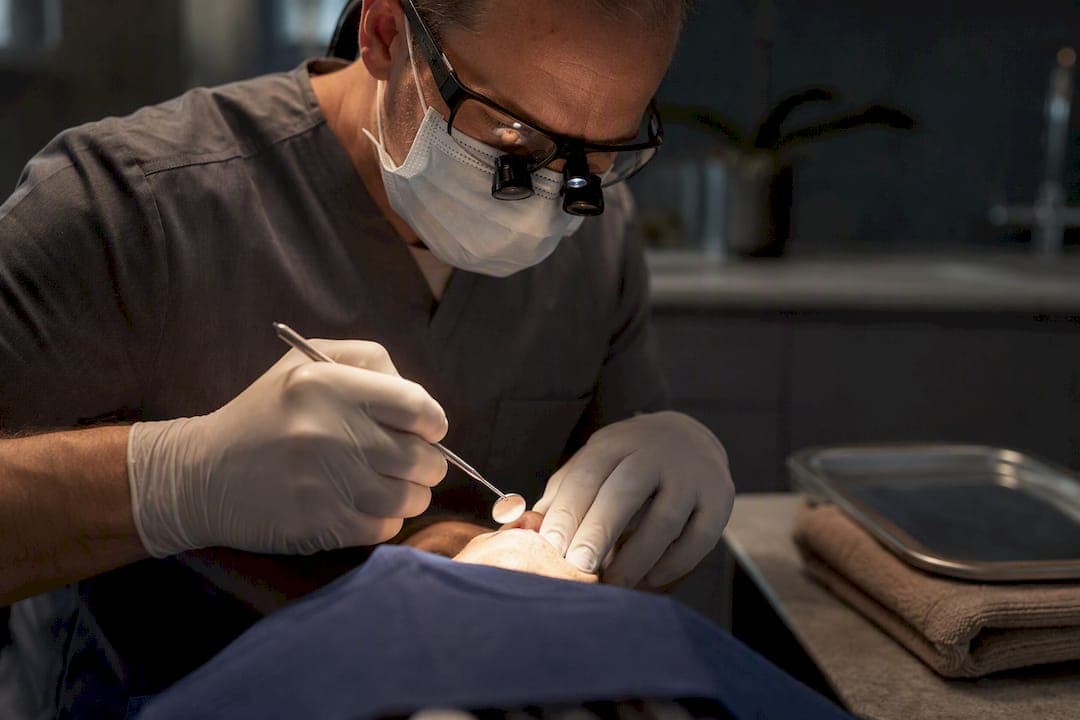
If your extraction site hurts worse on day two or three than it did the day of surgery, and you notice a foul taste or an empty-looking socket where a dark clot should be, that's dry socket. Call your dentist the same day., especially if you can see bone or the pain isn't responding to over-the-counter medication.
TL;DR:
- Smoking, vaping, or using hormonal birth control significantly increases the risk of dry socket by dislodging the blood clot and slowing healing.
- Pain worsening on days two or three after extraction, especially if radiating and unresponsive to over-the-counter medication, strongly indicates dry socket.
- Visible bone, an empty socket, or a persistent foul taste and bad breath despite good hygiene are key signs of dry socket requiring prompt dental attention.
- Most dry socket cases require same-day treatment with socket irrigation and medicated dressing, and antibiotics are only necessary if secondary infection occurs.
- Preventative measures such as avoiding straws, soft foods, and smoking for at least 72 hours help reduce the likelihood of developing dry socket.
Table of Contents
- What Are the Real Dry Socket Symptoms to Watch For?
- What Causes Dry Socket and Who's Most at Risk?
- Normal Healing vs. Dry Socket: What's the Difference?
- When Does Dry Socket Pain Become an Emergency?
- What Should You Do Right Now, and What Will the Dentist Do?
- How Can You Lower Your Risk After an Extraction?
- How Long Does It Take to Recover Once Treated?
- A Dental Practice's Take on Catching Dry Socket Early
- Same-Day Relief When You Need It Most
- Sources
What Are the Real Dry Socket Symptoms to Watch For?
The hallmark is timing: pain that starts easing off, then reverses course and gets worse around day two or three after the extraction. It doesn't stay put either. Patients often describe it radiating from the socket up into the ear, temple, or down the neck, which throws people off because it doesn't feel like a "tooth problem" anymore, it feels like an earache or a headache. That's exactly the pattern Mayo Clinic describes as characteristic of alveolar osteitis, the clinical term for dry socket.
Look inside the socket if you can manage it with a clean mirror or flashlight. A normal healing site shows a dark, reddish clot filling the gap. Dry socket shows an empty hole, sometimes with pale or grayish tissue, and occasionally visible bone.
By the numbers: Dry socket affects roughly 2% to 5% of all extractions, with the rate climbing noticeably higher after lower wisdom tooth removal.
Beyond pain, two other signs show up consistently:
- A persistent bad taste in the mouth that doesn't go away with brushing or rinsing.
- Noticeable bad breath that seems disconnected from normal oral hygiene.
A low-grade temperature can accompany dry socket, but Harvard Health notes that anything above 101°F points toward a secondary infection rather than straightforward alveolar osteitis, and that distinction changes how a dentist treats you.
What Causes Dry Socket and Who's Most at Risk?
The mechanism is simpler than the name suggests. A blood clot is supposed to form over the extraction site and act as a protective seal over bone and nerve endings. When that clot dislodges early or never forms properly, the bone and nerves underneath sit exposed to air, food, and bacteria. That exposure is what produces the sharp, radiating pain, and MedlinePlus frames it as an inflammatory reaction to that exposed tissue rather than a straightforward infection.
Some people are simply more likely to lose that clot than others. The known risk factors include:
- Smoking or vaping in the days after extraction, which mechanically dislodges the clot and slows healing.
- A traumatic or difficult extraction, common with impacted lower wisdom teeth.
- Active gum disease or an existing oral infection at the time of surgery.
- Poor oral hygiene before or after the procedure.
- Hormonal birth control, which some research links to higher rates of clot breakdown.
- A previous episode of dry socket, which raises your odds of it happening again.
Mayo Clinic singles out tobacco use and periodontal disease as the two most significant, and most modifiable, risk factors on that list.
Normal Healing vs. Dry Socket: What's the Difference?
Typical extraction recovery follows a predictable arc. Here's how the two compare day by day:
- Days 0 to 1: A clot forms, soreness peaks, and swelling may appear. This is expected.
- Days 2 to 3: Pain should be leveling off or improving. In dry socket, this is exactly when pain spikes instead.
- Days 4 to 7: Normal healing continues quietly, with pain fading toward mild discomfort. Dry socket, left untreated, stays sharp and often gets worse, with poor relief from ibuprofen or acetaminophen.
The clearest tell isn't the pain itself, it's the direction it's moving. Improving day over day is normal. Worsening after day one is not.
When Does Dry Socket Pain Become an Emergency?
Most cases of dry socket need to be seen within 24 hours, mainly for pain control and a proper socket dressing, not because it's life-threatening. But certain signs mean you shouldn't wait even that long. Call your dentist or seek urgent care if you notice:
- Pain that over-the-counter medication doesn't touch at all.
- Visible bone alongside worsening, not stable, symptoms.
- Pus or discharge from the socket.
- A fever above 101°F.
- Swelling that's starting to affect your breathing or swallowing.
That last one belongs in the emergency room, not a dental chair. Everything above it is a same-day call to your dentist.
Pro Tip: Before you call, jot down three things: the exact date of your extraction, what medications you've taken and when, and whether you've noticed any discharge or fever. It cuts triage time in half and gets you into a chair faster.
What Should You Do Right Now, and What Will the Dentist Do?
While you're waiting for your appointment, a few things help without making anything worse. Gentle saline rinses keep the area clean without disturbing tissue. Alternating acetaminophen and ibuprofen, rather than relying on one alone, tends to control dental pain more effectively than either drug by itself, and Harvard Health notes this combination can outperform opioids for this kind of pain. A cold pack against the outside of your cheek helps with swelling. Avoid sucking or chewing motions on that side entirely.
Alternating acetaminophen and ibuprofen is often more effective for acute dental pain than opioids used alone, according to Harvard Health's review of post-extraction pain management.
Once you're in the chair, treatment is fairly routine. The dentist irrigates the socket to clear out debris, then packs it with a medicated dressing that both numbs the area and protects the exposed bone. You'll likely need a few follow-up visits for dressing changes until the pain settles down. Antibiotics aren't automatic. MedlinePlus is clear that they're reserved for cases where a secondary infection is suspected, not for dry socket on its own.
Related reading if you want more detail on managing pain before your appointment: control severe toothache at home and using ice packs safely for dental pain.
How Can You Lower Your Risk After an Extraction?
Prevention comes down to protecting that clot for about a week. Here's the short version:
- Skip smoking and vaping entirely for at least 72 hours, longer if you can manage it.
- No straws. The suction can pull the clot right out.
- Stick to soft foods and chew on the opposite side.
- Rinse gently, and only starting when your dentist tells you to, usually not the day of surgery.
- Tell your dentist upfront if you smoke or use hormonal birth control, since both change your risk profile and might change how they manage your case.
Nicotine's effect on healing tissue goes beyond the mechanical risk of dislodging a clot. It also restricts blood flow to oral tissue, which slows the whole recovery process even when the clot stays put.
How Long Does It Take to Recover Once Treated?
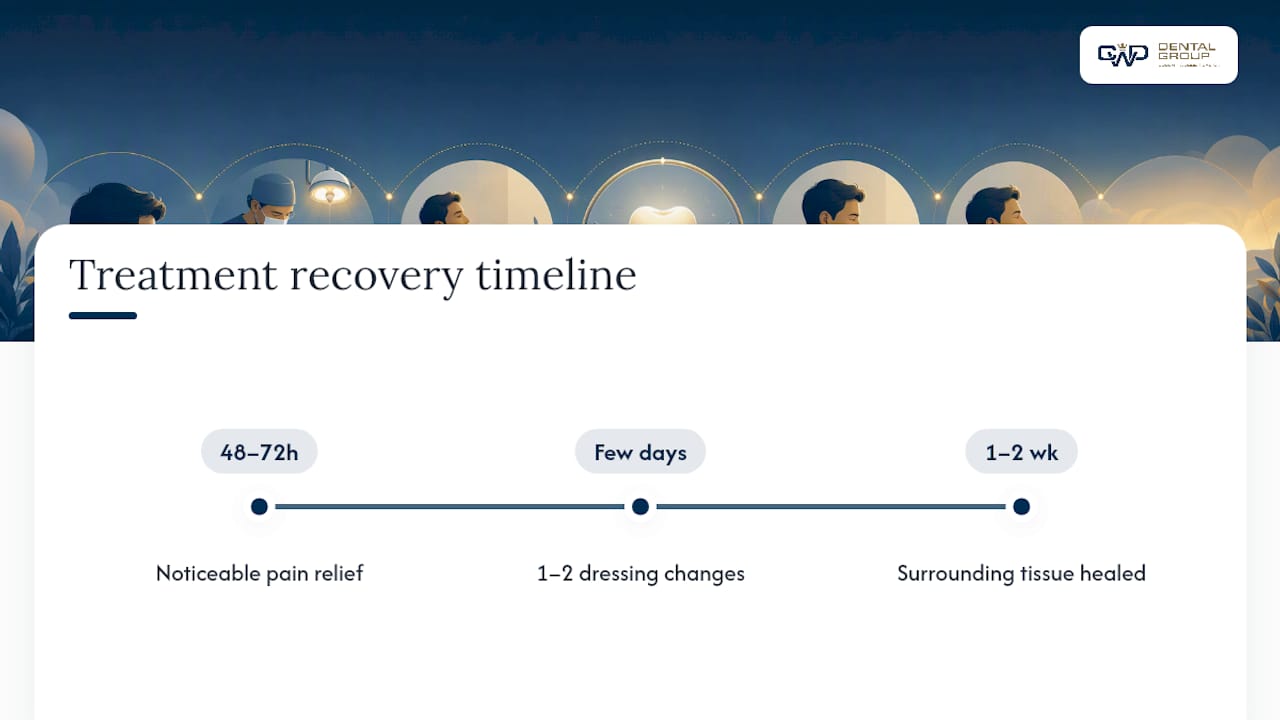
Once a dentist packs and dresses the socket, most patients feel real relief within 48 to 72 hours. The dressing may need to be changed once or twice more before the pain fully resolves, and the surrounding tissue typically finishes healing over one to two weeks.
If pain hasn't improved noticeably after a couple of dressing changes, that's worth a follow-up rather than pushing through it. Serious systemic infection from dry socket is rare when it's treated promptly, which is the reassuring part of an otherwise miserable few days. This is a painful, self-limiting condition with a well-understood treatment path, not a sign something has gone seriously wrong.
A Dental Practice's Take on Catching Dry Socket Early
Patients wait too long, usually because they assume the pain will pass on its own or feel embarrassed about continuing to smoke against advice. Neither is a reason to delay. What matters is getting into a chair fast: bring your extraction date, your medication list, and be honest about tobacco use. That honesty shapes how quickly we get you comfortable.
— Kayle
Same-Day Relief When You Need It Most
Waiting days for a dental appointment while dry socket pain gets worse isn't a real option, and it shouldn't be one. Some dental practices offer same-day emergency appointments in Tallahassee specifically for situations like this, where post-extraction pain has spiked instead of easing off.

A same-day visit for suspected dry socket typically includes an exam to confirm what's going on, gentle irrigation of the socket to clear debris, and a medicated dressing to control pain right away. If a secondary infection is suspected, that gets addressed too. You don't need to guess whether your symptoms are bad enough to justify a call. If pain is worsening rather than improving a day or two after extraction, that's reason enough. Visit the emergency dentist page to see availability and get seen today.
This article is general information, not a substitute for advice from a qualified doctor. Consult a qualified healthcare professional about your own circumstances before acting on anything here.
Sources
- Alveolar osteitis: incidence and risk factors (PMC)
- Dry socket - Symptoms and causes — Mayo Clinic
- Dry socket: preventing and treating a painful condition — Harvard Health
- Dry socket - MedlinePlus Patient Instructions