

Full dental reconstruction for veterans is a phased, medically focused treatment plan that restores chewing, bite function, and speech — not just appearance. When implants are involved, clinicians call it full-arch restoration, and the most common protocol is All-on-4 (four implants supporting a fixed arch prosthesis). Your first move: check whether you qualify for VA Class I dental benefits or Permanent & Total (P&T) status through the U.S. Department of Veterans Affairs. If you don't qualify, the VA Dental Insurance Program (VADIP) and veteran-specific nonprofit programs like the AAID Foundation's Smile Veteran initiative are realistic alternatives.
What to do right now:
- Confirm your VA dental eligibility class (Class I or P&T unlock comprehensive care including implants)
- If not Class I, review VADIP plans from Delta Dental or MetLife
- Contact the AAID Foundation Smile Veteran program or a local "Smiles for Veterans" initiative to check application windows
- Schedule a consultation with an implant-experienced dentist such as Cwddentalgroup in Tallahassee
Pro Tip: Gather your DD214, any recent dental X-rays or CBCT scans, and a brief medical summary (medications, diabetes status) before your first consult. Clinicians use these to triage your case faster and determine whether bone grafting will be needed.
Table of Contents
- What full dental reconstruction actually means clinically
- Veteran-specific programs that offer full-arch restorations
- VA dental coverage: who qualifies and what the VA will pay for
- Clinical candidacy, benefits, and risks of full-mouth reconstruction
- Typical timeline and costs: what to expect at each phase
- How to prepare, apply, and find alternatives if VA or programs don't cover you
- Key Takeaways
- What clinicians actually look for first — and what veterans often don't expect
- Veterans in Tallahassee: how Cwddentalgroup supports your path to reconstruction
- Where to learn more and verify your eligibility
What full dental reconstruction actually means clinically
Full mouth reconstruction and full mouth rehabilitation are clinical terms for rebuilding the entire bite using a combination of restorative procedures: implants, crowns, bridges, bone grafts, gum therapy, and sometimes TMJ treatment. It is not a cosmetic smile makeover. The goal is functional bite restoration — calibrating how your teeth meet, protecting your jaw joints, and making it possible to chew and speak without pain or instability.
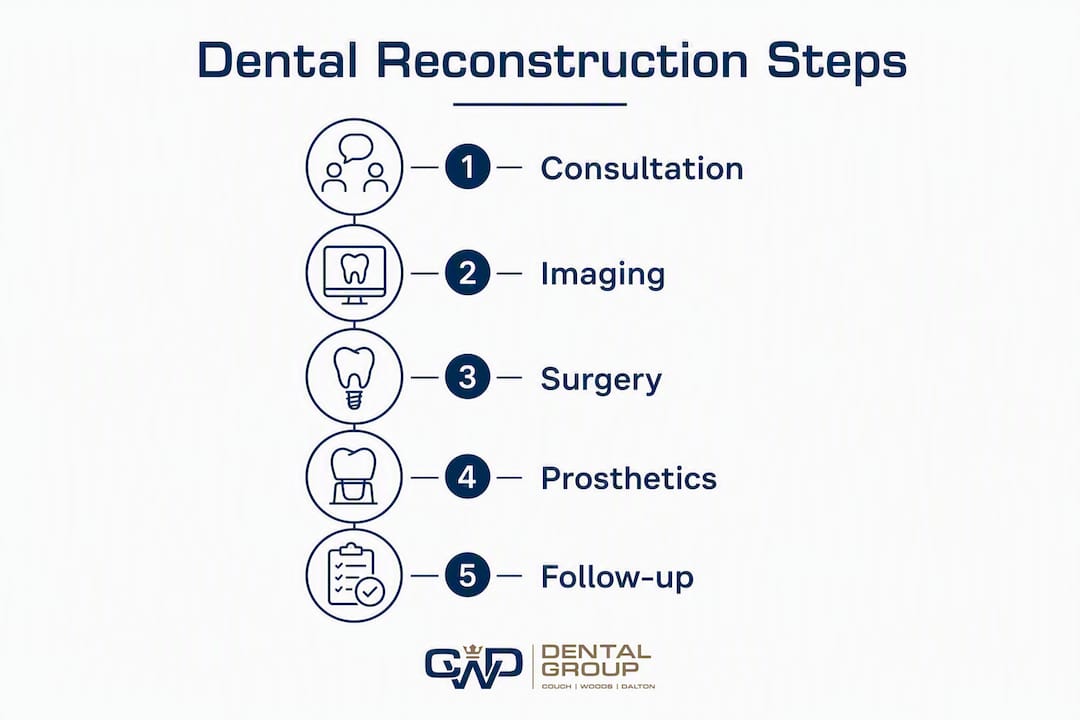
Full-arch implant prostheses take this further. Instead of restoring individual teeth one by one, the clinician places four to six implants per arch and attaches a fixed prosthesis that replaces an entire row of teeth. All-on-4 and All-on-6 protocols are the most common versions. The difference between these and removable dentures is significant: implant-supported arches preserve jawbone, don't slip, and function far closer to natural teeth. Individual implants work well for isolated missing teeth; full-arch prostheses are the answer when most or all teeth in a jaw are missing or failing.
The clinical phases follow a predictable sequence:
- Assessment: Full exam plus 3D CBCT imaging to map bone density and nerve locations
- Disease stabilization: Treat active gum disease, infections, or decay before any permanent work
- Foundation work: Bone grafts or sinus lifts if bone volume is insufficient for implants
- Implant surgery: Placement of titanium implants into the jawbone
- Osseointegration: Healing period (typically 3–6 months) during which bone fuses to the implants
- Final prosthesis delivery: Permanent arch or crowns placed after confirmed healing
Terms you'll hear at consults: CBCT (cone beam CT scan), osseointegration (bone-to-implant fusion), bone graft (added bone material to build up volume), sinus lift (bone augmentation in the upper jaw), and provisional prosthesis (a temporary restoration worn during healing).
Veteran-specific programs that offer full-arch restorations
Several nonprofit and clinic-run programs exist specifically to provide full-arch implant care to veterans at no cost or reduced cost. They are selective, but they are real.

AAID Foundation — Smile Veteran is the most widely recognized national program. The American Academy of Implant Dentistry Foundation partners with member clinicians to provide pro bono implant treatments to qualifying veterans. Applications typically require nomination or direct submission during open windows, and selection is based on clinical need, overall health, and program capacity. The foundation's website lists current application periods and participating providers.
Clinic-based "Smiles for Veterans" initiatives operate at the practice level. Oral surgery and implant practices — such as About Face Oral & Facial Surgery and Placer Oral & Dental Implant Surgery — run their own campaigns, sometimes offering complimentary All-on-4 restorations to a small number of selected veterans per year. These programs are announced on practice websites and through local veteran organizations.
Nonprofit and foundation programs typically cover surgical and restorative work for selected cases, but availability depends on application windows and participating clinicians. That selectivity is worth understanding before you apply.
What most programs require:
- DD214 (proof of honorable discharge)
- Recent dental records, X-rays, or CBCT scans
- Photos of your current smile and bite
- A short medical history (systemic conditions, medications)
- Sometimes a third-party nomination from a veterans service organization
How to evaluate program fit: Ask specifically what the program covers (surgery only, or surgery plus the final prosthesis?), whether follow-up visits are included, and what your obligations are post-treatment (hygiene maintenance, scheduled check-ins). Programs that don't cover the final prosthesis can leave you with implants but no teeth — confirm the full scope before committing.
VA dental coverage: who qualifies and what the VA will pay for
VA enrollment for general medical care does not automatically grant comprehensive dental benefits. The VA uses a classification system, and most veterans fall into classes with narrow or no dental coverage.
Class I veterans — those with a 100% schedular service-connected disability rating or designated Permanent and Total — receive any dental treatment reasonably necessary to maintain oral health and masticatory function, with no time limit and no restriction on repeat care. That includes complex reconstructions and implants when clinically indicated. Class IV veterans (100% schedular rating or individual unemployability) receive similar comprehensive coverage. The scope is not a fixed menu; it is determined by VA clinical judgment under 38 CFR 17.161(a).
Other classes have much narrower access. Class II covers a one-time correction of a service-connected noncompensable dental condition within 180 days of discharge. Class III covers dental conditions aggravating a service-connected disability. Class V and VI are tied to rehabilitation programs or medical necessity during inpatient care.
If you're not Class I or IV, VADIP is your next option. The VA Dental Insurance Program lets enrolled veterans purchase discounted private dental plans from Delta Dental or MetLife. VADIP plans generally cover diagnostic, preventive, restorative, endodontic, and surgical services depending on the plan selected. Enrolling in VADIP does not change your VA dental eligibility class — it is a separate insurance purchase, not a VA benefit upgrade.
Steps to check your eligibility:
- Visit VA.gov dental pages or call your nearest VA Medical Center
- Bring your DD214 and service records to a VA dental screening
- Ask specifically about your dental class and what procedures fall within your authorized scope
Clinical candidacy, benefits, and risks of full-mouth reconstruction
Not every veteran is an immediate candidate for full-arch implant reconstruction, and a good clinician will tell you that upfront.
Candidacy criteria:
- Sufficient bone volume in the jaw, or willingness to undergo bone grafting
- Controlled periodontal (gum) disease — active infection must be resolved first
- Stable systemic health, particularly diabetes (uncontrolled blood sugar significantly raises implant failure risk)
- Non-smoker or a committed smoking-cessation plan before surgery
- Realistic expectations about a multi-stage process that takes months, not weeks
The benefits are substantial when the foundation is right. Implant-supported arches preserve jawbone that removable dentures allow to shrink over time. Chewing function, speech clarity, and nutrition all improve. Implant survival rates are generally high over extended periods when protocols are well-planned, making full-arch restoration a durable intervention in restorative dentistry.
Risks are real too. Surgical complications, graft failures, and implant loss happen — more often when systemic health is poorly controlled or when the treatment is rushed. Bite mismanagement after delivery can fracture ceramic prostheses or create TMJ strain. Long-term success depends more on foundation health and patient maintenance than on the implant brand or loading protocol chosen.
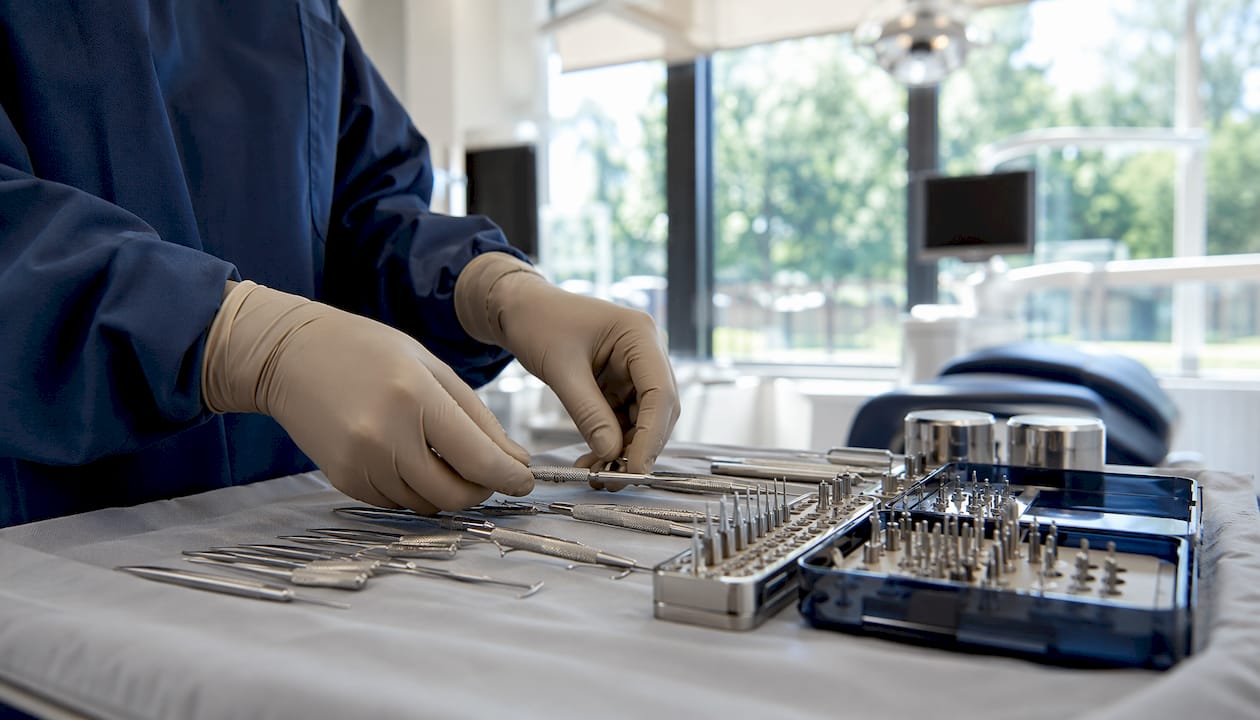
Pro Tip: Insist on CBCT imaging before any treatment plan is finalized. Without a 3D scan, a clinician cannot safely map bone volume and nerve anatomy — and any plan built without that data is guesswork. A staged plan with CBCT is the baseline standard for predictable full-arch outcomes.
Typical timeline and costs: what to expect at each phase
Full mouth reconstruction is not a single procedure — it combines restorative work to rebuild tooth structure and bite relationships, and it can take months to years depending on complexity.
Phase-by-phase timeline:
- Initial consult and CBCT imaging typically require a few visits
- Disease stabilization (gum treatment, extractions): a period depending on case complexity
- Bone grafting and healing (if needed): extended time before implant placement
- Implant surgery with provisional (temporary) prosthesis: day of surgery
- Osseointegration and healing: a period during which bone fuses to the implants
- Final prosthesis delivery: after confirmed bone fusion
Representative private-pay cost ranges:
| Scope | Typical Cost Range | Time to Completion |
|---|---|---|
| Partial full‑mouth cases may start around $15,000, while comprehensive full‑arch implant reconstructions for both arches can exceed $50,000–$80,000 depending on grafting and material choices. Timeline varies from several months to over a year depending on complexity. |
Cost variables include the number of implants, whether bone grafting or sinus lifts are needed, anesthesia type, lab materials (zirconia prostheses cost more than acrylic but last longer), and geographic pricing differences. Clinicians typically provide a phased cost estimate after CBCT and exam — not before.
For veterans exploring the dental implant process step by step, understanding each phase before committing helps set realistic expectations and avoids sticker shock mid-treatment.
How to prepare, apply, and find alternatives if VA or programs don't cover you
Step-by-step preparation before any application or consult:
- Collect your DD214 and any service-related medical records
- Gather recent dental records, X-rays, or CBCT scans (or note when your last imaging was done)
- Write a brief medical summary: current medications, diabetes status, blood pressure, any jaw trauma history
- Take clear photos of your smile and bite if a program requires them
Applying to veteran programs: Most programs open application windows once or twice a year. Watch the AAID Foundation website and local oral surgery practice pages. Some require a third-party nomination; others accept direct applications. After submission, expect a triage phone interview and then a clinical screening appointment if you advance. Selection is limited and based on clinical need and program capacity.
Alternatives if you're not eligible for VA comprehensive care or program selection:
- VADIP plans (Delta Dental, MetLife): discounted private insurance for enrolled veterans; covers many restorative procedures, though implant coverage varies by plan
- Dental schools: University dental programs often provide implant and restorative work at significantly reduced fees under faculty supervision
- Nonprofit and community clinics: Sliding-scale clinics serve veterans with income-based fees; check with local VA social workers for referrals
- Medical financing: CareCredit, Lending Club Patient Solutions, and similar programs offer payment plans for large dental cases; confirm interest terms before signing
- Crowdfunding: GoFundMe campaigns for dental reconstruction have succeeded for veterans with strong community networks, though results vary
For veterans managing gaps between VA appointments, dental care between VA visits is a practical resource for interim options.
Interim care matters. Active infection or severe pain should be addressed before reconstruction begins. Cwddentalgroup offers same-day emergency appointments for urgent issues — an infected tooth or a broken restoration doesn't have to wait weeks for a VA slot.
Key Takeaways
Full dental reconstruction for veterans is a staged clinical process, and Class I VA eligibility or a veteran program selection is the fastest path to covered full-arch implant care.
| Point | Details |
|---|---|
| VA Class I is the key threshold | Veterans with 100% schedular or P&T status receive comprehensive dental care including implants as clinically necessary. |
| VADIP fills the gap | Veterans not eligible for VA dental can purchase discounted Delta Dental or MetLife plans through VADIP without affecting VA eligibility. |
| Programs are selective but real | AAID Foundation Smile Veteran and clinic-based "Smiles for Veterans" campaigns offer pro bono full-arch care; apply during open windows with DD214 and dental records. |
| Cwddentalgroup offers a local path | Veterans in Tallahassee can schedule a veteran-focused consult at Cwddentalgroup for CBCT imaging, implant surgery, and same-day emergency care. |
What clinicians actually look for first — and what veterans often don't expect
The most common mistake veterans make when pursuing full dental reconstruction is focusing on the end result before the foundation is ready. At any serious implant practice, the first appointment isn't about choosing a prosthesis. It's about mapping what's actually going on in the bone and gums.
The first things a clinician checks: your medical history (diabetes, blood thinners, bone density medications), current gum disease status, and CBCT bone volume. Veterans who deferred dental care during service — which is extremely common — often present with untreated periodontal disease and significant bone loss that isn't visible without 3D imaging. That doesn't disqualify you from reconstruction, but it does change the sequence and timeline.
Service-related findings that affect treatment planning include jaw trauma from blast exposure, missing records from deployments, and higher rates of bruxism (grinding) linked to PTSD. Bruxism is particularly relevant for full-arch prostheses: a patient who grinds heavily without a night guard can fracture a zirconia arch within a year of delivery. A clinician who doesn't ask about grinding before planning your prosthesis is skipping a critical step.
What to ask at your first consult: How many phases does my treatment require? Will you use CBCT? Who performs the surgery versus the restorative work? What does the follow-up schedule look like for the first two years? Is there a maintenance or warranty plan for the prosthesis?
The veterans who get the best outcomes aren't necessarily the ones with the best bone. They're the ones who ask the right questions, follow the staged plan, and show up for maintenance.
Veterans in Tallahassee: how Cwddentalgroup supports your path to reconstruction
If you're in the Tallahassee area and ready to take the next step, Cwddentalgroup offers the full clinical scope veterans need for reconstruction planning and care. That includes CBCT imaging for precise implant planning, implant surgery, bone grafting, prosthetic restoration, and post-op maintenance — all under one roof.
The practical advantage of a local practice is coordination. Staged reconstruction requires multiple visits across months, and managing that through a single team that knows your case eliminates the handoff problems that come with fragmented care. When an urgent issue comes up mid-treatment — a loose provisional, an infection, unexpected pain — Cwddentalgroup's same-day emergency appointments mean you're not waiting weeks for a slot.
To schedule a veteran-focused consultation, bring your DD214, any recent dental imaging, and a brief medical summary. Cwddentalgroup's team will review your eligibility situation, assess your clinical candidacy, and walk you through a realistic staged plan. Call or book online to get started.
Where to learn more and verify your eligibility
Official VA resources:
- VA Dental Benefits and Eligibility — overview of who qualifies and how to apply
- VA Patient Dental Information — services offered and how VA dental care works
- VA Dental Insurance Program (VADIP) — how to enroll and compare Delta Dental and MetLife plans
- 38 CFR 17.161 — the federal regulation defining dental eligibility classes
Veteran program resources:
- AAID Foundation Smile Veteran program — search "AAID Foundation Smile Veteran" for current application windows and participating clinicians
- Local oral surgery practices running "Smiles for Veterans" campaigns — check practice websites and contact your regional VA social worker for referrals
Clinical resources:
- VA Dental Implants Patient Guide — plain-language explanation of implant types, prosthesis options, and what to expect
- How to access dental care after service — step-by-step enrollment and eligibility guidance
Before any consult: confirm program application dates directly with the sponsoring organization, contact your nearest VA dental clinic for a local eligibility screening, and bring your VA and medical documentation to speed evaluation. After reconstruction, cosmetic finishing questions — such as whitening options around existing restorations — are worth discussing with your dentist once the prosthesis is fully settled.
This article provides general information about dental care options for veterans and is not a substitute for professional dental or medical advice. Confirm your current VA eligibility and program details directly with the VA or a qualified dental provider.