
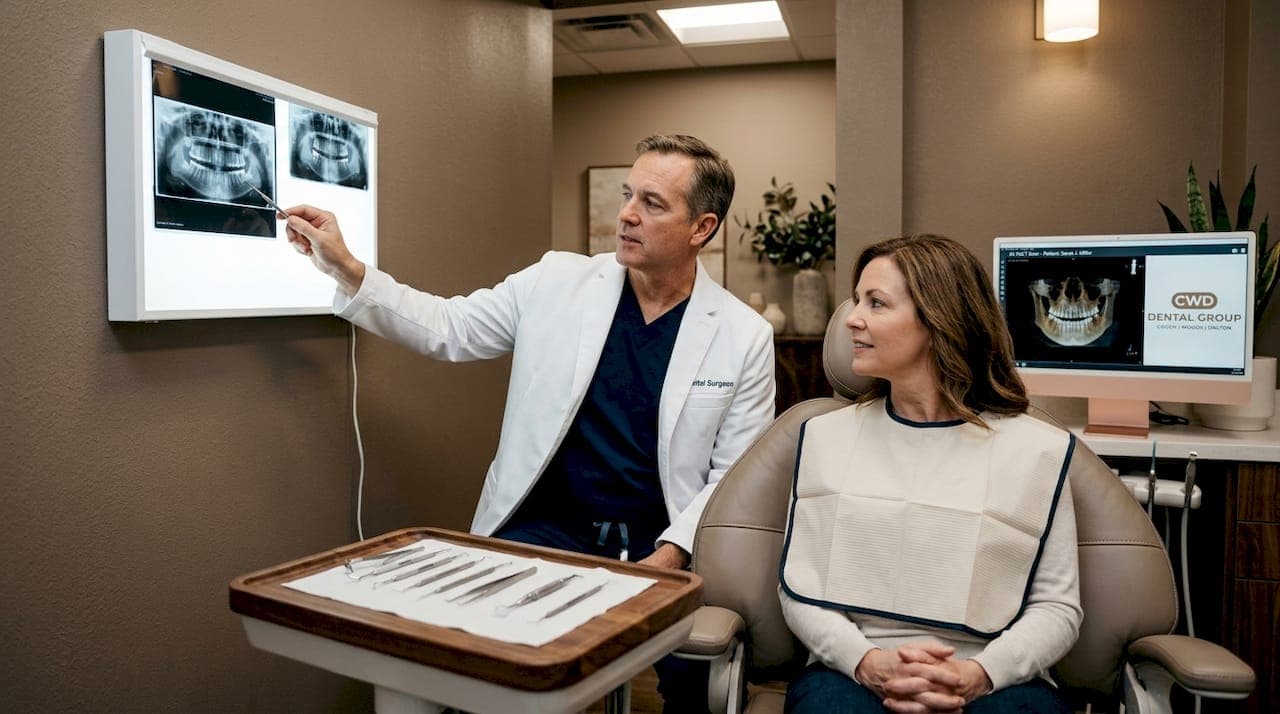
Dental implants replace missing teeth by surgically placing a titanium post into your jawbone, where it fuses with bone before receiving a permanent crown or denture. The dental implant process step by step is not a single appointment. It is a multi-stage clinical procedure that spans several months, covering diagnostic planning, possible bone augmentation, implant surgery, osseointegration, and final restoration. Most patients complete treatment in 3 to 9 months, though complex cases requiring bone grafting can take longer. Understanding each stage before you start removes the guesswork and helps you prepare physically and mentally for what lies ahead.
What prerequisites and assessments are needed before starting dental implants?
The dental implant process begins well before any surgery. Your dentist or oral surgeon conducts a full clinical evaluation to confirm you are a suitable candidate and to map out a precise treatment plan.
What the initial consultation covers
Your provider examines gum health, checks for active infection or periodontal disease, and reviews your full medical history. Conditions like uncontrolled diabetes, blood thinners, or a history of radiation therapy to the jaw can affect healing and may require clearance from a physician before proceeding.
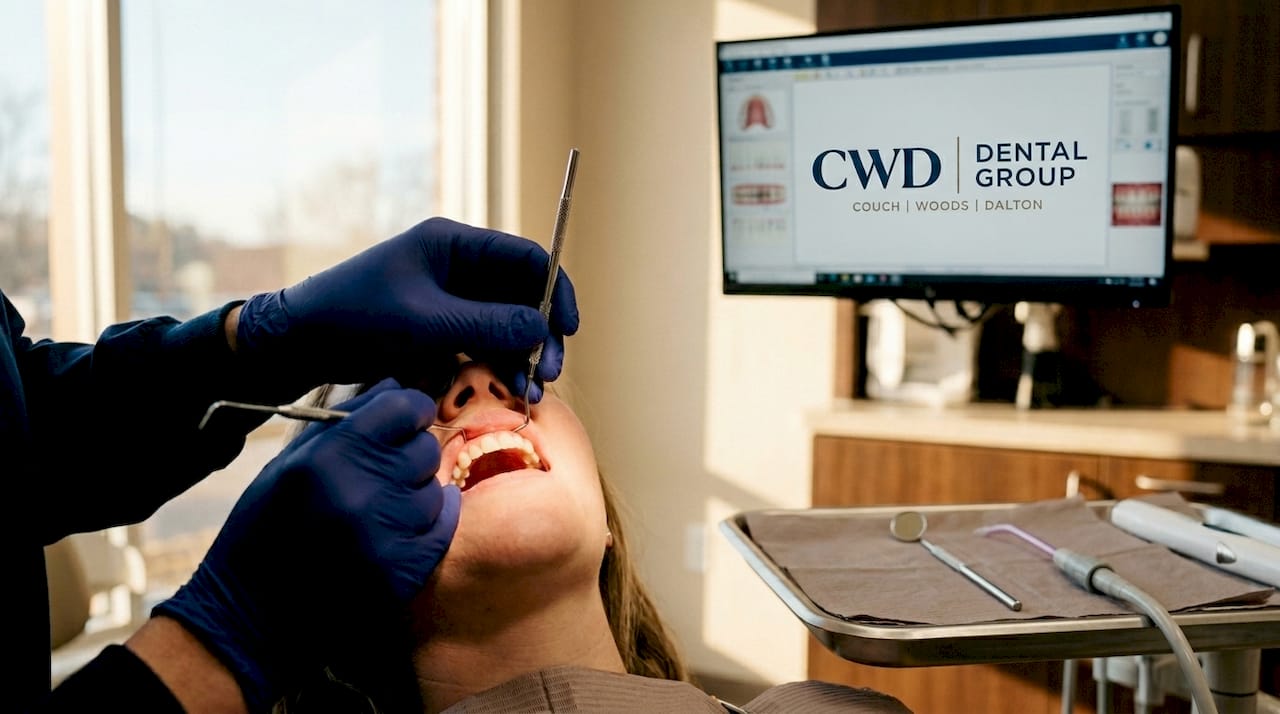
Imaging is the backbone of implant planning. X-rays give a two-dimensional view of bone height, but cone beam computed tomography (CBCT) scans provide a three-dimensional map of bone volume, density, and the exact location of nerves and sinuses. This data determines where the implant post can be placed safely and at what angle.
When preparatory procedures are required
Not every patient goes straight to surgery. Bone grafting and sinus lifts may be prerequisites when bone volume is insufficient, adding 4 to 9 months of healing before implant placement can begin. This is one of the most underestimated parts of the dental implant timeline. Patients who have had a missing tooth for years often experience significant bone resorption, making augmentation necessary.
Common preparatory procedures include:
- Tooth extraction if the damaged tooth is still present
- Bone grafting to rebuild jaw volume at the implant site
- Sinus lift to create space in the upper jaw near the molars
- Gum disease treatment to eliminate infection before surgery
Pro Tip: Ask your provider specifically whether a CBCT scan is part of your workup. Practices that rely only on standard X-rays for implant planning are working with incomplete information.
If you are weighing the financial side of preparatory work, the implant cost breakdown for Tallahassee patients covers what each stage typically adds to the total.
What happens during the surgical placement of dental implants?
Implant placement surgery is performed under local anesthesia in most cases, though sedation options are available for patients with dental anxiety or for more complex procedures. The surgery itself typically takes 1 to 2 hours per implant site.
Here is what happens during the procedure:
- Anesthesia administration. Local anesthetic numbs the surgical site completely. IV sedation or oral sedation can be added for comfort.
- Incision and flap creation. The surgeon makes a small incision in the gum tissue to expose the underlying jawbone.
- Osteotomy drilling. A series of progressively wider drill bits create a precise channel in the bone at the planned depth and angle from the CBCT data.
- Titanium post placement. The implant post is threaded into the prepared socket and torqued to a specific level to confirm initial stability.
- Closure. In a two-stage approach, a cover screw is placed and the gum is sutured closed over the implant. In a one-stage approach, a healing abutment protrudes through the gum to shape the tissue during healing.
- Post-operative instructions. You leave with written aftercare instructions, a prescription for pain relief if needed, and a follow-up appointment scheduled.
Most patients describe the procedure as pressure rather than pain. Swelling peaks at 48 to 72 hours and subsides within a week. Bruising around the jaw or cheek is normal and resolves on its own.
Pro Tip: Sleep with your head elevated for the first two nights after surgery. This reduces swelling faster than ice packs alone and shortens the discomfort window significantly.
Simultaneous procedures are common. If a tooth needs extraction at the same visit, the surgeon can sometimes place the implant immediately into the fresh socket, reducing the total number of appointments.
How does the healing and osseointegration phase work?
Osseointegration is the biological process by which bone cells grow directly onto the surface of the titanium implant, creating a stable, load-bearing interface. This is what makes implants function like natural tooth roots rather than just sitting in the jaw. Osseointegration typically takes 6 weeks to 6 months, with the range driven primarily by bone quality and density at the implant site.
Bone density classification matters here in a way most patient guides skip. Dense cortical bone, which is more common in the lower jaw, integrates faster and can sometimes support earlier loading. Softer trabecular bone, more prevalent in the upper jaw, requires a longer wait before the implant can bear the force of a crown. Your surgeon accounts for this when setting your timeline.
What to expect week by week
Soft tissue healing takes approximately 2 to 4 weeks, with sutures typically removed between 7 and 14 days after surgery. During this window, discomfort decreases steadily and eating gradually returns to near normal with soft foods.
During the full osseointegration period, patients should follow these guidelines:
- Avoid hard, crunchy, or chewy foods that could stress the implant site
- Use a soft-bristled toothbrush and avoid brushing directly over the surgical site until cleared
- Rinse with an antimicrobial mouthwash as directed, not standard alcohol-based rinses
- Avoid smoking entirely. Following aftercare instructions during healing significantly improves implant success rates, and smoking is the single biggest behavioral risk factor for implant failure
- Attend all scheduled check-up appointments so your provider can confirm integration is progressing
Warning signs that require immediate contact with your dentist:
Persistent or worsening pain after the first week, visible implant movement, pus or discharge at the site, or fever are not normal. These may indicate infection or failed osseointegration and need prompt evaluation.
What are the steps for abutment connection and final crown placement?
Once your dentist confirms osseointegration through clinical testing and imaging, the restoration phase begins. This is where the implant becomes a visible, functional tooth.
- Stage-two surgery (two-stage cases only). The surgeon makes a small incision to uncover the implant, removes the cover screw, and attaches a healing abutment. This minor procedure takes about 30 minutes and requires only local anesthesia.
- Gum shaping and healing. The healing abutment guides gum tissue to form a natural collar around the future crown. This takes 2 to 4 weeks.
- Impressions or digital scanning. Your dentist takes a physical impression or uses an intraoral scanner to capture the exact shape of the abutment and surrounding teeth. This data goes to a dental lab for crown fabrication.
- Crown fabrication. The lab produces a porcelain, zirconia, or porcelain-fused-to-metal crown matched to your natural tooth color and bite. Turnaround is typically 1 to 2 weeks.
- Final fitting and bite adjustment. The abutment connects the implant to the crown and shapes the gumline. The crown is seated, bite is checked with articulating paper, and minor adjustments are made until the fit is precise.
- Permanent cementation or screw retention. The crown is secured either with dental cement or a retaining screw, depending on the design chosen during planning.
| Restoration step | What it involves |
|---|---|
| Abutment placement | Connects implant post to crown; shapes surrounding gum tissue |
| Impressions or scan | Captures precise measurements for lab-fabricated crown |
| Crown fitting | Checks color match, bite alignment, and margin fit |
| Final cementation | Permanently secures crown to abutment |
After crown placement, your dentist schedules a follow-up at 6 months and then annually. Implants require the same oral hygiene as natural teeth: brushing twice daily, flossing, and regular professional cleanings.
How do dental implant procedures vary by type and complexity?
Not every implant case follows the same path. The total timeline ranges from 3 to 9 months for standard cases, but the specific protocol depends on the number of implants, bone condition, and loading approach chosen.
Single vs. multiple implants
A single implant replacing one tooth follows the standard two-stage or one-stage sequence described above. Multiple implants placed across a quadrant or full arch follow the same biological rules but involve more surgical sites and longer chair time per visit.
Conventional vs. immediate loading
Immediate loading, where a temporary crown is placed the same day as surgery, is possible in select cases where initial implant stability is high. Most single-tooth implants use delayed loading, waiting for confirmed osseointegration before adding crown pressure. Immediate loading carries a higher risk if bone quality is marginal.
All-on-4 full-arch cases
The All-on-4 protocol uses four strategically angled implants to support a full arch of teeth. Multiple implant types and loading protocols influence the number of visits and total timeline. All-on-4 patients often receive same-day provisional teeth, making it one of the few implant approaches where you leave surgery with a functional smile. The final permanent prosthesis is fitted after osseointegration, typically 3 to 6 months later. For Tallahassee patients exploring this option, the All-on-4 procedure guide covers the full surgical and restoration sequence in detail.
Pro Tip: If a provider quotes you a timeline under 3 months for a standard single implant with no augmentation, ask specifically which steps they are compressing and why. Rushed osseointegration confirmation is a leading cause of late implant failure.
Key takeaways
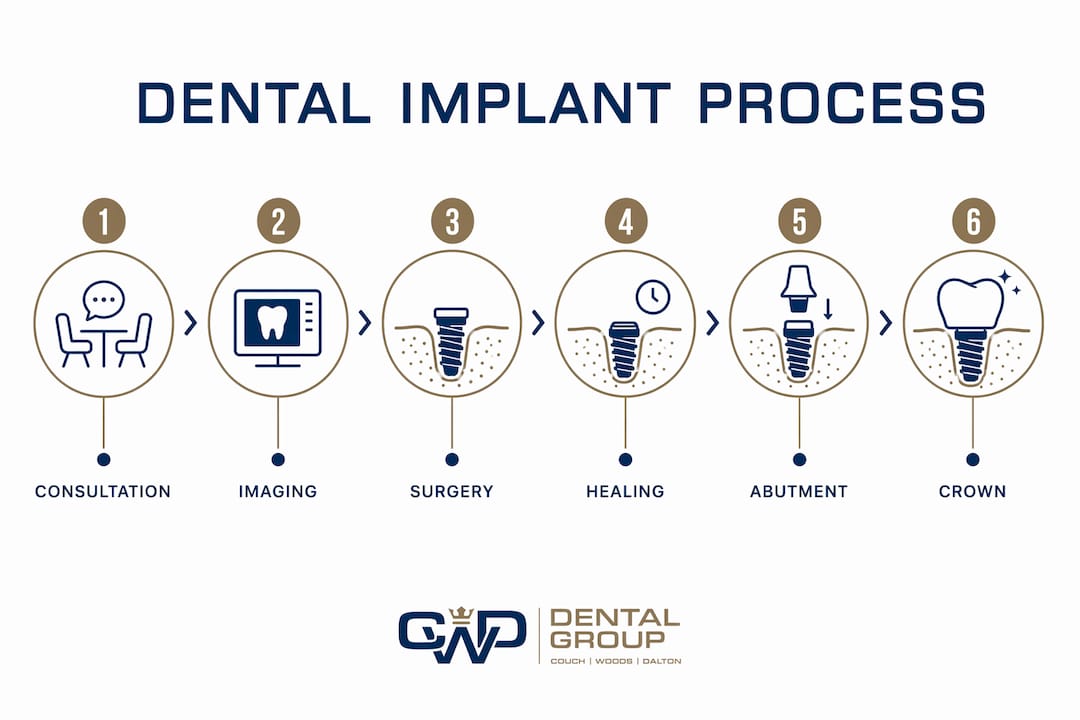
The dental implant process follows six defined clinical stages, and skipping or rushing any one of them, particularly osseointegration, is the primary cause of implant failure.
| Point | Details |
|---|---|
| Preparation determines success | CBCT imaging and medical review before surgery prevent placement errors and identify augmentation needs. |
| Osseointegration sets the pace | Bone integration takes 6 weeks to 6 months; dense lower jaw bone heals faster than upper jaw trabecular bone. |
| Aftercare compliance matters | Smoking, poor hygiene, and ignoring diet restrictions during healing are the top behavioral causes of implant failure. |
| Two-stage surgery adds a step | Many patients are not told about the second minor surgery to place the abutment, which adds 2 to 4 weeks to the timeline. |
| Procedure type changes the timeline | All-on-4 and immediate loading protocols differ significantly from standard single-implant sequences in visits and total duration. |
Why patience is the most underrated part of getting implants
Most patients who come to me frustrated with the implant process share one thing in common: nobody told them upfront that biology, not the dentist's schedule, controls the timeline. Osseointegration cannot be accelerated by willpower or a better toothbrush. It happens on the bone's schedule.
What I have seen work consistently is treating the healing phase as active participation rather than passive waiting. Patients who follow dietary restrictions precisely, show up to every check-up, and ask specific questions at each visit tend to have smoother outcomes. The ones who skip follow-ups or resume smoking "just for a few weeks" are disproportionately represented in complication cases.
The other thing worth saying plainly: the two-stage surgical approach surprises a lot of patients. They expect one surgery and one crown appointment. When they learn there is a second minor procedure to expose the implant and place the abutment, it feels like a setback. It is not. It is standard protocol for many cases, and it exists because confirming osseointegration before loading the implant is what gives the restoration its long-term durability.
Choose a provider who uses CBCT imaging, explains every stage before you consent, and gives you a written timeline with contingencies for augmentation. An experienced implant dentist in Tallahassee will walk you through exactly what your specific case requires rather than offering a generic timeline that may not apply to your bone condition.
The process is long. The result lasts decades. That trade-off is worth understanding before you start.
— Kayle
How Cwddentalgroup guides you through every implant stage
Cwddentalgroup provides dental implant care in Tallahassee with advanced CBCT imaging, in-house bone grafting, and personalized treatment planning at every stage. From your first consultation through final crown placement, the team builds a clear timeline specific to your bone condition and restoration goals, so you are never guessing what comes next.

Whether you need preparatory bone grafting in Tallahassee before implant surgery or same-day attention for a dental complication during recovery, Cwddentalgroup offers same-day emergency appointments to keep your treatment on track. If you are ready to understand exactly what your implant process will look like, contact Cwddentalgroup to schedule a consultation and get a treatment plan built around your specific case. For urgent dental needs during any stage of your implant recovery, emergency dental care is available without the long wait.
FAQ
How long does the dental implant process take from start to finish?
The standard implant process spans 3 to 9 months. Cases requiring bone grafting or sinus lifts can extend the total timeline by several additional months due to augmentation healing.
Is dental implant surgery painful?
The surgery is performed under local anesthesia, so patients feel pressure but not pain during the procedure. Post-operative discomfort peaks at 48 to 72 hours and is managed with prescribed or over-the-counter pain relief.
What is osseointegration and why does it take so long?
Osseointegration is the process where bone cells grow onto the titanium implant surface to create a stable foundation. It takes 6 weeks to 6 months depending on bone quality, and it cannot be safely shortened without risking implant failure.
Can I get a tooth the same day as implant surgery?
Same-day provisional teeth are possible with protocols like All-on-4 for full-arch cases where initial implant stability is confirmed. Most single-tooth implants use delayed loading and require waiting for osseointegration before crown placement.
What happens if I need a bone graft before my implant?
Bone grafting rebuilds jaw volume at the implant site and requires 4 to 9 months of healing before implant placement can proceed. It adds time to the overall dental implant timeline but is necessary to give the implant a stable foundation.