
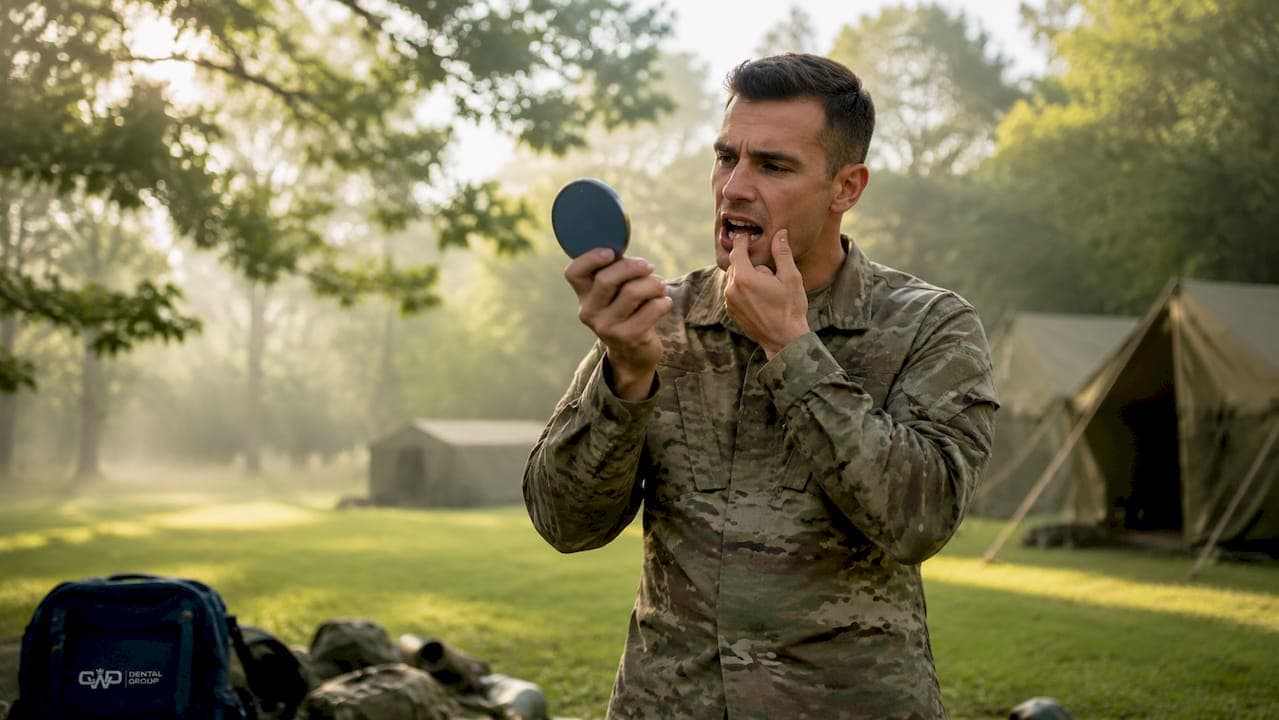
Dental neglect during service is defined as the failure to maintain oral health and obtain necessary dental care due to operational demands, limited access, or survival-mode prioritization. How dental neglect during service impacts health extends far beyond cavities. Dental morbidity ranks among the top five non-battle injuries causing medical evacuation during military operations. The consequences reach into cardiovascular disease, diabetes, respiratory infections, and mental health decline. Veterans and active service members carry these effects long after discharge, often discovering irreversible damage that began with a skipped appointment in the field.
How dental neglect during service impacts health at the oral level
The mouth takes the first hit. Chronic stress, disrupted hygiene routines, and limited access to care during deployment create conditions where oral disease accelerates faster than in civilian populations. Three conditions define the pattern: untreated decay, periodontal disease, and barodontalgia.
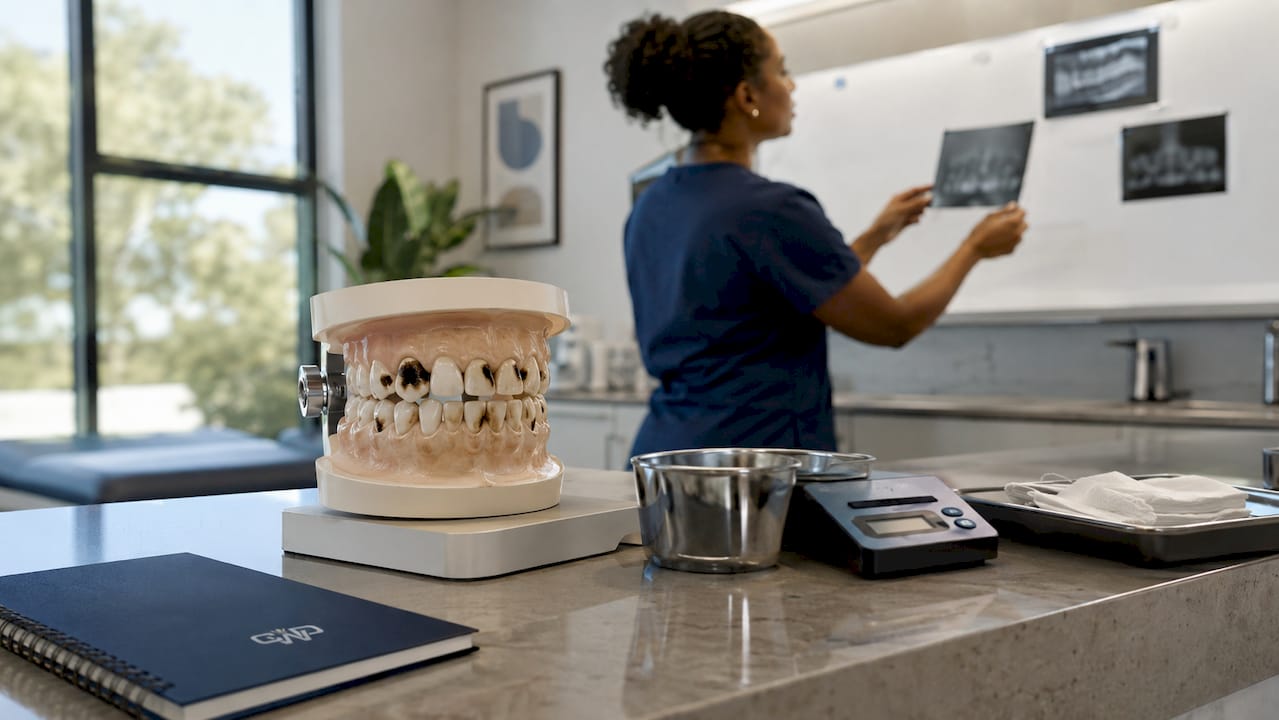
Untreated decay progresses silently. A small cavity ignored during a six-month deployment becomes a fractured tooth or abscess requiring emergency extraction by the time a service member returns to base. Periodontal disease, specifically periodontitis, destroys the bone and tissue supporting teeth. Stress hormones dysregulate immune defenses, accelerating periodontal destruction even in personnel who brush regularly.
Barodontalgia is a condition unique to military service. Pressure changes during flight or diving cause severe pain in teeth with untreated decay or failed root canals. Untreated decay and failed root canals can trigger acute dental emergencies mid-mission, potentially requiring evacuation. That is a readiness failure caused entirely by preventable neglect.
The military uses Dental Readiness Categories (DRC) to classify oral health status. Key categories include:
- DRC 1: Dentally ready. No treatment needed. Cleared for deployment.
- DRC 2: Dental care needed but not urgent. Deployable with monitoring.
- DRC 3: Treatment required. Dental condition likely to cause an emergency within 12 months. Non-deployable.
- DRC 4: Newly assigned or unclassified. Requires examination before deployment status is determined.
A DRC 3 or 4 classification means a service member cannot deploy. DRC 3 or 4 classifications denote treatment needed to prevent emergencies that compromise mission readiness. Dental neglect is not a personal problem. It is a unit readiness problem.
Pro Tip: If you received civilian dental treatment during service, that work does not automatically update your military dental file. You must submit documentation to your unit dental officer to update your DRC status.
What systemic diseases does oral neglect cause in service members?
Untreated oral disease does not stay in the mouth. Periodontitis triggers chronic systemic inflammation through bacterial translocation into the bloodstream. That inflammation is the mechanism linking poor oral health to serious whole-body conditions.
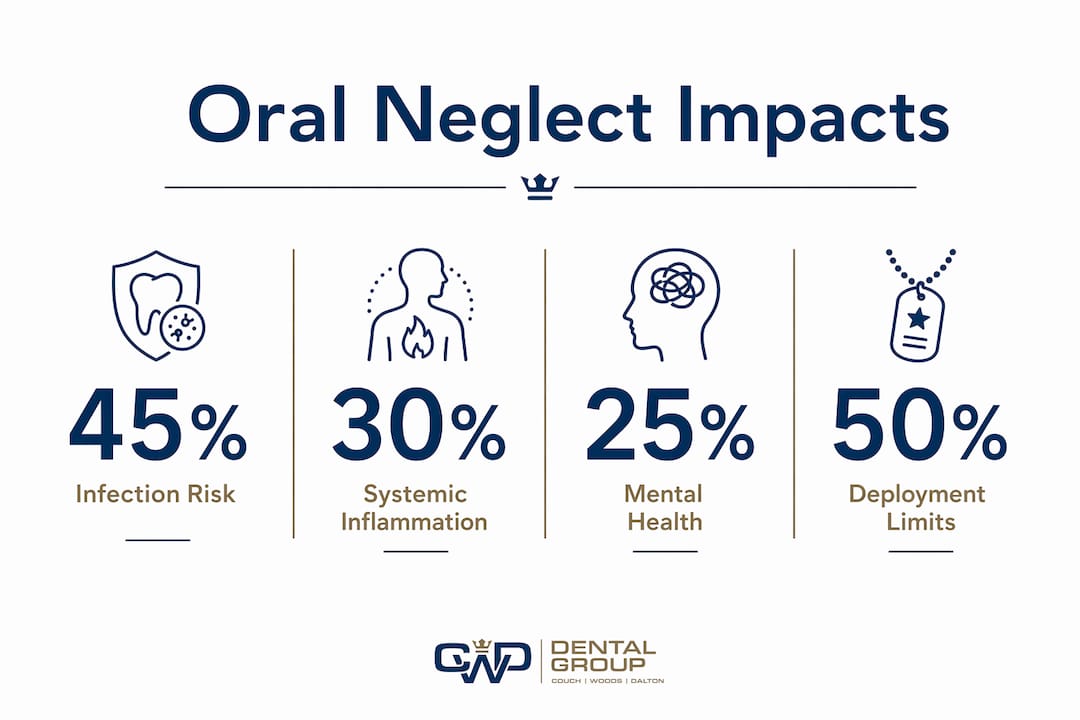
The connections are well-documented in military health research:
| Systemic condition | Link to oral neglect |
|---|---|
| Cardiovascular disease | Oral bacteria trigger arterial inflammation and plaque buildup |
| Type 2 diabetes | Periodontal inflammation worsens insulin resistance |
| Respiratory infections | Oral pathogens aspirated into lungs increase pneumonia risk |
| Neurodegenerative disorders | Chronic inflammation accelerates cognitive decline |
| Mental health decline | Periodontal disease co-occurs with PTSD and depression |
Each of these conditions compounds over time. A service member who ignores bleeding gums at 22 may face heart disease screening at 40 with a direct causal thread running back to that untreated periodontal infection.
"Poor oral health in military personnel correlates with cardiovascular disease, diabetes, respiratory infections, and neurodegenerative disorders. Dental neglect and mental health issues often occur simultaneously, complicating both diagnosis and treatment."
The mental health connection deserves specific attention. Periodontitis and mental health problems among military personnel frequently occur as superimposed conditions. That means PTSD and periodontitis do not just coexist. They reinforce each other. Stress worsens oral disease. Oral pain and disfigurement worsen psychological distress. Breaking one cycle requires addressing both.
How does dental neglect affect deployment eligibility and mission readiness?
Dental emergencies are a leading operational liability. In 2026, 152 military personnel urgently needed dental intervention during a single brief exercise. That number reflects what happens when routine care is deferred. One dental emergency can pull a medic, a vehicle, and a team leader away from mission-critical tasks.
Pre-deployment dental screening exists to prevent exactly this. The process follows a clear sequence:
- Full dental examination: Conducted within 12 months before deployment. Identifies decay, periodontal disease, and structural issues.
- DRC classification: Assigns readiness status. DRC 3 or 4 triggers mandatory treatment before deployment clearance.
- Required treatments: Extractions, fillings, root canals, and periodontal therapy completed to achieve DRC 1 or 2 status.
- Records update: Treatment documented in the military dental file. Civilian work must be submitted separately.
- Reassessment: Post-treatment exam confirms readiness status before final deployment clearance.
Standardized training for military clinicians improved dental disease assessment accuracy from 66% to 71%, increasing correct categorization odds by 2.26 times. Accurate classification matters because a misclassified DRC 2 patient deployed as DRC 1 becomes a medical evacuation risk. The system only works when both clinicians and service members take it seriously.
Veterans transitioning to civilian care can find guidance on accessing dental care after service to avoid gaps that allow neglected conditions to worsen.
Why do service members neglect dental care, and how do you break the cycle?
Behavioral factors drive neglect as much as access barriers do. Service members operate in survival mode. Minor tooth pain gets filed under "deal with it later." Brushing gets skipped during 72-hour field exercises. Tobacco use increases under stress, accelerating gum disease. Diet shifts toward high-sugar field rations that feed decay.
The psychological dimension runs deeper. Stress hormones directly dysregulate immune defenses, meaning the same cortisol spike that sharpens combat focus also weakens the body's ability to fight oral infection. Service members are not just neglecting their teeth. Their stress physiology is actively working against their oral health.
Breaking this cycle requires repeated, low-pressure education rather than single high-stakes warnings. The Rule of 7 approach shows that patients are more likely to act on oral care recommendations after seven exposures to the same message. One briefing before deployment does not change behavior. Consistent reinforcement through unit dental officers, health promotion programs, and peer education does.
Key behavioral habits that accelerate neglect during service include:
- Reduced brushing frequency during field operations and extended missions
- Increased tobacco use as a stress coping mechanism
- High-sugar, high-acid field ration diets that feed bacterial growth
- Avoidance of sick call for dental pain to avoid appearing non-mission-capable
- Failure to report civilian dental treatment to update military records
Pro Tip: Building an oral hygiene routine that takes under two minutes makes compliance realistic even during high-tempo operations. Consistency matters more than perfection.
How do veterans manage long-term health after dental neglect during military duty?
Veterans often discover advanced decay and periodontal destruction post-service because survival-mode neglect deferred minor discomfort that later progressed to severe disease. The transition from military to civilian dental care creates a gap where conditions worsen without intervention.
The core challenge is continuity. Military dental records do not automatically transfer to civilian providers. Veterans must actively request their records and share them with new dentists to establish a baseline and avoid redundant or missed treatment.
Practical steps for managing oral health after service:
- Request your military dental records before or immediately after discharge. These document your DRC history and any untreated conditions.
- Schedule a comprehensive exam within 90 days of discharge. Early assessment catches conditions before they require expensive emergency treatment.
- Disclose your service history to your civilian dentist. Barodontalgia history, tobacco use, and stress-related grinding all affect treatment planning.
- Prioritize periodontal evaluation. Veterans with deployment history have elevated periodontitis risk. A standard cleaning is not sufficient for assessment.
- Understand your VA dental benefits. Eligibility depends on service-connected conditions and discharge status. Not all veterans qualify for full VA dental coverage.
Veterans navigating the gap between military and civilian care can use resources like the veterans' dental care guide to maintain oral health between appointments. Emergency dental services remain an option for acute issues that arise during coverage gaps.
Key Takeaways
Dental neglect during military service causes progressive oral disease, systemic inflammation, and mental health decline that compound into serious long-term conditions if left untreated after discharge.
| Point | Details |
|---|---|
| Neglect starts a chain reaction | Untreated decay and gum disease trigger systemic inflammation linked to heart disease and diabetes. |
| DRC status determines deployment | DRC 3 or 4 classification blocks deployment and signals conditions requiring immediate treatment. |
| Stress accelerates oral disease | Cortisol dysregulates immune defenses, making periodontal destruction faster under operational stress. |
| Rule of 7 breaks neglect cycles | Repeated low-pressure education is more effective than single high-stakes warnings for changing behavior. |
| Post-service records transfer is critical | Veterans must actively request and share military dental records to prevent gaps in civilian care. |
What I've seen that most dental articles miss about military oral health
The research is clear on the clinical side. What gets underreported is the culture. Service members are trained to push through discomfort. Reporting a toothache feels like admitting weakness. I have seen veterans arrive at a dental chair with abscesses they managed with ibuprofen for months because they did not want to be the person who went to sick call for a tooth.
That culture is the real barrier. Dental readiness protocols exist. Screening requirements exist. But a service member who hides pain to stay mission-capable will slip through every system designed to catch them. The dental fitness classification research showing improved clinician accuracy is encouraging, but clinician skill only helps when the patient actually shows up.
The post-service window is where I see the most preventable damage. Veterans leave service, lose their military dental coverage, and delay care for months or years while navigating VA benefits. By the time they sit in a civilian dental chair, what started as a manageable cavity is now a tooth that needs extraction. That is not a dental failure. That is a system failure compounded by a culture that never taught them to treat oral health as mission-critical.
The fix is not complicated. Treat dental care the same way the military treats physical fitness. Make it mandatory, make it regular, and remove the stigma of needing it. Veterans deserve that same standard of care after they leave service, not just before deployment.
— Kayle
Dental care for veterans and service members at Cwddentalgroup
Veterans and active service members dealing with the effects of dental neglect need a provider who understands urgency. Cwddentalgroup offers same-day emergency appointments in Tallahassee, so acute dental pain does not turn into a prolonged crisis.

Whether you are managing an abscess, a fractured tooth, or years of deferred treatment, the team at Cwddentalgroup provides care without the long wait times that make civilian dental access frustrating for veterans. Dr. Chance Dalton and the Cwddentalgroup team bring the same commitment to emergency dental care that service members expect from a provider who takes their health seriously. Learn more about Dr. Dalton's approach and schedule your appointment today.
FAQ
What is dental neglect in the military context?
Dental neglect in the military context is the failure to maintain oral health or seek necessary treatment due to operational demands, limited access, or survival-mode prioritization. It results in untreated decay, periodontal disease, and conditions like barodontalgia that compromise both health and deployment eligibility.
How does poor oral health affect deployment eligibility?
Service members classified as DRC 3 or 4 are non-deployable until treatment is completed. DRC 3 or 4 status signals a dental condition likely to cause an emergency within 12 months, making the individual a readiness liability.
Can dental neglect during service cause heart disease?
Yes. Periodontal bacteria enter the bloodstream and trigger arterial inflammation, a documented pathway to cardiovascular disease. Veterans with untreated periodontitis carry elevated cardiovascular risk that persists long after discharge.
What is barodontalgia and why does it matter for service members?
Barodontalgia is tooth pain caused by pressure changes during flight or diving. Untreated decay and failed root canals make teeth vulnerable to this condition, which can cause acute emergencies mid-mission and require medical evacuation.
How do veterans access dental care after leaving the military?
Veterans should request military dental records immediately after discharge, schedule a comprehensive civilian exam within 90 days, and verify VA dental benefit eligibility based on service-connected conditions. The post-service dental care guide provides a full breakdown of available options.