
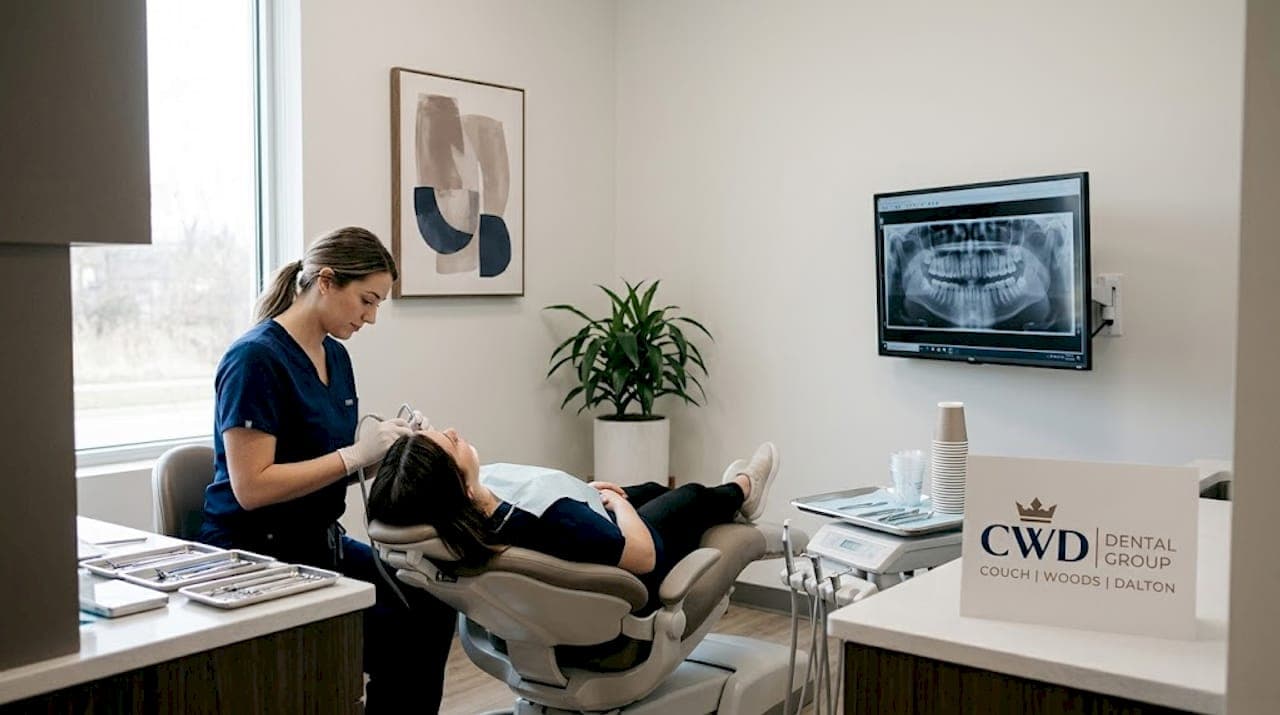
Most people assume that brushing twice a day is enough to keep their teeth and gums healthy. It is not. Understanding how dental cleanings prevent disease requires looking at what your toothbrush physically cannot reach and what happens in those neglected spaces over time. Plaque hardens into tartar within days, bacteria multiply, and the inflammation that follows does not stay confined to your mouth. Professional dental cleanings are the only way to interrupt that cycle, and the evidence connecting them to both oral and systemic health is far stronger than most patients realize.
Table of Contents
- Key takeaways
- What a professional dental cleaning actually involves
- How dental cleanings prevent gum disease and cavities
- Broader health benefits beyond your mouth
- Common misconceptions about cleaning types and frequency
- Maintaining oral health between cleanings
- My take on why patients underestimate this
- Take the next step with Cwddentalgroup
- FAQ
Key takeaways
| Point | Details |
|---|---|
| Brushing has real limits | Tartar cannot be removed by brushing; only professional scaling breaks the mineralization cycle. |
| Cleanings stop gum disease early | Removing plaque and tartar before it triggers inflammation prevents gingivitis from advancing to periodontitis. |
| Systemic health is connected | Dental cleanings reduce oral bacteria linked to heart disease, stroke, and cognitive decline. |
| Frequency depends on your risk | Most people need cleanings twice a year, but smokers and those with deep gum pockets may need more. |
| Home care extends professional results | Daily flossing and a low-sugar diet significantly slow plaque buildup between appointments. |
What a professional dental cleaning actually involves
When you sit down for a cleaning, the hygienist is not simply polishing your teeth. The process has distinct stages, each targeting something your toothbrush cannot address. Professional cleanings remove plaque, tartar, and bacteria from surfaces and spaces that are physically unreachable by brushing alone.
The core step is scaling. Using either hand instruments or an ultrasonic scaler, the hygienist breaks apart calculus (hardened tartar) from the tooth surface and along the gumline. After scaling, polishing removes surface stains and smooths enamel, making it harder for plaque to re-adhere quickly. Many appointments also include a fluoride treatment, which reinforces enamel and lowers cavity risk for months after the visit.
There are two main categories of professional cleaning:
- Prophylaxis (prophy): A routine cleaning for patients without active gum disease. It targets surface plaque and calculus to maintain oral health and prevent gingivitis.
- Scaling and root planing (deep cleaning): Reserved for patients with periodontitis. The hygienist cleans below the gumline, into the pockets where bacterial colonies have established themselves. Periodontitis management requires reaching these subgingival areas that a routine prophy cannot address.
You can learn more about the specific instruments used during these procedures in this overview of dental cleaning tools and how each one works.
Pro Tip: Ask your dentist to assess your gum pocket depths at your next visit. Pockets deeper than 4mm are a signal that you may need more frequent cleanings or a deeper cleaning protocol rather than a standard prophy.
How dental cleanings prevent gum disease and cavities
This is where the biology gets interesting. Plaque is a sticky film of bacteria that forms on teeth constantly. Left undisturbed, it mineralizes into calculus within days, creating a rough, porous surface that harbors even more bacteria. Your toothbrush cannot remove calculus once it has hardened. That is not a failure of effort. It is a structural limitation.
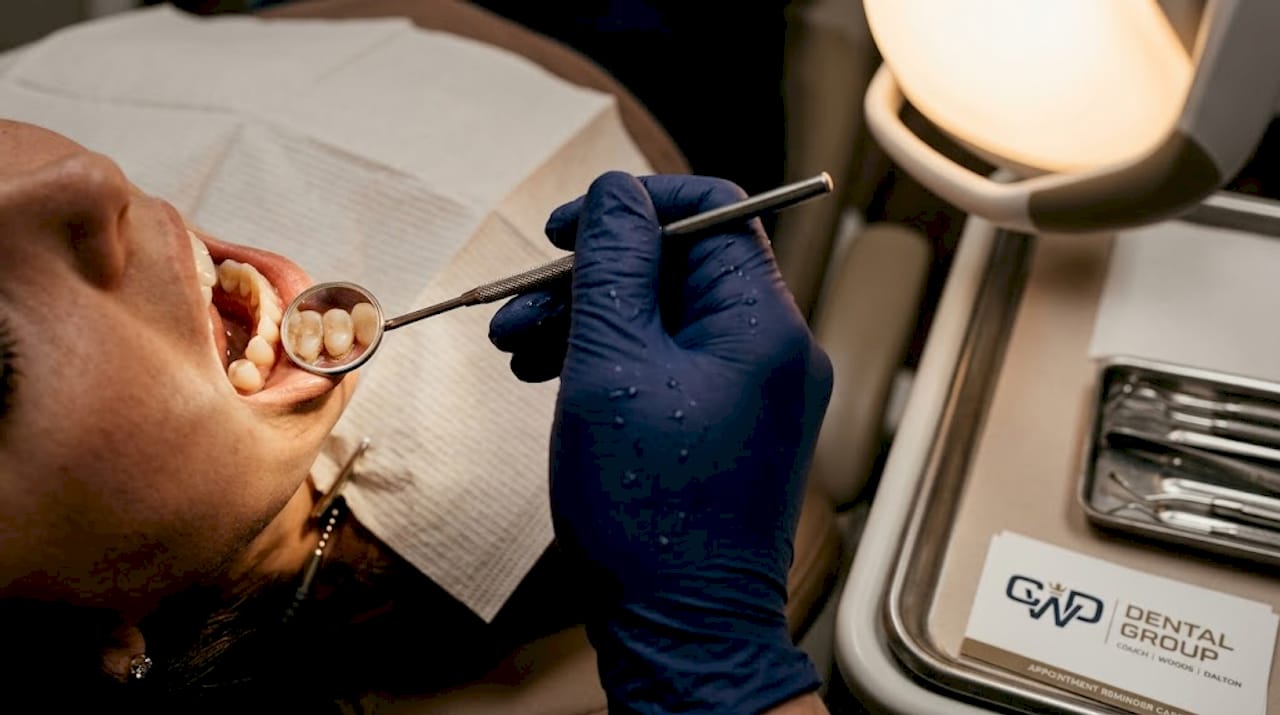
Those bacteria produce acids that erode enamel and release toxins that irritate gum tissue. The body responds with inflammation, which is the beginning of gingivitis. If calculus is not removed, the inflammation deepens, gum tissue pulls away from the tooth, and pockets form. Bacteria colonize those pockets, and the condition advances into periodontitis, a destructive infection that attacks the bone supporting your teeth.
Professional scaling physically breaks this cycle. Here is what that interruption accomplishes:
- Removes the calculus that bacteria use as a structural home
- Eliminates the acid-producing bacteria responsible for enamel erosion
- Reduces gingival inflammation, which is measured clinically by bleeding on probing
- Prevents pocket deepening that would otherwise require more aggressive treatment
Clinical research confirms these outcomes. Subgingival instrumentation reduces bleeding on probing and pocket depths significantly better than surface cleaning alone over a 24-month period.
Cleanings also create an early detection opportunity that most patients overlook. During a routine visit, your hygienist and dentist can spot bleeding, unusual pocket depths, and early decay before you feel any symptoms. Routine visits allow identification of conditions like plaque buildup and tissue changes before they become painful or expensive to treat.
| Condition | Without regular cleanings | With regular cleanings |
|---|---|---|
| Gingivitis | Likely to develop within months | Significantly reduced risk |
| Periodontitis | High risk as gingivitis progresses | Prevented through early intervention |
| Cavities | Increased due to acid erosion | Reduced through plaque and bacteria removal |
| Bone loss | Possible with untreated periodontitis | Avoided when disease is caught early |
Broader health benefits beyond your mouth
The connection between your mouth and the rest of your body is not a loose association. It is a documented biological pathway. Bacteria from infected gum tissue can enter the bloodstream, triggering systemic inflammation that affects organs far removed from your teeth.
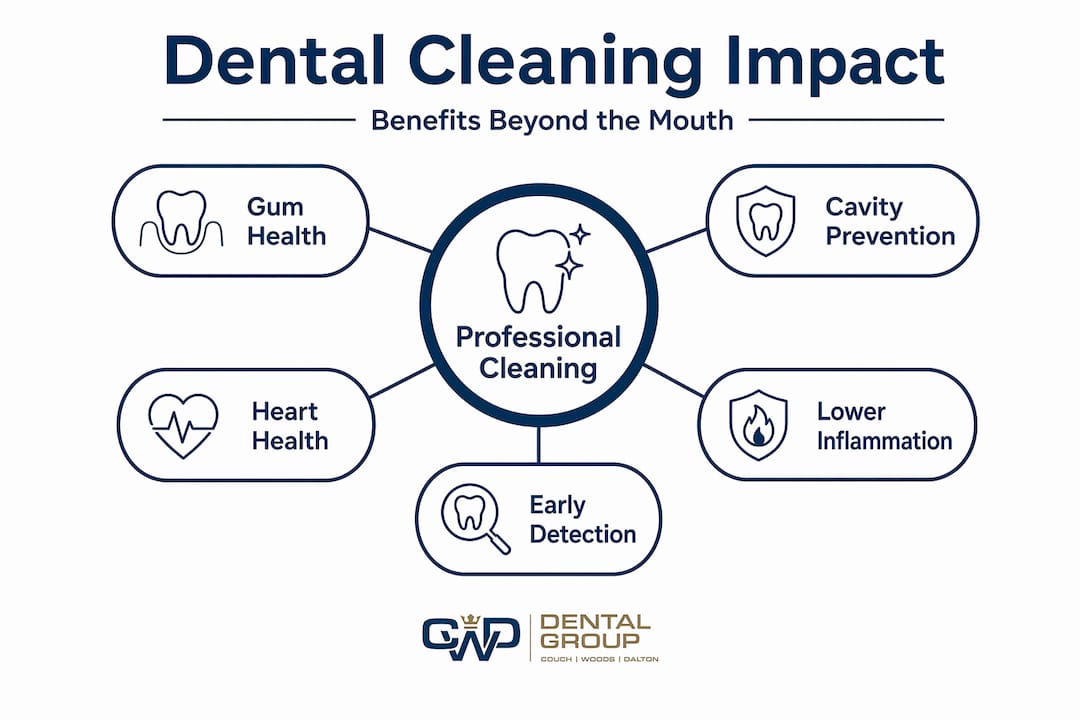
Dental cleanings can reduce risks associated with heart disease, stroke, and dementia, in addition to preventing oral disease. The mechanism is straightforward: when you lower the bacterial load in your mouth through professional cleaning, you reduce the inflammatory signals circulating through your body.
The conditions most strongly linked to poor oral hygiene include:
- Cardiovascular disease: Oral bacteria have been found in arterial plaque, and chronic gum inflammation is associated with elevated cardiovascular risk.
- Stroke: The same inflammatory markers elevated in periodontitis are implicated in stroke risk.
- Cognitive decline: Emerging research connects chronic oral infections to increased dementia risk, particularly in older adults.
- Diabetes complications: Gum disease makes blood sugar harder to control, and poorly controlled diabetes worsens gum disease. Regular cleanings help manage this feedback loop.
"Oral health is a window to your overall health. Problems in your mouth can affect the rest of your body." — Mayo Clinic
Pro Tip: Tell your dentist about any systemic conditions you manage, including heart disease, diabetes, or autoimmune disorders. These directly influence how often you should schedule cleanings and what type of preventive dental care is most appropriate for you.
Common misconceptions about cleaning types and frequency
One of the most persistent misunderstandings in dentistry is that all cleanings are the same. They are not, and mixing them up leads to real consequences. Routine cleanings preserve oral health in patients without active periodontitis, while deep cleanings treat active disease. Getting a prophy when you need scaling and root planing means the bacterial colonies below your gumline go untouched.
Here is another widespread misconception: that brushing harder or more frequently can substitute for professional scaling. Tartar cannot be removed by brushing alone, regardless of technique or toothbrush type. Once plaque mineralizes, mechanical removal requires professional instruments.
Several individual factors determine what kind of cleaning you need and how often:
- Smoking: Smoking significantly impacts cleaning effectiveness, reducing the reduction in bleeding on probing and inflammation even after professional treatment. Smokers typically need more frequent visits.
- Gum pocket depth: Pockets deeper than 4mm indicate active disease and usually require subgingival instrumentation, not a standard prophy.
- Medical history: Conditions like diabetes, immune disorders, and dry mouth (often a medication side effect) accelerate plaque buildup and gum disease progression.
- Prior periodontal treatment: Patients who have completed scaling and root planing often need supportive periodontal care every three to four months rather than the standard twice-yearly schedule.
| Patient profile | Recommended cleaning type | Suggested frequency |
|---|---|---|
| Healthy, no gum disease | Prophylaxis | Every 6 months |
| Mild gingivitis | Prophylaxis with monitoring | Every 3 to 6 months |
| Active periodontitis | Scaling and root planing | As prescribed, then every 3 to 4 months |
| Post-periodontal treatment | Supportive periodontal care | Every 3 to 4 months |
| Smoker with gum disease | Advanced protocol | Every 3 months or more |
If you are weighing the financial side of these decisions, this breakdown of deep cleaning costs without insurance is worth reading before your next appointment.
Maintaining oral health between cleanings
Professional cleanings do the heavy lifting, but what you do at home between appointments determines how quickly plaque rebuilds and how much work the next cleaning requires. Think of your daily routine as maintenance between tune-ups.
- Brush for two full minutes, twice a day. Use a soft-bristled brush and fluoride toothpaste. Electric toothbrushes consistently outperform manual ones in clinical studies for plaque removal.
- Floss once daily, without exception. Flossing reaches the contact points between teeth where 35% of each tooth surface lives. If traditional floss is difficult, try a water flosser or interdental brushes for tight spaces.
- Limit sugar and refined carbohydrates. Oral bacteria feed on sugar and produce acid as a byproduct. Cutting back on sugary drinks and snacks directly reduces acid attacks on enamel.
- Stay hydrated. Saliva is your mouth's natural defense. It neutralizes acids, washes away food particles, and delivers minerals that repair early enamel damage. Dry mouth accelerates decay.
- Watch for warning signs. Bleeding when you brush or floss, persistent bad breath, gum recession, or tooth sensitivity are not normal. These are signals to schedule a dental visit sooner rather than waiting for your next routine appointment.
- Manage dental anxiety proactively. If fear keeps you from scheduling cleanings, tell your dental team before the appointment. Most practices can accommodate you with communication strategies, breaks during the procedure, or sedation options.
For a step-by-step framework to build these habits consistently, this guide on daily oral hygiene steps covers the specifics in practical detail.
My take on why patients underestimate this
I have seen the same pattern repeat itself more times than I can count. A patient skips cleanings for two or three years, not because they do not care about their teeth, but because nothing hurts. Then they come in, and what started as manageable gingivitis has become periodontitis requiring multiple deep cleaning sessions, possible antibiotic therapy, and in some cases, referral to a periodontist.
The frustrating part is that the biology is not complicated. Plaque forms. It hardens. Bacteria multiply. Inflammation spreads. Every step in that chain is predictable and preventable. But prevention does not feel urgent when there are no symptoms. Pain is a terrible early warning system for gum disease because the disease progresses silently for years before it becomes obvious.
What I have learned is that patients who treat cleanings as a health priority rather than a cosmetic errand have dramatically better long-term outcomes. They spend less money over time. They keep more of their natural teeth. And they carry a lower systemic inflammatory burden, which matters for their heart, their brain, and their overall quality of life.
The barrier is almost never knowledge. Most people know they should go. The barrier is inertia, anxiety, or cost concerns. All of those are solvable problems if you address them directly with your dental team before they become reasons to cancel another appointment.
— Kayle
Take the next step with Cwddentalgroup
If this article has made you want to actually schedule that cleaning you have been putting off, Cwddentalgroup in Tallahassee makes it straightforward. Their team provides thorough prophylaxis and deep cleaning services tailored to your specific risk profile, not a one-size-fits-all approach. Every visit includes a full assessment so you know exactly what type of care you need and why.

What sets Cwddentalgroup apart is the same-day availability for emergency dental care when something unexpected comes up, whether that is sudden tooth pain, a broken tooth, or an abscess that cannot wait. Preventive care and urgent care under one roof means your oral health does not fall through the gaps. Reach out to Cwddentalgroup to book your cleaning and start treating your oral health as the whole-body investment it actually is.
FAQ
How often should you get dental cleanings?
Most people benefit from cleanings twice a year, but patients with gum disease, diabetes, or a smoking history often need visits every three to four months for effective disease control.
Can dental cleanings really prevent heart disease?
Professional cleanings lower the oral bacterial load that contributes to systemic inflammation, and research links gum disease to elevated cardiovascular risk, though cleanings are one part of a broader prevention strategy.
What is the difference between a regular cleaning and a deep cleaning?
A regular prophylaxis removes plaque and calculus above and just below the gumline in healthy patients, while scaling and root planing goes deeper into gum pockets to treat active periodontitis.
Why can't brushing replace a professional dental cleaning?
Once plaque hardens into tartar, no toothbrush can remove it. Professional scaling instruments are the only way to break apart calculus and interrupt the bacterial cycle it supports.
What are the signs you need a dental cleaning sooner than scheduled?
Bleeding gums, persistent bad breath, gum recession, or new tooth sensitivity are all signals to book an appointment before your next routine visit rather than waiting.