
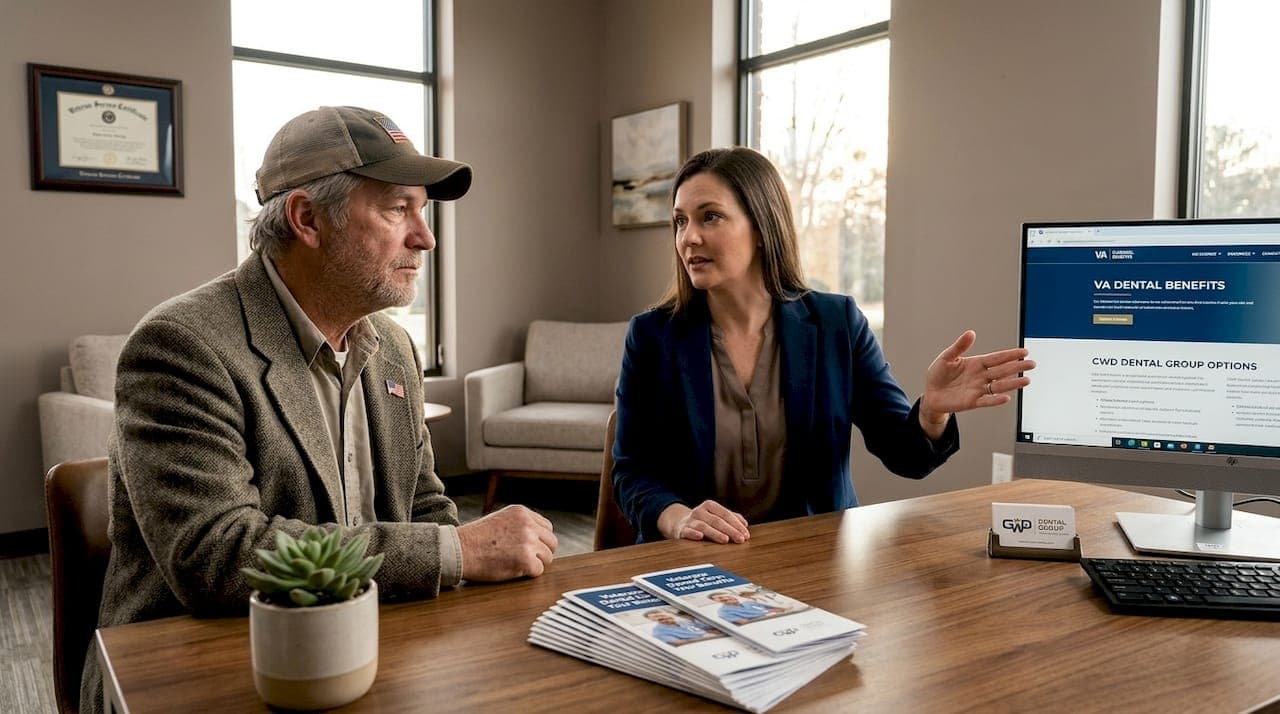
Accessing dental care after service is determined by your VA dental benefits class, not simply by your enrollment in VA health care. Many veterans complete the VA health care enrollment process and assume dental coverage follows automatically. It does not. Your dental eligibility depends on a separate classification tied to your service history, disability status, and specific health conditions. If you do not qualify for free VA dental care, programs like the VA Dental Insurance Program (VADIP), Medicaid, and CHAMPVA can fill the gap. This guide explains every option available to you in 2026.
How to access dental care after service through VA benefits
The first step toward dental support after service is applying for VA health care. VA enrollment requires completing VA Form 10-10EZ, which you can submit online, by mail, or in person at a VA medical center. Enrollment alone does not unlock dental benefits. That is the most important fact to understand before you do anything else.
Once enrolled, the VA places you into a dental benefits class. Each class determines what dental services you can receive at no cost, at reduced cost, or not at all through VA facilities. The classification system is based on your service history and health status, and it operates entirely separately from your general VA health care eligibility.
The main dental benefits classes include:
- Service-connected dental conditions: Veterans with a dental condition directly caused by military service receive comprehensive dental care.
- Service-connected noncompensable dental conditions: Veterans with a dental condition rated at 0% disability but linked to service qualify for specific one-time or ongoing treatment.
- Prisoners of war: Former POWs receive comprehensive dental care regardless of disability rating.
- Veterans with service-connected disabilities rated 100% disabling: These veterans receive full dental care.
- Veterans enrolled in certain VA vocational rehabilitation programs: Limited dental care is available to support employment goals.
- Veterans receiving care for a service-connected condition that affects dental health: Dental treatment may be covered when it is medically necessary for treating the primary condition.
Pro Tip: Before your first VA dental appointment, call your local VA medical center and ask specifically which dental benefits class you fall into. Do not assume your class based on your disability rating alone. The classification process has nuances that a VA benefits counselor can clarify in under 10 minutes.
Enrollment in VA health care does not automatically include dental coverage, and misconceptions about this delay care for thousands of veterans each year. Verifying your class is the single most productive step you can take.
What are the alternative dental coverage options for veterans?
Veterans who do not qualify for free VA dental care have four realistic paths to affordable dental services: VADIP, CHAMPVA with VADIP, Medicaid, and Medicare with supplemental coverage.
VA Dental Insurance Program (VADIP)
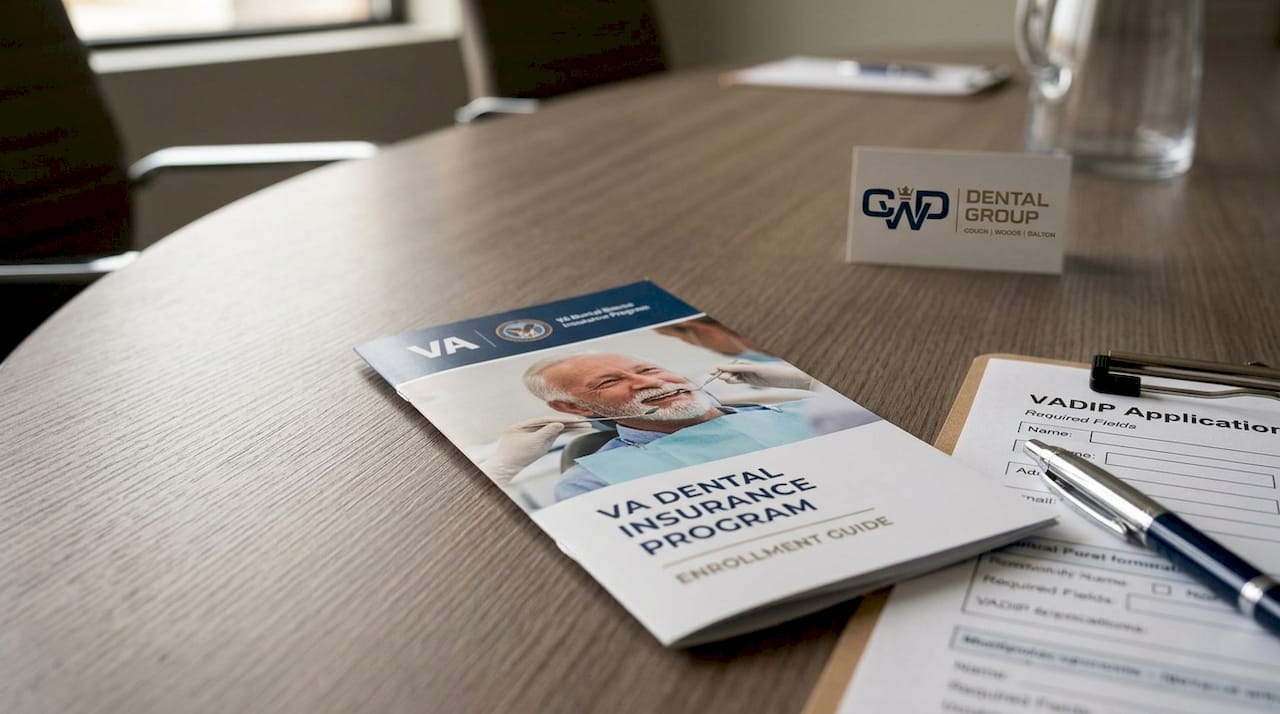
VADIP provides reduced-cost private dental insurance negotiated by the VA through Delta Dental and MetLife. Any veteran enrolled in VA health care qualifies to purchase a VADIP plan. CHAMPVA beneficiaries also qualify. Coverage under VADIP includes routine exams, cleanings, fillings, emergency care, and surgery. Think of VADIP as private dental insurance with VA-negotiated rates. You pay premiums, but those rates are lower than most individual market plans.
CHAMPVA and dental coverage
CHAMPVA does not cover standalone dental care except when dental treatment is directly part of treating a covered medical condition. For CHAMPVA beneficiaries, VADIP is the primary path to affordable dental coverage. This distinction matters because many CHAMPVA beneficiaries incorrectly assume their medical coverage extends to routine dental visits.
Medicaid dental benefits
Adult dental benefits under Medicaid vary significantly by state. Some states offer comprehensive coverage that includes preventive care, restorative work, and oral surgery. Others limit coverage to emergency extractions only. The table below shows the general range:
| Program | Routine exams | Cleanings | Fillings | Emergency care | Surgery |
|---|---|---|---|---|---|
| VA (qualifying class) | Yes | Yes | Yes | Yes | Yes |
| VADIP (Delta Dental/MetLife) | Yes | Yes | Yes | Yes | Yes |
| Medicaid (comprehensive states) | Yes | Yes | Yes | Yes | Varies |
| Medicaid (limited states) | No | No | No | Yes | Limited |
| Medicare (standard) | No | No | No | Limited | Limited |
Medicare and dental care
Medicare generally excludes routine dental services. Exceptions exist when dental procedures are directly linked to a covered inpatient hospital procedure, such as jaw reconstruction following a covered accident. Veterans relying on Medicare for dental coverage should strongly consider supplemental insurance. A Medicare-accepting dentist guide can help you identify providers who work within these limited exceptions.
Pro Tip: If you live in a state with comprehensive Medicaid dental benefits, confirm that local dentists actually accept Medicaid patients before scheduling. State coverage policy and provider participation are two separate things, and many dentists in coverage states still opt out of Medicaid networks.
How do you find dentists who accept veterans' insurance plans?
Finding a dentist who accepts your specific coverage requires more than a Google search. Follow these steps to confirm coverage before you sit in the chair.
- Identify your exact plan. Know whether you are using VA direct care, VADIP through Delta Dental or MetLife, Medicaid, or Medicare. Each plan has a different provider network, and a dentist who accepts one does not necessarily accept another.
- Use the plan's official provider locator. Delta Dental and MetLife both maintain online directories for VADIP participants. VA facilities are searchable through the VA's facility locator at va.gov. Medicaid provider lists are maintained by your state's Medicaid agency.
- Use DentistLink for Medicaid searches. DentistLink is a free referral service operating in several states that connects patients to Medicaid-accepting dental providers. It is particularly useful in states where Medicaid provider directories are outdated.
- Call the dental office directly before booking. Confirm that the practice accepts your specific plan and that the dentist you will see is credentialed under that plan. Front desk staff can verify this in under two minutes.
- Ask about in-network versus out-of-network costs. Network dentists reduce costs and simplify claims under programs like VADIP and TRICARE. Out-of-network providers may require you to pay upfront and file your own reimbursement claim, which can take weeks and result in partial payment.
- Request a written treatment estimate before work begins. For any procedure beyond a routine cleaning, ask the office to submit a pre-authorization or provide a cost estimate based on your specific coverage. This protects you from surprise bills.
Understanding network versus non-network costs under veterans' dental programs can mean the difference between a $50 copay and a $400 out-of-pocket bill for the same procedure. Confirming provider participation is not optional. It is the step most veterans skip and later regret.
You can also review patient resources that explain how dental insurance claims work, which helps you ask the right questions when calling a new provider.
Comparing dental benefits across VA, VADIP, Medicaid, and Medicare
Veterans accessing dental benefits through different programs face meaningful differences in what is covered, what it costs, and how to enroll.
| Program | Enrollment requirement | Premiums/cost sharing | Covered services | Key limitation |
|---|---|---|---|---|
| VA direct dental care | VA health care enrollment plus qualifying benefits class | None for qualifying veterans | Comprehensive for top classes | Most veterans do not qualify for free care |
| VADIP | VA health care or CHAMPVA enrollment | Monthly premiums plus copays | Exams, cleanings, fillings, surgery, emergency | Must enroll with Delta Dental or MetLife separately |
| Medicaid | State-based income eligibility | Low or no cost sharing | Varies widely by state | Provider participation gaps in many areas |
| Medicare | Age 65+ or disability qualification | Premiums plus deductibles | Extremely limited dental | Routine dental almost entirely excluded |
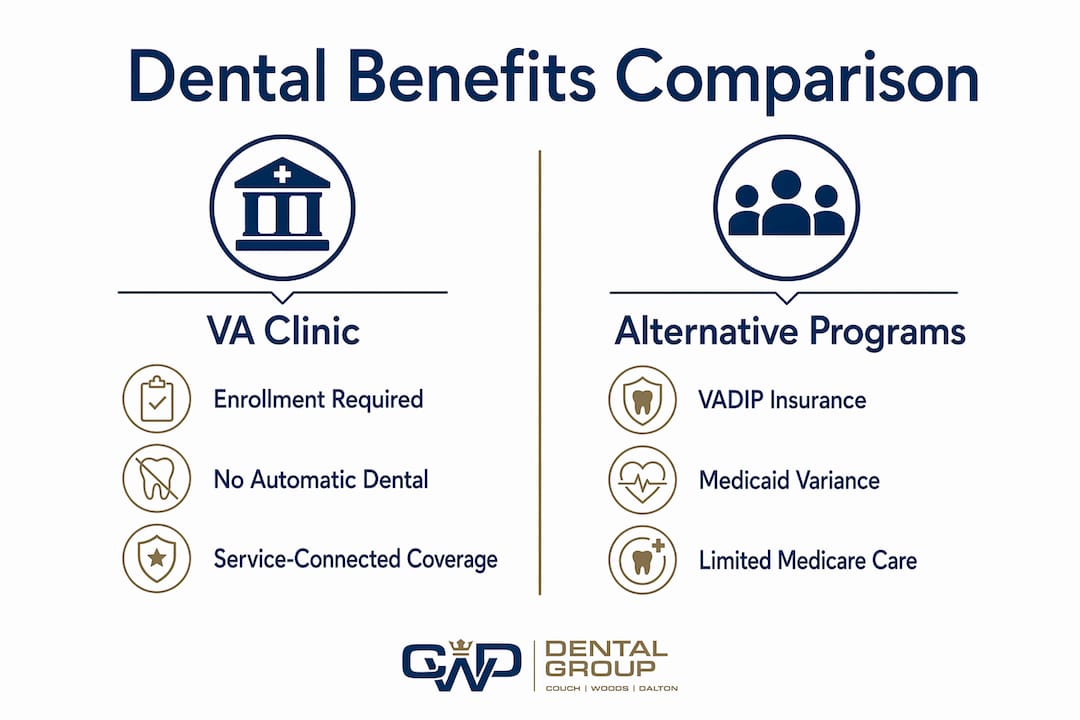
VADIP enrollment works differently from VA clinic access. You enroll directly with Delta Dental or MetLife, not through a VA facility. This distinction catches many veterans off guard. Once enrolled, you use VADIP like any private dental insurance plan, presenting your insurance card at a participating dentist rather than visiting a VA dental clinic.
State Medicaid policies create the widest variation in dental access among veterans. State Medicaid dental coverage often exists on paper but faces real access barriers due to limited provider participation. A veteran in Minnesota may have comprehensive Medicaid dental benefits with dozens of participating providers nearby. A veteran in a rural Southern state may have emergency-only coverage with one participating dentist within 60 miles. Checking your state's specific Medicaid dental policy and local provider availability is not a minor detail. It determines whether your coverage is real or theoretical.
Key takeaways
Accessing dental care after military service requires verifying your VA dental benefits class first, then pursuing VADIP, Medicaid, or supplemental insurance if you do not qualify for free VA care.
| Point | Details |
|---|---|
| VA enrollment does not include dental | Veterans must verify their dental benefits class separately after enrolling in VA health care. |
| VADIP fills the gap for most veterans | Any VA-enrolled veteran or CHAMPVA beneficiary can purchase VADIP through Delta Dental or MetLife. |
| Medicaid coverage varies by state | Check your state's specific adult dental policy and confirm local provider participation before relying on it. |
| Medicare rarely covers dental | Routine dental is excluded from Medicare; supplemental insurance is the practical solution for Medicare-eligible veterans. |
| Confirm provider networks before treatment | In-network dentists reduce costs and eliminate self-filed claims under VADIP, TRICARE, and Medicaid. |
What I've learned after years of watching veterans navigate dental coverage
The single biggest mistake I see veterans make is treating VA health care enrollment as the finish line. They complete Form 10-10EZ, get their VA card, and assume dental care is included. Then they call a VA dental clinic and learn they are not in a qualifying benefits class. By that point, a tooth that needed a filling six months ago needs a root canal.
The VA dental classification system is genuinely confusing, and I do not think that confusion is entirely the veteran's fault. The language around "service-connected noncompensable dental conditions" is not intuitive. But the fix is simple: call your VA medical center and ask one direct question. "What dental benefits class am I in?" That answer changes everything.
For veterans who do not qualify for free VA dental care, VADIP is underused and underappreciated. The premiums are reasonable, the coverage through Delta Dental and MetLife is real, and the enrollment process is straightforward. The catch is that you have to treat it like private insurance. You need to find a participating dentist before you need care, not during a dental emergency at 10 p.m.
My honest advice is this: do not wait for a dental crisis to figure out your coverage. Spend 30 minutes this week confirming your benefits class and identifying one in-network dentist near you. That half hour of preparation is worth more than any amount of research done in pain.
— Kayle
Urgent dental care in Tallahassee for veterans
Veterans in the Tallahassee area who need immediate dental attention do not have to wait weeks for an appointment. Cwddentalgroup offers same-day emergency dental appointments for urgent issues including severe tooth pain, broken teeth, and dental infections. The team at Cwddentalgroup works with patients to understand their insurance coverage, whether that is VADIP, Medicaid, or private insurance, and helps clarify what services are covered before treatment begins. With a patient-centered approach and a reputation built on professionalism and genuine care, Cwddentalgroup is a trusted option for veterans who need quality dental care without the long wait.
FAQ
Does VA health care enrollment include dental coverage?
No. VA health care enrollment does not automatically include dental benefits. Veterans must verify their dental benefits class after enrollment to determine what dental care they qualify for.
Who qualifies for free VA dental care?
Veterans qualify for free VA dental care if they have a service-connected dental condition, a 100% service-connected disability rating, are former prisoners of war, or meet other specific VA classification criteria. Most veterans do not fall into these categories.
What is VADIP and how do I enroll?
VADIP is the VA Dental Insurance Program, offering reduced-cost dental insurance through Delta Dental and MetLife. Veterans enrolled in VA health care or CHAMPVA can enroll directly with Delta Dental or MetLife, not through a VA facility.
Does Medicare cover dental care for veterans?
Medicare generally excludes routine dental services. Limited exceptions apply when dental procedures are part of a covered inpatient hospital procedure. Veterans relying on Medicare should consider supplemental dental insurance to cover routine care.
How do I find a dentist who accepts my veterans' dental insurance?
Use the official provider directory for your specific plan, whether that is Delta Dental, MetLife, or your state's Medicaid portal. Call the dental office directly to confirm they accept your plan before scheduling, since directories are not always current.