
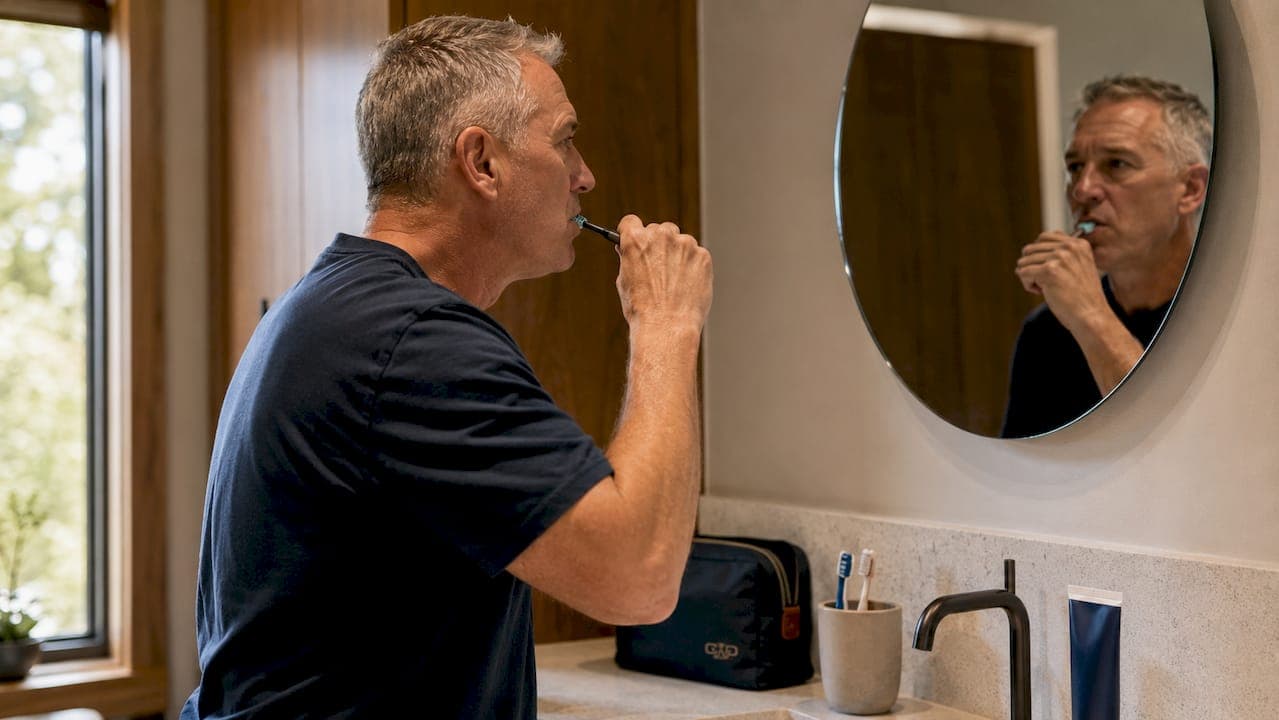
Dental care between VA appointments is defined as the preventive routines, community care access, and emergency management strategies veterans use to protect their oral health outside of scheduled VA visits. Only about 26% of enrolled veterans qualify for VA dental benefits, which means the majority must rely on home care and outside resources to stay healthy. The gap between appointments is where most dental problems start. Filling that gap with the right habits and knowledge prevents small issues from becoming expensive, painful ones.
What daily preventive dental care should veterans follow between VA visits?
Consistent home care is the single most effective tool for maintaining oral health between appointments. Daily home care prevents gum disease and decay, and it costs almost nothing compared to restorative procedures later. Veterans who skip this foundation end up needing fillings, extractions, or root canals that could have been avoided.
Brushing technique and timing
Dental professionals recommend brushing twice daily for 2 minutes with fluoride toothpaste. Divide your mouth into four quadrants and spend 30 seconds on each. That structure keeps you from rushing through one side and neglecting the other. After eating acidic foods like citrus or soda, wait 30 minutes before brushing. Brushing immediately after acid softens enamel and causes more harm than good.
Many patients damage gums by brushing too hard or using hard-bristled brushes. Use a soft-bristled brush and gentle circular motions. Aggressive scrubbing strips enamel and pulls gums away from teeth over time. That kind of damage is irreversible.
Flossing and mouthwash
Flossing daily using the "C" shape technique cleans below the gumline where brushing cannot reach. Curve the floss around each tooth and slide it gently under the gum tissue. Skipping this step leaves bacteria in the spaces most likely to develop cavities and gum disease.
An alcohol-free fluoride mouthwash adds another layer of bacterial control without drying out oral tissues. Veterans managing dry mouth from medications will find alcohol-free formulas far less irritating. Dry mouth is a common side effect of many VA-prescribed medications, and it significantly raises cavity risk.
Pro Tip: If you have diabetes, gum disease, or dry mouth, a standard twice-yearly cleaning schedule is not enough. Veterans with these conditions benefit from 3–4 dental visits yearly to stay ahead of complications.
Here are the core daily habits that protect your teeth between VA visits:
- Brush twice daily for 2 minutes with fluoride toothpaste using a soft-bristled brush
- Floss once daily using the "C" shape technique around each tooth
- Rinse with alcohol-free fluoride mouthwash to reduce bacteria
- Wait 30 minutes after acidic foods before brushing
- Replace your toothbrush every 3 months or after illness
- Stay hydrated to combat dry mouth caused by medications
How can veterans use the VA Community Care Network for dental access?
The VA Community Care Network gives eligible veterans access to local private dentists when VA clinics have long wait times or are too far away. Approximately 40% of all VA care is now delivered through this network, and it handled over 3.5 million dental procedures in fiscal year 2025. That scale reflects how critical community care has become for veterans who cannot get timely VA clinic appointments.

Who qualifies for community dental care?
Eligibility for community care dental services depends on your VA dental class, distance from a VA dental clinic, wait times, and specific medical circumstances. Veterans who qualify for VA dental benefits but face long waits or live far from a VA facility are the most common candidates. Veterans with service-connected conditions that affect oral health may also qualify under specific criteria. Always confirm your eligibility with your VA primary care team before assuming coverage.
How to request a community care dental appointment
Follow these steps to access community dental care through the VA:
- Contact your VA primary care provider or patient advocate and request a community care dental referral.
- Confirm your eligibility for community dental care based on your VA dental class.
- Receive VA authorization through the referral process before scheduling any private appointment.
- Use the VA's Optum Serve program to coordinate paperwork, authorization, and payment with the private dentist.
- Schedule your appointment with a network dentist after authorization is confirmed.
- Keep all documentation from the private dentist and submit it to the VA as required.
Pro Tip: Never visit a private dentist expecting VA coverage without prior written authorization. Without VA approval, the VA will not cover the cost, and you will be responsible for the full bill.
The table below summarizes key differences between VA clinic care and community care access:
| Feature | VA clinic care | Community care network |
|---|---|---|
| Location | VA facility only | Local private dentists |
| Wait times | Can be weeks to months | Often faster |
| Authorization needed | No | Yes, before the visit |
| Cost to veteran | Covered by benefit class | Covered if pre-authorized |
| Paperwork coordination | VA handles | Optum Serve assists |
Community care is not a backup plan. For veterans in rural areas or those facing long VA wait times, it is often the primary path to timely dental treatment.
What emergency dental care options exist between VA appointments?
A dental emergency is defined as any condition involving severe pain, infection, trauma, or a broken tooth that affects eating or speaking. These situations require prompt attention regardless of your VA appointment schedule. Waiting weeks for a routine VA slot when you have an abscess is not just uncomfortable. It is dangerous.
VA dental clinics may offer walk-in triage services for urgent problems even for veterans without routine dental coverage. Triage means assessment, not guaranteed same-day treatment. The clinic evaluates severity and schedules follow-up care based on urgency. Emergency dental procedures may also be approved by the VA when they are needed to support ongoing medical treatments.
"Veterans experiencing urgent dental issues such as severe pain, swelling, or infection should contact their VA dental clinic immediately for triage, even if they do not have routine dental coverage. Same-day treatment is not always available, but early assessment prevents conditions from worsening and opens the path to authorized emergency care."
Here is how to manage a dental emergency between VA appointments:
- Call your VA dental clinic first and describe your symptoms clearly to request triage
- If the VA cannot see you quickly, ask your patient advocate about emergency community care authorization
- Use over-the-counter pain relievers like ibuprofen to manage pain while awaiting care
- Rinse with warm salt water to reduce swelling and slow bacterial spread
- Avoid chewing on the affected side to prevent further damage
- Do not ignore swelling that spreads to your jaw, neck, or face. That signals a spreading infection requiring immediate emergency room care
For veterans in Tallahassee, Cwddentalgroup provides same-day emergency appointments for urgent dental needs, eliminating the wait that makes emergencies worse.
What planning strategies help veterans maintain consistent dental care?
Consistent oral health management between VA appointments requires more than good brushing habits. It requires a plan. Veterans who coordinate dental and medical appointments and track their VA schedule proactively avoid the long gaps that let small problems grow.
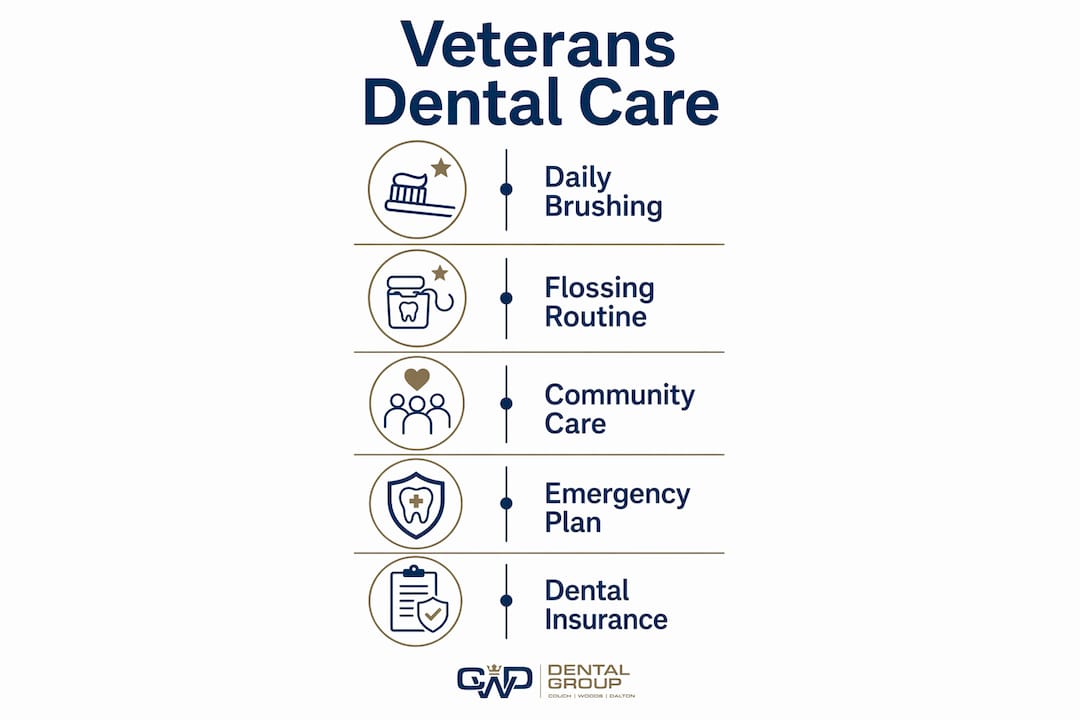
Keeping personal dental records is one of the most underused strategies. Document every procedure, diagnosis, and medication change that affects your oral health. This record supports continuity of care when you switch providers, move to a new VA facility, or file insurance claims.
Here are the planning habits that keep oral health consistent:
- Track your VA dental appointment schedule and request the next appointment before leaving each visit
- Use community care proactively when VA wait times exceed 30 days
- Coordinate dental visits with medical appointments when conditions like diabetes or heart disease affect oral health
- Maintain a personal dental file with X-rays, treatment notes, and provider contact information
- Review your dental care budget annually to account for out-of-pocket costs
Veterans who do not qualify for free VA dental benefits have one strong alternative. The VA Dental Insurance Program (VADIP) offers discounted private dental insurance plans for veterans and their dependents. VADIP is not free, but it significantly reduces costs compared to paying out of pocket at private practices. Enrolling in VADIP before you need care is far smarter than scrambling for coverage after a problem develops.
Key Takeaways
Consistent home care, proactive community care access, and a clear emergency plan are the three pillars of strong oral health between VA dental appointments.
| Point | Details |
|---|---|
| Home care is non-negotiable | Brush twice daily, floss daily, and use fluoride mouthwash to prevent decay between visits. |
| VA coverage is limited | Only about 26% of enrolled veterans qualify for VA dental benefits, so know your eligibility. |
| Community care requires authorization | Always get VA approval before visiting a private dentist or the VA will not cover the cost. |
| Emergencies need immediate triage | Contact your VA clinic for walk-in triage on urgent issues, even without routine dental coverage. |
| VADIP fills coverage gaps | Veterans without free VA dental benefits can purchase discounted insurance through VADIP. |
What I've learned about dental care gaps for veterans
Veterans face a dental care challenge that most civilians never encounter. The assumption that VA enrollment means dental coverage is one of the most common and costly mistakes I see. The reality is that most veterans are on their own for routine dental care, and that gap shows up in their oral health over time.
The veterans who do best are the ones who treat home care as seriously as any medical prescription. They brush with intention, floss without skipping, and they do not wait for pain to tell them something is wrong. Preventive dentistry is not glamorous, but catching a cavity early versus needing a root canal later is the difference between a $150 filling and a $1,500 procedure.
The community care network is genuinely useful, but only if you work it correctly. I have seen veterans lose coverage because they scheduled a private dental appointment without getting VA authorization first. That one step, getting written approval before the visit, protects you completely. Skip it and you own the bill.
My strongest advice for veterans managing dental health between appointments: build a relationship with a local dentist who understands VA care coordination. That relationship pays off when you need emergency care fast or when you need documentation for a VA claim. You should not be navigating this alone, and you do not have to.
— Kayle
Cwddentalgroup is here when VA appointments are not enough
Veterans in Tallahassee should not have to wait weeks when a dental problem demands attention now. Cwddentalgroup provides same-day emergency appointments and a full range of dental services designed around patient comfort and fast access.
Whether you need urgent care for a painful tooth or want to establish consistent preventive care between VA visits, Cwddentalgroup's experienced team is ready. Book your emergency dental visit today, or schedule a routine appointment at a time that works for you. No long waits, no confusion about coverage. Just straightforward, quality dental care from a team that treats every patient like a priority.
FAQ
What percentage of veterans qualify for VA dental benefits?
Only about 26% of veterans enrolled in VA healthcare meet the federal criteria for dental benefits. Eligibility depends on factors like service-connected disability ratings and specific dental classes.
How often should veterans get dental checkups?
Veterans with no major risk factors need a checkup and cleaning every 6 months. Those with gum disease, diabetes, or dry mouth should schedule 3–4 visits per year to stay ahead of complications.
Can veterans see a private dentist without VA authorization?
Veterans can visit any private dentist, but the VA will only cover the cost if you have prior written authorization. Without that approval, you pay out of pocket regardless of your benefit eligibility.
What is VADIP and who should use it?
VADIP is the VA Dental Insurance Program, a discounted private dental insurance option for veterans and dependents who do not qualify for free VA dental care. It is the most practical coverage option for the majority of enrolled veterans.
What should veterans do during a dental emergency between VA appointments?
Contact your VA dental clinic immediately for triage assessment, even without routine coverage. If VA care is not available quickly, request emergency community care authorization through your patient advocate or call a local emergency dentist like Cwddentalgroup for same-day care.