

A biannual dental cleaning routine is defined as two professional dental cleanings per year, spaced approximately every six months. The American Dental Association and the Cleveland Clinic both recommend this schedule as the foundation of preventive oral care. Professional cleanings remove plaque and bacteria that daily brushing and flossing cannot reach, which directly reduces your risk of gum disease and cavities. For most individuals and families, this twice-yearly schedule is the single most effective step you can take to protect your long-term oral health.
How often should you schedule a dental cleaning?
The standard answer is twice a year, but the right dental cleaning schedule for you depends on more than the calendar. Dentists recommend twice-yearly visits as a preventive baseline, not a reactive treatment. The six-month interval exists because that is roughly how long it takes for plaque to harden into tartar, which no toothbrush can remove.
Factors that change your frequency
Some patients need more than two visits per year. Patients with gum disease or weakened immune systems often require cleanings every three to four months. That tighter schedule prevents bacterial buildup from accelerating bone and tissue loss. Other risk factors that push frequency higher include:
- A family history of gum disease or tooth decay
- Diabetes or other conditions that affect immune response
- Smoking or tobacco use, which accelerates plaque buildup
- Pregnancy, which increases gum sensitivity and inflammation risk
- Dry mouth caused by medications
On the other side, some low-risk adults with excellent home hygiene and no history of decay may be cleared for annual visits. The recall interval is always confirmed by your dentist after a full oral exam, not by patient preference alone. This is why the biannual dental checkup matters beyond just the cleaning itself. Your dentist uses that visit to reassess your risk level and adjust your schedule accordingly.
Pro Tip: Book your next appointment before you leave the office. Most practices will send a reminder six months out, but securing the date while you are already there removes one more scheduling barrier.
What happens during a biannual dental cleaning appointment?
A routine cleaning appointment at a practice like Cwddentalgroup follows a predictable sequence. Understanding each step removes the anxiety of the unknown and helps you make the most of your time in the chair.
- Medical history review. Your hygienist checks for any changes in medications, health conditions, or symptoms since your last visit.
- Oral exam. The dentist or hygienist examines your gums, teeth, and soft tissues for signs of disease, decay, or abnormalities.
- Scaling. A scaler removes hardened tartar from tooth surfaces and along the gumline. This is the step that brushing at home cannot replicate.
- Polishing. A gritty paste and a rotating brush remove surface stains and smooth the enamel, making it harder for plaque to adhere.
- Flossing. Professional flossing clears debris from between teeth and checks for gum bleeding or sensitivity.
- Fluoride treatment. Many practices apply a fluoride varnish or rinse to strengthen enamel, particularly for children and high-risk adults.
A routine cleaning takes 30 to 60 minutes, which means two annual visits total roughly two hours of professional preventive care per year. That is a small investment relative to the cost and discomfort of treating advanced decay or gum disease.
Routine cleaning vs. deep cleaning
Not every appointment is a standard prophylaxis cleaning. Patients who have skipped visits or who have active gum disease may require a deep cleaning procedure called scaling and root planing. This process goes below the gumline to remove bacterial deposits from the root surfaces of teeth.
| Cleaning type | Who it is for | Typical duration | Anesthesia needed? |
|---|---|---|---|
| Prophylaxis (routine) | Healthy patients, standard maintenance | 30 to 60 minutes | No |
| Scaling and root planing | Patients with gum disease or significant buildup | 60 to 120 minutes per quadrant | Often yes |
| Periodontal maintenance | Post-treatment gum disease patients | 45 to 60 minutes | Sometimes |
Deep cleaning for gum disease involves numbing the gums and working in sections, so it typically spans multiple appointments. Patients who maintain their regular dental cleaning schedule rarely need this level of intervention.
Pro Tip: Ask your hygienist to explain what they are finding as they work. Knowing your plaque score or gum pocket depths gives you a concrete target to improve before your next visit.
How to set up and maintain your dental cleaning schedule
Building a regular dental care routine for yourself or your family requires more than good intentions. It requires a system.
Setting up your scheduling system
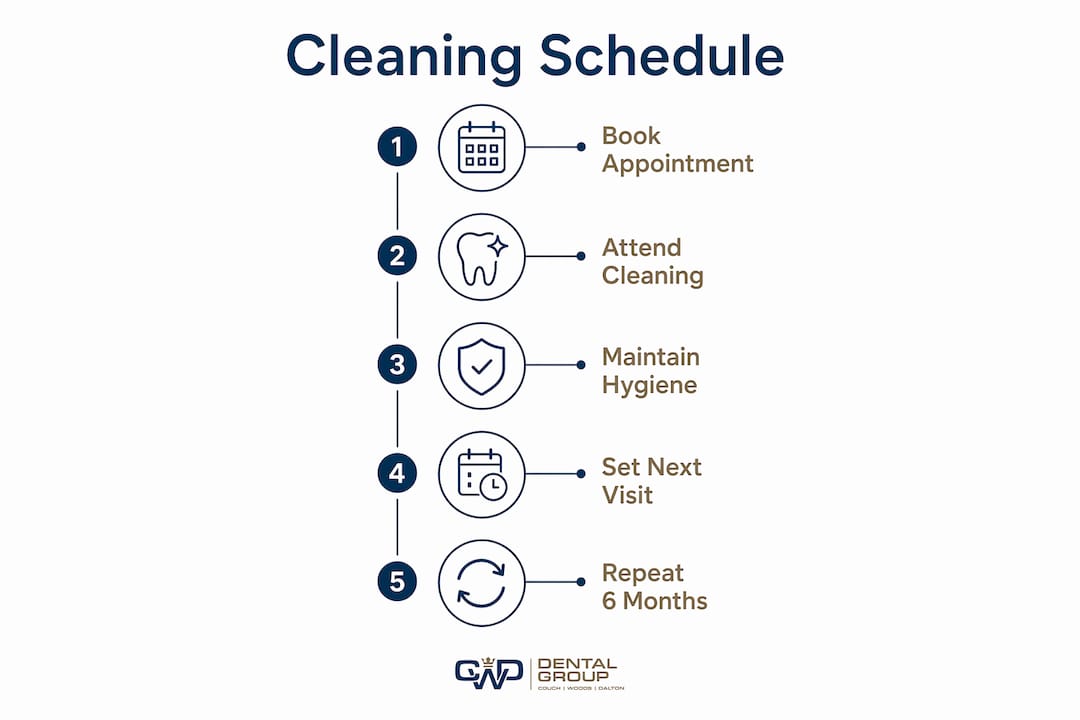
Start by choosing a scheduling method that fits your life. A shared digital calendar like Google Calendar or Apple Calendar works well for families tracking multiple members. Set two recurring events per person per year and attach a reminder two weeks in advance. This gives you enough lead time to reschedule if a conflict arises without losing the appointment entirely.

Booking in advance is the single most effective habit for maintaining a consistent dental cleaning schedule. Most dental practices, including Cwddentalgroup, fill popular morning and Saturday slots weeks ahead. If you wait until you feel like going, you will wait longer than six months.
Preparing for your appointment
Arriving prepared makes the visit faster and more productive. Bring the following:
- Your current dental insurance card and any updated coverage information
- A list of medications you have started or stopped since your last visit
- Notes on any symptoms you have noticed, including sensitivity, bleeding, or pain
- Questions about cosmetic concerns or changes you want to discuss
Your daily oral hygiene habits between appointments directly affect what your hygienist finds. Brushing twice daily with fluoride toothpaste, flossing once daily, and limiting sugary drinks reduces tartar buildup and shortens cleaning time.
Managing family schedules
For families, the most practical approach is to schedule everyone on the same day or in back-to-back appointments. This cuts the number of trips to the office in half and makes it easier to track when each family member is due. Children benefit from starting early dental care routines as soon as their first teeth appear, which normalizes the experience before anxiety can develop.
Common mistakes that derail your biannual cleaning schedule
Even well-intentioned patients fall into patterns that undermine their routine. Recognizing these mistakes is the first step to avoiding them.
- Skipping appointments when nothing hurts. Dental disease is largely painless in its early stages. Waiting for symptoms means waiting until the problem is already advanced.
- Ignoring dentist recommendations for earlier visits. If your dentist says to come back in three months, that recommendation is based on clinical findings, not a sales tactic. Follow it.
- Failing to report symptoms between visits. Bleeding gums, loose teeth, or toothaches are signals to call your dentist immediately, not to wait for your next scheduled cleaning.
- Relying on professional cleanings alone. A biannual checkup does not replace daily brushing and flossing. Professional care and home care work together, not as substitutes for each other.
- Letting dental anxiety go unaddressed. Dental anxiety is manageable when you communicate openly with your dentist. Most practices offer comfort options ranging from nitrous oxide to headphones and blankets.
Pro Tip: If anxiety is the reason you skip appointments, tell the front desk when you book. Practices that prioritize patient comfort, like Cwddentalgroup, can assign you a hygienist known for working well with anxious patients.
Key takeaways
A biannual dental cleaning routine, confirmed and personalized by your dentist after each oral exam, is the most effective preventive strategy for long-term oral health.
| Point | Details |
|---|---|
| Standard frequency | Visit your dentist twice a year, roughly every six months, as a preventive baseline. |
| Personalized intervals | Risk factors like gum disease or diabetes may require cleanings every three to four months. |
| What to expect | Routine cleanings take 30 to 60 minutes and include scaling, polishing, and flossing. |
| Scheduling strategy | Book your next appointment before leaving the office and use digital reminders for families. |
| Warning signs | Bleeding gums, toothaches, or swelling require an immediate call, not a wait until your next visit. |
Why I think most people misunderstand the six-month rule
Most patients treat the six-month interval as a fixed rule handed down from somewhere official. The reality is more interesting. The twice-yearly recommendation became standard in the mid-20th century, partly shaped by dental industry marketing, and it has since been validated by clinical research as a reasonable preventive interval for average-risk adults. But "average risk" describes fewer people than most assume.
In my experience, the patients who benefit most from their dental visits are the ones who treat the appointment as a diagnostic conversation, not a cleaning transaction. They ask what their gum pocket depths are. They ask whether their home care is actually working. They push back when something feels off. That engagement changes outcomes in ways that no cleaning schedule alone can.
I also think families underestimate how much the routine they establish for their children shapes adult behavior. A child who goes to the dentist twice a year without drama becomes an adult who does the same. The family dental care habits you build now are the ones your kids carry forward for decades. That is a return on investment that no filling or crown can match.
The uncomfortable truth is that most people who end up needing expensive dental work did not skip cleanings because they forgot. They skipped because nothing hurt. Pain is a terrible proxy for dental health. The whole point of the biannual schedule is to catch problems before they produce symptoms.
— Kayle
Keep your smile on schedule with Cwddentalgroup

Cwddentalgroup makes it straightforward for Tallahassee families and individuals to stay on top of their dental cleaning schedule. The practice offers personalized appointment planning, experienced hygienists, and a patient-centered approach that takes comfort seriously. Whether you are booking a routine prophylaxis cleaning or need a more intensive visit after a gap in care, the team builds a plan around your specific oral health needs. For urgent situations that cannot wait for a scheduled appointment, Cwddentalgroup provides same-day emergency care for issues like toothaches, swelling, or dental trauma. Schedule your next cleaning today and stay ahead of problems before they start.
FAQ
How often should I get a dental cleaning?
Most dentists recommend a professional cleaning every six months. Patients with gum disease, diabetes, or other risk factors may need cleanings every three to four months based on their dentist's assessment.
What is the difference between a routine cleaning and a deep cleaning?
A routine prophylaxis cleaning removes plaque and tartar from tooth surfaces above and at the gumline. A deep cleaning, or scaling and root planing, removes bacterial deposits from below the gumline and is used to treat active gum disease.
What happens if I skip my biannual dental checkup?
Skipping visits allows plaque to harden into tartar, which increases the risk of gum disease and cavities. Patients who miss multiple appointments often require more intensive and costly treatment when they do return.
How do I schedule dental cleanings for my whole family?
Book all family members on the same day or in consecutive slots to reduce trips to the office. Use a shared digital calendar with six-month recurring reminders and confirm each person's individual recall interval with their dentist.
Can I schedule a dental cleaning if I have dental anxiety?
Yes. Tell your dental practice about your anxiety when booking so they can prepare comfort options in advance. Most practices, including Cwddentalgroup, offer techniques and accommodations specifically designed to make anxious patients more comfortable.