

Combat-related dental and facial injuries need specialized care fast. The right first move is emergency stabilization, whether that's a field medic, military dental officer, or civilian ER, followed immediately by documentation that protects your VA and TRICARE claims. Veterans who served 90 or more days of active duty can apply for a one-time free dental exam within 180 days of discharge. Miss that window and the benefit disappears. Dental trauma sustained during active duty and properly documented as service-connected can qualify you for lifelong VA dental care. Make sure all injuries are clearly documented and tied to your service status.
Multidisciplinary maxillofacial teams at Brooke Army Medical Center (BAMC) and Naval Medical Center San Diego (NMCSD) handle the most complex reconstructions. The VA dental program covers a range of restorative procedures for eligible veterans. Cwddentalgroup offers same-day emergency appointments in Tallahassee while longer referrals are in progress.
- Stabilize first: control bleeding, manage pain, preserve any avulsed teeth
- Document everything: incident report, photos, medical and dental records
- Apply for the VA one-time exam within 180 days of separation
- Pursue service-connected dental care if trauma occurred on active duty
Pro Tip: Keep a copy of your DD214 and all injury-related dental records in one folder. You will need them repeatedly across VA, TRICARE, and civilian referrals.
Table of Contents
- What specialized dental care actually covers for combat injuries
- Who provides this care in the U.S.
- How to access care through VA, TRICARE, and civilian routes
- What to do in the first 48 hours after a dental injury
- Rehabilitation and long-term recovery: what to expect
- Costs, coverage, and realistic timelines
- What to bring and questions to ask your care team
- When you need a multidisciplinary center and how to request one
- How Cwddentalgroup supports veterans with urgent dental needs
- Key Takeaways
- What actually matters most in combat dental recovery
- Urgent dental care in Tallahassee: CWD Dental Group is ready today
- Useful sources and references
What specialized dental care actually covers for combat injuries
Dental care for combat-related injuries goes well beyond fillings and extractions. The clinical scope includes oral and maxillofacial surgery, microvascular reconstruction, dental implants, prosthodontics, TMJ assessment, sensory and nerve rehabilitation, speech and swallowing therapy, nutrition support, and mental health integration.
The most significant advance in military dental trauma management is the jaw-in-a-day technique: a microvascular fibula transfer that rebuilds the jaw and places implants in a single operation. What once required multiple surgeries spread over years now happens in one coordinated procedure. Restoring the ability to eat, speak, and swallow is the clinical priority, not cosmetics. That functional focus is what drives return-to-duty outcomes and long-term quality of life.
- Oral and maxillofacial surgery: jaw reconstruction, fracture repair, soft-tissue restoration
- Microvascular reconstruction: fibula transfers, vascularized bone grafts with immediate implants
- Prosthodontics: implant-supported crowns, bridges, and full-arch restorations
- TMJ assessment and conservative management for joint injuries
- Speech and language pathology for swallowing and articulation deficits
- Nutrition support during recovery when normal eating is not possible
- Sensory and nerve rehabilitation for facial numbness or altered sensation
Craniomaxillofacial injuries accounted for roughly 42% of evacuated patients in prior conflicts, which is why the military invested in dedicated restoration centers of excellence.
Pro Tip: Ask your surgical team specifically about TMJ assessment at your first evaluation. Peer-reviewed research shows TMD and sensory deficits are common secondary complications of combat dental trauma and are frequently missed without targeted screening.
Who provides this care in the U.S.
Three distinct systems deliver trauma dental care for veterans and active-duty personnel, and knowing which one fits your situation saves weeks.
VA Dental Program
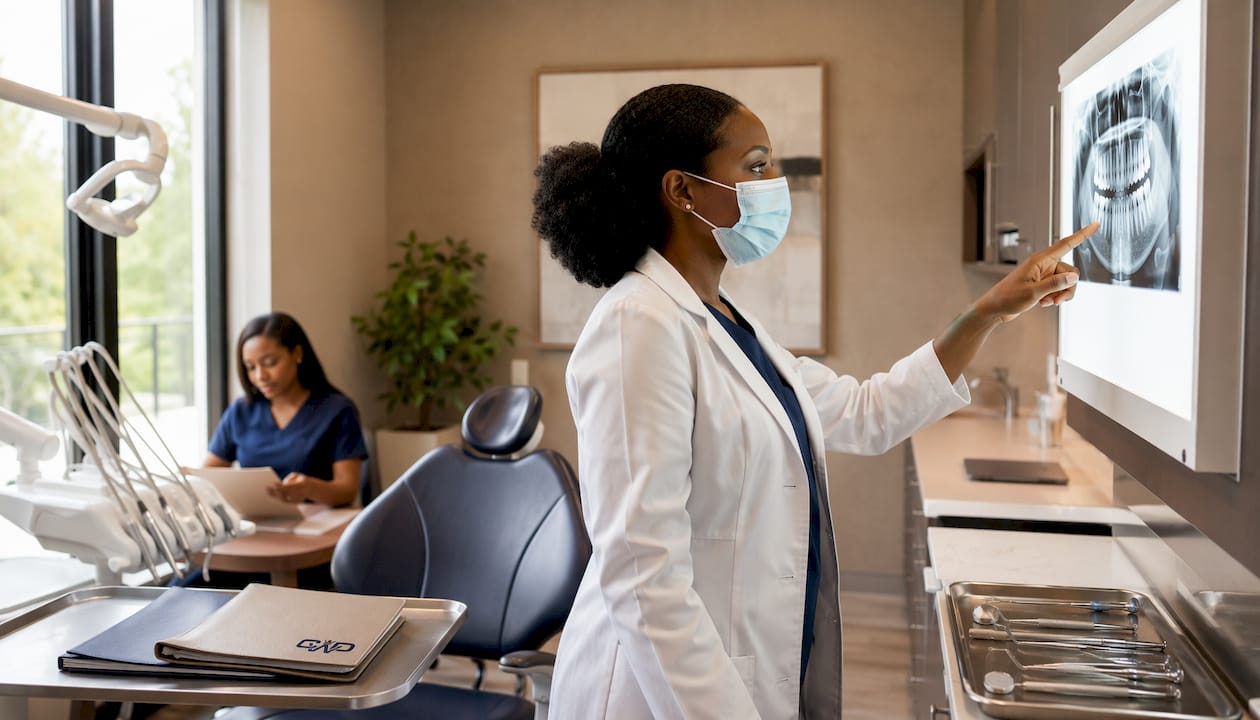
The VA provides restorative procedures, dentures, oral surgery, and access to oral and facial reconstruction for eligible veterans. Eligibility hinges on service-connected status or the 180-day one-time exam window. Veterans needing long-term care typically require a Dental Trauma Rating (VA Form 10-564-D) or a VA Regional Office rating decision (VA Form 10-7131) to unlock ongoing service-connected dental care.
Military Centers of Excellence
- BAMC (San Antonio): Designated as a Defense Health Agency Maxillofacial Restoration Center of Excellence, integrating surgery, dentistry, prosthetics, speech therapy, and rehabilitation under one roof
- NMCSD (San Diego): The second regional hub; its program has treated 60+ patients since November 2020 with a 94% return-to-duty rate using accelerated protocols
Civilian Specialists
Oral and maxillofacial surgeons, prosthodontists, and multidisciplinary trauma centers fill gaps when military or VA capacity is limited. Civilian care requires careful documentation to support later VA service-connection claims.
How to access care through VA, TRICARE, and civilian routes
VA route
- Obtain your DD214 and confirm it does not show a complete dental exam before separation
- Contact your nearest VA dental clinic and request the one-time post-separation exam
- Apply within 180 days of discharge; the benefit requires active application and is not automatic
- Bring all injury-related records, photos, and any operative reports from military treatment
TRICARE and DoD route
- Report to your military treatment facility (MTF) for initial evaluation
- Request a referral to BAMC or NMCSD for complex maxillofacial cases
- For emergencies, TRICARE covers stabilization care; follow up with your MTF for referral paperwork
- Active-duty dependents follow separate TRICARE eligibility rules; confirm coverage before civilian visits
Civilian route
- Seek a board-certified oral and maxillofacial surgeon if military or VA access is delayed
- Document all civilian treatment thoroughly: operative reports, imaging, and receipts
- Request that civilian providers write referral letters explicitly linking injuries to service
- Submit civilian records to the VA to support a service-connection claim later
For step-by-step guidance on accessing post-service dental care, Cwddentalgroup's veteran resource guide covers the eligibility process in plain language.
What to do in the first 48 hours after a dental injury
Speed matters. The actions you take in the first two days directly affect both clinical outcomes and your ability to get covered care.
- Bleeding control: Apply firm pressure with gauze; go to an ER if bleeding does not stop within 15 minutes
- Pain management: Over-the-counter ibuprofen or acetaminophen; avoid aspirin, which prolongs bleeding
- Antibiotics: Contaminated wounds from combat environments typically require antibiotic coverage; a military medical officer or ER physician can prescribe
- Avulsed tooth: Handle by the crown only, rinse gently with saline, and reimplant immediately if possible; if not, store in milk or saline and get to a dental clinic within 30–60 minutes
- Fractured teeth: Save all fragments in a sealed bag with saline
- Documentation: Photograph injuries, record the date and circumstances, and request copies of all medical records before leaving any treatment facility
Knowing what qualifies as a dental emergency helps you triage correctly and avoid delays that worsen outcomes.
Rehabilitation and long-term recovery: what to expect
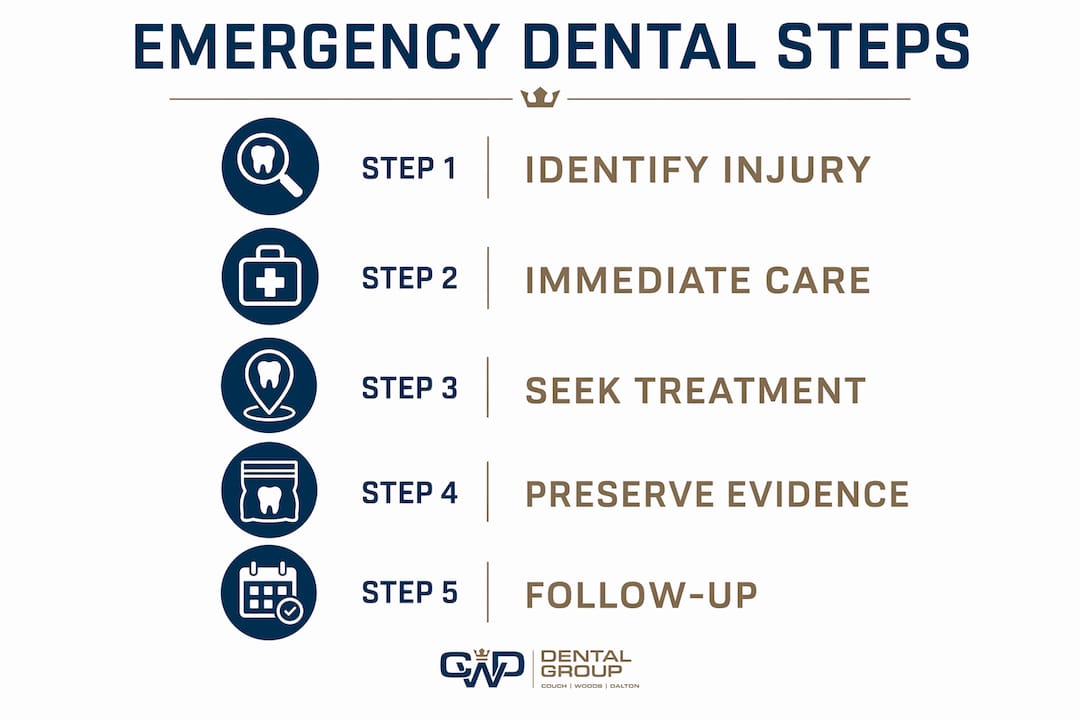
Recovery from serious combat dental trauma is a team effort measured in months, not weeks. A full rehabilitation team typically includes oral and maxillofacial surgeons, prosthodontists, speech and language pathologists, physical and occupational therapists, nutritionists, and mental health professionals.
The jaw-in-a-day protocol compresses what used to be an 18–24 month multi-stage process into a single hospitalization, with patients beginning oral intake and walking within days of surgery. Staged reconstructions for more complex cases still follow a phased timeline, but accelerated protocols at BAMC and NMCSD have shortened overall recovery significantly.
- Early milestones: pain control, wound healing, and beginning liquid nutrition within days
- Mid-phase: implant integration, prosthetic fitting, and speech therapy starting within weeks
- Long-term: TMJ monitoring, sensory reassessment, and staged revisions if needed
Combat dental trauma research published in 2025 found that TMD was diagnosed in 10.4% of soldiers with head and neck trauma, with avulsion injuries carrying a significantly higher association. Early TMJ screening is not optional.
Costs, coverage, and realistic timelines
Coverage varies by eligibility category, and the gaps matter.
- VA coverage: The one-time exam is free for eligible veterans; ongoing care requires service-connected status with proper documentation
- TRICARE: Covers emergency stabilization and referred care for active-duty personnel; dependent coverage follows separate rules
- Civilian care: May require out-of-pocket payment unless a TRICARE referral is in place or VA service-connection is established
Typical timelines run roughly as follows: emergency stabilization within days, reconstructive surgery within weeks to months depending on referral processing, and prosthetic and implant phases spanning several additional months. Keep every referral letter, operative report, and imaging study. Those records are the foundation of any future VA claim.
Deferred care during service compounds these costs and complications. Understanding how dental neglect during service affects long-term recovery helps frame why early treatment and documentation matter financially as well as clinically.
What to bring and questions to ask your care team
Document checklist:
- DD214 (discharge paperwork)
- Military medical and dental records
- Incident or injury report
- Photographs of injuries taken at time of trauma
- Any prior imaging: X-rays, CT scans, panoramic films
- Referral letters from military or VA providers
Questions worth asking:
- What is the functional restoration goal, and in what order will we address eating, speaking, and swallowing?
- How many surgical procedures should I expect, and what is the realistic timeline?
- When will implants be placed relative to bone grafting?
- Which records will be shared directly with VA or TRICARE?
Red flags that need immediate escalation:
- Uncontrolled infection or spreading facial swelling
- Progressive numbness or sensory loss in the face or jaw
- Worsening TMJ pain or inability to open the mouth
- New or worsening difficulty swallowing or speaking
When you need a multidisciplinary center and how to request one
Not every combat dental injury requires BAMC or NMCSD. But some clearly do.
Referral criteria:
- Large bony defects or significant jaw loss
- Multiple missing teeth combined with jaw fracture
- Microvascular reconstruction needs
- Major soft-tissue loss affecting lips, cheeks, or floor of mouth
- Combined craniofacial trauma affecting the airway or swallowing
How to request a referral:
- Ask your MTF dentist or VA dentist to initiate a consult with BAMC or NMCSD
- Provide all imaging, operative reports, and clinical notes at the time of the request
- Document functional deficits explicitly: difficulty eating, speaking, or swallowing carries weight in referral decisions
At a center of excellence, coordinated nine-pathway teams use virtual surgical planning, microvascular anastomosis, and immediate implant placement into vascularized bone grafts to restore function in a single operation when appropriate.
How Cwddentalgroup supports veterans with urgent dental needs
Cwddentalgroup in Tallahassee offers same-day emergency appointments for veterans and active-duty personnel who need immediate care while longer VA or military referrals are being processed. Services include urgent restorations, pain control, infection management, and referral coordination for cases that need specialist involvement.
The practice can help you organize your DD214, dental records, and injury documentation before your VA application or specialist referral. For veterans managing care between VA appointments, having a local emergency option prevents gaps that worsen outcomes and complicate claims.
Key Takeaways
Veterans with combat-related dental injuries get the best outcomes when they act fast, document thoroughly, and connect with the right level of care from the start.
| Point | Details |
|---|---|
| Apply within 180 days | The VA one-time free dental exam is available to veterans who served at least 90 days and apply within 180 days of discharge, provided their DD214 shows no complete dental exam before separation. The benefit requires active application and is not automatic. |
| Document service connection | VA Form 10-564-D or a Regional Office rating decision is required for lifelong service-connected dental care. |
| Jaw-in-a-day compresses timelines | This single-operation protocol replaces what previously required multiple years of staged reconstruction. |
| NMCSD outcomes | The NMCSD program reported a high return-to-duty rate among patients treated since November 2020. |
| Cwddentalgroup local option | Same-day emergency care in Tallahassee stabilizes veterans while VA or military referrals are processed. |
What actually matters most in combat dental recovery
The conventional advice tells veterans to "work the system" and be patient. That framing misses the point. The veterans who get the best functional outcomes are the ones who treat documentation as a clinical tool, not paperwork. Every photo, every operative report, every referral letter is evidence that shapes both your care pathway and your VA eligibility.
The other thing most guides understate: the functional priority matters more than the cosmetic one. Military medical experts at NMCSD and BAMC design their programs around restoring the ability to eat, speak, and swallow, not around aesthetics. That mindset should guide every conversation you have with your care team. If a provider leads with cosmetic outcomes before addressing function, push back.
Timely care and thorough records are not bureaucratic hurdles. They are the two variables most within your control, and they have the largest effect on what coverage you receive and how fully you recover.
Urgent dental care in Tallahassee: CWD Dental Group is ready today
Same-day emergency appointments for veterans are available at Cwddentalgroup in Tallahassee. If you are in pain, dealing with a broken tooth, or managing an infection while waiting on VA processing, do not wait for a referral to get stabilized.
Visit Cwddentalgroup's emergency dental care page to book a same-day appointment or call the practice directly. Bring your DD214, any military medical or dental records, injury photos, and referral paperwork if you have it. The team will help you manage immediate pain, coordinate documentation, and connect you with the right next step in your care pathway.
Useful sources and references
- VA Dental Patient Information: Eligibility and Services
- About VA Health Benefits: Dental Care
- BAMC Designated as DHA Maxillofacial Restoration Center of Excellence
- NMCSD Maxillofacial Program: Restoring Form, Function, and Readiness
- The New Face of Readiness: One Soldier's Story of Restoration
- A Retrospective Study of Dental Trauma in Israeli Military Personnel (PubMed)
- The Burden of Dental Emergencies and Craniomaxillofacial Injuries in U.S. Military Personnel