

VA dental eligibility comes down to which benefit class you fall into, not whether you're enrolled in VA health care. Veterans in Class I, IIA, IIC, or IV get "any needed dental care" for as long as they're eligible. Most other veterans qualify for a single, limited episode of treatment or none at all. If you don't make the cut, the VA Dental Insurance Program (VADIP) and community or private care fill the gap.
TL;DR:
- Veterans with Class I, IIA, IIC, or IV benefits qualify for ongoing, comprehensive dental care regardless of VA health care enrollment, while others typically get limited or one-time treatment.
- The VA Dental Insurance Program offers private coverage that does not affect existing VA dental benefits and is useful for veterans needing faster or extended family coverage.
- Confirming your dental benefit class requires checking your disability letter, VA.gov records, and contacting your local VA clinic or CVSO, especially within 180 days of discharge for Class II claims.
- Major restorative procedures like implants are not automatically covered and require case-by-case evaluation; veterans with limited benefits should consider community care options.
- Standing eligibility for continued care depends on benefit class; veterans must actively verify their status to avoid missing opportunities like timely filings for Class II or using private clinics during VA delays.
Table of Contents
- VA Dental Benefit Classes: Who Qualifies and What Each Covers
- VADIP: A Different Path That Doesn't Replace VA Dental Care
- How to Confirm Your Eligibility and Apply
- Ongoing Care vs. One-Time Fixes: What VA Actually Pays For
- If You Don't Qualify: What to Do Next
- How a Local Clinic Fills the Gap When VA Access Stalls
- What Veterans Get Wrong About Eligibility
- Local Help Now: How to Book With CWD Dental Group
- Sources
VA Dental Benefit Classes: Who Qualifies and What Each Covers
The VA sorts every veteran into a benefit class, and that class, not your health enrollment status, decides what dental work you can get for free. VA Dental Care lays out six main categories, and the differences between them are bigger than most veterans expect.
- Class I: veterans with a service-connected, compensable dental condition. This gets you "any needed dental care," on an ongoing basis, for life.
- Class II: a one-time course of treatment for a dental condition that existed at discharge but wasn't rated as service-connected. It's a single fix, not recurring coverage.
- Class IIA: combat veterans and former POWs get treatment for service-connected, noncompensable dental trauma. This one also opens the door to ongoing "any needed dental care."
- Class IIC: certain former POWs qualify for the same "any needed dental care" standard as Class I, regardless of trauma classification.
- Class III: dental care tied to a service-connected condition where the dental problem is clinically shown to complicate that other condition, per VA Dental Care.
- Class IV: veterans rated 100% disabled from service-connected conditions get "any needed dental care" as long as that rating stands.
- Class V: veterans enrolled in a VA vocational rehabilitation program qualify when dental work is necessary to meet that program's goals.
- Class VI: veterans scheduled for inpatient care or certain outpatient procedures where dental treatment is needed to prep for that care.
The misconception that trips up the most veterans: signing up for VA health care does not automatically grant dental coverage. It's a separate determination entirely, governed by 38 CFR §17.161, the regulation that spells out exactly who VA can treat and under what conditions.
VADIP: A Different Path That Doesn't Replace VA Dental Care
The VA Dental Insurance Program is discounted private dental insurance, and it exists specifically for veterans who don't fit neatly into the "any needed dental care" classes. Buying into VADIP does not change or reduce your existing VA dental eligibility. If you already qualify for free care under Class I or Class IV, VADIP just adds options on top of that.
- Open to any veteran enrolled in VA health care, plus CHAMPVA spouses and dependent children, according to the VADIP program page.
- Available nationwide, including U.S. territories, through private insurance carriers under contract with VA.
- A common move for veterans who want faster appointments, a broader network of private dentists, or coverage for family members VA dental benefits don't touch.
Veterans often layer VADIP on top of limited VA eligibility. If your VA benefit only covers a one-time Class II correction, VADIP becomes your ongoing coverage after that course is used up.
How to Confirm Your Eligibility and Apply
Figuring out your class isn't guesswork. It's a short checklist, and skipping a step is the most common reason veterans lose access to a benefit they actually qualified for.
- Pull your VA disability rating letter and check whether it lists a dental condition or combat trauma designation.
- Sign into VA.gov and review your enrollment record and dental eligibility status.
- Call your local VA medical facility's dental clinic or enrollment coordinator directly. Eligibility calls get answered faster than portal messages.
- If you're within 180 days of discharge and think you qualify for a Class II one-time correction, file the request immediately. That window is strict, and the VA resource packet confirms missing it forfeits the benefit.
- Contact your County Veteran Service Officer (CVSO) if you're stuck. They handle this paperwork constantly and can spot errors in a rating letter that a first-time caller would miss.
- Once your class is confirmed, a VA dental provider has to authorize any treatment before it happens. If you want VADIP as a backup, enroll through the VADIP portal separately.
Pro Tip: Request a VA dental exam even if you're unsure you qualify. An exam finding can establish or strengthen a service connection that reclassifies you into a better benefit class. Keep your DD214 and any treatment notes handy. Documentation matters more than most veterans assume.
Ongoing Care vs. One-Time Fixes: What VA Actually Pays For
Only Classes I, IIA, IIC, and IV get repeat restorative and prosthetic work covered indefinitely. Everyone else in a qualifying class typically gets one course of treatment and that's it.
- Complex procedures like implants aren't routinely covered. VA evaluates them case-by-case based on clinical necessity, not automatically as part of a class benefit.
- Class II corrections are meant to fix problems that existed at discharge. Once complete, future coverage depends on your benefit class, which may provide limited or no additional coverage.
- The Homeless Veterans Dental Program (HVDP) offers a one-time course of treatment tied to rehabilitation and employment goals for eligible homeless veterans, detailed in the VA resource packet.
Veterans considering major restorative work should ask directly whether their class covers it before assuming a repeat benefit exists.
If You Don't Qualify: What to Do Next
Plenty of veterans find out they only qualify for a single Class II correction, or nothing at all. That's not the end of the road.
- VADIP works if you want predictable, discounted coverage and don't mind paying premiums.
- VA community care can cover you when your local VA facility can't provide needed dental treatment, per VA's community care guidance, but it requires prior authorization.
- Community health clinics and local private dentists remain the fastest options when you need care now and don't have time to wait on a VA determination. A step-by-step access guide can help you map out interim options.
- Your CVSO can point you toward regional low-cost clinics that specifically serve veterans.
Pro Tip: Even if you're denied now, document every dental issue tied to your service. A future claim or reevaluation can hinge on records you didn't think to keep at the time.
How a Local Clinic Fills the Gap When VA Access Stalls
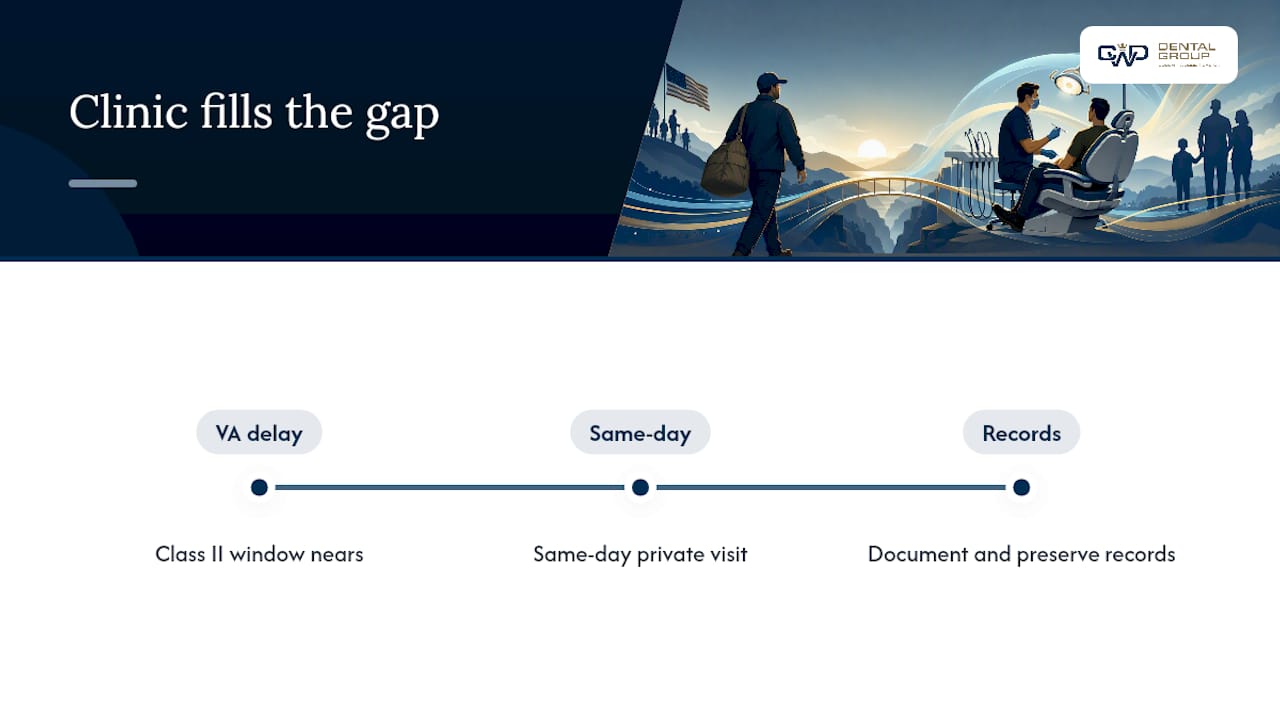
VA appointment backlogs are common, and a Class II window can close while you're waiting for a callback. That's where a same-day option matters. CWD Dental Group offers same-day emergency appointments and full restorative work in Tallahassee, and the practice has handled cases involving veterans documenting service-related dental trauma. If VA care is delayed, a private visit now, paired with careful record-keeping, keeps your options open for later.
What Veterans Get Wrong About Eligibility
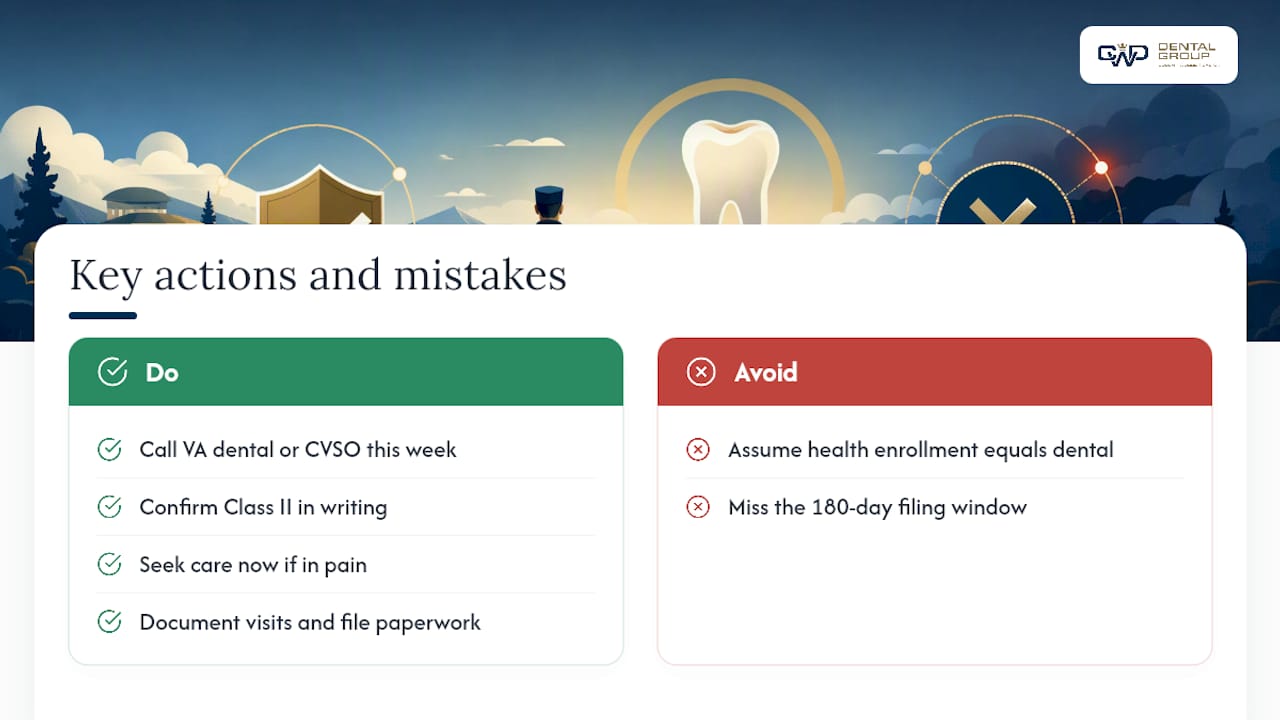
The biggest mistake I see: assuming VA health enrollment means dental coverage. It doesn't, and that gap catches veterans off guard right when they need care most. The second mistake is letting the 180-day Class II window slip by without filing, often because nobody told them the clock was running.
If you take one action from this article, make it this: call your local VA dental clinic or CVSO this week and get your class confirmed in writing. If you have pain now, don't wait on that answer. Get seen, document everything, and sort the VA paperwork in parallel.
— Kayle
Local Help Now: How to Book With CWD Dental Group
If a VA appointment is weeks out and you're dealing with pain, a cracked filling, or an infection, waiting isn't really an option. CWD Dental Group is a practical middle ground for Tallahassee veterans: same-day emergency visits, full restorative and reconstructive dentistry, and staff familiar with what veterans need documented for a future VA claim.
Booking is straightforward. Call the office, describe the issue, and bring photo ID, your DD214 if you have it, and any VA paperwork related to prior dental care or your disability rating. That paperwork helps the team note anything relevant if you're building a case for service connection down the line. For urgent issues, visit the emergency dentist page to see same-day availability and get seen before the problem gets worse.
This article is general information, not a substitute for advice from a qualified doctor. Consult a qualified healthcare professional about your own circumstances before acting on anything here.