
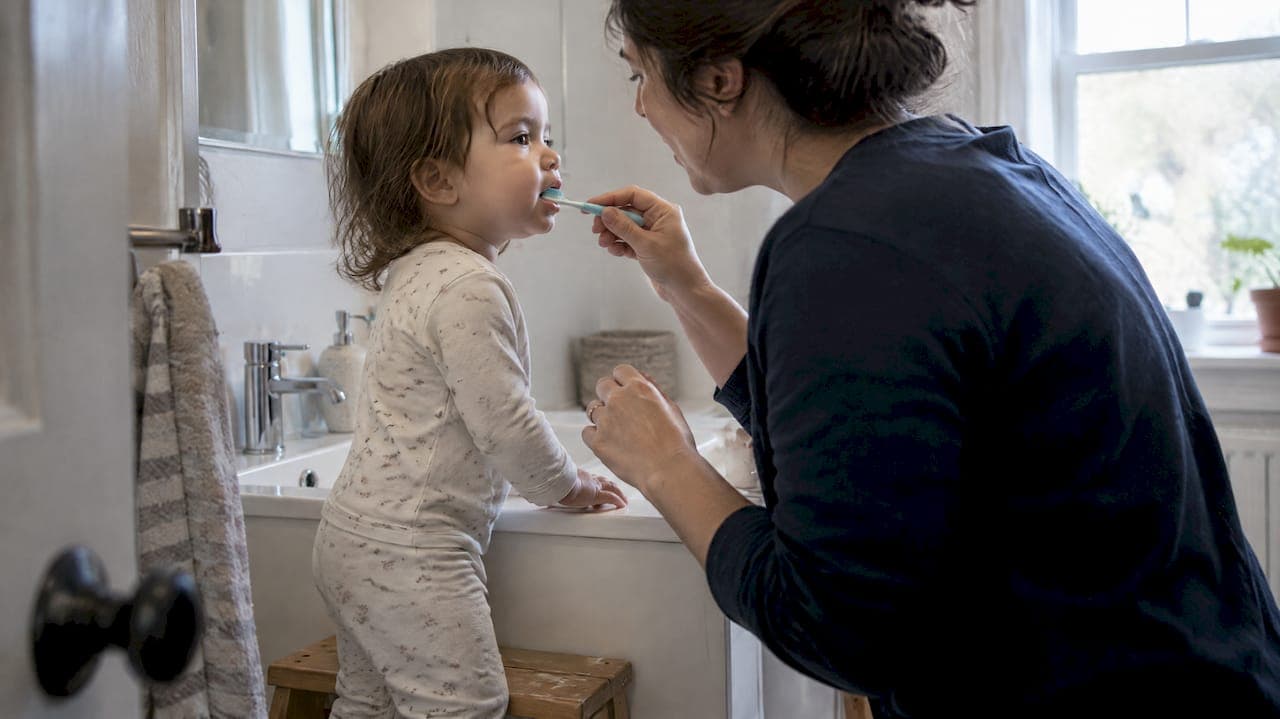
Brush your toddler's teeth twice a day with a supervised smear of fluoride toothpaste, and keep milk, formula, juice and sugary drinks out of the crib or bed. Book a dental home visit by the first birthday or within six months of the first tooth, and ask about fluoride varnish. Keep sugary snacks and drinks to mealtimes, and offer water between meals.
TL;DR:
- For children under 3, use a smear about the size of a grain of rice; use a pea sized amount from ages 3 to 6.
- Fluoride varnish can reduce cavities in primary teeth by about one third; higher risk children may need repeat applications every 3 to 6 months.
- Brush after the final evening feed and skip rinsing; after a night feed, wipe the child's teeth or brush with water.
- Most children receive sealants when permanent molars emerge around age 6, although a dentist may seal baby molars with deep grooves and high cavity risk.
- Seek emergency care if facial swelling occurs with fever; tooth pain that disrupts sleep or eating warrants prompt dental contact.
Table of Contents
- How do you clean and brush your toddler's teeth at each age?
- Which feeding habits raise or lower cavity risk?
- What does fluoride do, and how is it used safely?
- When should your toddler see a dentist?
- How is early decay treated, and when is it urgent?
- What habits help prevention stick for the long run?
- Do dental sealants help toddlers?
- What are the early signs of tooth decay in a toddler?
- What are safe teething practices that don't raise decay risk?
- How do pacifiers affect your toddler's teeth?
- Do you need to clean teeth after night feedings or breastfeeding?
- Why does early prevention deserve a clinic's full attention?
- How can we help you protect your toddler's teeth?
- FAQ
- Sources
How do you clean and brush your toddler's teeth at each age?
Start before the first tooth shows up. Cleaning the gums twice a day with a soft, damp cloth removes bacteria and sugars that feed early decay, and it gets your child used to having their mouth touched. Once the first tooth erupts, switch to a soft, small-head toothbrush and brush morning and night.
The toothpaste amount matters more than most parents realize. The CDC recommends fluoride toothpaste twice daily: a smear about the size of a grain of rice for children under 3, and a pea-sized amount for ages 3 to 6. Always supervise so your child spits rather than swallows. Toddlers do not know how to spit yet, so you teach it: show them, make it a game, and praise the effort.
Toddlers also lack the hand control to clean well on their own. Head Start guidance says parents should do hands-on brushing until at least age 6 or 7. Until then, your child can hold the brush and "practice," but you finish the job.
Here is what a good routine looks like:
- Brush thoroughly, covering the outer, inner and chewing surfaces of every tooth.
- Use the knee-to-knee position: you and another adult sit facing each other, knees touching, and lay your toddler's head in your lap. Or stand behind your child at the mirror and tilt their head back gently.
- Make brushing time visible with a song or a sand timer so it feels like a game, not a standoff.
- Brush the last thing before bed, after the final drink or snack, so nothing sugary sits on the teeth overnight.
- Hand over the toothbrush for a turn first, then take it back and finish. Responsibility shifts in small steps, not all at once.
Pro Tip: Let your toddler "brush" a stuffed animal or doll first, then take a turn on their own teeth. Role reversal turns resistance into play, and you get a clear view of what they are willing to tolerate.
Flossing can start when teeth are close enough to touch. Toddlers often have gaps, so some children do not need it until later, but once teeth are snug, floss daily with a floss pick or a short length of floss. You do it for them until they have the dexterity to manage it, which is usually well past the toddler years. Plaque hides between teeth where a brush cannot reach, so skipping this step leaves a real gap in the routine.
Which feeding habits raise or lower cavity risk?
Cavities follow a simple chain. Bacteria in plaque feed on sugars, make acid, and the acid dissolves minerals from the enamel. Each time your toddler eats or drinks something sugary, that acid attack lasts a while. So frequency matters as much as quantity: a sippy cup of juice carried around all afternoon does more harm than a cookie eaten with lunch.

The most damaging habit is the bedtime bottle or sippy cup with milk, formula, juice or any sweet drink. Saliva slows down during sleep, so sugars pool around the teeth for hours. Finish feedings before sleep, brush, and if your child needs something in the crib, make it plain water.
Grazing is the quieter culprit. A handful of crackers here, a few sips of juice there, and the teeth never get a break to recover. Instead:
- Plan meals and one or two set snack times rather than constant nibbling.
- Serve sugary foods with a meal, when extra saliva helps wash them away, rather than as a standalone snack.
- Make water the default drink between meals and keep juice occasional and small.
- Offer tooth-friendly snacks such as cheese, plain yogurt and raw vegetable sticks cut to a safe size for toddlers. Dairy foods in particular do not feed decay bacteria the way sweets do.
Changing habits is easier when you go gradually. If your toddler is used to a bottle at bedtime, dilute the contents with water over a week or two until it is all water, then phase out the bottle. Make sure grandparents, daycare staff and babysitters know the rules, because one inconsistent caregiver can undo a lot of progress. A short note on the fridge with your three rules (water at night, sweets with meals, no grazing) keeps everyone aligned.
What does fluoride do, and how is it used safely?
Fluoride is the single most useful tool for preventing decay. It helps prevent and repair early enamel damage by replacing minerals lost to acid, and steady low levels of fluoride in saliva and on the tooth surface are protective. That is why the daily dose from toothpaste and tap water adds up over time.
At home, the rules come down to amount and supervision. Use the rice-sized smear under age 3 and the pea-sized amount from 3 to 6, and do not let toddlers swallow extra. Fluoride mouthrinses and high-strength products are generally for older children or by prescription, so skip them for a toddler unless your dentist specifically recommends one.
Fluoride varnish applied by a clinician reduces cavities in primary teeth by about one-third. It is a quick, painted-on treatment, and it is one of the strongest reasons to get your child into a dental chair early.
Here is how the pieces fit together:
- Fluoride varnish: painted onto the teeth in the office. The AAPD and USPSTF-backed guidance describes 5% sodium fluoride varnish applied by a clinician. For children at higher risk, dentists commonly repeat it every 3 to 6 months.
- Community water fluoridation: children who drink fluoridated tap water have fewer cavities. Ask your dentist or pediatrician whether your local water is fluoridated.
- Fluoride supplements: only for select children whose water is fluoride-deficient, and only by prescription, because too much fluoride during tooth development can cause fluorosis (faint white marks on permanent teeth).
If you use well water or filtered water that removes fluoride, mention it at your next visit so your dentist can adjust the plan.
When should your toddler see a dentist?
Plan the first visit by your child's first birthday or within six months of the first tooth, whichever comes first. That timing comes from AAPD and USPSTF-backed guidance, and it surprises many parents who assume dental care starts at age 3 or later. We explain the idea in more detail in our guide to what a dental home is, and the timing question is covered in your child's first dental visit age.
These early appointments are short and gentle. Expect:
- A quick look at the teeth, gums and bite, often with your toddler sitting on your lap.
- A demonstration of brushing technique and the right amount of toothpaste.
- A cavity risk assessment based on diet, home routine and fluoride exposure.
- Fluoride varnish if your child's risk or the dentist's plan calls for it.
- Guidance on thumb sucking, pacifiers, teething and snacks.
Visit frequency is at least once a year, and more often if your child is at higher risk. The real payoff is prevention: a problem spotted while it is small is usually a simple fix, which tends to mean fewer and shorter future treatments. A toddler who has already met the dentist, sat in the chair and left with a sticker also tends to be calmer if a problem ever does show up.
How is early decay treated, and when is it urgent?
Not every cavity needs a drill. Very early lesions, sometimes called white spots, can often be monitored and treated with fluoride and better home care. If decay has gone deeper, options step up to fillings, and for advanced decay a dentist may recommend a pulpotomy (treating the inner part of the tooth) or an extraction. The goal is to stop infection, protect the developing permanent teeth underneath and keep your child chewing and speaking comfortably. For a deeper look at modern options, see our article on cavity treatments for children.
Baby teeth matter here. They are placeholders for permanent teeth, and untreated decay can lead to infections that may harm the teeth coming in behind them.
Call a dentist promptly, or seek urgent care, if you notice: For help managing orthodontic costs, see tips on how to use HSA/FSA and predetermination to cut orthodontic costs.
- Tooth pain that wakes your child at night or keeps them from eating.
- Swelling in the gums, cheek or face.
- Fever along with a tooth complaint.
- Dark brown or black spots or visible holes in a tooth.
- A tooth that has become loose before it should be.
While you arrange care, keep brushing gently around the sore area, avoid sugary foods and drinks, and ask your dentist or pediatrician about age-appropriate pain relief. Do not place aspirin or any medication directly against the gum. Facial swelling with fever warrants immediate emergency care.
What habits help prevention stick for the long run?
Routine beats willpower. Tie brushing to things that already happen every day, such as after breakfast and right before the bedtime book, and your toddler will start to expect it the way they expect pajamas. Praise the effort rather than the result, and skip bribes and punishments, which tend to turn a health habit into a power struggle.
- Anchor brushing to the same two moments each day and keep the order identical: bath, pajamas, brush, book.
- Give your toddler a child-sized brush with a favorite character or color, and let them pick the toothpaste flavor.
- Use a song or timer so the end is always in sight.
- Use a sticker chart for consistent effort, then fade it out once brushing is automatic.
- Keep doing the hands-on brushing until your child can show good technique, usually around age 6 or 7.
Troubleshooting helps. If your child refuses or gags, try a softer brush, a milder toothpaste flavor or a different time of day. If sensory issues are at play, ask your dentist for desensitization tips. On travel days, pack the brush first and keep the same order, even if it happens in a hotel bathroom. If daycare or grandparents handle bedtime, share a one-page routine. Our age-appropriate dental care guide goes into more detail by age.
Pro Tip: Brush your own teeth at the same time. Toddlers imitate, so a family brushing moment does more than any lecture.
Do dental sealants help toddlers?
Sealants are thin protective coatings painted onto the chewing surfaces of back teeth, where deep grooves trap food and bacteria. The CDC reports that sealants on back teeth can prevent about 80% of cavities on those surfaces. That is a strong result, and the reason dentists pay attention to them even in young children.
The practical question for toddlers is timing. Sealants go on teeth that have deep grooves and are fully erupted, so most children get their first set when permanent molars come in around age 6, rather than during the toddler years. Baby molars can sometimes be sealed too, if your dentist sees deep grooves and a high cavity risk, which is a judgment call made at an exam.
Applying a sealant is quick and painless: the tooth is cleaned and dried, the coating is painted on, and a special light hardens it. There is no drilling or numbing. Sealants last for years but are checked at routine visits, since they can wear or chip, and they are easy to repair.
Sealants work alongside fluoride and brushing, not instead of them. They protect the grooves, while fluoride strengthens enamel across the whole tooth and brushing keeps plaque off the smooth surfaces and gumline. Ask at your toddler's visits whether any teeth are candidates now or when to plan for the first permanent molars.
What are the early signs of tooth decay in a toddler?
Early decay is easy to miss because it does not hurt at first, so check your toddler's teeth in good light every few weeks. Lift the lip and look at the front teeth, especially along the gumline, and look at the chewing surfaces of the back teeth when your child opens wide.
Here is what to watch for:
- White or chalky spots or lines, often along the gumline of the upper front teeth. This is the earliest stage, and it can often be reversed with fluoride and better hygiene.
- Light brown, dark brown or black spots, which suggest the decay has progressed.
- Visible pits or holes in a tooth.
- Sensitivity to cold, hot or sweet foods, or a child who suddenly refuses a food they used to enjoy.
- Fussiness, chewing on one side or tooth pain that disrupts sleep.
- Persistent bad breath that does not clear up after brushing.
A white spot is the best time to act. Book a visit, tighten up the routine and ask about fluoride varnish, since early lesions can often be stopped before they need a filling. Once spots turn brown or a hole appears, have it examined soon, because decay in baby teeth can progress quickly, and it is far easier to deal with a small problem than a large one.
A good habit: while you brush, glance at one area each night, so you notice any change quickly.
What are safe teething practices that don't raise decay risk?
Teething often brings drooling, fussiness and the urge to chew on everything. The goal is to soothe your baby without adding sugar or bacteria to the mouth.
Safe, tooth-friendly options include:
- A chilled (not frozen) solid rubber teething ring, which gives gentle pressure and cold comfort.
- A clean, damp washcloth, chilled in the fridge, for your child to chew on.
- Gentle gum massage with a clean finger.
- Wiping drool from the chin to avoid skin irritation.
Avoid anything sweet. Do not dip pacifiers or teething rings in honey, sugar, syrup or juice, and skip sugary teething biscuits or rusks that dissolve onto the gums and teeth. Avoid honey for babies. Skip teething gels and tablets that numb the gums unless your pediatrician or dentist specifically recommends one, because the sensation of numbness can affect swallowing and some products carry safety warnings.
Keep cleaning. Even while teething is in full swing, keep wiping the gums and brushing any teeth that have come through. Sore gums are no reason to skip it, and a soft brush used gently is usually fine. If your child has a high fever, diarrhea or seems severely unwell, do not blame teething. Call your pediatrician.
How do pacifiers affect your toddler's teeth?
A clean pacifier does not cause cavities by itself, but what you do with it can. The risk comes from dipping it in sugar, honey or juice, or cleaning it by putting it in your own mouth, which can pass cavity-causing bacteria from you to your child.
The bigger long-term concern is how a pacifier shapes the bite. Prolonged sucking can push the front teeth outward, narrow the upper jaw or leave a gap that keeps the front teeth from meeting. The effects tend to be minor in the early years, and many bite changes improve on their own if sucking stops before permanent teeth come in. Many dentists suggest weaning during the toddler years to stay on the safe side.
Practical steps:
- Use only orthodontic-style or one-piece pacifiers, and replace them when they look worn or cracked.
- Keep it clean with warm soapy water, not your mouth.
- Limit use to sleep and soothing moments, rather than all day, which also helps speech development.
- Wean gradually: try shortening the time, offering a comfort object instead, and praising the child for going without.
If your toddler still uses a pacifier or sucks a thumb around age 3 or later, mention it at your next dental visit. Your dentist can check how the teeth and bite are developing and suggest a weaning plan that fits your child.
Do you need to clean teeth after night feedings or breastfeeding?
Yes, once teeth are present, cleaning after the last feeding of the day matters. Breast milk and formula both contain natural sugars, and saliva flow drops during sleep, so milk left on the teeth overnight gives bacteria a long window to produce acid. This is why decay can set in on the upper front teeth of toddlers who nurse or bottle-feed to sleep.
A simple approach:
- Make the final feeding of the evening happen before the bedtime brushing routine, not after.
- Brush with the rice-sized smear of fluoride toothpaste, then skip rinsing so a bit of fluoride stays on the teeth. Your child spits out the excess but does not rinse with water.
- For babies without teeth yet, wipe the gums with a damp cloth after the last feeding.
- If your toddler wakes for a night feed, either gradually phase it out or follow it with a quick wipe of the teeth with a damp cloth or brush with water.
Breastfeeding itself is not the problem. Frequent, prolonged night feeding on demand with no cleaning afterward is the pattern that raises risk, especially once other sugary foods are in the mix. If you are not ready to end night feeds, ask your dentist about a plan that fits your family. Taking it step by step usually works better than quitting overnight.
Why does early prevention deserve a clinic's full attention?
Our view after seeing how decay develops in young children: the families who avoid trouble are rarely the ones with perfect habits. They are the ones who start early and ask questions. We put family-centered preventive care first, which means early visits, fluoride varnish when it fits, parent coaching on brushing and snacks, and a comfortable first experience for your toddler. We also keep same-day access open for urgent problems, because a toothache should not wait a week. Talk with your dentist about a prevention plan built around your child, since risk looks different for every family.
— Kayle
How can we help you protect your toddler's teeth?
Our pediatric dentist team gives families a friendly place to start prevention early, and our services page shows everything we offer in one place:
- Pediatric dentistry for babies, toddlers and older children
- Preventive teeth cleaning visits and risk checks
- Fluoride varnish and sealant assessments
- Same-day emergency dental care when something cannot wait

We make visits gentle and welcoming. If you are wondering whether your toddler is due for a first visit or a checkup, book a preventive visit with our team and we will walk you through a plan that fits your family.
This article is general information, not a substitute for advice from a qualified doctor. Consult a qualified healthcare professional about your own circumstances before acting on anything here.
FAQ
How can I stop baby teeth from decaying?
Brush twice a day with a supervised smear of fluoride toothpaste, keep sugary drinks away from bedtime and between meals, and book a dental home visit early. Fluoride varnish from a dentist adds another layer of protection.
What is the most effective way to prevent cavities in children?
Daily fluoride toothpaste, limited sugar frequency and regular dental visits work best together. Professional fluoride varnish reduces cavities in primary teeth by about one-third, so asking about it at checkups is worthwhile.
What foods help prevent cavities in toddlers?
Cheese, plain yogurt, raw vegetable sticks and plain water are good choices. Serve any sweets with meals rather than as all-day snacks, since how often teeth meet sugar matters as much as how much.
How are cavities in toddlers treated?
Very early spots may be monitored and treated with fluoride and better home care. Deeper cavities may need a filling, and advanced decay may need a pulpotomy or extraction, depending on the tooth and your child's age.