
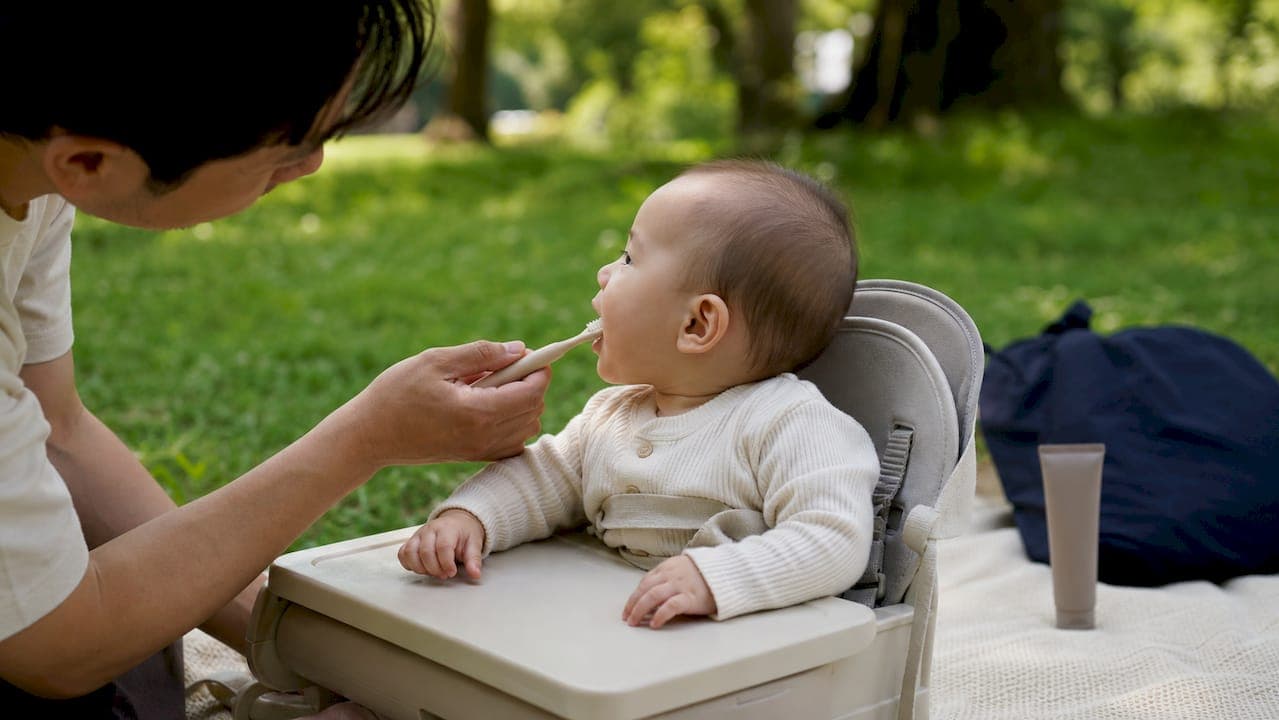
Start these 8 actions now, and you'll protect your child's teeth from the very first eruption onward. The CDC, AAP, and ADA all agree on the core routine:
- Wipe your newborn's gums with a clean, damp cloth after every feeding
- Start brushing with a soft infant toothbrush the moment the first tooth appears
- Use a grain-of-rice smear of fluoride toothpaste for children under 3
- Never put your baby to bed with a bottle of milk, formula, or juice
- Introduce an open cup by around 12 months
- Limit sugary drinks and snacks; offer water as the default drink
- Schedule the first dental visit within 6 months of the first tooth or by the first birthday
- Call a dentist promptly if you see white spots, brown stains, swelling, or persistent pain
These aren't suggestions. Cavities are the most common chronic disease of childhood in the United States, and more than half of children aged 6 to 8 have had at least one cavity in a primary tooth. The good news: most of that damage is preventable with a consistent daily routine started early.
Table of Contents
- How do you care for baby teeth at each stage?
- Exactly how do you brush a baby or toddler's teeth?
- Why does fluoride matter, and how do you get the right amount?
- What soothes teething safely, and what should you avoid?
- When should you schedule the first dental visit?
- How do you spot early dental problems at home?
- Quick eruption timeline and care milestones
- How do you choose the right dentist for your child?
- What actually happens at a child's first dental visit?
- Key Takeaways
- The habit that matters more than any product
- Cwddentalgroup makes early dental care easy for Tallahassee families
- Trusted sources for further reading
How do you care for baby teeth at each stage?
Baby teeth care step by step really means stage by stage. What you do for a 2-week-old is different from what you do for a 2-year-old, but each stage builds directly on the last.
Newborn to 6 months: gum care before teeth arrive
Begin cleaning your baby's mouth in the first few days after birth by wiping the gums with a clean, moist cloth or gauze pad after feedings. There are no teeth yet, but bacteria are already present. One habit to drop immediately: never clean a dropped pacifier in your own mouth. Saliva can transfer Streptococcus mutans, the primary cavity-causing bacteria, directly to your infant before a single tooth has erupted.
Around 6 months: the first tooth arrives
Most babies cut their first tooth around 6 months, though anywhere from 4 to 12 months is normal. The day that tooth appears, the brushing routine starts. Use a soft-bristled infant toothbrush and a smear of fluoride toothpaste no larger than a grain of rice. Book a dental visit within 6 months of that first tooth or by the first birthday, whichever comes first, at a trusted pediatric dentistry practice.
Ages 1 to 3: the toddler stage
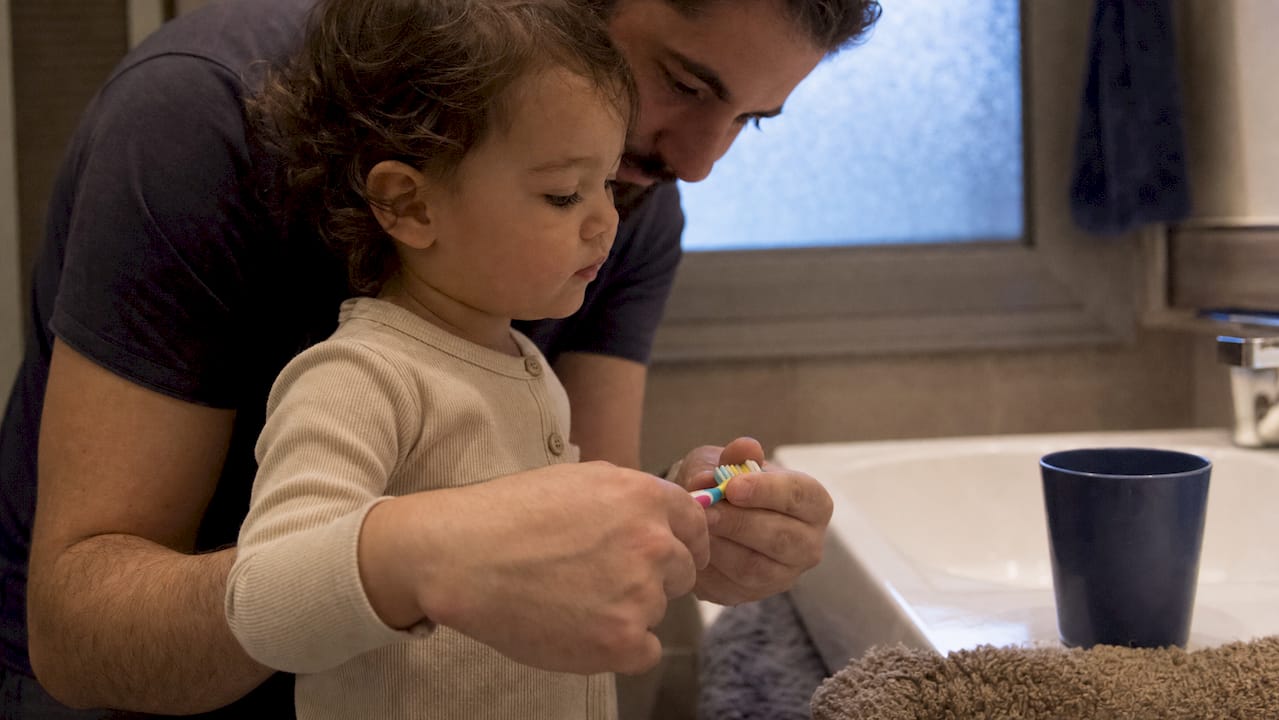
Brush twice daily, morning and before bed. Keep the grain-of-rice amount until age 3, then move to a pea-sized amount. When two teeth are touching, start flossing between them. Toddlers will want to hold the brush themselves, which is fine. Let them try, then finish the job yourself. That "assist-brush" approach builds independence while making sure plaque actually gets removed.
By age 3: full primary dentition
All 20 primary teeth are typically in by age 3. At this point, twice-daily brushing with a pea-sized amount of fluoride toothpaste is the standard. Regular dental checkups every 6 months are the norm, and your dentist may recommend fluoride varnish or sealants depending on your child's cavity risk. For a deeper age-by-age dental care routine, the stage-specific guidance continues well past the toddler years.
Pro Tip: Build a "brush, book, bed" sequence into the nightly routine. Brushing right before the bedtime story makes it a predictable, calm part of the wind-down rather than a battle at the end of the night.
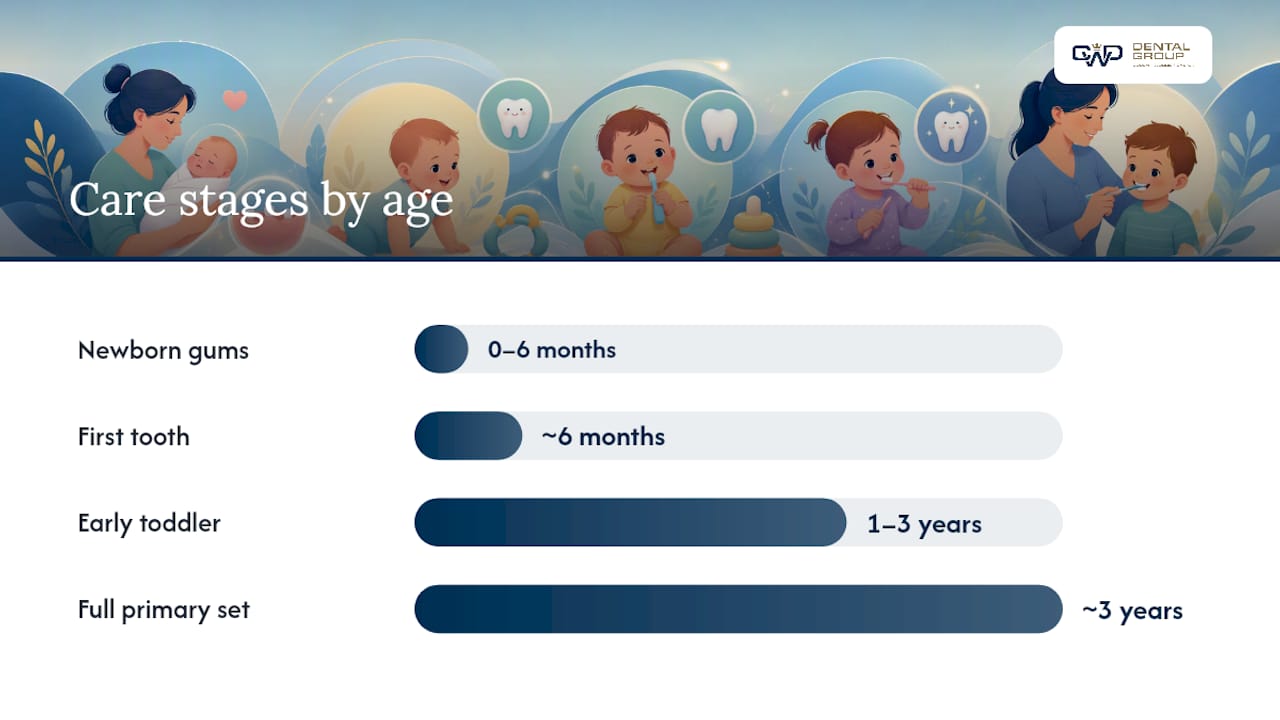
| Stage | Age | Key Care Action |
|---|---|---|
| Newborn gums | 0–6 months | Wipe gums with damp cloth after feeds |
| First tooth | ~6 months | Brush with infant brush + grain-of-rice fluoride toothpaste; book dentist |
| Early toddler | 1–3 years | Twice-daily brushing; floss when teeth touch |
| Full primary set | ~3 years | Pea-sized toothpaste; 6-month checkups; discuss varnish |
Exactly how do you brush a baby or toddler's teeth?
Position matters as much as technique. Sit your child on your lap facing away from you, or lay their head against your chest. This gives you a clear view of all surfaces and keeps the child stable without a struggle.
The brushing sequence
- Apply the correct toothpaste amount (grain-of-rice for under 3; pea-sized for ages 3–6) to a soft-bristled infant or toddler brush.
- Start at the back teeth on one side, using small circular motions along the outer surfaces.
- Move to the inner surfaces, angling the brush toward the gumline.
- Brush the chewing surfaces with a gentle back-and-forth motion.
- Repeat on the other side, then brush the front teeth.
- Spit, but skip the rinse. Leaving a trace of fluoride toothpaste on the teeth extends its protective effect.
Aim for about 2 minutes total, twice a day. A timer, a short song, or a brushing app all work. The ADA recommends supervising brushing until children can reliably do it themselves, which typically happens somewhere between ages 7 and 10. Even a 6-year-old who insists they've got it usually hasn't.
One more thing: start brushing as soon as teeth appear, even if it's imperfect at first. A wiggly, uncooperative toddler who gets 80% coverage is still far better off than one who skips brushing entirely.
Why does fluoride matter, and how do you get the right amount?
Fluoride does two things most parents don't realize: it strengthens enamel before decay starts, and it can actually reverse very early-stage decay before it becomes a cavity. That's not a minor benefit.
Fluoride varnish alone prevents about one-third of cavities in primary teeth, and children in communities with fluoridated water have measurably fewer cavities. The public-health target for community water fluoridation is about 0.7 mg/L. If your household uses bottled water or a private well, you may be missing that protection entirely.
Check your tap water first. The CDC's My Water's Fluoride tool lets you look up your local water system's fluoride level by state and county. If your water isn't fluoridated, ask your pediatrician or dentist about fluoride supplements. These are only appropriate when community water is not fluoridated, and dosage depends on age and local levels, so professional guidance is required before starting them.
Fluoride varnish is applied in-office, typically every 6 months, though children at higher cavity risk may benefit from more frequent applications. Pediatricians can also apply varnish at well-child visits, which is useful when dental access is delayed. Fluoride varnish is often covered by public and private insurance, so it's worth asking your insurer before assuming it's out of pocket.
What soothes teething safely, and what should you avoid?
Teething typically begins around 6 months and continues through age 3. The real symptoms are drooling, irritability, and disrupted sleep. Those are uncomfortable but normal.
What is not normal: fever, diarrhea, or a rash. Fever and diarrhea are not normal teething symptoms and warrant a call to your pediatrician. If your baby has a temperature above 100.4°F alongside teething, something else is going on.
Safe soothing options:
- A chilled (not frozen) teething ring
- Gentle gum massage with a clean finger
- Infant acetaminophen or ibuprofen, only per your pediatrician's guidance and age-appropriate dosing
What to avoid:
- Topical benzocaine gels for infants. The FDA has warned against these products because benzocaine can cause methemoglobinemia, a serious condition that reduces oxygen in the blood.
- Homeopathic teething tablets. The FDA has also flagged certain products in this category for containing inconsistent levels of belladonna.
- Frozen teething rings that are hard enough to bruise gum tissue.
- Amber teething necklaces, which pose a choking and strangulation hazard.
When in doubt, call your pediatrician. Teething is uncomfortable, but it shouldn't require anything beyond basic comfort measures.
When should you schedule the first dental visit?
The answer is specific: within 6 months of the first tooth appearing, or by the first birthday, whichever comes first. Many parents wait until age 3 or 4, assuming baby teeth don't need professional attention. That's a costly delay.
The ADA recommends the first dental visit within six months after the first tooth appears, but no later than the child's first birthday. The goal isn't just to check the teeth. It's to establish a dental home: a consistent practice where your child's oral health is tracked over time, where early problems are caught before they become expensive, and where your family gets personalized guidance on fluoride, diet, and brushing technique.
What the first visit typically includes:
- A brief oral exam to check tooth development, gum health, and bite
- A gentle cleaning if needed
- A fluoride varnish application when appropriate
- Parent education on brushing technique, toothpaste amounts, and feeding habits
- Scheduling of the next visit (usually every 6 months)
An established dental home also means your child has a known provider when something urgent happens. For more on what this relationship looks like over time, this guide to dental homes for parents covers the long-term value in detail.
How do you spot early dental problems at home?
White spots on teeth are the first visible sign of decay, and most parents don't recognize them. They appear as chalky or opaque patches on the enamel surface, usually near the gumline. At that stage, the damage is still reversible with fluoride treatment. Brown or black staining means the decay has progressed further and needs professional evaluation.
A quick home checklist:
- Lift the lip and look at the front teeth near the gumline monthly
- Check for white, brown, or black spots on any tooth surface
- Note any tooth that seems sensitive to temperature or touch
- Watch for swelling, redness, or pus near the gums
Seek urgent care immediately for:
- Uncontrolled bleeding from the mouth after trauma
- A knocked-out or severely displaced tooth
- Facial swelling combined with fever (this can indicate a spreading infection)
- Severe, persistent tooth pain that disrupts sleep or eating
For cavity treatment options when decay is caught early, modern pediatric cavity treatments have come a long way from what most parents remember from their own childhood. Same-day emergency appointments are available at Cwddentalgroup for situations that can't wait.
Quick eruption timeline and care milestones
| Tooth Group | Typical Eruption Age | Key Care Action |
|---|---|---|
| Lower central incisors | 6–10 months | Start brushing; schedule first dental visit |
| Upper central incisors | 8–12 months | Grain-of-rice fluoride toothpaste; wipe gums after feeds |
| Lateral incisors | around 6 months | Continue twice-daily brushing |
| First molars | around 12 months | Begin flossing when teeth touch; check for white spots |
| Canines | ages 1 to 3 | Maintain brushing routine; 6-month dental checkup |
| Second molars | by age 3 | Pea-sized toothpaste at age 3; discuss sealants with dentist |
A few notes on outliers: teeth arriving before 4 months or still absent after 12 months are worth mentioning to your pediatrician. Late eruption is often genetic and not a problem, but it's worth ruling out other causes. Early eruption just means the brushing routine starts sooner.
How do you choose the right dentist for your child?
The right dentist for a toddler isn't just any dentist. Look for a practice that sees young children regularly, offers preventive services like fluoride varnish, and has a physical environment that doesn't terrify a 1-year-old. A waiting room with a TV playing cartoons matters less than whether the staff knows how to handle a scared, squirming toddler calmly.
Selection criteria worth checking:
- Experience with infants and toddlers, not just school-age children
- Preventive services: fluoride varnish, parent education, dietary counseling
- Same-day or emergency appointment availability for urgent situations
- Clear communication about insurance, payment options, and what's covered
- A calm, child-friendly clinical environment
Questions to ask at the first appointment:
- What's your fluoride varnish schedule for a child at our cavity risk level?
- How do you handle a child who's anxious or uncooperative?
- What's the protocol if my child has a dental emergency on a weekend?
- How often do you recommend checkups for this age group?
For a broader look at what pediatric dentistry involves and how it differs from general dentistry, this overview of pediatric dentistry covers the training and service differences clearly. You can also explore dental services specifically for toddlers to understand what a practice should offer at this age.
What actually happens at a child's first dental visit?
A first visit for a 1-year-old is nothing like a visit for a 7-year-old. It's short, low-pressure, and focused almost entirely on the parent. Here's the typical flow at a family-focused practice like Cwddentalgroup:
The first-visit process:
- Check-in and brief health history: The team reviews the child's medical background and any parental concerns.
- Knee-to-knee exam: The dentist and parent sit facing each other; the child lies back with their head in the dentist's lap. It takes about 2 minutes.
- Oral exam: The dentist checks tooth development, gum tissue, bite, and any early signs of decay.
- Brushing demonstration: The dentist or hygienist shows the parent the correct technique and toothpaste amount in real time.
- Fluoride varnish: Applied if indicated by the child's age and risk level.
- Parent education: Diet, bottle habits, pacifier use, and the next visit are all discussed.
- Scheduling: The next 6-month checkup is booked before you leave.
Tips for a smooth visit:
- Book a morning appointment. Infants and toddlers are typically calmer earlier in the day.
- Keep your own demeanor relaxed. Children read parental anxiety quickly.
- Bring a comfort item: a favorite toy or blanket helps.
- Don't use the dentist as a threat ("if you don't brush, the dentist will hurt you"). It creates fear that makes every future visit harder.
Cwddentalgroup offers same-day emergency appointments for situations that can't wait, which means your child's dental home is also the place to call when something goes wrong unexpectedly.
Key Takeaways
Starting infant dental hygiene early, using the right fluoride amounts, and establishing a dental home by the first birthday are the three actions that do the most to prevent cavities in primary teeth.
| Point | Details |
|---|---|
| Start before teeth arrive | Wipe newborn gums with a damp cloth after every feeding from day one. |
| Fluoride toothpaste amounts | Grain-of-rice smear for under 3 years; pea-sized amount for ages 3–6. |
| No bottles at bedtime | Milk, formula, or juice in a bedtime bottle pools sugar around teeth for hours. |
| First dental visit by age 1 | Book within 6 months of the first tooth or by the first birthday, whichever comes first. |
| Cwddentalgroup for local families | Cwddentalgroup in Tallahassee offers infant and toddler exams, fluoride varnish, and same-day emergency care. |
The habit that matters more than any product
There's a tendency to focus on finding the right toothbrush or the best toothpaste for infants, as if the product is the variable that determines outcomes. It isn't. The research is clear: consistency and timing matter far more than brand.
What actually moves the needle is starting before parents think they need to. Most cavities in toddlers develop because the routine started late, not because the wrong brush was used. A child whose gums were wiped from week one, whose first tooth was brushed the day it appeared, and who saw a dentist before their first birthday is in a fundamentally different position than one whose parents waited until age 3 to start.
The other thing that gets underestimated: the bacteria transfer problem. Parents who wouldn't dream of giving their infant soda will clean a pacifier in their own mouth without a second thought. That single habit can seed a baby's mouth with cavity-causing bacteria before a single tooth has erupted. Keeping separate utensils, cleaning dropped items with soap and water, and never sharing spoons aren't overcautious rules. They're the kind of specific, unsexy interventions that actually prevent disease.
Baby teeth are not placeholders. They guide speech development, hold space for permanent teeth, and allow a child to chew a varied diet during critical growth years. Losing them early to decay has real consequences that follow a child into adolescence. The step-by-step routine in this guide isn't complicated. The hard part is starting it on day one and not stopping.
Cwddentalgroup makes early dental care easy for Tallahassee families
Getting your child's first dental visit right shouldn't require navigating a long waitlist or explaining your toddler's anxiety to a front desk that isn't used to 1-year-olds. Cwddentalgroup in Tallahassee is built for exactly this: family-focused dental care from infancy onward, with a team that knows how to make small patients comfortable and parents confident.

Services for infants and toddlers include first-tooth exams, fluoride varnish, cavity treatment, and parent education on brushing technique and diet. When something urgent happens, Cwddentalgroup's same-day emergency dental appointments mean you're not searching for urgent care on a Saturday morning. Book your child's first visit today and establish the dental home that protects their smile from the start.
Trusted sources for further reading
These are the primary sources behind the guidance in this article. Each one is worth bookmarking.
- Oral Health Tips for Children | Oral Health | CDC
- Good Oral Health Starts Early: AAP Policy Explained - HealthyChildren.org
- Healthy Mouth for Your Baby (booklet) - NIDCR
- Healthy Habits - Babies and Kids | MouthHealthy - Oral Health Information from the ADA
- Looking after your baby's teeth - NHS
- How to Prevent Tooth Decay in Your Baby - HealthyChildren.org