
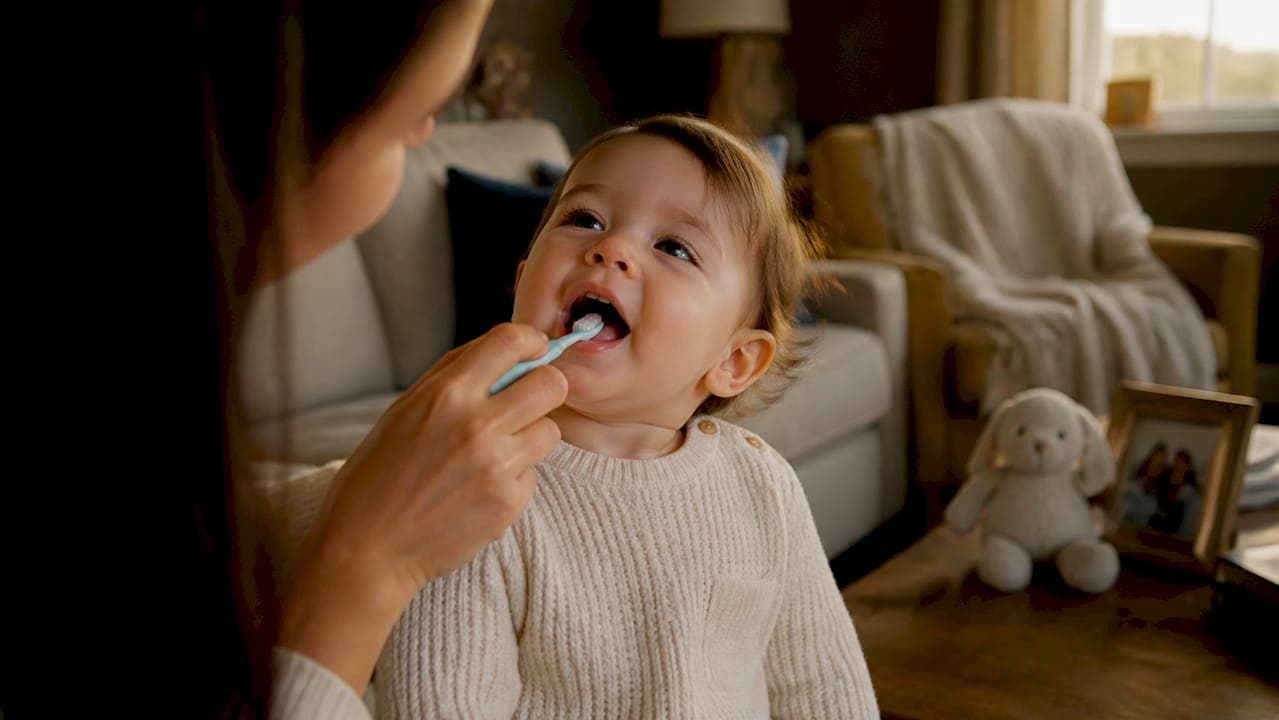
Schedule your child's first dental visit within six months of their first tooth erupting, and no later than their first birthday. That's the clear guidance from the American Academy of Pediatric Dentistry, and it's echoed by every major U.S. dental and pediatric health organization. The goal isn't just a quick look at a few baby teeth. It's about establishing a dental home, catching early decay before it spreads, and giving you the guidance you need to protect your child's oral health from day one.
Key Takeaways
Schedule your child's first dental visit within six months of the first tooth or by the first birthday, whichever comes first.
| Point | Details |
|---|---|
| Recommended timing | First visit within 6 months of first tooth or by age 1, per AAPD guidance. |
| Visit length and scope | Expect 30–45 minutes covering an exam, risk assessment, and caregiver guidance. |
| X-rays not routine | Radiographs are used selectively for infants, only when clinically indicated. |
| Home care starts at first tooth | Use a rice-grain smear of fluoride toothpaste; brush twice daily from day one. |
| Cwddentalgroup | Tallahassee families can book infant exams, preventive visits, and same-day emergency care at Cwddentalgroup. |
Table of Contents
- What major U.S. organizations recommend for the first dental visit
- What actually happens at a child's first dental visit
- Signs you should schedule the dentist earlier than the first birthday
- How to prepare your child and make the first visit go smoothly
- After the visit: follow-up schedule and daily home care
- How to pick the right dentist and establish a dental home
- The part most parents get wrong about early dental visits
- Pediatric dental care at Cwddentalgroup in Tallahassee
- Sources
What major U.S. organizations recommend for the first dental visit
The consensus across U.S. health authorities is unusually tight on this one. Every major organization lands on the same window: first tooth or first birthday, whichever comes first.
| Organization | Recommended timing | Key emphasis |
|---|---|---|
| AAPD | Within 6 months of first tooth; by age 1 | Establish a dental home; caries-risk assessment |
| ADA (MouthHealthy) | After first tooth; no later than age 1 | Positive caregiver and child experience |
| AAP (HealthyChildren.org) | By first birthday or within 6 months of first tooth | Early prevention; caregiver guidance |
| Stanford Children's Health | By 12 months or within 6 months of first tooth | Visit length 30–45 minutes; X-rays not routine |
| URMC | By first birthday | Exam of teeth, jaws, gums; selective X-rays |
The ADA's MouthHealthy guidance stresses that the visit should be a positive experience for both child and caregiver, not just a clinical check. Healthychildren, published by the American Academy of Pediatrics, frames it the same way: oral health starts early, and the dental home you establish now shapes your child's relationship with dental care for years.
One procedural note worth knowing: X-rays are not routine at this age. Both Stanford Children's Health and URMC confirm that radiographs are used selectively for infants and toddlers, only when a specific clinical concern warrants them.
What actually happens at a child's first dental visit
Most parents expect something more dramatic than what actually occurs. The first visit is, in large part, a conversation with you.
According to Stanford Children's Health and URMC, a typical first appointment runs 30–45 minutes and covers:
- A review of your child's medical history, birth details, and feeding habits
- A visual exam of the teeth, gums, jaw, and oral tissues
- A caries-risk assessment to determine how likely your child is to develop decay
- Anticipatory guidance for you: feeding habits, fluoride exposure, pacifier use, injury prevention
- A possible gentle cleaning if teeth are present
- A fluoride discussion and, depending on risk, a fluoride application
- Referral to a specialist if anything warrants a closer look
The AAPD's periodicity guidelines describe this age-based exam structure in detail, including when to consider topical fluoride and how to tailor counseling based on eruption stage and feeding habits. What you won't see: drilling, fillings, or anything that should alarm a one-year-old. The child often sits in your lap the entire time.
Pro Tip: The first visit functions largely as caregiver education. Come with questions about feeding, fluoride in your water supply, and teething. You'll leave with more useful information than your child will.
Signs you should schedule the dentist earlier than the first birthday
The first-birthday guideline works for most children. A few situations call for an earlier appointment.
Call your dentist sooner if you notice:
- Visible white spots or dark pits on any tooth (early signs of decay)
- Persistent fussiness or pain that seems linked to the mouth
- Trauma or injury to the mouth, jaw, or teeth
- Difficulty eating or latching that isn't explained by another cause
- Frequent night bottles with formula, juice, or milk (a known driver of early childhood caries)
- Prolonged use of sugary liquids in a bottle or sippy cup throughout the day
Children with certain medical conditions, those on long-term medications that affect saliva, or those with a strong family history of early decay may also need a tailored schedule. A pediatric dentist can complete a caries-risk assessment and set recall intervals that match your child's actual risk level, not just a calendar date. When in doubt, call. An early assessment almost always costs less, in time and money, than treating decay that was caught late.
How to prepare your child and make the first visit go smoothly
Preparation matters more than most parents realize. A child who arrives calm and curious has a very different experience than one who arrives anxious.
Before the appointment:
- Gather your child's health history, delivery details, and a list of any medications or allergies
- Note the date the first tooth appeared and your child's current feeding habits
- Bring a favorite toy or comfort item
- Have your insurance card and a list of questions ready
Behavior strategies that work:
- Role-play at home: take turns opening wide and counting each other's teeth
- Read a picture book about dentist visits or watch a short, age-appropriate video
- Use simple, positive language ("the dentist is going to count your teeth and make sure they're healthy")
- Avoid words like "hurt," "shot," or "drill," even in reassurance
Pro Tip: MouthHealthy recommends scheduling morning appointments when children are rested and most cooperative. A tired toddler at 4 PM is a harder patient than a well-rested one at 9 AM.
When you call to book, tell the office: the date of the first tooth, your child's feeding habits, whether your tap water is fluoridated, and any special needs or sensitivities. That information helps the dentist prepare a visit that fits your child, not a generic one-year-old.
Your own calm matters too. Research cited by the ADA notes that parents' anxiety is contagious. If you're relaxed, your child reads that. If you're tense, they read that too.

After the visit: follow-up schedule and daily home care
Most children should return every six months, though the dentist may recommend a shorter interval for higher-risk kids. The AAPD's periodicity guidelines make clear that recall frequency should be based on caries-risk assessment, not a fixed calendar.
Daily home-care checklist:
- Brush twice daily with a soft-bristled infant toothbrush as soon as the first tooth appears
- Start flossing when two teeth touch each other
- Transition from bottle to open cup by around 12 months to reduce prolonged liquid exposure
- Use age-appropriate fluoride toothpaste amounts (see table below)
Fluoride toothpaste by age:
| Age | Amount | Notes |
|---|---|---|
| Under 3 years | Smear (rice-grain size) | Use fluoride toothpaste; follow provider advice |
| 3–6 years | Pea-size | Supervise brushing; teach spitting, not swallowing |
| 6 years and older | Pea-size or standard | Child can brush with supervision until technique is reliable |
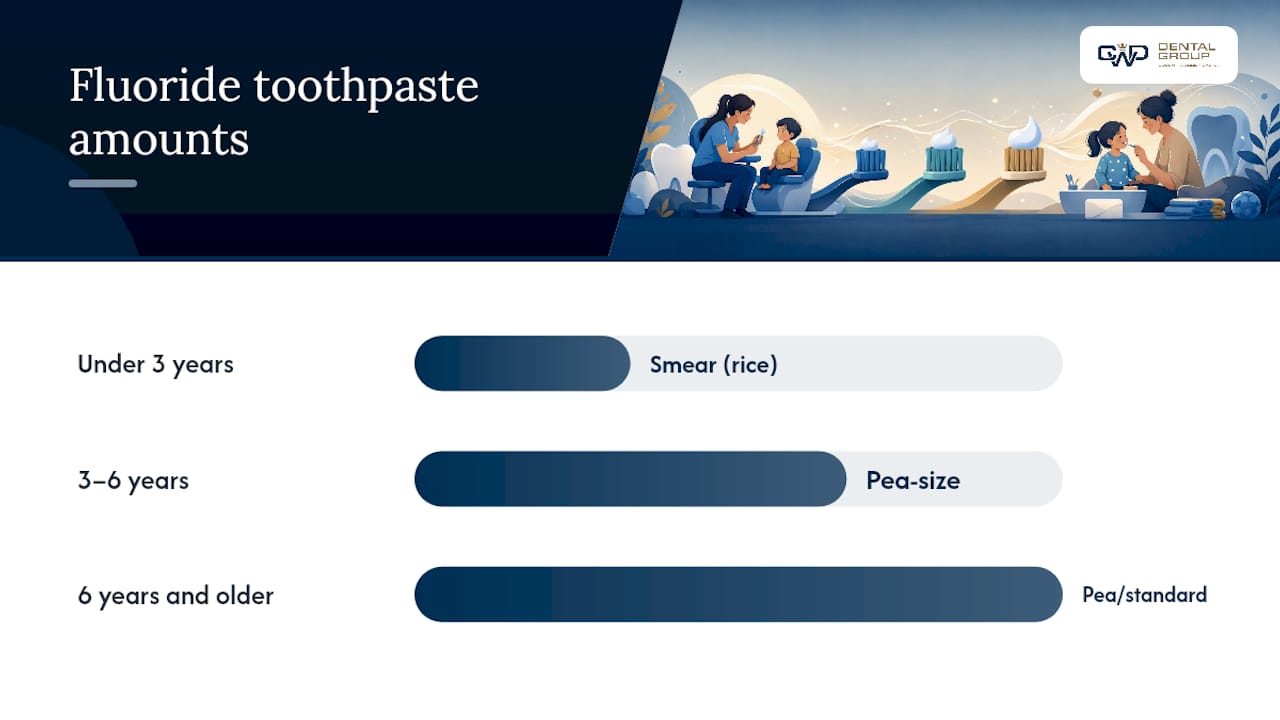
The ADA's home-care guidance supports these amounts. For a fuller age-by-age routine, the dental care routine for kids guide covers what to do at each stage as more teeth come in. You can also find step-by-step infant oral care in the baby teeth care guide.
How to pick the right dentist and establish a dental home
A dental home isn't just a dentist your child has seen once. It's a practice that knows your child's history, tracks their development over time, and is reachable when something goes wrong.
What to look for in a practice:
- Pediatric training or strong family-dentistry experience with infants and toddlers
- A child-friendly office environment (not just a waiting room with one toy)
- Flexible scheduling, including early morning slots
- Access to emergency or same-day care
- Transparent insurance and payment options
Questions worth asking before you book:
- Do you see infants and children under 12 months?
- What does a first visit for a one-year-old look like at your practice?
- What is your policy on X-rays for toddlers?
- How do you handle a child who is anxious or uncooperative?
- What fluoride treatments do you offer, and at what ages?
- How do you determine recall intervals for young children?
- Do you offer same-day or emergency appointments for families?
- What should I bring to the first visit?
For more on what to look for, the partner resource on selecting a family dental practice covers the key criteria in plain terms. The dental home guide explains the concept in depth and why early establishment reduces long-term treatment needs and cost.
The part most parents get wrong about early dental visits
The conventional wisdom parents hear most often is: "Baby teeth fall out anyway, so they don't matter much." That framing causes real harm.
Baby teeth hold space for permanent teeth. Decay in a primary molar can spread to adjacent teeth, cause pain that disrupts eating and sleep, and require treatment far more involved than a simple preventive visit would have been. The AAPD's data is clear: children seen early, with a caries-risk assessment completed in the first year, need fewer restorative procedures over time. The first visit isn't a formality. It's the cheapest dental appointment your child will ever have, because it prevents the expensive ones.
The other thing parents underestimate is how much the first visit is for them. You'll leave knowing whether your tap water is fluoridated enough, whether your child's feeding habits raise their risk, and exactly how to brush those first few teeth. That knowledge compounds. A parent who leaves the first visit informed makes better decisions for the next five years of their child's oral health.
Pediatric dental care at Cwddentalgroup in Tallahassee
Cwddentalgroup offers preventive visits, infant and toddler exams, fluoride counseling, and same-day emergency appointments for families across Tallahassee. If your child has had a dental injury or you're seeing early signs of decay, the practice provides same-day emergency dental care so you're never left waiting when something urgent comes up.

The team is experienced with children at every age, from first-tooth exams through adolescent care, and the office is set up to make young patients comfortable from the moment they walk in. To book your child's first visit or ask questions about what to expect, call Cwddentalgroup or schedule online at Cwddentalgroup.
Sources
- Periodicity of Examination, Preventive Dental
- A Child's First Dental Visit Fact Sheet - Stanford Medicine Children's Health
- Urmc
- Healthychildren
This article is general information, not a substitute for advice from a qualified doctor. Consult a qualified healthcare professional about your own circumstances before acting on anything here.