

Teeth whitening maintenance after treatment is the active care routine that determines how long your brighter smile actually lasts. Professional in-office whitening results last 12–24 months, while at-home treatments hold for 6–12 months. Both timelines depend heavily on what you do in the days and weeks after your appointment. The difference between a smile that fades in two months and one that holds for two years comes down to four pillars: diet control, daily hygiene, scheduled touch-ups, and professional cleanings. This guide covers each one with specific, practical steps you can start today.
Why is the first 48 hours after teeth whitening critical for maintenance?
The first 48 hours after whitening are the highest-risk window for staining. Enamel pores remain open and highly receptive to pigment for 48–72 hours post-treatment, then gradually stabilize through rehydration. During this window, colored molecules from food and drink absorb directly into the enamel surface far more easily than they would on an untreated tooth.
Dentists call the recommended eating plan during this period the "white diet." The concept is straightforward: avoid anything that would stain a white shirt. Specifically, you need to stay away from:
- Coffee, tea, and dark sodas
- Red wine and fruit juices
- Tomato-based sauces and ketchup
- Berries, beets, and dark fruits
- Soy sauce, balsamic vinegar, and curry
- Colored candies and artificially dyed foods
Safe choices during this window include white rice, plain chicken or fish, bananas, white bread, plain yogurt, milk, and still water. These foods carry no chromogens, which are the pigment molecules responsible for staining.
The rehydration process also affects how your final shade looks. Many patients notice their teeth appear slightly translucent or uneven right after treatment. That is normal. The enamel is still settling, and the true result becomes visible once rehydration completes, usually within 48–72 hours. Judging your results before that point leads to unnecessary concern.

Pro Tip: Adding milk to coffee or tea reduces tannin staining power by up to 50%. Once you pass the 48-hour window, this simple swap lets you enjoy your morning routine without significantly accelerating re-staining.
What daily oral hygiene practices support long-term whitening results?
A consistent daily hygiene routine is the single most controllable factor in how long your whitening lasts. The right habits reduce cumulative stain buildup and protect enamel integrity over months and years. Here is the routine that works:
- Brush twice daily with a soft-bristle toothbrush. Hard bristles abrade enamel over time, which increases surface roughness and gives stains more places to grip. Use a fluoride toothpaste to strengthen enamel between whitening sessions.
- Floss every day. Interdental spaces collect pigment-rich debris that brushing misses. Leaving that buildup in place accelerates discoloration between teeth, making your smile look uneven even when the front surfaces stay bright.
- Rinse with water immediately after staining foods or drinks. Daily water rinsing after pigment-rich foods significantly reduces cumulative stain buildup by diluting chromogens before they settle. This one habit costs nothing and takes five seconds.
- Use a whitening maintenance toothpaste strategically. These toothpastes contain mild abrasives or low-concentration peroxide. Using one two or three times per week, rather than every session, keeps surface stains in check without over-abrading enamel.
- Rinse with an alcohol-free mouthwash. Alcohol-based rinses can dry out oral tissues and temporarily increase enamel sensitivity after whitening. An alcohol-free formula with fluoride supports remineralization instead.
The cumulative effect of these habits is significant. Patients who follow a structured daily oral hygiene routine consistently report slower re-staining compared to those who rely on touch-up treatments alone. Maintenance is not a single event. It is a daily practice.
Pro Tip: Using a straw with coloring beverages routes liquid past your front teeth and significantly slows re-staining over time. Keep reusable straws at your desk and in your bag so the habit sticks.
How does diet impact the longevity of whitening results beyond the initial 48 hours?
Diet is the most underestimated long-term factor in keeping teeth white. Most patients follow the white diet strictly for 48 hours, then return to their normal eating patterns without any modification. That approach leads to gradual discoloration that becomes obvious within a few months.
The main culprits are chromogen-rich foods and drinks. Coffee and tea contain tannins that bind to enamel proteins. Red wine delivers both tannins and deep pigments. Berries, tomato sauce, and soy sauce all carry concentrated color compounds that accumulate with repeated exposure. The key insight is that most patients do not notice gradual discoloration until comparing old photos. Fading happens slowly, which makes it easy to ignore until it is significant.
The goal is not complete avoidance. That is neither realistic nor necessary. The goal is modification:
- Dilute staining drinks. Adding water to juice or milk to coffee reduces pigment concentration per sip.
- Drink quickly rather than sipping slowly. Prolonged contact time between a staining beverage and your enamel increases absorption. Finish your coffee in one sitting rather than nursing it for an hour.
- Rinse with water immediately after. This is the simplest and most effective habit for reducing stain buildup over time.
- Eat crunchy fruits and vegetables regularly. Apples, celery, and carrots act as natural mechanical cleaners. Their fibrous texture scrubs surface deposits off enamel as you chew.
- Pair staining foods with neutral ones. Eating cheese or plain bread alongside a staining food reduces direct enamel contact and buffers acidity.
Acidic foods and drinks deserve special attention. Acid temporarily softens enamel, which makes it more porous and more vulnerable to pigment uptake. Citrus juice, vinegar-based dressings, and carbonated drinks all fall into this category. Rinsing with water after acidic foods and waiting 30 minutes before brushing protects enamel from abrasion while it rehardened. You can find more detail on foods to avoid after whitening to build a sustainable long-term eating plan.
What professional maintenance and touch-up protocols help prolong whitening effects?
Professional care is what separates patients who maintain bright results for two years from those who fade within six months. At-home habits slow re-staining, but they cannot remove the pellicle layer or reset the shade the way a professional session can.
Here is how a structured professional maintenance plan works:
- Schedule biannual professional cleanings. Professional hygiene cleanings every six months remove the pellicle layer that attracts stains and makes whitening products more effective. Scaling and polishing during these visits clear deposits that daily brushing cannot reach. Learn more about scheduling biannual cleanings to build this into your calendar.
- Use custom-fabricated whitening trays for touch-ups. Generic trays from drugstores do not fit the contours of your teeth precisely, which leads to uneven whitening and gel leakage. Custom trays from your dentist deliver consistent gel contact across every surface.
- Follow a touch-up schedule of every 6–12 months. Maintenance touch-ups every 6–12 months reset the shade before significant relapse occurs. Patients with heavy coffee or tea habits may benefit from a session every 4–6 months.
- Limit each touch-up session to the prescribed duration. Over-whitening does not improve brightness once enamel reaches its biological limit. Excessive use degrades enamel and increases sensitivity without delivering additional whiteness. More is not better.
- Ask about advanced cleaning techniques. Methods like guided biofilm therapy use ultrasonic tools and specialized agents to remove biofilm without abrading enamel. This approach is particularly useful for patients with sensitivity who need thorough cleaning without the discomfort of traditional scaling.
| Maintenance type | Frequency | Primary benefit |
|---|---|---|
| Professional cleaning | Every 6 months | Removes pellicle, prevents stain adhesion |
| Custom tray touch-up | Every 6–12 months | Resets shade, prevents significant relapse |
| At-home whitening toothpaste | 2–3 times per week | Controls surface stains between sessions |
| Water rinsing after staining foods | After every exposure | Dilutes chromogens before they settle |
Pro Tip: Custom trays used for 1–2 nights every few months reset the staining clock predictably without daily use. Consistency with gentle maintenance beats aggressive irregular whitening every time.
How to troubleshoot common whitening maintenance challenges and avoid mistakes?
Most patients who lose their whitening results early make one of a small number of predictable mistakes. Recognizing them early saves you from unnecessary retreatment and enamel damage.
- Over-whitening. Patients who see slight fading often increase treatment frequency, which causes sensitivity and enamel degradation without improving brightness. Stick to your scheduled intervals.
- Misreading color settling as relapse. Teeth often look slightly uneven or off-white in the first 48–72 hours as enamel rehydrates. This is normal shade settling, not fading. Waiting the full rehydration period before evaluating results prevents premature retreatment.
- Ending the white diet too early. Some patients stop dietary restrictions after 24 hours instead of the full 48. That early exposure to pigments during the open-pore phase causes staining that is disproportionate to the amount consumed.
- Ignoring sensitivity signals. Mild sensitivity after whitening is common and resolves within a day or two. Persistent sensitivity lasting more than a week, or sharp pain, signals enamel damage or an underlying issue. Consult a dental professional promptly in those cases. You can review key side effects of whitening to know what is normal versus what needs attention.
- Skipping professional cleanings. At-home maintenance cannot replicate what a professional cleaning removes. Skipping biannual visits allows pellicle buildup that accelerates re-staining and reduces the effectiveness of any touch-up treatment.
Whitening results are not permanent by nature. They require a personalized care plan, consistent daily habits, and professional supervision to last. Patients who treat whitening as a one-time event consistently see faster fading than those who build maintenance into their routine.
Key Takeaways
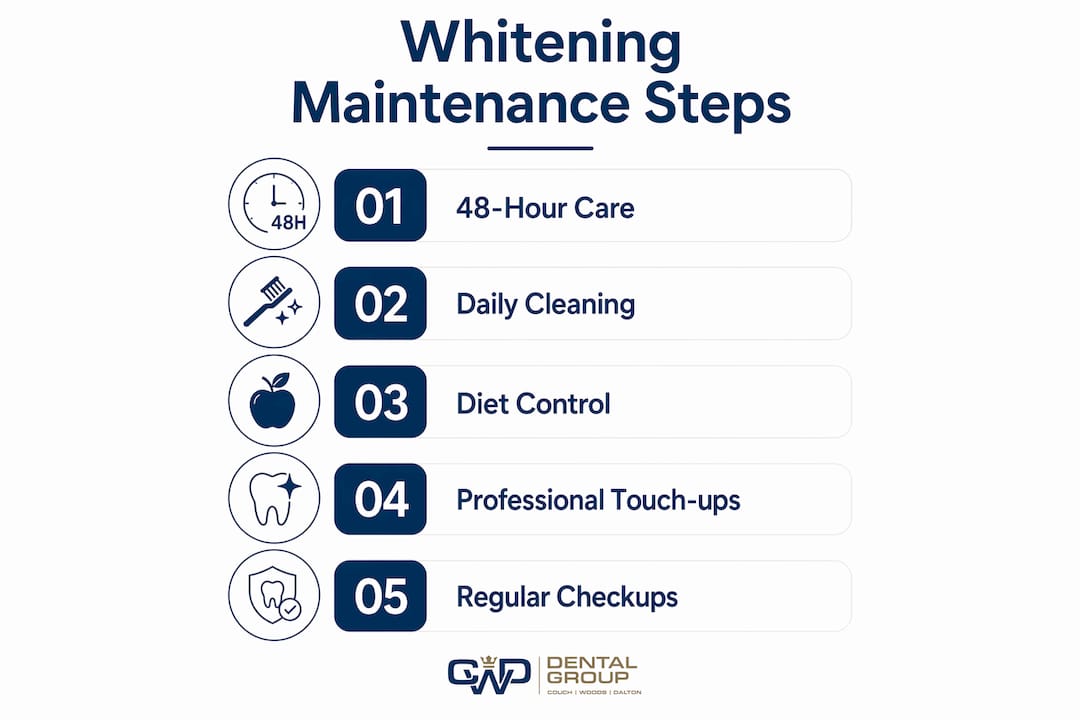
Teeth whitening maintenance after treatment requires a structured routine across four areas: the critical 48-hour post-treatment window, daily hygiene habits, dietary modifications, and scheduled professional care.
| Point | Details |
|---|---|
| Protect the 48-hour window | Avoid all colored and acidic foods for 48–72 hours while enamel pores remain open. |
| Rinse after every staining exposure | Water rinsing immediately after pigment-rich foods dilutes chromogens before they settle on enamel. |
| Schedule touch-ups every 6–12 months | Custom tray sessions reset shade before significant relapse and prevent the need for aggressive retreatment. |
| Get professional cleanings twice yearly | Biannual cleanings remove the pellicle layer that attracts stains and makes whitening more effective. |
| Avoid over-whitening | Exceeding recommended frequency degrades enamel and increases sensitivity without improving brightness. |
What I have learned about maintaining whitening results long-term
Patients often come to me frustrated that their whitening faded faster than expected. In almost every case, the issue is not the treatment. It is the follow-up. Whitening is not a one-time fix. It is the starting point of an ongoing routine.
The insight that surprises most patients is how invisible the fading process is. You do not notice it happening day by day. You notice it six months later when you compare a photo. That is why I always tell patients to treat maintenance as a proactive daily habit, not a reactive response to visible fading. Rinsing with water after your morning coffee takes five seconds. Keeping a straw at your desk costs almost nothing. These small habits compound over months into a measurably brighter result.
The other thing I feel strongly about is enamel preservation. I have seen patients who whitened aggressively every few weeks because they wanted faster results. They ended up with sensitivity, uneven surfaces, and results that looked worse than before. Gentle, consistent maintenance always outperforms aggressive irregular treatment. Your enamel is not replaceable. Protecting it while keeping your smile bright is the actual goal.
— Kayle
Cwddentalgroup's professional whitening and maintenance services
Maintaining your whitening results is easier when you have a dental team that builds a plan around your specific habits and lifestyle.

Cwddentalgroup in Tallahassee offers professional teeth cleaning services designed to remove pellicle buildup, polish enamel, and prepare your teeth for whitening touch-ups. The team creates customized maintenance schedules based on your diet, staining history, and treatment type. Whether you need a biannual cleaning, a custom tray fitting, or guidance on your post-whitening care routine, Cwddentalgroup provides same-day appointments and expert follow-up care. Schedule your next cleaning or whitening consultation with Cwddentalgroup and keep your results lasting as long as possible.
FAQ
How long do teeth whitening results last with proper maintenance?
Professional in-office whitening lasts 12–24 months with consistent maintenance. At-home treatments typically last 6–12 months depending on diet and daily hygiene habits.
What can I eat in the first 48 hours after whitening?
Stick to white or light-colored foods such as plain chicken, white rice, bananas, yogurt, and water. Enamel pores remain open for 48–72 hours post-treatment, making colored and acidic foods a high staining risk.
How often should I get a whitening touch-up?
Most patients benefit from a touch-up every 6–12 months. Those with heavy coffee or tea habits may need a session every 4–6 months using custom trays to reset the shade before significant relapse.
Does using a straw actually help keep teeth white?
Yes. Using a straw with coloring beverages routes liquid past the front teeth, reducing direct enamel contact and slowing re-staining over time.
When should I see a dentist about whitening sensitivity?
Mild sensitivity lasting one to two days after treatment is normal. Persistent sensitivity beyond one week, or sharp pain, requires a professional evaluation to rule out enamel damage or an underlying dental issue.