
Teeth whitening is the process of using peroxide-based bleaching agents to chemically break down stains and discoloration in natural tooth enamel, producing a noticeably brighter smile. Professional in-office bleaching is the most requested cosmetic dental procedure, with costs ranging from $500 to $1,000 per session. The core agents are hydrogen peroxide and carbamide peroxide, and they work by penetrating enamel to oxidize stain molecules. Methods range from in-office treatments supervised by a dentist to dentist-prescribed take-home trays and over-the-counter products. Understanding what is teeth whitening process means knowing how those methods differ in strength, speed, and safety.
How does the teeth whitening process work?
Teeth whitening operates through oxidation, where peroxide molecules penetrate the enamel and break the molecular bonds that hold stain pigments together. The result is lighter-colored compounds that no longer absorb visible light the same way. This is why whitening works on natural teeth but not on dental restorations.
Stains fall into two categories. Extrinsic stains sit on the outer enamel surface and come from coffee, tea, wine, and tobacco. Intrinsic stains are deeper, embedded within the dentin layer beneath the enamel, and require longer treatment or higher peroxide concentrations to address.
The terms "whitening" and "bleaching" are not interchangeable. Whitening refers to any product that removes surface debris to restore a tooth's natural color. Bleaching refers specifically to treatments that lighten teeth beyond their natural shade using peroxide agents. Most professional treatments qualify as bleaching.
Professional treatments use 15%–40% peroxide concentrations, while over-the-counter products contain 3%–14%. Higher concentrations work faster but require clinical supervision to protect gum tissue and minimize sensitivity. That supervision is what separates a safe, effective result from a painful one.
Pro Tip: If you have intrinsic stains from tetracycline antibiotics or fluorosis, standard peroxide treatments produce limited results. Ask your dentist about alternatives like veneers or bonding before investing in whitening.
What are the main teeth whitening methods?
Three primary teeth whitening methods exist: in-office professional treatment, dentist-prescribed take-home trays, and over-the-counter products. Each differs in peroxide strength, treatment time, and the level of professional oversight involved.
In-office professional whitening
In-office whitening delivers the fastest and most dramatic results. Sessions last 60–90 minutes and can lighten teeth by 6–10 shades in a single visit. A dentist applies a high-concentration peroxide gel in monitored cycles, sometimes activating it with an LED or laser light to accelerate the chemical reaction. This method suits people who want immediate results before an event or who have significant staining.
Dentist-prescribed take-home trays
Custom take-home trays use molds of your specific teeth, ensuring the whitening gel contacts every surface evenly. These trays use moderate peroxide concentrations and offer gradual whitening with a lower sensitivity risk compared to in-office treatments. Treatment typically takes 1–2 weeks of nightly wear. The custom bleaching trays used in this approach are far more precise than any generic strip or tray you can buy at a pharmacy.
Over-the-counter products
OTC options include whitening strips, paint-on gels, and whitening toothpastes. They use lower peroxide concentrations and require 4–6 weeks of daily use to produce noticeable results. Results are less predictable because the trays are not custom-fitted and the gel may not reach all tooth surfaces evenly.
| Method | Peroxide Strength | Treatment Time | Shade Improvement | Cost Range |
|---|---|---|---|---|
| In-office professional | 15%–40% | 60–90 minutes | 6–10 shades | $500–$1,000 |
| Dentist take-home trays | Moderate professional grade | 1–2 weeks | 4–8 shades | $200–$500 |
| OTC strips and gels | 3%–14% | 4–6 weeks | 1–3 shades | $20–$60 |
Pro Tip: Before buying OTC whitening products, check whether you have any crowns, veneers, or fillings on visible front teeth. Those restorations will not whiten, and you may end up with uneven coloring that looks worse than before.
What happens during a professional whitening session?
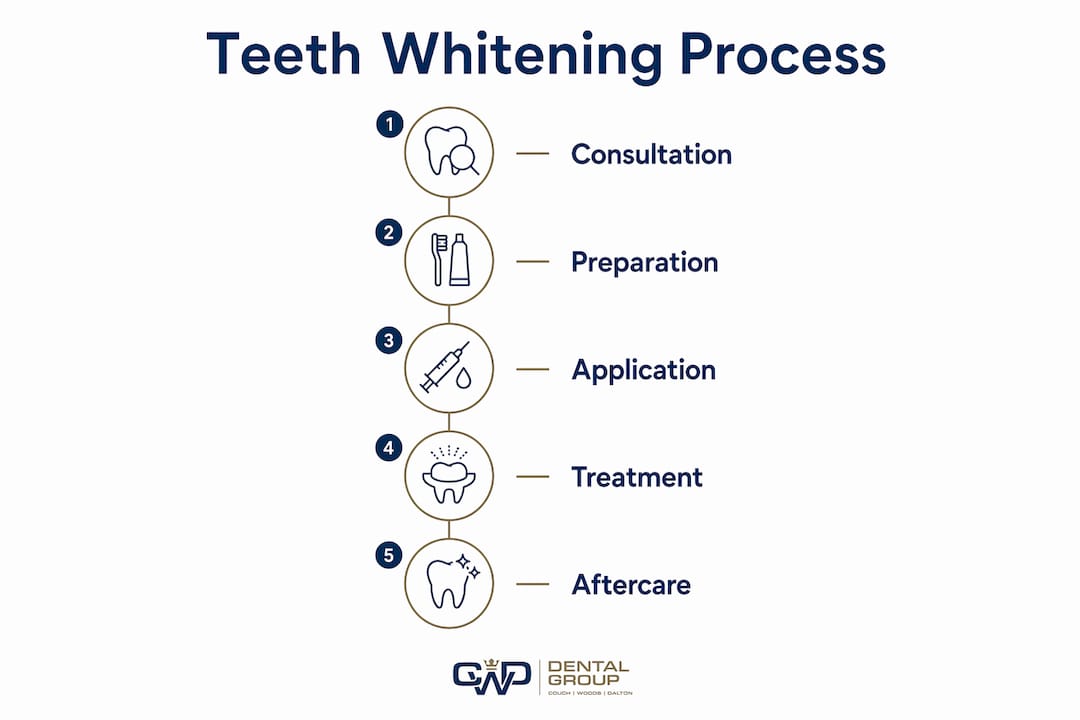
A professional whitening session follows a structured sequence designed to protect your mouth while maximizing results. Knowing each step removes the uncertainty and helps you prepare.
- Pre-treatment exam. Your dentist checks for cavities, gum disease, and existing restorations. Untreated decay or exposed roots make whitening painful and potentially harmful. This step is non-negotiable.
- Shade assessment. A baseline shade is recorded using a standardized shade guide. This gives you a measurable before-and-after comparison.
- Gum protection. A rubber dam or protective gel is applied to your gums and soft tissues. This shields them from the high-concentration peroxide gel.
- Gel application. Whitening gels are applied in monitored cycles, sometimes with LED activation, to maximize efficacy and minimize enamel damage. Each cycle typically lasts 15–20 minutes.
- Rinsing and evaluation. After the final cycle, the gel is rinsed away and your dentist compares the new shade to your baseline. Most patients see a 6–10 shade improvement.
- Sensitivity management. A fluoride treatment or desensitizing gel is often applied at the end to reduce post-treatment discomfort.
Professional whitening includes a tailored gel concentration and protective measures that OTC products simply cannot replicate. That personalization is what makes the results more consistent and the experience more comfortable. For a detailed look at what the in-office experience involves, the teeth stain removal process at Cwddentalgroup walks through each stage clearly.
What are the side effects and how long do results last?
Teeth whitening is safe when performed correctly, but side effects are real and worth understanding before you start. The two most common are temporary tooth sensitivity and mild gum irritation. Both typically resolve within 24–72 hours after treatment.
- Tooth sensitivity. Peroxide temporarily opens the enamel's microscopic tubules, allowing temperature changes to reach the nerve. Using a desensitizing toothpaste like Sensodyne for two weeks before treatment significantly reduces this effect.
- Gum irritation. This occurs when the whitening gel contacts soft tissue. Professional treatments minimize this with protective barriers. DIY methods carry a much higher risk.
- Restoration mismatch. Dental restorations like crowns and veneers do not change color with whitening, which can create a visible color mismatch on front teeth. Discuss this with your dentist before treatment.
- Enamel risk from DIY remedies. The American Dental Association warns against DIY methods like lemon juice or charcoal, which are abrasive or acidic and can permanently damage enamel.
Whitening results last months to years depending on lifestyle habits like smoking and drinking coffee or wine. Patients who avoid those habits and use touch-up trays every 6–12 months maintain results significantly longer. Avoid staining foods and beverages for 48 hours post-whitening, since freshly treated enamel is more receptive to pigments. For a realistic picture of how long results hold, the guide on permanent whitening myths at Cwddentalgroup is worth reading before your appointment.
Pro Tip: Use a professional whitening gel with your custom trays for touch-ups rather than buying new OTC strips. The gel strength and tray fit produce far more even results at a lower long-term cost.
Key takeaways
Professional teeth whitening is the most effective and safest method for lightening natural tooth enamel, using supervised peroxide concentrations that OTC products cannot match.
| Point | Details |
|---|---|
| Oxidation drives whitening | Peroxide breaks stain molecules inside enamel, which is why it works on natural teeth only. |
| Concentration determines speed | Professional treatments use 15%–40% peroxide; OTC products use 3%–14% and take 4–6 weeks. |
| Professional sessions deliver fast results | In-office whitening lightens teeth 6–10 shades in a single 60–90 minute visit. |
| Restorations do not whiten | Crowns, veneers, and fillings stay their original color, so discuss them with your dentist first. |
| Post-care protects your investment | Avoid staining foods for 48 hours and schedule touch-ups every 6–12 months to maintain results. |
Why i tell every patient to start with a consultation
Most people who come to me frustrated with whitening results made the same mistake: they skipped the consultation and went straight to a product. They bought strips, used them for six weeks, and saw uneven results or sensitivity that put them off whitening entirely. The problem was never the whitening itself. It was the lack of a starting assessment.
A consultation does three things that no box of strips can do. It identifies whether your stains are extrinsic or intrinsic, which determines which method will actually work. It flags any restorations that will not whiten, so you are not surprised by a color mismatch. And it establishes a baseline shade, which gives you a real measure of progress instead of a vague impression.
The other thing I push back on is the idea that more peroxide always means better results. Patients sometimes request the highest concentration available because they assume it will work faster. It does work faster, but without proper gum protection and cycle monitoring, it also causes more sensitivity and tissue irritation. The right concentration is the one matched to your specific stain type and sensitivity level, not the highest one on the shelf.
My honest recommendation: treat the consultation as the first step in the process, not an optional add-on. The 30 minutes you spend there will save you weeks of trial and error and protect your enamel in the process.
— Kayle
Ready to see what professional whitening can do for you?
Cwddentalgroup offers comprehensive cosmetic dental services in Tallahassee, including professional teeth whitening consultations tailored to your specific needs. The team assesses your stain type, existing restorations, and sensitivity before recommending a treatment plan. That means no guesswork and no wasted money on products that will not work for your situation.

Same-day appointments are available for patients who want to get started quickly. Whether you are exploring in-office whitening or a custom take-home tray program, the team at Cwddentalgroup will walk you through every step. Schedule your whitening consultation today and find out exactly how many shades brighter your smile can get.
FAQ
What is the teeth whitening process in simple terms?
Teeth whitening uses peroxide-based gels to penetrate enamel and break down stain molecules through oxidation. The result is a lighter tooth color, achieved either in a dental office or gradually at home.
How long does professional teeth whitening take?
A single in-office session lasts 60–90 minutes and typically lightens teeth by 6–10 shades. Dentist-prescribed take-home trays produce results over 1–2 weeks of nightly use.
Is teeth whitening safe for everyone?
The American Dental Association recognizes in-office and dentist-supervised take-home whitening as safe and effective. People with untreated cavities, gum disease, or significant dental restorations should consult a dentist before starting any whitening treatment.
Does teeth whitening work on crowns or veneers?
Whitening agents do not change the color of crowns, veneers, or fillings. Only natural tooth enamel responds to peroxide, so existing restorations may appear mismatched after treatment.
How do you choose the right whitening method?
The right method depends on your stain type, budget, and how quickly you want results. A dentist can assess whether in-office treatment, custom trays, or OTC products are the best fit. The guide on choosing whitening treatments at Cwddentalgroup covers this decision in detail.