
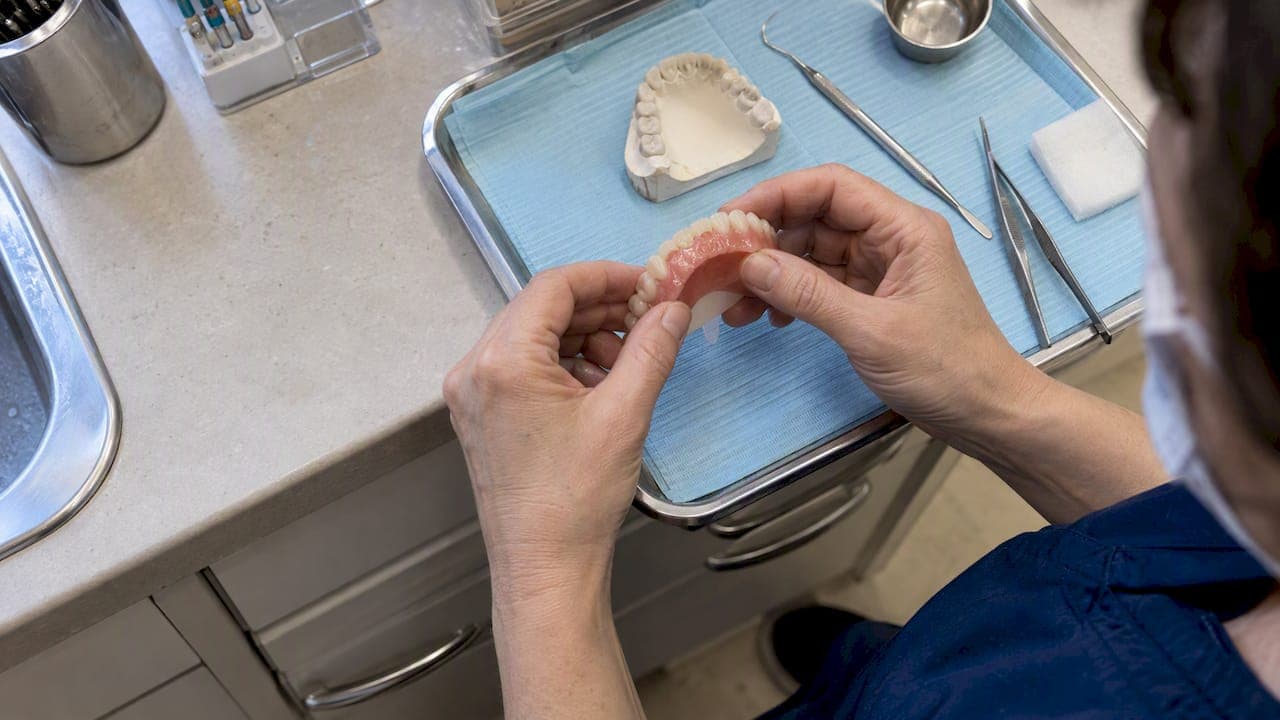
An immediate denture is a denture made before your teeth are removed and placed the same day to protect the extraction sites and preserve your appearance. You will not spend a single day without teeth, but expect this first denture to need relining as your mouth heals over the following months. The biggest adjustment is less about the appliance itself and more about the changing shape of your gums underneath it.
TL;DR:
- Preparation usually takes one to three appointments; ask whether relines are included, how many follow ups are planned, and which laboratory makes the denture.
- Keep the denture in for the first 24 hours, including overnight, and attend the first checkup within a day or two for cleaning and adjustments.
- Bone changes peak during the first three months; relining is expected at three to six months, and a definitive denture at six to twelve months.
- Call your dentist promptly for severe or worsening pain, bleeding that persists despite gentle pressure, fever, pus, or swelling that spreads rather than improves.
Table of Contents
- Who immediate dentures are right for
- Getting ready: impressions, bite records, and lab planning
- What happens on extraction and insertion day
- The first 24 to 72 hours: what to do and when to call
- Healing, bone changes, and when you'll need a reline
- Common adjustments and how to handle them
- How CWD Dental Group approaches immediate dentures
- A quick framework before you decide
- Ready to talk through your options?
- FAQ
- Sources
Who immediate dentures are right for
Immediate dentures suit people who need teeth removed but can't accept going without a visible smile, even temporarily. They're also common when a dentist has already cleared several teeth for extraction and wants to avoid a gap in function or appearance during healing.
The advantage is real: you walk out with teeth the same day the old ones come out, and the appliance itself helps protect raw tissue and control bleeding right after extraction, acting almost like a surgical bandage, according to a clinical report on immediate denture fabrication. The tradeoff is that this first denture is a transitional piece, not a finished product.
- Conventional dentures are made after gums have fully healed, so they fit more precisely from day one but leave you without teeth during that healing window.
- Implant-supported options offer more permanent stability but involve surgery, healing time, and a separate planning process.
- Immediate dentures split the difference: same-day teeth, with planned adjustments as your bone and gums settle.
Getting ready: impressions, bite records, and lab planning
Because there's no chance to try the denture in before your teeth come out, the prep appointments carry more weight than with a conventional denture. Everything has to be planned around teeth that will soon be gone.
- Your dentist takes impressions of your current teeth and gums, usually at the first visit.
- A bite registration records how your upper and lower jaws meet so the lab can set the correct vertical dimension.
- You choose a tooth shade and shape, often during the same visit or a short follow-up.
- The lab trims the models to approximate where your gum ridge will sit after extraction, then fabricates the denture base and teeth around that estimate.
Most immediate dentures take just one to three appointments to prepare, a shorter sequence than many patients expect, according to a university dental school patient leaflet. Before you commit, ask your dentist three things: whether a reline is included in the fee, how many follow-up visits are built into the plan, and which lab fabricates the denture.
What happens on extraction and insertion day
This is the longest single appointment in the process, combining surgery and a denture fitting in one visit. Your dentist checks bleeding is controlled before moving ahead with insertion, since the denture needs a relatively dry, stable field to seat properly.
- Teeth are extracted first, following whatever surgical plan was mapped out at your prep visits.
- Once bleeding is managed, the dentist seats the denture and uses pressure-indicator paste to spot areas pressing too hard on healing tissue.
- Denture borders are trimmed and smoothed based on those pressure marks, and any needed sutures are placed.
- You get hands-on instruction for inserting and removing the denture yourself before you leave.
Checking fit with pressure-indicator paste at delivery, then again at the first follow-up, catches over-trimmed or high-pressure spots early, before they turn into ulcers as your tissue starts to remodel, according to the clinical report on immediate denture fabrication. Expect some local anesthetic to still be working as you leave, mild soreness once it wears off, and instructions for over-the-counter or prescribed pain relief to get you through the first day.
The first 24 to 72 hours: what to do and when to call
The instructions for the first day differ from what you'll do afterward, and mixing the two up is the most common mistake. For the first 24 hours, the denture stays in, full stop, even while sleeping. It's doing the job of a surgical dressing, protecting the extraction sites and helping control bleeding.
Your first follow-up appointment typically happens within a day or two of insertion, when the dentist removes the denture, cleans the sites, checks healing, and makes any adjustments, according to an NHS trust patient aftercare leaflet. That short window matters because it's your first real chance to catch problems before they become painful.
- Stick to soft foods for the first few days: soup, mashed potatoes, scrambled eggs, yogurt.
- Start gentle saline rinses the day after surgery to help the sites heal, as recommended in a Royal Devon patient leaflet.
- After the first night, remove the denture at bedtime unless your dentist tells you otherwise, and clean it daily with a denture brush.
- Call your dentist promptly for severe or worsening pain, heavy bleeding that won't stop with gentle pressure, or signs of infection like fever or spreading swelling. Our dry socket symptoms guide covers what to watch for and why it's worth calling within 24 hours.
Healing, bone changes, and when you'll need a reline
Your gum ridge isn't a fixed shape once teeth come out. It remodels, and the biggest changes happen fast. Bone resorption is most rapid in the first three months after extraction, which is exactly why an immediate denture that fit perfectly on day one can feel loose by month two, according to research on prosthodontic rehabilitation with immediate dentures.
Healing and tissue adaptation typically continue for 3 to 6 months, with that same source recommending follow-up continue for 8 to 12 months as the ridge stabilizes.
- Expect a reline, a procedure that adds material to the denture's inner surface to match your new gum shape, around the 3 to 6 month mark.
- A definitive, more precisely fitted denture usually comes after the ridge has largely stabilized, often between 6 and 12 months after extraction.
- Follow-up visits tend to be more frequent early on, then space out as your mouth settles, with relines added as needed if fit changes faster than expected.
Common adjustments and how to handle them
Sore spots, occasional looseness, and an adjustment period for speaking and eating are normal, not signs something went wrong. Most people need a few weeks to get comfortable biting and chewing with a new denture, and speech often sounds slightly different for the first several days.
Short-term fixes exist for the rough patches. A small amount of denture adhesive can help with looseness between appointments, and a soft liner can ease pressure on sore spots until your next reline. If your denture feels suddenly very loose or starts to rock when you talk, that's worth a visit rather than waiting it out, a pattern covered in our guide to fixing loose dentures.

Pro Tip: Keep a small log of sore spots and timing between visits. It helps your dentist pinpoint exactly where adjustments are needed instead of guessing.
Watch for warning signs that need prompt attention rather than a scheduled adjustment: worsening pain days after extraction (a possible sign of dry socket), pus, fever, or swelling that spreads rather than settles.
How CWD Dental Group approaches immediate dentures
We build immediate denture planning into the same visit flow as same-day emergency dental care, so a patient who needs urgent extractions isn't left choosing between quick relief and a finished smile. We offer in-office denture fabrication alongside extractions, surgical dentistry, and emergency scheduling, which keeps the extraction and fitting process under one roof rather than split across referrals.
We set reline expectations at the consult, not after the fact: when you book with us, we walk through the appointment sequence, what the first 24 to 48 hours will look like, and roughly when to expect a reline or definitive denture based on healing progress.
A quick framework before you decide
Before committing, run through three checkpoints with your dentist: how important is it that you never go without visible teeth, are you comfortable attending multiple follow-up and reline visits, and does your budget account for a reline and eventually a definitive denture, not just the initial appliance.
Bring specific questions: is a reline included in the quoted fee, which lab fabricates the denture, and how many post-op visits are built into the plan. Shared, documented expectations upfront prevent frustration later.
— Kayle
Ready to talk through your options?
If you're weighing immediate dentures against extractions you've been putting off, we can walk through both in one visit. Call CWD Dental Group to book a consult, or ask us directly about immediate-denture planning when you schedule.

Have your medical history and current medications ready when you call, along with any questions about reline timing and follow-up visits. Start with our full list of services or reach out through our emergency dental care page if you need same-day attention.
This article is general information, not a substitute for advice from a qualified doctor. Consult a qualified healthcare professional about your own circumstances before acting on anything here.
FAQ
How long do you sleep with immediate dentures?
You keep the denture in for the first 24 hours, including overnight, since it helps protect the extraction sites and control bleeding. After that first night, most patients remove the denture at bedtime unless their dentist advises otherwise, based on patient aftercare guidance.
Do you have to go without teeth while waiting for dentures?
No, that's the main reason immediate dentures exist: they're fabricated before extraction and inserted the same day your teeth are removed. You leave the appointment with a functioning denture rather than an empty gap while your mouth heals.
Is it hard to eat with immediate dentures?
Eating takes some adjustment, and a soft-food diet is recommended for the first several days to protect healing extraction sites. Most people gradually return to a more normal diet over the following weeks as they adapt to the fit and their gums settle.
Do immediate dentures look fake?
Tooth shade and shape are selected before extraction specifically to match your natural smile, so a well-fitted immediate denture generally looks like your own teeth. Fit and appearance can shift slightly as your gums heal, which is part of why a reline is planned into the process.
Sources
- Immediate denture fabrication: a clinical report
- Patient leaflet: immediate denture aftercare (NHS trust patient leaflet)
- Looking after your immediate dentures (Royal Devon patient leaflet)
- Immediate denture patient leaflet — University dental school