
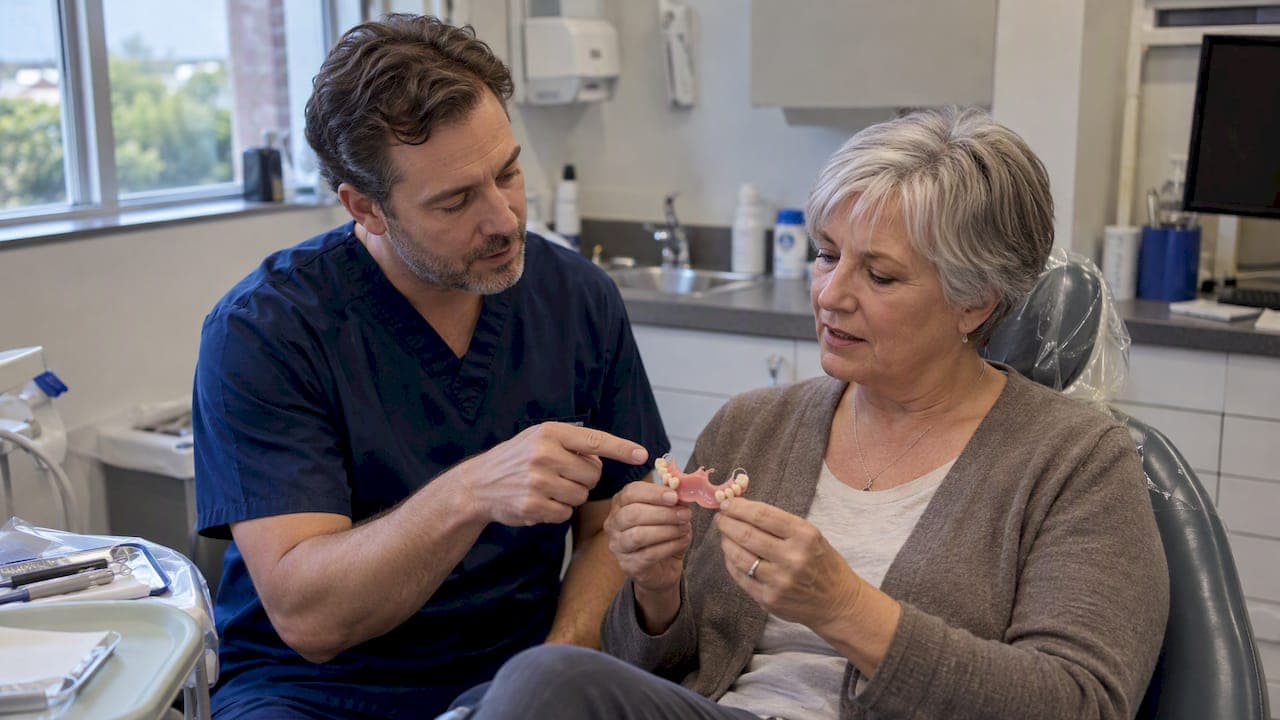
Flexible partial dentures are removable appliances made from bendable thermoplastic material instead of rigid metal or hard acrylic. They tend to offer better esthetics and a more comfortable fit than traditional partials because the material flexes around natural undercuts in your gums. They are not right for every situation, though, since repairs can be limited and a dentist's evaluation is the only way to know if you qualify.
TL;DR:
- Flexible partials are best suited for patients with limited tooth loss and healthy abutments, while those with extensive loss may require rigid or implant-supported options.
- Repairs and relines are limited because the flexible material does not bond as strongly as acrylic, often requiring replacements for major fit adjustments.
- The cost for a flexible partial typically ranges from $256 to $270 per unit, with a turnaround time of about 5 to 9 days, not including additional fees or insurance limitations.
- Proper care involves daily brushing with denture cleaner, nightly soaks in cleaning solutions, and removing the appliance for a few hours daily to prevent tissue irritation.
- Flexibles offer better comfort and esthetics but may pose challenges in long-term durability, repairs, and stability for patients with complex dental needs.
Table of Contents
- Types and materials used for flexible partial dentures
- Benefits compared with traditional acrylic or metal partials
- Who is a good candidate, and who should consider alternatives
- Cost, lab turnaround, and what affects the price
- Care and cleaning: a dentist-approved daily routine
- Durability, repairs, and how long a flexible partial lasts
- What to expect at impressions, try-in, and delivery visits
- What a dental team actually tells patients about flexible partials
- Are flexible partials the right long-term choice?
- Ready to find out if a flexible partial fits your case
- FAQ
- Sources
Types and materials used for flexible partial dentures
Most flexible partials fall into a few material categories, each with its own feel and durability profile.
- Thermoplastic nylon (often sold under names like Valplast) is thin, slightly translucent, and shaped into gum-colored clasps that hide against the tissue.
- Ethylene-propylene materials, such as those marketed as Duraflex, tend to absorb less water and resist staining better than some nylon-based options.
- Hybrid designs combine a metal framework for structural support with flexible clasps, used when a dentist wants stronger occlusal rests but still wants to hide the clasp line.
Dental labs typically brand these materials under their own trade names, so the term on your lab slip may differ from the generic category your dentist uses. Turnaround depends on the lab and case complexity, but most flexible partials are fabricated within about a week once the final impression arrives at the lab.
Benefits compared with traditional acrylic or metal partials
The appeal of flexible partials comes down to how they look and feel in the mouth.
- No visible metal clasps: the gum-colored material blends into your natural tissue instead of showing a metal hook when you smile.
- Better adaptability: the material flexes into undercuts that a rigid partial cannot reach, which often means fewer sore spots during the adjustment period.
- Lower reaction risk: patients sensitive to acrylic monomers or metal alloys often tolerate flexible materials better.
- Improved speech and chewing for many wearers, since a thinner, more adaptive base can feel less bulky against the tongue.
A 2023 to 2024 clinical series of 20 patients found high patient preference and comfort with flexible partials over traditional acrylic ones, though the same study noted ongoing challenges with relining and repair. That trade-off, better comfort against harder maintenance, runs through nearly every decision about this appliance type.
Who is a good candidate, and who should consider alternatives
Flexible partials work best for a specific kind of case, not every missing tooth situation.
- Good candidates usually have limited tooth loss, healthy abutment teeth, and want to avoid the look of metal clasps.
- Poor candidates often have widespread tooth loss, weak periodontal support, or a bite that needs firm occlusal rests only a rigid framework can provide.
- Implants or cast-metal partials may be the better recommendation when the remaining teeth cannot bear enough load on their own, or when long-term stability matters more than cosmetic clasps.
- Questions worth asking at your evaluation include how many teeth the appliance will replace, whether your gum tissue can support a flexible base, and what the repair plan looks like if it cracks.
A dentist examining your mouth directly is the only reliable way to sort these categories, since periodontal health and bite force vary case by case.
Cost, lab turnaround, and what affects the price
Pricing for flexible partials varies by lab, region, and case complexity, so treat any figure as a starting reference rather than a quote.
- Lab-level examples show per-unit pricing for materials like Valplast running roughly $256 to $270, with turnaround of about 5 to 9 days once the lab has your final impression, though in-office fees for the exam, impressions, and fitting add to that base cost.
- Cost drivers include the number of teeth being replaced, premium tooth materials, shade matching for a natural look, and any extra occlusal adjustment work.
- Insurance coverage gaps are common, since many plans categorize partials differently than crowns or fillings. For seniors weighing Medicare options, it helps to review how Medicare dental and vision coverage actually applies before assuming a partial is covered.
- Typical timeline runs from an initial exam and impressions through a try-in visit to final delivery, usually spread across a few appointments over two to four weeks.
If you are also weighing implant-supported options, snap-in denture costs sit in a different range entirely and are worth comparing before you commit.
Care and cleaning: a dentist-approved daily routine
Keeping a flexible partial clean protects both the appliance and the gum tissue underneath it.
- Rinse after meals to remove food particles before they settle into the material.
- Brush daily with a denture-specific cleaner, never a regular toothpaste, since abrasive formulas can dull or scratch the surface.
- Soak overnight in a denture-cleaning solution rather than hot water, which can warp thermoplastic material.
- Remove it for several hours each day, ideally overnight, to let your gum tissue rest. The American Dental Association recommends this removal schedule specifically to prevent tissue irritation and reduce bacterial buildup.
- Avoid household cleaners or whitening products, which can damage the flexible material and discolor it over time.
Pro Tip: Keep a small travel case with your cleaning solution so you're never tempted to skip a soak when you're away from home.
Watch for odor or a dull, sticky feel on the surface, both signs it's time for a professional cleaning rather than more scrubbing at home.

Durability, repairs, and how long a flexible partial lasts
Flexible partials hold up well day to day, but they come with a different repair reality than rigid appliances.
- Typical lifespan runs several years with good care, though diet, grinding habits, and cleaning consistency all affect how long the material stays stable.
- Relines and repairs are limited because the flexible material does not bond the same way acrylic does, so labs often recommend a remake rather than a reline for major fit changes.
- Chairside adjustments can handle minor fit issues, but a cracked clasp or significant tissue change usually means sending it back to the lab.
- Warning signs that call for a dentist visit include persistent soreness, looseness that worsens over days, or a lingering odor despite regular cleaning.
Pro Tip: Don't try to heat or reshape a flexible partial yourself at home. Some materials can be gently remolded by a clinician, but attempting it without the right equipment can ruin the fit permanently.
What to expect at impressions, try-in, and delivery visits
The path from first exam to a finished flexible partial follows a predictable sequence.
- Initial exam: your dentist checks remaining teeth, gum health, and bite before recommending a flexible partial.
- Impressions: a mold of your mouth goes to the lab, which fabricates the appliance from the flexible material you and your dentist chose.
- Try-in: you return to check fit, color, and comfort before the final piece is finished.
- Delivery: the finished partial is seated, and your dentist walks through insertion and removal technique.
- Follow-up check: a visit one to two weeks later catches sore spots or minor fit issues early.
Bring a list of current medications and your old appliance, if you have one, so your dentist can compare fit and function directly.
What a dental team actually tells patients about flexible partials
In practice, most of the questions we hear at the chair come down to comfort and upkeep rather than the material itself. Patients moving from a rigid partial to a flexible one usually notice the difference within the first week: less pressure on the gums, easier insertion, and a shorter adjustment period overall.

We offer denture services alongside same-day emergency appointments for patients who need a quick fix on a cracked or loose appliance rather than waiting weeks for an opening. If your current partial is causing sore spots or doesn't seat the way it used to, our guide on fixing loose dentures covers practical steps you can try before your next visit, and our family dentistry and denture services page outlines what a full evaluation includes.
Are flexible partials the right long-term choice?
Flexible partials solve a real problem: they look natural and fit comfortably for many patients who were self-conscious about metal clasps. But comfort now does not always mean simplicity later, since repairs and relines are harder than with acrylic. Talk through your specific case, and don't assume one appliance fits every mouth.
— Kayle
Ready to find out if a flexible partial fits your case
We offer denture services, including flexible partial options, as part of comprehensive care, and we schedule same-day emergency appointments when an existing appliance breaks or needs urgent attention.
A consult typically starts with an exam of your remaining teeth and gum health, followed by impressions if a flexible partial looks like the right fit. From there, we walk you through material options and a realistic timeline before anything is finalized. Visit our dental services page to book an appointment and get a direct answer about your case.
This article is general information, not a substitute for advice from a qualified doctor. Consult a qualified healthcare professional about your own circumstances before acting on anything here.
FAQ
Can you eat with flexible partial dentures?
Yes, most patients eat normally once they adjust to the appliance, though softer foods are easier at first while your gums adapt. Chewing efficiency with flexible partials is often reported as comparable to or better than traditional acrylic partials in patient comfort studies.
What is the best type of partial denture to get?
There is no single best option. It depends on how many teeth you're missing, the health of your remaining teeth and gums, and whether you prioritize esthetics or maximum bite support, which is why a dentist's evaluation matters more than a general recommendation.
Do flexible dentures hurt?
Flexible dentures generally cause less irritation than rigid partials because the material adapts to your gum's natural contours, though some soreness during the first few days of wear is normal. Persistent pain or a lingering sore spot after two weeks is a sign to return for an adjustment, as the ADA recommends for any poorly fitting appliance.
Are flexible dentures widely available?
Yes, flexible partials are offered by many general and prosthodontic dental practices, and the materials are produced by multiple dental labs under various brand names. Availability and material options can vary by practice, so ask your dentist which specific material they use.
Sources
- ADA — Dentures (oral health topics)
- Flexible partial dentures benefits and challenges (study PDF)
- Glidewell — Flexible partials (materials, specs, prices)
- Dandy — Flexible partial dentures (lab guidance)