
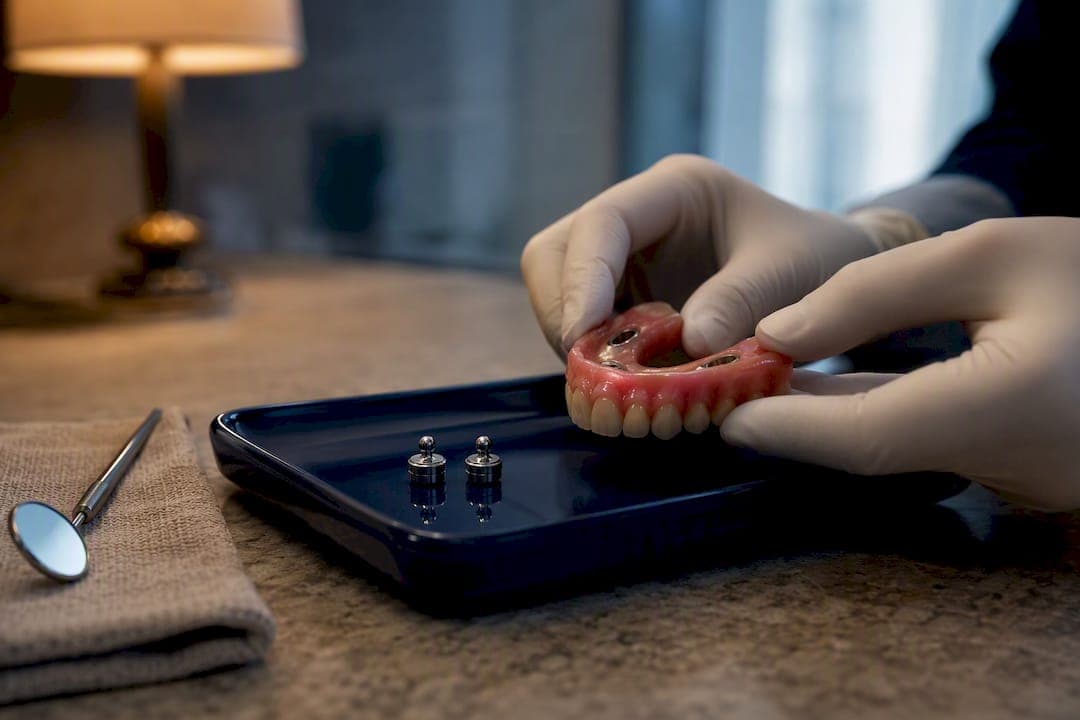
A snap-in denture typically runs $5,000 to $16,000 per arch, with most patients landing near $8,000 to $8,500, according to 2026 market data compiled by DentalReviewed. The two biggest swing factors are how many implants your case requires (two versus four) and where you live, since metro-area fees often run well above rural pricing. Dental insurance sometimes covers a portion of the denture component; implant surgery is often excluded or limited in coverage.
TL;DR:
- The average cost per arch for snap-in dentures ranges from $8,000 to $8,500, with full mouth treatment potentially reaching $18,000 to $30,000 depending on case complexity.
- Implant count significantly impacts the price, with two-implant overdentures costing less than four-implant options, and geographic location can add up to 60% more to overall fees.
- Costs include surgical placement, implant hardware, attachments, denture fabrication, and follow-up visits, but preparatory procedures like bone grafts may substantially increase the total.
- Insurance typically covers about 50% of the denture portion but often excludes or limits implant surgery, with annual maximums usually between $1,000 and $2,500.
- Patients should request detailed, itemized estimates and understand maintenance costs, such as attachment replacements and relines, to accurately budget for ongoing care.
Table of Contents
- How Much Do Snap Dentures Cost by Configuration?
- What's Actually Included in a Snap-In Denture Quote?
- What Drives the Price Up or Down?
- Will Insurance Cover Snap-In Dentures?
- Budgeting for Life After the Denture Is Placed
- Getting a Written Estimate You Can Actually Compare
- What CWD Dental Group Brings to Your Treatment Plan
- Who Actually Benefits Most From Snap-In Dentures?
- Get an Itemized Estimate Before You Decide
- Where to Verify Coverage and Clinical Details
- Sources
- FAQ
How Much Do Snap Dentures Cost by Configuration?
The number on a treatment plan depends almost entirely on implant count and which arch you're treating. A two-implant overdenture, the simplest and most common setup, typically prices lower than a four-implant version because it needs fewer surgical sites and less hardware.
Here's how the ranges usually break down per arch:
- Two implants per arch: typically ranges from lower to mid five-figures, reflecting surgery, abutments, and the denture itself bundled together.
- Four implants per arch: commonly falls into a higher cost range due to additional implant hardware, surgical time, and more complex attachment systems.
- Both arches treated: doubling a single-arch estimate gets you close, though many practices offer a modest discount for treating upper and lower at the same visit since some fees (imaging, anesthesia) get shared.
Snapshot: National averages cluster around $8,000 to $8,500 per arch, but a full mouth (both arches, four implants each) can reasonably land between $18,000 and $30,000 depending on your market and case complexity.
Geography moves the needle more than most patients expect. A comparison of implant-supported denture pricing found that fees in major metro markets can run 30% to 60% higher than in rural areas, mostly because of overhead, specialist availability, and local competition. If you're pricing options in Tallahassee or anywhere in the Florida Panhandle, expect quotes to sit closer to the national average than to big-city premiums.
What's Actually Included in a Snap-In Denture Quote?
A single number on an estimate rarely tells the whole story. Most comprehensive quotes bundle several distinct cost categories, and knowing what belongs in each one helps you spot a quote that's missing something.
Expect a full itemized estimate to cover:
- Surgical placement fees for inserting the implants into the jawbone.
- Implant hardware itself (the titanium posts), which varies by brand and system.
- Abutments and attachment components that let the denture snap onto the implants.
- Denture fabrication and lab fees, including the acrylic base and any metal reinforcement.
- Follow-up visits for fit adjustments in the weeks after placement.
Preparatory work often gets quoted separately, and it can add meaningfully to your total. Extractions, bone grafts, sinus lifts (for upper-arch cases with thin bone), and a CT scan for surgical planning are common add-ons rather than automatic inclusions. Material upgrades, like a metal-reinforced denture base or a premium attachment system, also shift the price. Ask specifically whether your quote assumes standard bone density or whether it already accounts for grafting, since that single item can add several thousand dollars if your jaw needs rebuilding first.
What Drives the Price Up or Down?
Implant count is the single biggest lever. Going from two implants to four roughly doubles the hardware cost and adds surgical time, but it also improves stability, particularly on the lower arch where bone tends to resorb faster after tooth loss.
Provider type matters almost as much. A general dentist who places implants in-house often prices lower than a prosthodontist or oral surgeon working with a referring dentist, simply because you're not paying two separate specialist fees. That said, complex cases (thin bone, prior implant failure, extensive grafting) usually need the specialist regardless of cost.
Other factors that move your total:
- Attachment system choice. Locator-style nylon inserts are the standard, budget-friendly option. Bar-retained systems cost more upfront and require more lab time but can offer better stability for a loose upper arch, according to prosthodontic cost guides.
- Market and overhead. Big-city practices carry higher rent and staffing costs, which shows up in the quote.
- Bone quality. Patients who've worn traditional dentures for years often have more bone loss, which can mean grafting before implants go in at all.
- Lab complexity. A denture with precise metal framework costs more to fabricate than a straightforward acrylic base.
Pro Tip: If your bone density is borderline, ask your provider whether a shorter or narrower implant could avoid a graft altogether. It's not always possible, but when it is, it can save you a separate surgical fee and weeks of extra healing time.
Will Insurance Cover Snap-In Dentures?
Dental insurance and snap-in dentures have a complicated relationship. Most PPO plans treat the denture itself as a major prosthetic service, often covering somewhere close to 50% of that portion. Implant surgery is a different line item, and many plans limit or exclude it entirely, according to Healthinsurance. Annual maximums on most plans fall between $1,000 and $2,500, which doesn't stretch far against a $10,000 to $20,000 treatment plan.
Original Medicare doesn't cover routine dental care or implants at all, according to Medicare. Medicare Advantage plans vary widely; some include limited dental riders, so it's worth checking your specific plan's benefits before assuming you're out of luck.
Where the real savings show up is elsewhere:
- HSA and FSA funds pay for the treatment with pre-tax dollars, which effectively discounts the cost by your marginal tax rate.
- CareCredit and similar financing spreads payments out, sometimes interest-free for a promotional period.
- Dental schools can charge 40% to 60% less than private practice, though treatment takes longer and involves supervised students.
- In-house membership plans at many practices offer discounted rates for patients without traditional insurance.
Before committing, ask your provider to submit a pre-treatment estimate to your insurer. That single document tells you exactly what your plan will pay and what lands on you, rather than guessing from your benefits summary.
Budgeting for Life After the Denture Is Placed
The sticker price on your treatment plan isn't the last check you'll write. Snap-in dentures rely on attachment inserts, small nylon components that wear down with daily use, and most patients replace them every 6 to 18 months at roughly $50 to $200 per set.
Relines, which readjust the denture's fit as your gum tissue changes shape over time, typically cost $300 to $600 and happen every couple of years. The denture itself usually needs full replacement every 5 to 10 years. Planning for $200 to $600 in maintenance every one to two years keeps these costs from feeling like surprises.
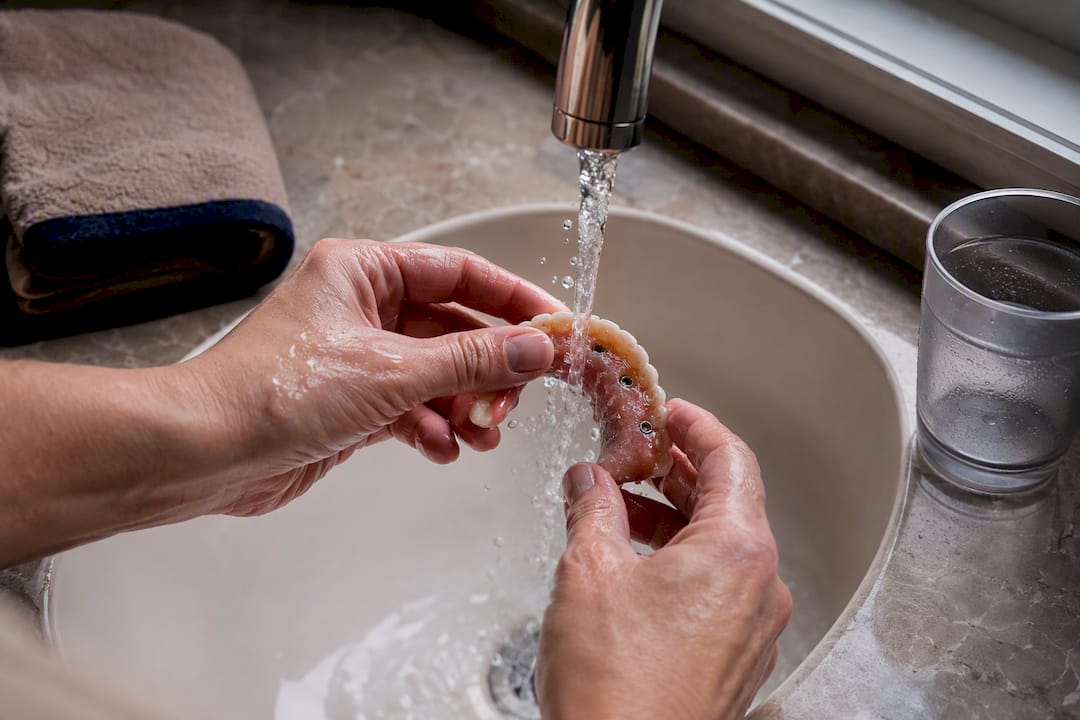
The bigger financial risk is peri-implantitis, an infection around the implant caused by trapped plaque, which can lead to implant failure and the cost of starting over. Daily removal and cleaning of the denture, along with careful brushing around the implant attachments, is the cheapest insurance you'll ever buy against that outcome.
Getting a Written Estimate You Can Actually Compare
A verbal quote over the phone tells you almost nothing. Get everything in writing, then use these steps to compare offers apples to apples:
- Request an itemized estimate that separates surgery, implants, abutments, lab fees, and follow-up visits into distinct line items.
- Confirm who performs each step. Some practices split surgical placement and restorative work between a specialist and a general dentist; ask about credentials for both.
- Ask about warranties. Find out what happens if an implant fails, whether attachment part replacement is covered, and how many follow-up adjustments are included.
- Watch for vague "package" pricing that doesn't break out lab fees or a maintenance schedule. That's usually a sign something's being left out, not included.
Pro Tip: Bring your last dental X-rays and a list of current medications to your consultation. It speeds up treatment planning and often lets the office give you a firmer number on the same visit.
What CWD Dental Group Brings to Your Treatment Plan
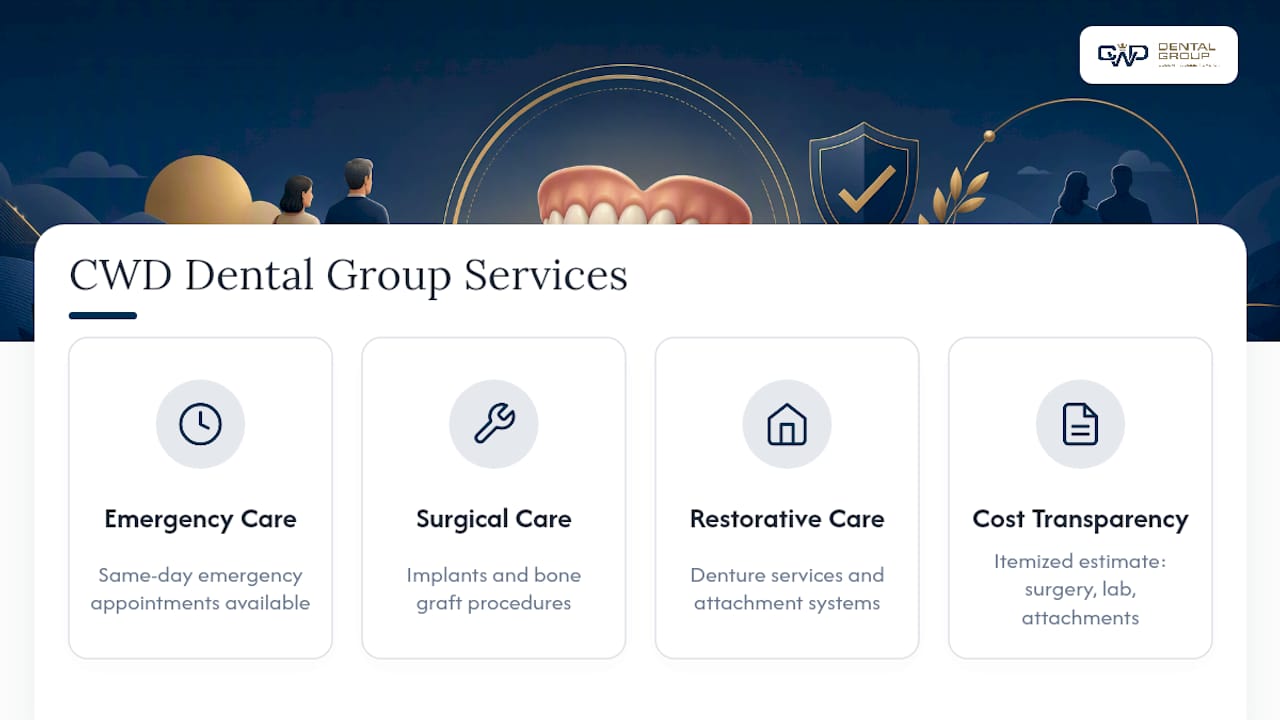
CWD Dental Group serves Tallahassee patients with a patient-centered approach that includes same-day emergency appointments alongside surgical and restorative dentistry, including implants, bone grafts, and denture services. When you come in for a consultation, the practice can walk you through an itemized estimate covering surgical fees, lab work, and the attachment system that fits your case, so you know what you're paying for before treatment starts.
Who Actually Benefits Most From Snap-In Dentures?
Patients with adequate bone and a tight budget usually do best with two implants; traditional dentures make sense only when implants aren't financially or medically feasible. Four implants earn their extra cost when the lower arch has significant bone loss or when stability, not just cost, is the priority. All-on-4 fixed bridges suit patients who never want to remove their teeth, at a higher price point.
— Kayle
Get an Itemized Estimate Before You Decide
Patients in Tallahassee have access to a local, in-person alternative to guessing at costs from online calculators or out-of-state pricing guides. When surgical placement, restorative work, and denture fabrication are coordinated, patients typically receive a single itemized estimate instead of piecing together quotes from multiple providers.
If you're weighing snap-in dentures against traditional dentures or a fixed implant bridge, a same-day consultation is the fastest way to see real numbers for your specific case. Bring your current X-rays and a list of medications, and ask to review the full service menu so you understand what's bundled into your quote versus billed separately. Scheduling a consultation can help you obtain a written estimate to compare against other offers.
Where to Verify Coverage and Clinical Details
Check Medicare.gov's dental services page for coverage rules, and review Cleveland Clinic's overview of implant-supported dentures for procedural details and maintenance expectations.
This article is general information, not a substitute for advice from a qualified doctor. Consult a qualified healthcare professional about your own circumstances before acting on anything here.
Sources
- Healthinsurance
- Medicare
- Implant-supported dentures — Cleveland Clinic
- How Much Do Snap-In Dentures Cost? 2026 Prices by State — DentalReviewed
FAQ
How much would a full set of snap-in dentures cost?
A full mouth, both arches with implants placed in each, typically runs $18,000 to $30,000, based on per-arch averages of $8,000 to $8,500 and higher four-implant configurations.
What's the downside of snap-in dentures?
They require ongoing maintenance, including attachment insert replacement every 6 to 18 months and periodic relines, and there's a real risk of peri-implantitis if hygiene around the implants slips.
What is the cheapest state to get dentures in?
Pricing varies more by metro area than by state line. Markets.
Will insurance pay for snap-on dentures?
Most PPO plans cover part of the denture prosthesis, often around 50%, but frequently limit or exclude the implant surgery itself, and annual maximums typically cap between $1,000 and $2,500. Original Medicare doesn't cover dental implants at all, though some Medicare Advantage plans offer limited dental benefits.