
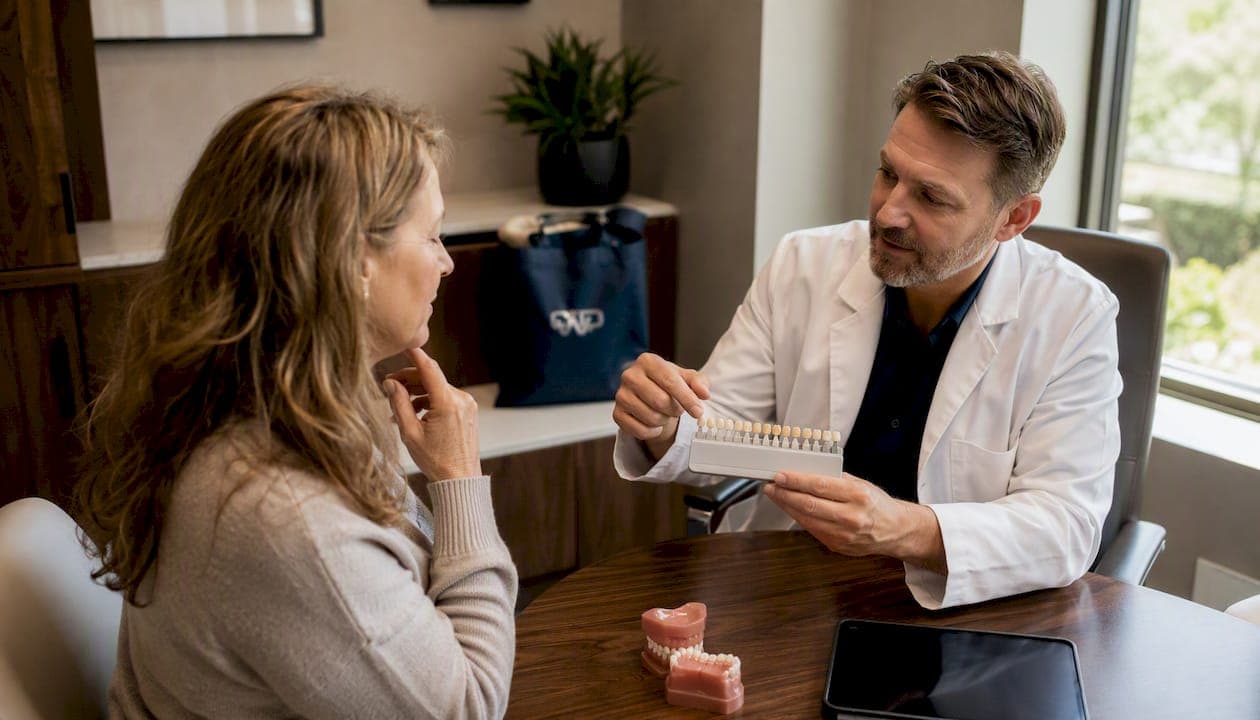
The most common cosmetic dentistry mistakes are over-whitening, poor veneer and crown design, skipping bite and gum health checks, and choosing a provider based on price or social media hype. Avoid them by insisting on proper diagnosis, mockups, and a documented maintenance plan before you commit to anything irreversible.
Before your next consultation, run through this quick checklist:
- Has the dentist confirmed your gum and bite health before discussing aesthetics?
- Will you get a mockup, wax-up, or provisional to preview the result?
- Is there a written treatment plan with alternatives and long-term maintenance expectations?
- Does the plan exceed $5,000 or involve irreversible enamel removal? If so, plan to get a second opinion before signing anything.
- Are before-and-after photos from real patients shown in natural light, not studio shots?
Pro Tip: Watch for these red flags in a first consultation: the dentist skips X-rays, never mentions your bite, quotes a price before examining you, or pressures you to book the same day. Any one of these is a reason to pause.
Cosmetic dentistry sits on top of your oral health. If the foundation is weak, the best-looking work will not last — and you could end up in more pain or expense later.
Table of Contents
- 1. Chasing a paper-white shade you will regret
- 2. Veneer and crown designs that look fake or disproportionate
- 3. Skipping oral health and bite checks before cosmetic work
- 4. Choosing a provider based on price, trends, or social media
- 5. Skipping treatment planning, mockups, and informed consent
- 6. Neglecting long-term maintenance, replacement timelines, and costs
- 7. Ignoring the irreversible-work threshold and skipping a second opinion
- Key Takeaways
- The case for planning over perfection
- Cwddentalgroup helps you avoid these mistakes from the start
- Useful sources and professional references
1. Chasing a paper-white shade you will regret
Over-whitening is one of the most common cosmetic dentistry mistakes, and it is also one of the easiest to make when you are scrolling through filtered Instagram smiles. Teeth that are bleached to a stark, opaque white rarely look natural. They clash with your skin tone, lose the subtle translucency that makes real teeth look alive, and create a jarring contrast against any existing crowns, veneers, or large composite fillings that cannot be whitened at all.
Existing restorations do not respond to bleaching agents. If you whiten your natural teeth aggressively and then try to match new restorations to that shade, you are setting yourself up for uneven results that are difficult and expensive to correct.
What to do instead:
- Ask your dentist to shade-match in natural daylight, not under operatory lighting.
- Request a trial bleaching session before committing to a full course.
- Confirm how whitening fits into the larger plan if you also need crowns, veneers, or bonding.
Pro Tip: The shade guide tab B1 is often cited as the brightest shade that still reads as natural. Anything lighter tends to look artificial on most skin tones.
For practical guidance on keeping results realistic long-term, the whitening maintenance guide from Cwddentalgroup covers touch-up timing and what to avoid between sessions.
2. Veneer and crown designs that look fake or disproportionate
Patients often regret results that look "too perfect" or out of proportion because dentists applied cookie-cutter designs instead of customizing to facial features and age. Excessive uniformity, opaque porcelain edges, mismatched gum margins, and teeth that are too wide or too long for the face are the most common aesthetic failures.

Lab communication matters enormously here. A dentist who sends vague instructions to a dental lab, or who uses a low-cost offshore lab without reviewing the case closely, is gambling with your outcome. The technician building your veneers needs detailed photographs, shade maps, and ideally a wax-up to work from.
Design failures to watch for:
- All teeth the same length and width, with no natural variation
- Opaque, chalky edges with no translucency at the incisal tip
- Gum margins that do not follow the natural scallop of your gumline
- Proportions that do not match your face width, lip line, or age
Practical verification steps before prep:
- Ask to see a digital design or diagnostic wax-up before any enamel is touched.
- Request before-and-after portfolios of real cases similar to yours, viewed in natural light. Marketing photos often overstate transformations because of studio lighting and angles.
- Ask which lab performs the work and whether the dentist reviews cases in person with the technician.
- Confirm the material: porcelain veneers carry strong survival rates at ten years for well-made, properly bonded restorations, with some decline over longer periods.
Pro Tip: Bring photos of smiles you like and ones you do not. Not to copy a celebrity, but to give your dentist a visual language. "More rounded" or "less blocky" is far more useful than "I want a nice smile."
For more on interpreting before-and-after photos realistically, see what to consider before committing to a smile makeover.
3. Skipping oral health and bite checks before cosmetic work
No cosmetic procedure should begin before a thorough health evaluation. Untreated periodontitis, active decay, or a compromised bite will undermine any aesthetic result, often within months. Poorly placed veneer or crown margins, or failing to treat gum disease first, can cause gum recession, bleeding, and long-term tissue problems that ruin the final look.
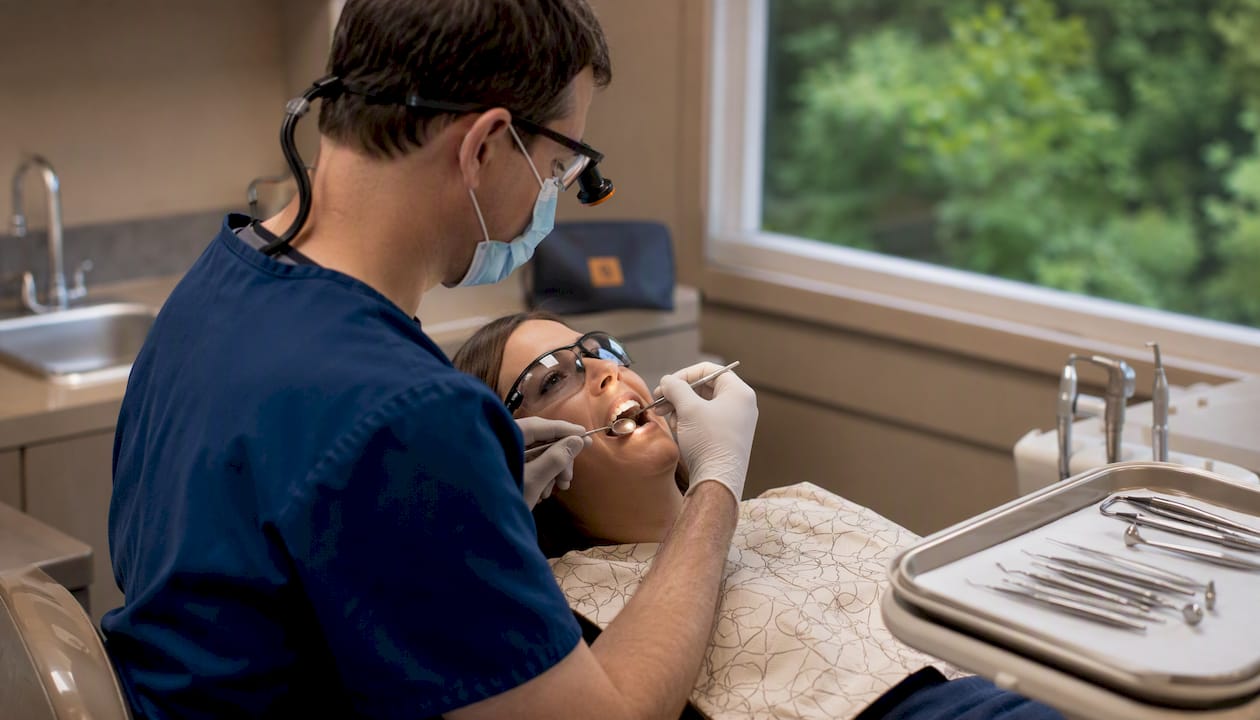
Bite function is just as critical. Failing to assess occlusion or TMJ before cosmetic work can create new pain or mechanical failures. Veneers placed without considering how your teeth meet will chip, crack, or debond under load, often within the first year.
Diagnostics to request before any cosmetic procedure:
- Full periodontal charting and gum health assessment
- Current radiographs (X-rays) to rule out decay and bone loss
- Occlusal analysis to map how your teeth contact under biting force
- TMJ screening if you have any history of jaw pain, clicking, or grinding
Treating any disease first is the priority. A dentist who moves straight to aesthetics without confirming your oral health foundation is skipping the most important step.
Red flags in a consult: no bite discussion, no radiographs offered, or a dentist who jumps to a treatment quote before examining your gums. Walk away.
4. Choosing a provider based on price, trends, or social media
Patients commonly regret choosing a dentist solely on price because low-cost options may prioritize volume over careful planning, leading to inferior materials, rushed timelines, and higher long-term corrective costs. The same applies to trend-driven offers: "one-day smile makeovers" and social media promotions frequently skip the diagnostic and provisional phases that protect you.
Practices that perform higher volumes of specific cosmetic procedures typically show more predictable, refined outcomes than those performing them infrequently. Volume is not everything, but it is a meaningful signal.
Questions to vet a provider's real cosmetic experience:
- How many cases similar to mine do you complete per year?
- Can I see full case portfolios, before and after, in natural light, not stock photos?
- Who performs the lab work, and do you review cases directly with the technician?
- What happens if I am not satisfied with the result?
If the full cost of quality treatment is out of reach right now, cosmetic dentistry financing options are worth exploring before you compromise on provider quality. Delaying to save properly is almost always better than paying twice to fix a poor result.
5. Skipping treatment planning, mockups, and informed consent
A complete planning phase is not a luxury. Diagnostic test drives, including digital smile design, wax-ups, and provisional restorations, allow incremental refinement and are a lower-risk way to validate your preferences and function before irreversible enamel reduction. Skipping them increases remake and regret rates.
A real-world case from Dental Protection illustrates the cost: a dentist placed composite veneers freehand without study models, a wax-up, or occlusal analysis. The patient disliked the result, requested removal, and discovered enamel damage during reversal. The dentist later acknowledged that the lack of thorough initial assessment and planning had compromised the clinical outcome and raised questions about valid consent.
What a complete planning phase should include:
- High-quality clinical photographs from multiple angles
- Digital smile design or diagnostic wax-up
- Provisional restorations or chairside mockup for patient approval
- A written treatment plan with documented alternatives
- Explicit discussion of which steps are irreversible and why
Checklist to verify during your consultation:
- Is there a documented written plan with alternatives?
- Will you trial provisionals before final restorations are placed?
- Has the dentist explicitly explained which steps cannot be undone?
6. Neglecting long-term maintenance, replacement timelines, and costs
Cosmetic dentistry is a long-term commitment. Patients who treat it as a one-time fix are routinely surprised by staining, marginal discoloration, debonding, and bite-related chipping within a few years. Planning for maintenance from day one prevents both financial and aesthetic surprises.
Common surprises patients face: composite bonding stains and chips faster than porcelain; whitening fades with coffee, wine, and time; veneer margins can discolor if oral hygiene slips; and crowns eventually need replacement, especially if the bite was never properly balanced.
| Treatment | Typical Lifespan | Maintenance Needs |
|---|---|---|
| Professional whitening | 6 months to 2 years | Touch-ups needed; avoid staining foods and drinks |
| Composite bonding | 3–7 years | Occasional polishing or repairs; staining possible |
| Porcelain veneers | — | Replacement when worn or damaged; good hygiene critical |
| Dental crowns | — | Regular checkups; bite balance important |
| Orthodontic treatment | Long-lasting with retainers | Retainer wear required indefinitely |
Ask your dentist before committing: what is the expected lifespan of this specific restoration for my bite and habits? What does routine maintenance look like, and what is a realistic estimate of long-term costs over ten years?
For composite bonding specifically, the bonding longevity guide from Cwddentalgroup covers what affects lifespan and how to extend it.
7. Ignoring the irreversible-work threshold and skipping a second opinion
Seek a second opinion for any cosmetic treatment plan that exceeds $5,000 or proposes irreversible procedures like veneers or crowns when more conservative options might suffice. That threshold is not arbitrary. At that cost and risk level, a second perspective costs very little relative to what you are committing to.
Signs that justify a second opinion:
- No mockup or provisional was offered before irreversible prep.
- The dentist pressured you to book the same day.
- No documentation of alternative, more conservative treatments was provided.
- Bite and function analysis were skipped entirely.
- The plan involves removing healthy enamel primarily for cosmetic reasons.
When you go for a second opinion, bring your X-rays, any written treatment plan, and photographs of your current smile. Ask the second practitioner: "Is this the most conservative approach that achieves the result I want?" and "What would you do differently and why?"
Key Takeaways
The best predictor of a good cosmetic outcome is the clinician's track record with cases similar to yours and the time invested in pre-treatment planning, not the advertised material or price.
| Point | Details |
|---|---|
| Foundation first | Confirm gum health, bite analysis, and X-rays before any aesthetic procedure begins. |
| Demand a test-drive | Request a wax-up, digital design, or provisional mockup before irreversible enamel prep. |
| Veneer survival rates | Well-made porcelain veneers survive at roughly 91% at ten years; plan for eventual replacement. |
| Second-opinion threshold | Get a second opinion on any plan involving significant cost or irreversible enamel removal. |
| Cwddentalgroup approach | Cwddentalgroup provides comprehensive diagnostics, digital design, and documented maintenance plans before committing patients to irreversible cosmetic work. |
Pre-appointment checklist — save this before your next consultation:
- Foundation confirmed: gum health, bite analysis, and radiographs completed
- Provisional or mockup offered before any irreversible step
- Written treatment plan with documented alternatives provided
- Maintenance expectations and replacement timelines discussed
- Plan cost and invasiveness reviewed against the second-opinion threshold
Top three red flags to walk away from immediately:
- Dentist quotes a price or books a procedure before examining your mouth
- No X-rays, no bite discussion, no mention of gum health
- Pressure to decide or book on the same day as the consultation
One-line patient action steps: Take photos of your current smile. Write down your top three concerns in order of priority. Give yourself at least 48 hours before agreeing to any irreversible procedure.
The case for planning over perfection
Most people researching cosmetic dentistry are not looking for a Hollywood smile. They want to feel comfortable, confident, and not self-conscious. That is a reasonable, achievable goal. The problem is that the cosmetic dentistry industry, particularly on social media, sells perfection, and perfection is a moving target that leaves a lot of patients disappointed.
The cases that end in complaints, remakes, and legal disputes share a pattern: rushed planning, skipped diagnostics, and a patient who was never shown what the result would look like before enamel was removed. The cases that end in genuine satisfaction share a different pattern: a dentist who slowed down, ran the diagnostics, showed the patient a mockup, and had an honest conversation about what was and was not possible.
At Cwddentalgroup, the clinical philosophy starts with oral health and function before aesthetics. That means periodontal screening, bite analysis, and a full diagnostic workup before any cosmetic conversation begins. The practice offers a broad range of cosmetic and restorative services, including Invisalign, veneers, whitening, and bonding, alongside same-day emergency appointments for patients who need urgent evaluation. The goal is always to offer the most conservative option that achieves what the patient actually wants, with full documentation and a realistic maintenance plan.
Patients deserve to know what they are agreeing to, what it will cost over time, and what happens if something goes wrong. That conversation should happen before any drill touches a tooth.
Cwddentalgroup helps you avoid these mistakes from the start
Choosing cosmetic dental work is a significant decision, and the difference between a result you love and one you regret almost always comes down to what happened before the procedure.
Cwddentalgroup in Tallahassee builds every cosmetic consultation around the steps that protect patients: comprehensive diagnostics, digital design and wax-ups, provisional trials where appropriate, and a documented maintenance plan before any irreversible work is scheduled. The team reviews candidacy honestly, discusses conservative alternatives, and never pressures patients to book on the day of consultation.
If you are weighing cosmetic options and want a thorough evaluation first, Dr. Cory Couch and the Cwddentalgroup team are accepting new patients. For patients who have experienced a cosmetic complication and need urgent attention, same-day emergency appointments are available. Financing options are also discussed during consultation for patients planning larger treatment plans.
Useful sources and professional references
- Cleveland Clinic: Cosmetic Dentistry Overview — authoritative patient-facing summary of procedures, risks, and what to expect from cosmetic dental treatment.
- Better Health Channel: Cosmetic Dentistry and Teeth Whitening — detailed guidance on pre-treatment health checks, procedure risks, and maintenance requirements.
- Dental Protection Case Studies — real-world cases illustrating the consequences of skipped planning, inadequate consent, and inexperienced providers.
- Aesthetic Smile Reconstruction: Cosmetic Dentistry Risks and Regret Prevention — clinician-authored guidance on bite analysis, design customization, and avoiding common treatment failures.
- Aesthetic Smile Reconstruction: Cosmetic Dentistry Decisions — explains the role of digital smile design, wax-ups, and provisionals in reducing regret.
- Smyleee: The Honest Guide to Cosmetic Dentistry — covers veneer survival rates, second-opinion thresholds, and realistic expectation-setting.
- Brightnis: 5 Questions to Ask Before Starting Cosmetic Dental Treatments — practical patient-facing question framework for consultations.
- Cwddentalgroup: Cosmetic and Advanced Dentistry — practice overview of cosmetic services and clinical approach.
- Cwddentalgroup: Teeth Whitening Maintenance Guide — patient guidance on maintaining whitening results and planning realistic touch-ups.
This article is general information, not professional dental advice. Confirm your specific treatment options and oral health status with a licensed dental professional before making any treatment decisions.