

Biannual teeth cleaning is defined as professional dental prophylaxis performed twice yearly, and it is the most effective preventive measure for maintaining oral health across every age group. The American Dental Association recommends this twice-yearly schedule as the baseline for average-risk patients. Patients who follow it experience up to 50% lower cavity risk and 80% fewer cases of gum disease compared to those who skip routine visits. That gap in outcomes is not a coincidence. Professional cleaning removes mineralized tartar that no toothbrush can reach, catches early-stage problems before they become expensive, and connects your mouth's health to your body's overall condition. The benefits of biannual teeth cleaning go well beyond a brighter smile.
1. What are the core oral health benefits of biannual teeth cleaning?
Professional dental prophylaxis does two things home care cannot. It removes calculus, the hardened mineral deposit that forms when plaque is left undisturbed, and it disrupts the bacterial colonies living beneath the gumline. Both actions directly prevent the two most common dental diseases: cavities and gum disease.
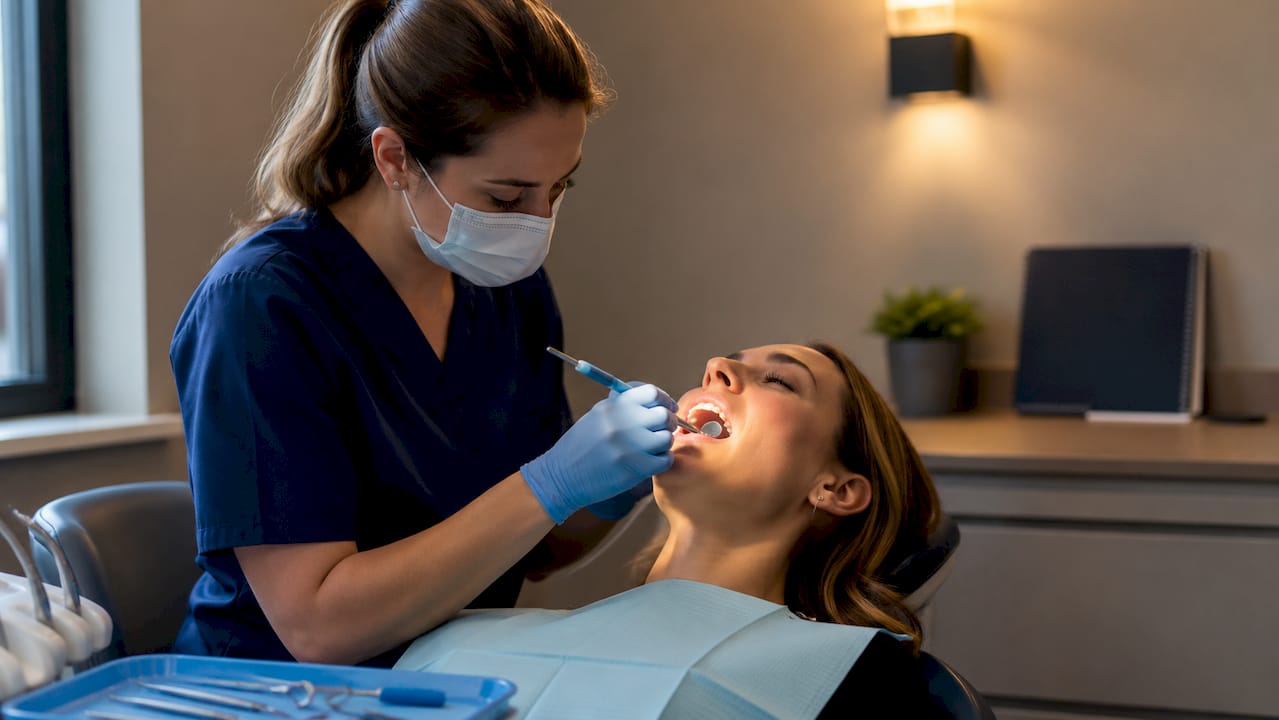
Ultrasonic scalers vibrate at high frequencies to shatter calculus deposits that brushing and flossing cannot touch. This is not cosmetic polishing. The therapeutic removal of mineralized deposits is the clinical core of every cleaning appointment. Polishing comes after, not instead of, scaling.
A standard cleaning appointment covers:
- Gum health exam: The hygienist measures pocket depths around each tooth to check for recession or inflammation.
- Subgingival scaling: Calculus is removed from below the gumline, where gum disease starts.
- Supragingival scaling: Visible tartar on tooth surfaces is cleared with hand scalers or ultrasonic tools.
- Polishing: A mild abrasive paste removes surface stains and smooths enamel.
- Oral cancer screening: The dentist visually inspects soft tissue for abnormal lesions.
Pro Tip: Tell your hygienist which side of your mouth you favor when chewing. Tartar builds faster on the less-used side, and that information helps them focus their scaling where it matters most.
2. How do regular cleanings support early detection of dental problems?
Early detection is one of the most underrated teeth cleaning advantages. A cleaning appointment is not just a cleaning. Professional cleanings include physical exams of gum health and oral cancer screenings, with appointments typically running 30 to 60 minutes. That time gives the dental team a full picture of what is happening in your mouth.
Early detection lowers treatment complexity and cost across every category of dental disease. A cavity caught at the enamel stage needs a small filling. The same cavity left for 12 months may need a root canal and crown. Gum inflammation spotted at the gingivitis stage resolves with a cleaning and better home care. Left untreated, it advances to periodontitis, which causes irreversible bone loss.
Conditions routinely caught during biannual visits include:
- Early gingivitis and gum recession
- Interproximal cavities between teeth, invisible without X-rays
- Cracked teeth or failing restorations
- Oral cancer and precancerous lesions
- Signs of bruxism (tooth grinding) before enamel damage becomes severe
The oral cancer screening alone justifies the visit for many patients. Oral cancer survival rates improve dramatically with early-stage diagnosis, and a visual soft-tissue exam takes under two minutes during a routine appointment.
3. What systemic health benefits are linked to biannual dental cleanings?
The mouth is not separate from the rest of the body. Biannual cleanings reduce oral bacterial load, which lowers systemic inflammation and affects broader health conditions including cardiovascular disease and diabetes management. This connection is well-established in medical literature and changes how patients should think about skipping a cleaning.
Chronic gum disease allows oral bacteria to enter the bloodstream through inflamed tissue. Those bacteria trigger inflammatory responses in blood vessels, which contributes to arterial plaque formation. For patients managing diabetes, the relationship runs both ways: elevated blood sugar accelerates gum disease, and active gum disease makes blood sugar harder to control.
Oral health care through professional cleaning impacts systemic health by controlling oral bacteria levels, thereby reducing systemic inflammation linked to heart disease, stroke, and diabetes complications. Treating the mouth is treating the body.
The financial case is equally clear. Preventive dental visits save $8 to $50 for every $1 spent on preventive care. A cleaning that costs $150 can prevent a root canal that costs $1,500 or more. Families who invest in routine cleanings avoid the financial shock of treating advanced dental disease.
Pro Tip: If you have a family history of heart disease or are managing diabetes, tell your dentist. They can adjust your cleaning frequency and coordinate care notes with your physician.
4. How personalized is the recommended cleaning schedule?
The six-month interval is a starting point, not a fixed rule. Six-month cleaning intervals serve as a baseline, with adjustments based on individual risk factors like diabetes, gum disease history, and oral hygiene habits. Your dentist uses a risk-based assessment at each visit to determine whether your schedule should change.
The six-month guideline is not one-size-fits-all. Dental professionals personalize cleaning frequency based on clinical findings, not calendar convention. A patient with excellent home care, no cavities, and healthy gums may safely extend to nine or twelve months. A patient with active gum disease or a history of rapid tartar buildup may need cleanings every three to four months.
| Patient Profile | Recommended Frequency | Reason |
|---|---|---|
| Average-risk adult, healthy gums | Every 6 months | Baseline ADA guideline |
| Active gum disease or periodontitis | Every 3–4 months | Prevents disease progression |
| Diabetes or immune-compromised | Every 3–4 months | Higher infection and inflammation risk |
| Low-risk adult, excellent home care | Every 9–12 months | Clinically supported extended interval |
| Children with high cavity risk | Every 6 months or more | Developing enamel is more vulnerable |
The key takeaway is that how often you should get your teeth cleaned depends on your mouth, not your neighbor's. Ask your dentist to explain your risk category at your next visit and get a schedule that fits your actual clinical needs.
5. How do daily habits extend the benefits of professional cleanings?
A professional cleaning resets your oral microbiome. What you do in the following six months determines how much of that benefit you preserve. Strong home care habits slow tartar buildup, reduce gum inflammation between visits, and make each cleaning appointment faster and more comfortable.
The habits that matter most:
- Brush twice daily with fluoride toothpaste. Fluoride remineralizes early enamel damage before it becomes a cavity. Two minutes per session, twice a day, is the minimum effective dose.
- Floss or use an interdental brush daily. Cavities between teeth account for a large share of all new decay. Flossing removes the plaque that a toothbrush physically cannot reach.
- Use an anti-tartar mouthwash. Rinses containing pyrophosphates slow the mineralization of plaque into calculus, giving your next cleaning a head start.
- Limit sugar and acidic foods. Bacteria feed on fermentable carbohydrates and produce acid that erodes enamel. Reducing frequency of sugar exposure matters more than total quantity.
- Avoid smoking and tobacco. Tobacco use accelerates gum recession, masks early gum disease symptoms, and dramatically increases oral cancer risk.
Hygienists provide personalized feedback on brushing and flossing technique based on where tartar accumulates during your cleaning. If calculus always builds on your lower front teeth, your hygienist can show you exactly how to adjust your brush angle to address it. That coaching is a direct benefit of showing up consistently.
Key Takeaways
Biannual teeth cleanings are the single most cost-effective preventive measure for protecting both oral health and overall systemic wellness across every stage of life.
| Point | Details |
|---|---|
| Cavity and gum disease prevention | Regular cleanings cut cavity risk by up to 50% and reduce gum disease cases by 80%. |
| Early detection saves money | Catching problems at the gingivitis or enamel stage avoids root canals, extractions, and bone grafts. |
| Systemic health connection | Reducing oral bacteria lowers inflammation linked to heart disease and diabetes complications. |
| Personalized scheduling matters | Cleaning frequency should range from every 3 to 12 months based on individual risk factors. |
| Home care extends clinical results | Daily brushing, flossing, and anti-tartar rinses preserve the benefits between professional visits. |
Why I trust biannual cleanings more than any other single dental habit
I have worked alongside dental hygienists long enough to know that the cleaning appointment is the most undervalued hour in preventive health care. Patients often treat it as optional, something to reschedule when life gets busy. That mindset costs them far more than they realize, in money, in comfort, and sometimes in teeth.
The biggest myth I encounter is that a good brusher does not need professional cleanings. Brushing removes soft plaque. It does not touch calculus. Once plaque mineralizes, no amount of brushing removes it. The only tool that does is an ultrasonic scaler in the hands of a trained hygienist. I have seen patients with textbook brushing habits still develop gum disease because they skipped their cleanings for two years.
The other thing I want families to understand is that the six-month rule is a floor, not a ceiling. If your dentist recommends every four months, that is not a sales tactic. It is a clinical judgment based on your specific risk profile. Following that advice is one of the most direct ways to protect your dental health over the long term.
The role of dental hygiene in your overall health is larger than most people appreciate. Your mouth is the entry point for everything your body processes. Keeping it clean is not vanity. It is maintenance.
— Kayle
Preventive dental care at Cwddentalgroup in Tallahassee
Cwddentalgroup offers family-centered preventive care built around personalized cleaning schedules, not rigid calendar slots. The team assesses each patient's risk profile and recommends the cleaning frequency that fits their actual clinical needs, whether that is every six months or every three.

Scheduling is straightforward, and the practice accepts same-day appointments for urgent concerns. If a cleaning reveals something that needs immediate attention, Cwddentalgroup's emergency dental services are available without the long waits common at other practices. Families in Tallahassee can schedule a biannual cleaning and get a personalized care plan from a team known for both clinical quality and genuine warmth.
FAQ
What are the main benefits of biannual teeth cleaning?
Biannual professional cleanings remove tartar, prevent cavities and gum disease, and allow dentists to catch early-stage problems before they require costly treatment. Patients who attend regularly experience up to 50% lower cavity risk and 80% fewer gum disease cases.
How often should you get your teeth cleaned?
The American Dental Association recommends every six months as the baseline, but your dentist may adjust that to every three to four months if you have active gum disease, diabetes, or rapid tartar buildup.
Can teeth cleanings improve your overall health?
Professional cleanings reduce oral bacterial load, which lowers systemic inflammation linked to cardiovascular disease and diabetes complications. Treating gum disease has been shown to improve blood sugar control in diabetic patients.
What happens if you skip biannual dental cleanings?
Skipping cleanings allows tartar and subgingival bacteria to accumulate, accelerating gum disease and cavity formation. Problems that could have been treated with a simple filling or scaling often progress to root canals, extractions, or bone loss.
Does a teeth cleaning hurt?
Most patients experience little to no discomfort during a standard cleaning. Patients with gum inflammation or heavy tartar buildup may feel sensitivity during scaling, which typically resolves within a day or two after the appointment.