
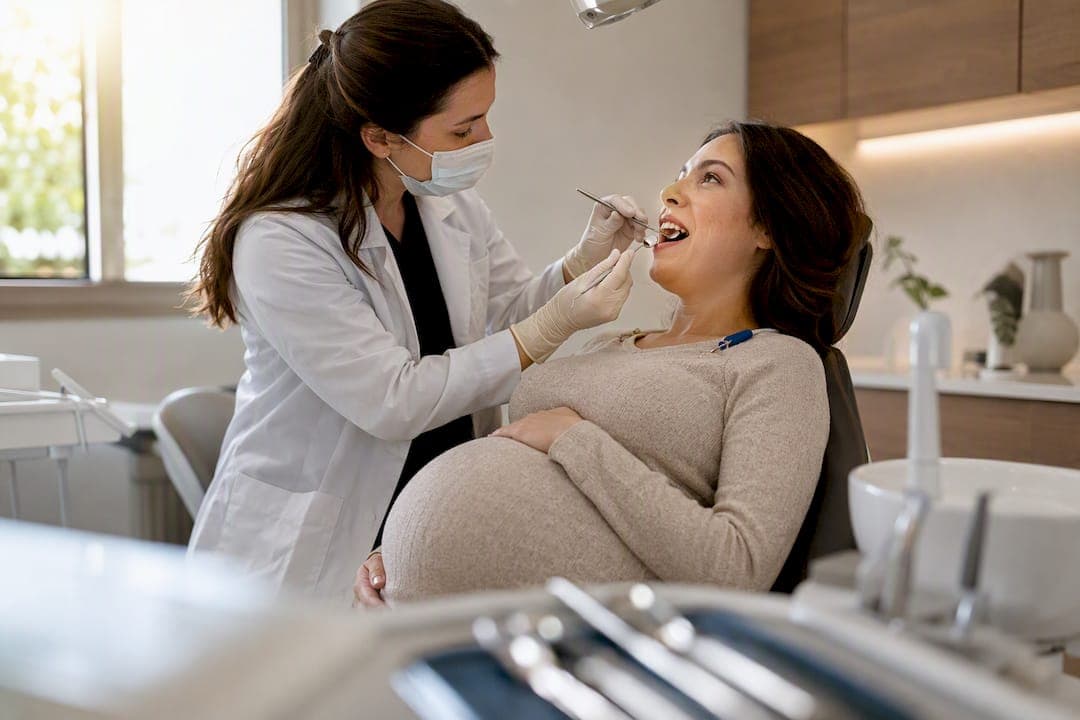
If you're pregnant and dealing with tooth pain, treat it, don't wait it out. Rinse with warm salt water, try a cold compress, and take acetaminophen if your OB has cleared it. Most dental treatment, including X-rays and local anesthetic, is safe during pregnancy, and a toothache that lingers is more often a sign of a treatable problem than something to sit with until after delivery.
TL;DR:
- Most dental procedures, including X-rays and anesthesia, are safe during pregnancy when proper precautions are taken, and emergency care should not be postponed.
- Hormonal changes increase the risk of gingivitis, cavities, and tooth sensitivity, making good oral hygiene and regular cleanings essential throughout pregnancy.
- Home remedies like saltwater rinses, cold compresses, and acetaminophen can manage tooth pain temporarily while waiting for dental evaluation.
- Emergency symptoms such as severe pain, swelling, fever, pus, or difficulty swallowing require immediate dental and medical attention, while airway issues need ER care.
- Preventive practices like brushing, flossing, reducing sugary snacks, and informing your dentist about your pregnancy are key to minimizing toothache risk.
Table of Contents
- Why Toothaches Are More Common During Pregnancy
- What Can You Safely Do for Tooth Pain Right Now?
- Is Dental Treatment Safe While You're Pregnant?
- When Is a Toothache a Dental Emergency?
- How Can You Lower Your Risk of Toothache in Pregnancy?
- How Do You Deal With Dental Anxiety While Pregnant?
- Do Pregnancy Medications Affect Dental Treatment?
- How CWD Dental Group Cares for Pregnant Patients
- Need Same-Day Relief for a Toothache During Pregnancy?
- Where This Guidance Comes From
- Sources
Why Toothaches Are More Common During Pregnancy
Pregnancy hormones make gum tissue more reactive to plaque, which is why so many pregnant women notice bleeding, swollen, or tender gums even with the same brushing habits they had before. Between 60% and 75% of pregnant women develop some degree of gingivitis, and that same hormonal shift comes with a caries rate roughly 1.5 to 2 times higher than in nonpregnant women, according to the CDC.
Morning sickness adds a second layer of risk. Stomach acid from vomiting softens enamel, and a lot of women find themselves snacking more often on carbohydrate-heavy foods that feed decay-causing bacteria. Layer that on top of gum inflammation, and you get a mouth that's simply more vulnerable than it was a year ago.
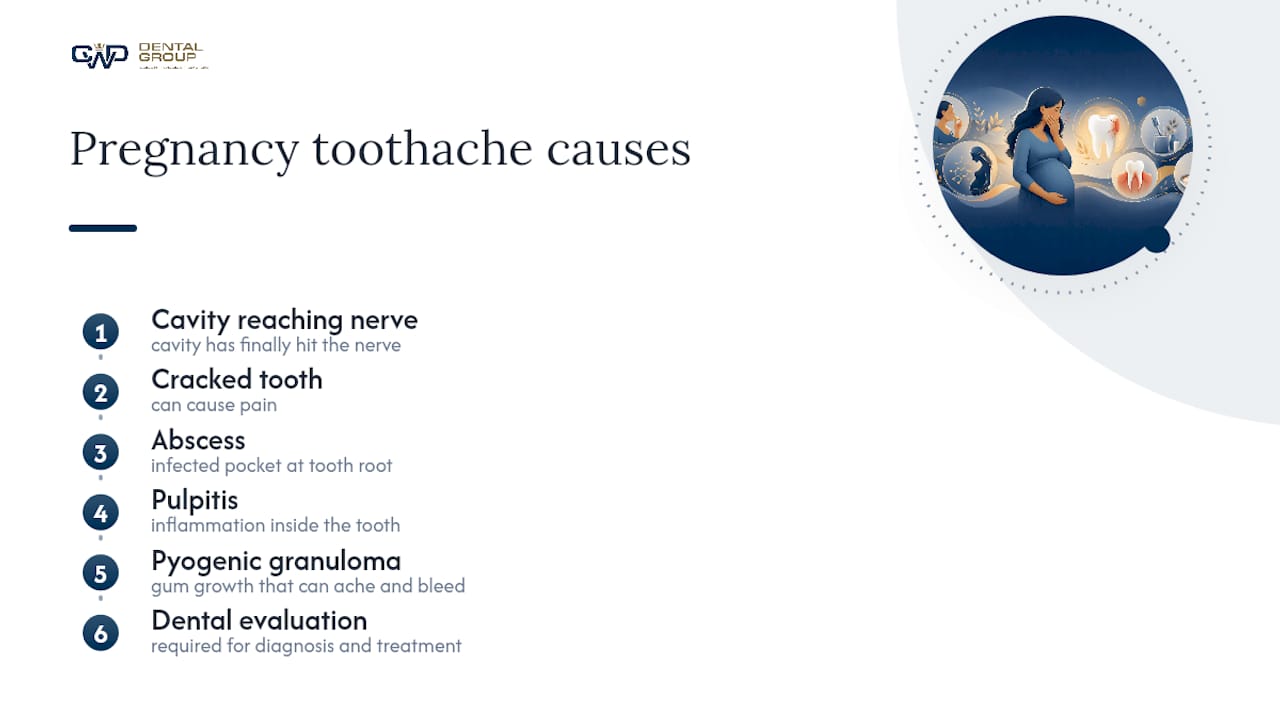
The toothache itself usually traces back to one of a few things: a cavity that's finally hit the nerve, a cracked tooth, an abscess, or pulpitis (inflammation inside the tooth). Some women also develop a pregnancy tumor, or pyogenic granuloma, a harmless but irritating growth on the gum that can ache and bleed. These conditions require dental evaluation and treatment.
What Can You Safely Do for Tooth Pain Right Now?
Home care buys you time and comfort. It does not fix a cavity or an infection, but it can knock down pain and protect your teeth while you get an appointment on the calendar.
- Warm salt-water rinse: Dissolve half a teaspoon of salt in a cup of warm water and swish for 30 seconds, several times a day. It reduces gum inflammation and helps flush bacteria out of irritated tissue.
- Baking soda rinse after vomiting: Mix one teaspoon of baking soda into a cup of water and swish right after being sick. This neutralizes stomach acid before it has a chance to wear down enamel. Skip brushing for about 30 minutes afterward, since brushing right on top of acid-softened enamel can do more damage than good.
- Cold compress: Hold it against the outside of your cheek near the painful tooth for 15 to 20 minutes at a stretch. Cold narrows blood vessels and dulls throbbing pain, especially useful if there's any swelling.
- Acetaminophen: This is the standard first-line pain reliever in pregnancy. Confirm the dose with your obstetrician, and avoid NSAIDs like ibuprofen unless your OB specifically tells you otherwise.
- Topical benzocaine gels: Use these cautiously and only in small amounts. If numbing gel isn't cutting the pain, that's usually a sign the problem is deeper than surface irritation and needs a dentist's eyes on it.
Pro Tip: Keep a small travel kit of salt, a spare toothbrush, and travel-size baking soda in your bag during the first trimester. Morning sickness rarely waits for a convenient moment, and rinsing within a few minutes of vomiting makes a real difference for your enamel.
None of this replaces an exam. Home remedies manage discomfort. Only a dentist can tell you whether you're dealing with a cavity, an abscess, or something else entirely, and our guide on controlling severe toothache at home walks through more of these steps in detail.
Is Dental Treatment Safe While You're Pregnant?
Yes. The American Dental Association states plainly that preventive, diagnostic, and restorative dental care is safe throughout pregnancy, and that emergency treatment should never be postponed to a specific trimester. That includes fillings, root canals, and extractions when they're clinically necessary.
Dental X-rays use a low dose of radiation and, combined with a lead apron and thyroid collar, expose the fetus to essentially no meaningful risk. Local anesthetics like lidocaine are also considered safe and are used routinely for pregnant patients getting fillings or root canals. For a tooth with irreversible pulpitis, nonsurgical root canal treatment is often the preferred urgent option precisely because it resolves the infection without pulling the tooth.
Quick fact: Pregnant women face a gingivitis rate of 60% to 75%. Yet most cases are fully manageable with routine cleanings and better home care, not extensive intervention.
On medications, penicillins, cephalosporins, and clindamycin are generally considered compatible with pregnancy when an antibiotic is needed for infection, while NSAIDs are typically avoided. Your dentist should coordinate directly with your obstetrician before prescribing anything, especially in the first trimester.
- Elective or purely cosmetic work (like whitening) usually waits until after delivery.
- Urgent or emergency treatment, like an abscess or a fractured tooth, should not wait for any trimester.
- The second trimester is often the most comfortable window for longer procedures, mainly due to positioning and reduced nausea, not because other times are unsafe.
When Is a Toothache a Dental Emergency?
Some symptoms mean you need care today, not next week. Watch for these warning signs and act on them right away:
- Severe, throbbing pain that hasn't let up after 24 to 48 hours of home care.
- Facial or jaw swelling, especially if it's spreading or affecting one side of your face noticeably more than the other.
- Fever alongside tooth pain, which can signal that an infection has moved beyond the tooth itself.
- Visible drainage, pus, or a foul taste near the painful tooth.
- Difficulty swallowing or breathing, which is a sign the infection may be spreading into surrounding tissue.
Numbers one through four mean you should call your dentist's office today and let your obstetrician know what's happening, since a spreading dental infection can carry systemic effects for both you and the baby. Number five is different: that's an airway concern, and it means the emergency room, not a dental office, is the right call. Our piece on why tooth pain needs urgent care breaks down exactly how fast infections can escalate once they take hold.
How Can You Lower Your Risk of Toothache in Pregnancy?
Prevention during pregnancy looks almost identical to good oral hygiene at any other time, just with a bit more attention to detail. The habits that matter most:
- Brush twice a day with fluoride toothpaste using a soft-bristle brush, especially along the gumline where pregnancy gingivitis tends to concentrate.
- Floss once daily, even when gums bleed. Bleeding is usually inflammation, not a reason to stop.
- Keep your regular cleaning appointments and tell the front desk and hygienist you're pregnant so they can adjust chair positioning and any imaging protocols.
- After vomiting, rinse with water or the baking soda solution rather than brushing right away.
- Cut back on constant sugary snacking, which is one of the biggest drivers of the higher caries rate seen in pregnancy.
- Ask your dentist about a professional fluoride varnish or a chlorhexidine rinse if your gums are especially inflamed or you have a history of cavities.
None of this requires a special "pregnancy toothpaste" or expensive products. Consistency matters more than any single product choice, and getting cleanings on schedule catches small problems before they turn into a 2:00 AM toothache.
How Do You Deal With Dental Anxiety While Pregnant?
Dental anxiety tends to get worse, not better, during pregnancy. Hormones amplify emotional responses generally, and there's the added worry many women carry about whether treatment could somehow affect the baby. That combination keeps people out of the dental chair even when they're in real pain, which almost always makes the underlying problem worse.
Talk to your dentist before the appointment, not during it. A quick phone call explaining that you're nervous, pregnant, and dealing with nausea lets the office plan around you rather than surprise you. Ask specifically about semi-reclined seating instead of lying flat, since a fully reclined position can trigger nausea or reflux in later pregnancy, along with keeping strong flavors and scents out of the room if smells are triggering for you right now.
It also helps to separate the fear from the facts. The anxiety is usually about the unknown, not the actual procedure, and once you know that X-rays, anesthetic, and even a root canal carry established safety records in pregnancy, a lot of that dread loses its grip. Bring a support person if the office allows it. Ask your dentist to talk you through each step before doing it. Simple, practical accommodations like these turn a stressful visit into a manageable one, and they cost the practice nothing to offer.
Do Pregnancy Medications Affect Dental Treatment?
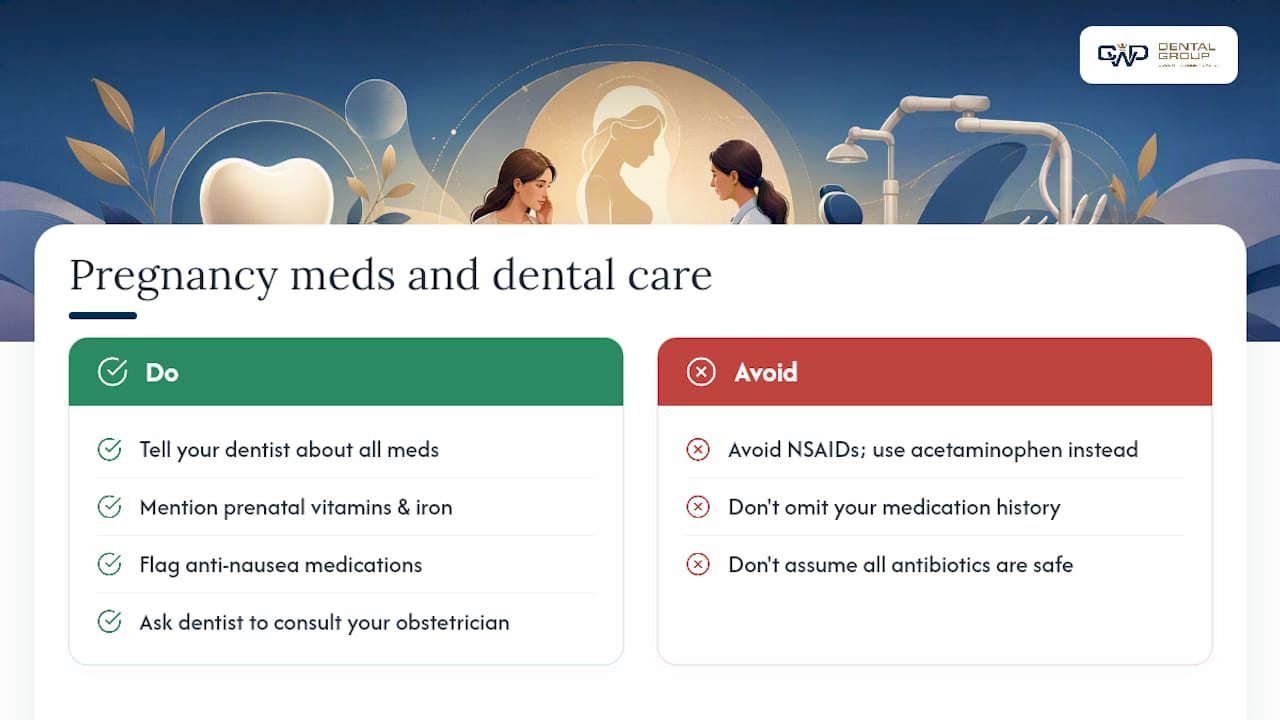
If you're taking prenatal vitamins, iron supplements, or medication for nausea, thyroid conditions, or gestational diabetes, tell your dentist before treatment starts. Some interactions matter more than others, but your dentist can't account for what they don't know about.
Iron supplements, for instance, can cause dry mouth, which raises cavity risk on its own and is worth mentioning if you're getting frequent decay. Anti-nausea medications sometimes affect saliva production too, and saliva is one of your mouth's natural defenses against acid and bacteria.
The bigger conversation is usually about what the dentist prescribes, not what you're already taking. Antibiotic and analgesic choices have to be tailored to pregnancy category and trimester, and InfantRisk's clinical guidance on dental care during pregnancy notes that penicillins, cephalosporins, and clindamycin are generally the safer antibiotic choices, while NSAIDs should be avoided in favor of acetaminophen. This is exactly why dentists lean on your obstetrician for a second opinion before writing a prescription. If you're already managing something like gestational diabetes with medication, that's also worth flagging, since some conditions affect healing time after a procedure like an extraction.
How CWD Dental Group Cares for Pregnant Patients
Pregnant patients don't need to wait days for relief when a toothache flares up. Emergency dental appointments can help ensure a painful tooth is evaluated promptly, rather than delayed for days. Dental providers should coordinate directly with your obstetrician on medication choices and treatment timing, which matters more in pregnancy than at almost any other point in dental care.
Tell the front desk you're pregnant when you book, and mention how far along you are. That single detail shapes everything from chair positioning to imaging protocol to how we talk you through the visit if nausea or anxiety is part of the picture. Our approach to endodontic pain relief reflects the same principle: treat the infection promptly, adjust the process for your comfort, and keep your OB in the loop the whole way.
— Kayle
Need Same-Day Relief for a Toothache During Pregnancy?
CWD Dental Group offers same-day emergency dental appointments in Tallahassee, so a pregnant patient in pain doesn't have to wait a week to be seen or spend that time guessing whether her symptoms are serious. Dental practices following pregnancy-safe protocols for X-rays, anesthetic, and medication will coordinate with your obstetrician when a prescription or treatment plan needs review.
You don't need to diagnose yourself first. If a toothache has lasted more than a day, or you're seeing swelling, fever, or drainage, book a same-day emergency dental visit and let us take it from there. If your situation is less urgent but you want it checked before it becomes a bigger problem, you can also schedule a visit directly online. Prenatal nutrition also plays a supporting role in oral tissue health, and resources like Nu Sante Nutrition's guidance on collagen during pregnancy offer useful context if you're looking at diet alongside dental care.
Where This Guidance Comes From
This article draws on guidance from established public health and dental authorities, not general web advice:
- CDC: Talking to pregnant women about oral health
- American Dental Association: Pregnancy and oral health topics
- HRSA: Oral health and pregnancy
- ACOG Committee Opinion: Oral health care during pregnancy and through the lifespan
- Endodontic management of pregnant patients (PMC)
Every pregnancy carries its own medical details, so talk with both your dentist and your obstetrician before starting any treatment or medication.
This article is general information, not a substitute for advice from a qualified doctor. Consult a qualified healthcare professional about your own circumstances before acting on anything here.
Sources
- CDC: Talking to pregnant women about oral health
- American Dental Association: Pregnancy and oral health topics
- Latest concepts in endodontic management of pregnant patients (PMC)
- HRSA: Oral health and pregnancy