
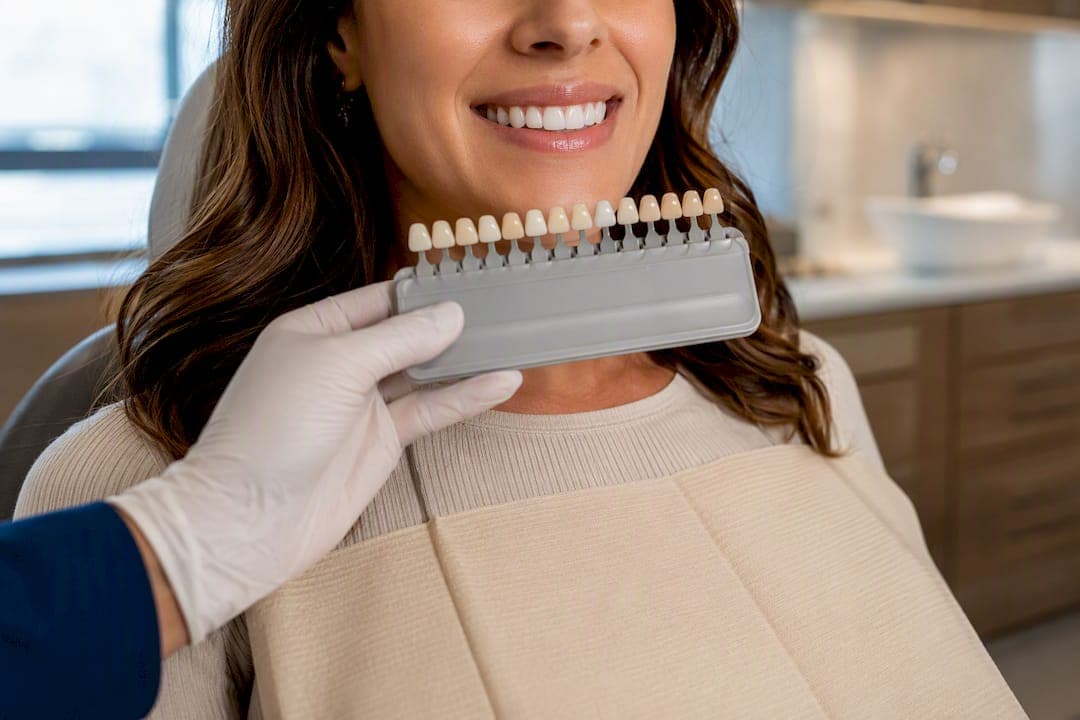
Yes, professional teeth whitening at a dentist works faster and more predictably than drugstore kits, and dental supervision lowers your risk of gum irritation and uneven results. In-office treatments can lighten teeth several shades in a single visit, while dentist-supplied take-home trays deliver similar results over one to two weeks. Expect to pay $300 to $1,000 for in-office treatment or $150 to $600 for trays, depending on your provider and how much staining you're dealing with.
TL;DR:
- Professional whitening treatments rely on high-concentration peroxide gels, with in-office options achieving visible results in one visit.
- Results typically last from six months to three years, depending on habits like coffee and tobacco use, which can cause re-staining.
- Sensitivity and gum irritation are the most common side effects and are usually mild and temporary when managed properly by dentists.
- Costs vary from $150 to $1,000 based on location, practice type, product system, and stain severity, with insurance rarely covering cosmetic whitening.
- Whitening is less effective on restorations like crowns and veneers, and deep intrinsic stains may require veneers or bonding instead.
Table of Contents
- What Happens Chemically During Teeth Whitening
- In-Office Whitening vs. Take-Home Trays
- What to Expect During an In-Office Whitening Visit
- What Teeth Whitening Costs and Why Prices Vary
- How Long Whitening Results Actually Last
- Is Teeth Whitening Safe? Sensitivity and Side Effects
- Are You a Good Candidate for Whitening?
- Choosing a Whitening Approach: What to Ask at Your Consultation
- Why Patients Trust CWD Dental Group With Whitening
- A Clinician's Honest Take on Whitening Expectations
- Ready to Schedule Your Whitening Consultation
- Sources
What Happens Chemically During Teeth Whitening
Professional whitening treatments rely on hydrogen peroxide or carbamide peroxide, both of which release oxygen molecules that break apart the pigmented compounds staining your enamel. Higher concentrations work faster, which is part of why in-office bleaching gels run 35 to 40 percent hydrogen peroxide compared to what you'd find on a pharmacy shelf.
Not every stain responds the same way. Whitening works well on:
- Extrinsic stains: surface discoloration from coffee, wine, tobacco, or aging enamel
- Mild intrinsic stains: some internal discoloration from early tetracycline exposure or fluorosis, though results vary
- Yellow-toned teeth: these typically lighten more dramatically than gray-toned teeth
One thing whitening can't touch: restorations. Crowns, veneers, and bonding material stay exactly the color they were made, so a mouth with visible dental work up front may end up with a mismatched smile after treatment.
In-Office Whitening vs. Take-Home Trays
Dentists offer two main routes to a brighter smile, and the right one depends on how fast you want results and how your teeth typically react to bleaching agents.
Chairside (in-office) whitening uses the strongest peroxide concentrations under direct supervision. A dentist or hygienist applies the gel, sometimes pairs it with a curing light, and you walk out with visible change in under an hour. Some manufacturers, like Philips Zoom, advertise significant shade improvement in one visit., though results depend on your starting shade and stain type.
Take-home trays use milder carbamide peroxide, typically 10 to 22 percent, worn for a few hours daily over one to several weeks. It's slower, but the custom-fit trays double as touch-up tools for months afterward.
Consider these factors:
- Timeline: need results for an event this week? Chairside wins.
- Sensitivity history: if you've had sensitive teeth before, trays let you control exposure gradually.
- Budget: trays generally cost less upfront but require more product over time.
A dentist-supervised whitening process accounts for both options based on your enamel condition and goals.
What to Expect During an In-Office Whitening Visit
The appointment itself is more involved than most patients assume, and that's largely the point.
- Exam and shade documentation. Your dentist checks for cavities, gum disease, or exposed roots, then records your current shade with a guide so you have a real before-and-after comparison.
- Soft-tissue protection. A rubber dam or painted-on barrier shields your gums and lips, since protecting soft tissue from gel contact is one of the clearest safety advantages of professional treatment.
- Gel application in cycles. The peroxide gel goes on for 15 to 20 minutes at a time, gets removed, and gets reapplied, often two to three times per visit.
- Optional light activation. Some systems use a curing light, though research suggests chemical activation alone performs comparably in many cases rather than the light itself driving the results.
- Final rinse and aftercare notes. Expect mild tingling for a day or two, and a recommendation to avoid dark foods and drinks for 24 to 48 hours while enamel pores are still open.
Most sessions run 60 to 90 minutes total.
Pro Tip: Ask your dentist to photograph your shade guide result. It gives you an objective way to track fading months later instead of guessing.
What Teeth Whitening Costs and Why Prices Vary
Cost is usually the first question patients ask, and the honest answer is: it depends on more than just the whitening product.
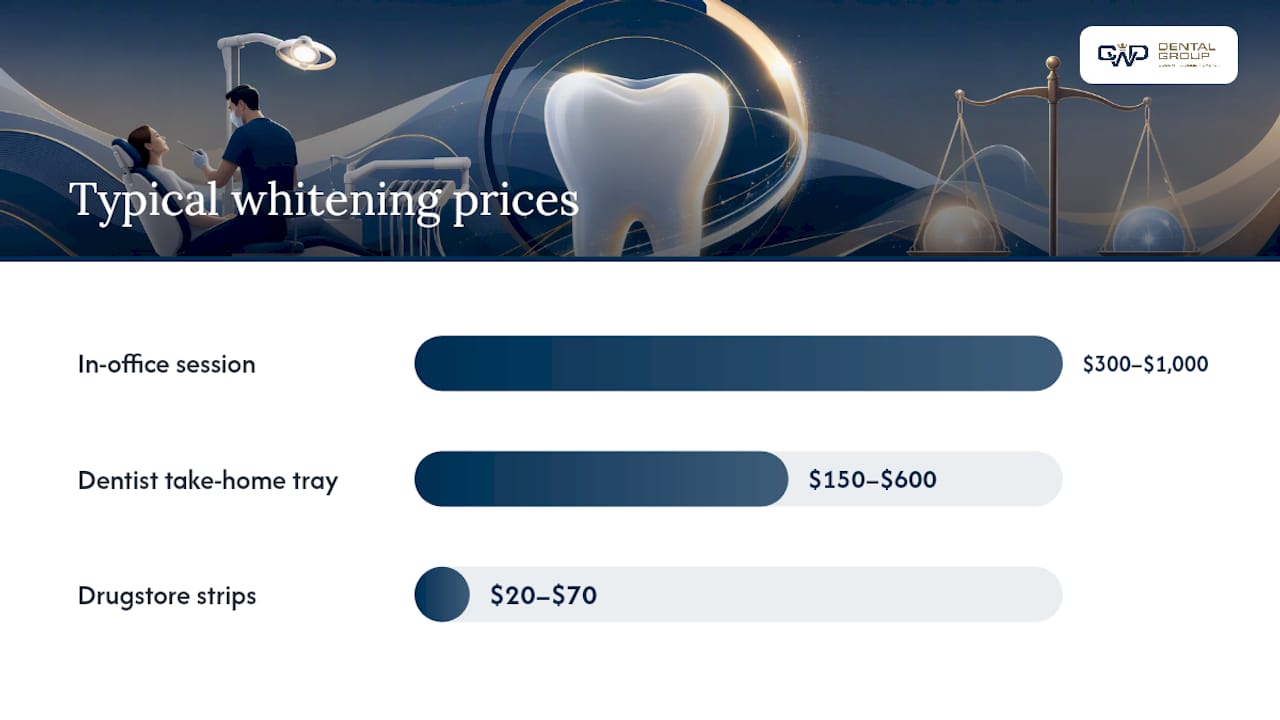
In-office sessions in the United States typically run $300 to $1,000 per visit, while dentist-supplied take-home trays cost $150 to $600, compared to $20 to $70 for drugstore strips. That gap reflects real differences in strength, supervision, and customization, not just markup.
Price depends on:
- Geographic location and local cost of living
- Practice type, since specialty cosmetic practices often charge more than general dentistry offices
- Product system used, as branded systems can cost more than generic professional-grade gels
- Extent of staining, since heavier discoloration may need more applications
Dental insurance almost never covers whitening since it's classified as cosmetic, not medically necessary. Many patients use an HSA or FSA if their plan allows cosmetic dental spending, and some practices offer financing plans for larger cosmetic treatment packages that include whitening.
How Long Whitening Results Actually Last
Your teeth reach their final shade within a day or two of treatment, once temporary dehydration from the gel settles and enamel rehydrates naturally.
Longevity is where expectations often go wrong. Results can last anywhere from six months to roughly three years, and the spread comes down almost entirely to habits, not the treatment itself. Coffee, red wine, tobacco, and dark sauces all re-stain enamel over time, undoing progress faster than most patients expect.
To stretch your results:
- Schedule periodic touch-ups, whether a quick in-office session or a few nights back in your trays
- Keep your custom trays if you got them, since they're reusable for spot treatments
- Use whitening toothpaste between touch-ups to slow new surface staining
For a deeper breakdown of what actually extends results versus what's marketing spin, this guide to whitening maintenance is worth a look, and it's also worth understanding why "permanent" whitening claims don't hold up before you commit to any promise that sounds too good to be true.
Is Teeth Whitening Safe? Sensitivity and Side Effects
Sensitivity is the most common complaint, and it's rarely serious. Systematic reviews confirm that tooth sensitivity and gum irritation are the most frequently reported side effects of bleaching, and both are typically mild and temporary, usually fading within a day or two of treatment.
Higher peroxide concentrations tend to produce faster results but also a higher chance of sensitivity, which is exactly why clinical oversight matters. Dentists manage this risk with:
- A pre-treatment exam to rule out cavities or exposed dentin
- Concentration adjustments based on your enamel condition
- Desensitizing agents like potassium nitrate applied before or after treatment
- Proper isolation of gums to prevent chemical burns
Whitening should typically be postponed if you have active tooth decay, untreated gum disease, or are pregnant, since limited safety data exists for that group. The ADA recommends checking with a licensed dentist before starting any whitening treatment precisely because these contraindications aren't always obvious to patients on their own.
Pro Tip: If sensitivity hits hard after a session, a pea-sized dab of sensitivity toothpaste rubbed directly on teeth (not brushed) before bed can calm nerves faster than brushing alone.
Are You a Good Candidate for Whitening?
Most healthy adults with mostly surface-level staining are excellent candidates for professional whitening, but the treatment has real limits worth knowing before you book.
Good candidates typically have:
- Healthy gums and no untreated cavities
- Mostly extrinsic staining from food, drinks, or tobacco
- Natural teeth in the smile zone, since crowns and veneers won't lighten
Whitening has limitations too. Deep intrinsic stains from childhood antibiotic use or trauma often respond poorly to bleaching. In those cases, veneers or bonding may address discoloration whitening can't touch. An exam before treatment isn't just a formality. It's how your dentist rules out decay or gum disease that whitening gel would otherwise aggravate.
Choosing a Whitening Approach: What to Ask at Your Consultation
Walking into a consultation with the right questions saves you money and disappointment.
- Decide your priorities first. Rank speed, sensitivity risk, budget, and whether you have visible restorations that won't match a new shade.
- Ask about expected shade change. A specific number of shades, not a vague "brighter smile" promise.
- Ask what concentration will be used. Higher isn't automatically better if your teeth are sensitivity-prone.
- Ask how many applications or sessions are included. Some quoted prices cover one visit; others include a touch-up kit.
- Get a full cost breakdown. Confirm what's included versus what costs extra, like desensitizing treatments.
- Ask about the follow-up plan. How and when should you expect touch-ups?
Watch for red flags: heavy pressure to buy an expensive package on the spot, or guarantees of "permanent" results without any explanation of maintenance. Neither holds up to how bleaching chemistry actually works. This treatment decision guide walks through the same checklist in more depth.
Why Patients Trust CWD Dental Group With Whitening
Cwddentalgroup built its Tallahassee practice around comfort and accessibility, including same-day emergency appointments when a dental issue can't wait. That patient-centered approach carries into cosmetic care too, where whitening sits alongside a full range of services from routine exams to advanced restorative work. Patients get consistent oversight from the same team handling their broader dental health, not a one-off cosmetic transaction disconnected from the rest of their care.
A Clinician's Honest Take on Whitening Expectations
Clinical oversight matters here in ways that get glossed over in whitening ads. A dentist who checks your gums and enamel before treatment isn't being cautious for the sake of it. They're preventing a bad reaction before it happens, not treating one afterward. Sensitivity is manageable when it's anticipated, and most patients are surprised by how mild it actually is once someone experienced walks them through it. Realistic expectations beat dramatic promises every time. Talk to your dentist about what your teeth can actually do before you commit to any timeline or shade goal.
— Kayle
Ready to Schedule Your Whitening Consultation
A quality dental practice offers cosmetic consultations and ongoing dental care under the same roof, with same-day appointments available if something urgent comes up first.

If you're ready to find out what shade change is realistic for your teeth, scheduling a visit starts with a straightforward exam, not a sales pitch. Patients dealing with an urgent issue before they can think about cosmetic work can also check same-day emergency appointment availability. Either way, the next step is simple: book the visit and get a plan built around your actual teeth, not a generic package.
This article is general information, not a substitute for advice from a qualified doctor. Consult a qualified healthcare professional about your own circumstances before acting on anything here.
Sources
- Professional teeth whitening cost (Colgate)
- Teeth whitening (ADA)
- Systematic review on bleaching side effects (PMC)
- Teeth Whitening Cost 2026: In-Office vs At-Home vs OTC