
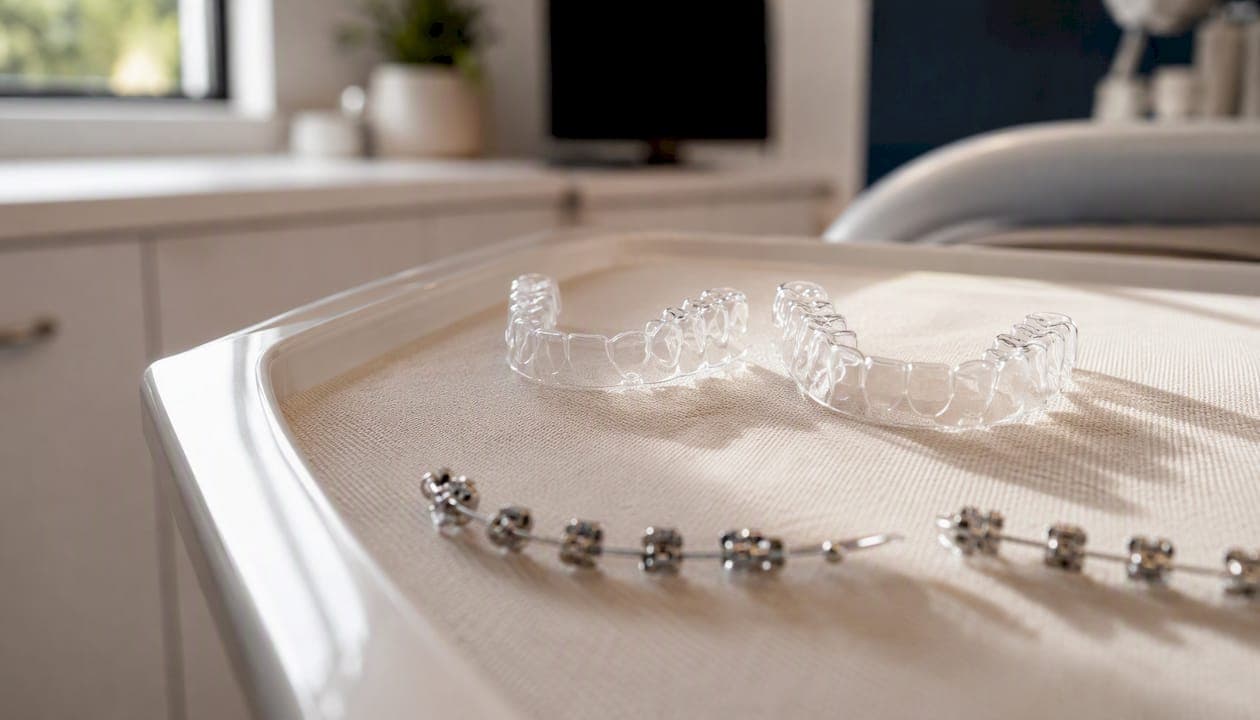
Metal braces, ceramic braces, lingual braces, fixed functional appliances (like the Forsus spring and palatal expanders), and clear aligners (Invisalign Teen) are the five main orthodontic options for teenagers in the U.S. The short rule: choose by case complexity first, then by your teen's willingness to wear and care for a removable device. Most active treatment runs roughly 12–24 months, and the American Association of Orthodontists (AAO) recommends a screening by age 7 so any developing issues are caught early, even though most teens don't start active treatment until 11–14.
- Best for complex cases: Traditional metal braces (most predictable, no compliance required)
- Best for discretion: Clear aligners (Invisalign Teen) for mild-to-moderate cases, or lingual braces for near-invisible fixed treatment
- Best if your teen won't reliably wear a removable device: Ceramic or metal fixed braces, or a fixed functional appliance when bite correction is also needed
Key Takeaways
Match the treatment to the case first, then to your teen's compliance level and your budget, because those three factors determine which orthodontic option will actually deliver the result.
| Point | Details |
|---|---|
| Start with a consult and records | No accurate plan or timeline exists without clinical X-rays and scans; book an evaluation before comparing options. |
| Match treatment to case complexity | Metal or ceramic fixed braces suit complex cases; clear aligners work well for mild-to-moderate cases with a compliant teen. |
| Most treatment runs 18–24 months | Simple cases can finish in 12 months; complex ones extend beyond 24; your orthodontist can only confirm after records. |
| Retainers are long-term | Full-time wear for 3–6 months post-treatment, then nights-only indefinitely; skipping retainers risks relapse. |
| Cwddentalgroup for Tallahassee families | Offers Invisalign Teen, braces, retainers, and same-day emergency support for appliance problems during active treatment. |
Table of Contents
- Why adolescence is such a good time for orthodontic treatment
- What are the main teen orthodontic options available today?
- How long does teen orthodontic treatment actually take?
- How do you choose the right orthodontic option for your teen?
- What does teen orthodontic treatment cost in the U.S.?
- Daily care, foods to avoid, and sports protection
- What happens after braces come off? Retainers explained
- What to expect at an orthodontic consult
- Sources
Why adolescence is such a good time for orthodontic treatment
Adolescence, roughly ages 11–14 for most teens, is often the most effective window for orthodontic treatment. The reason is straightforward: nearly all permanent teeth are present, and the jaw is still growing. Active jaw growth means bone is more responsive to the gentle, sustained pressure that braces and aligners apply. Moving teeth through a still-developing jaw typically takes less force and less time than doing the same work in a fully mature adult skeleton.
The AAO recommends a screening by age 7 not because most 7-year-olds need braces, but because an orthodontist can spot crowding, bite problems, or jaw-development concerns early enough to plan ahead. Some children benefit from Phase 1 (early) treatment around ages 7–10 to guide jaw growth or create space before all permanent teeth arrive. Most, though, move directly to Phase 2 comprehensive treatment in early adolescence.
Statistic to know: According to RuCo Braces, most teens begin orthodontic treatment between ages 11 and 14, the window when permanent teeth are present and jaw growth still assists tooth movement.
There's also a practical injury-prevention angle. Early intervention for severely protruding upper front teeth can reduce the risk of trauma to those teeth, according to MySpecialtyDentist's orthodontic guidance. For families with a teen whose front teeth protrude noticeably, that's a concrete reason not to wait. For a broader look at age-appropriate dental care by developmental stage, that resource walks through what to expect from childhood through the teen years.
What are the main teen orthodontic options available today?
This is where the teen orthodontic options overview gets practical. Each appliance type works differently, suits different cases, and places different demands on your teenager's daily routine.
Traditional metal braces
Stainless steel brackets bonded to each tooth, connected by archwires that are periodically tightened or replaced. They apply continuous pressure without any action required from your teen. Metal braces are frequently the most reliable and predictable option for complex cases, including significant crowding, large bite discrepancies, and rotations that aligners struggle to correct.
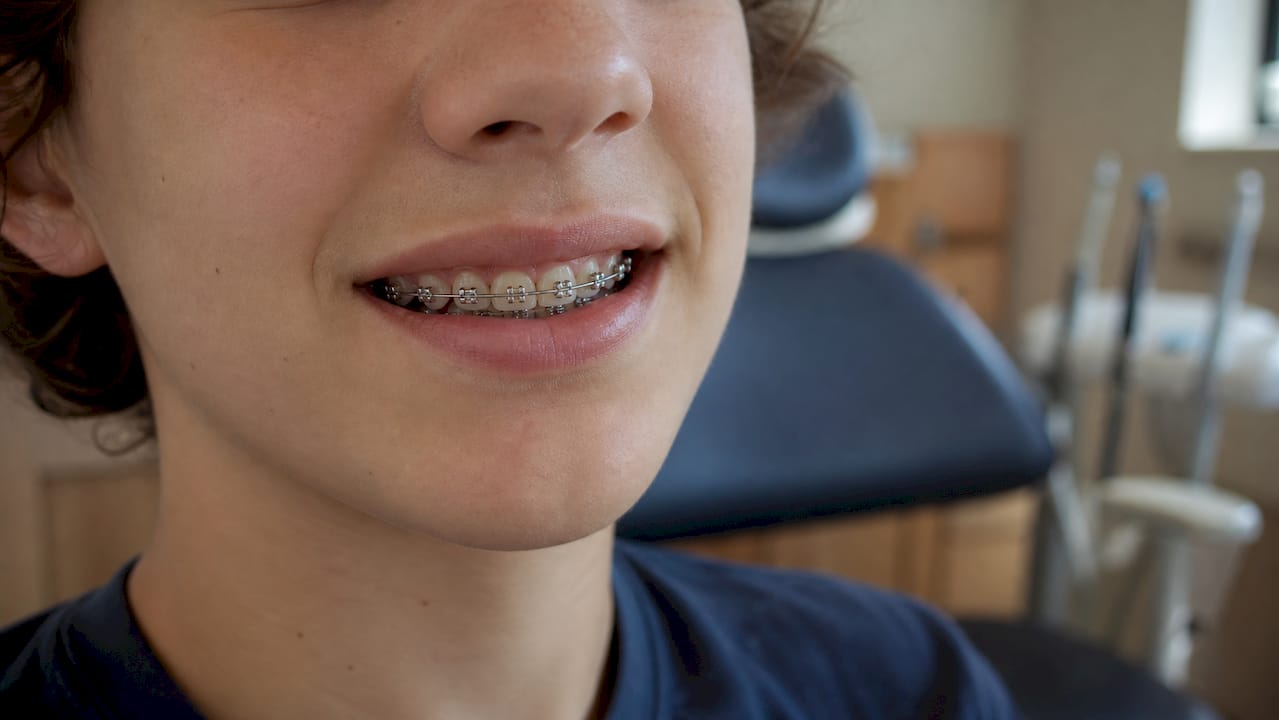
Pros: Most effective for complex tooth movement; no compliance required; typically the lowest cost option; durable. Cons: Most visible option; food restrictions (no hard, sticky, or chewy foods); harder to clean around; some initial discomfort after adjustments. Typical U.S. cost: $3,000–$5,500
Ceramic (clear) braces
Same mechanics as metal braces, but the brackets are tooth-colored or clear ceramic. They blend with the teeth far better than metal, though the brackets can stain from coffee, tea, or certain foods over time.
Pros: Much less visible than metal; same reliability and control as fixed metal braces; good for teens who want a lower-profile look without the compliance demands of aligners. Cons: More expensive than metal; brackets can stain; slightly more fragile; still require food restrictions. Typical U.S. cost: Generally $4,000–$6,000, though this varies by case and provider.
Lingual braces
Brackets bonded to the inside (tongue-side) surfaces of the teeth, making them completely invisible from the front. They offer the same mechanical control as standard fixed braces.
Pros: Truly invisible from the outside; no compliance issues; effective for most case types. Cons: Higher cost than other fixed options; can cause tongue irritation, especially early on; speech adjustment period; harder to clean; not all orthodontists place them. Lingual braces are an invisible but higher-cost option compared to other fixed appliances. Typical U.S. cost: Often $8,000–$12,000+, depending on the case.
Clear aligners (Invisalign Teen)
A series of custom-made, removable clear plastic trays worn 20–22 hours per day. Each tray moves teeth incrementally. Invisalign Teen includes compliance indicators (small blue dots that fade with wear) so parents and orthodontists can verify actual wear time. The system also includes replacement aligners for the inevitable lost tray.
Pros: Nearly invisible; removable for eating, brushing, and sports; fewer emergency appointments for broken brackets; hygiene is generally easier. Cons: Requires strong daily compliance (20–22 hours); not ideal for complex rotations or severe bite issues; lost aligners add cost; results depend entirely on consistent wear. Typical U.S. cost: $5,000–$7,000 for most teen cases.
For more on how clear aligners compare to fixed braces for younger patients, the Invisalign for Kids guide at Cwddentalgroup covers the key differences.
Fixed functional appliances: Forsus and palatal expanders
These are not standalone alignment systems. Fixed functional appliances like the Forsus spring and palatal expanders are used when bite or jaw-position correction is needed, typically in combination with braces. The Forsus is a spring-loaded device that corrects overbites by repositioning the lower jaw. A palatal expander widens the upper jaw to create space and correct crossbites. Both are fixed in place, so compliance is not a factor.
Best for: Teens with overbites, underbites, crossbites, or narrow arches that need jaw-level correction alongside tooth alignment.
Pro Tip: If your teen's orthodontist recommends a Forsus or expander, ask specifically what problem it solves and what happens to treatment if it's skipped. Understanding the "why" behind each appliance helps you have a more productive conversation at the consult.
Comparison at a glance
| Option | Typical treatment length | Visibility | Best for | Daily responsibility | Estimated cost (U.S.) | Appointment frequency |
|---|---|---|---|---|---|---|
| Traditional fixed braces | 18–24 months | High (metal) | Complex cases, all severities | Low (fixed) | $3,000–$5,500 | Every 4–8 weeks |
| Ceramic fixed braces | 18–24 months | Low (tooth-colored) | Moderate to complex; aesthetics-conscious | Low (fixed) | $4,000–$6,000 | Every 4–8 weeks |
| Lingual braces | 18–24 months | None (inside teeth) | Most cases; maximum discretion | Low (fixed) | $8,000–$12,000+ | Every 4–8 weeks |
| Clear aligners (Invisalign Teen) | 12–18 months (mild/moderate) | Very low (clear) | Mild to moderate; compliant teens | High (must wear 20–22 hrs/day) | $5,000–$7,000 | Every 6–10 weeks |
| Fixed functional appliances | Varies (used alongside braces) | Moderate (inside mouth) | Bite/jaw correction adjunct | None (fixed) | Included in overall plan | Per braces schedule |
How long does teen orthodontic treatment actually take?
Most standard teen cases fall in the 18–24 month range, though simpler cases can wrap up in 12 months and more complex ones extend beyond 24. No orthodontist can give you a reliable timeline without clinical records, which is why the estimate you get at a consult may differ from what you read online.
The typical sequence looks like this:
- Records appointment: Photos, X-rays, digital scans or study models. This is where the orthodontist maps the actual plan.
- Banding/first fit: Brackets are bonded (or aligners delivered). Expect 1–3 days of soreness as teeth begin to respond.
- Adjustment appointments: Every 4–10 weeks depending on appliance type. Fixed braces typically need visits every 4–8 weeks; aligner patients often come in every 6–10 weeks since trays are changed at home.
- Debanding: Brackets removed, teeth polished, retainers delivered.
- Retention phase: Retainers worn full-time initially, then nights-only long-term.
For soreness after a new wire or a new aligner tray, soft foods for 2–3 days and over-the-counter analgesics (ibuprofen or acetaminophen, as directed) typically manage discomfort well. The soreness usually peaks around 24–48 hours and fades on its own.
| Appliance type | Typical check interval |
|---|---|
| Metal or ceramic fixed braces | Every 4–8 weeks |
| Lingual braces | Every 4–8 weeks |
| Clear aligners (Invisalign Teen) | Every 6–10 weeks |
| Fixed functional appliances (Forsus, expander) | Per braces schedule |
How do you choose the right orthodontic option for your teen?
Start with case complexity, because that narrows the field before aesthetics or cost even enter the conversation. A teen with a severe overbite and significant crowding has fewer options than one with mild spacing. Once complexity is settled, these five factors drive the rest of the decision:
- Case complexity and diagnosis. Ask the orthodontist: what is the primary problem being corrected, and which appliances can reliably fix it? Fixed appliances remain the safest choice for cases requiring complex tooth movement because they work continuously without depending on patient memory.
- Teen maturity and compliance. Be honest. A teen who forgets their retainer, loses things regularly, or resists routines is not a strong candidate for aligners. Compliance is the single biggest risk factor for aligner success in teens; when parents and orthodontists have a monitoring plan in place, outcomes improve.
- Aesthetics priority. If your teen is strongly motivated by appearance, that's a real factor. Ceramic braces or aligners may improve their cooperation with treatment, which matters.
- Activities. Contact sports players need orthodontic mouthguards with fixed braces or must remove aligners before play. Wind instrument players (flute, trumpet, clarinet) often find fixed braces affect embouchure initially; aligners can be removed for practice.
- Budget and insurance. Metal braces are typically the most affordable. Lingual braces and clear aligners cost more. Know your insurance orthodontic maximum before the consult.
Questions to bring to the consult
A good orthodontist welcomes these. If any question gets a vague or dismissive answer, that's a signal.
- What is the specific diagnosis, and what are you trying to correct?
- Which treatment options are appropriate for my teen's case, and why?
- What is the realistic timeline, and what could extend it?
- What does the retention plan look like after active treatment?
- What happens if a bracket breaks or an aligner is lost?
- What is the total fee, what does it include, and what are the payment options?
- How often will we need appointments, and what happens at each one?
- How do you measure whether treatment is on track?
Red flags at a consult: vague timelines before records are taken, pressure to commit to a single option without discussing alternatives, no clear retention plan, or a fee quote given without a clinical exam.
For evaluating aligner readiness specifically, have an honest conversation with your teen about what 20–22 hours of daily wear actually means. Some orthodontists offer a short trial period or use the compliance indicators in Invisalign Teen to verify wear before committing to the full plan.
What does teen orthodontic treatment cost in the U.S.?
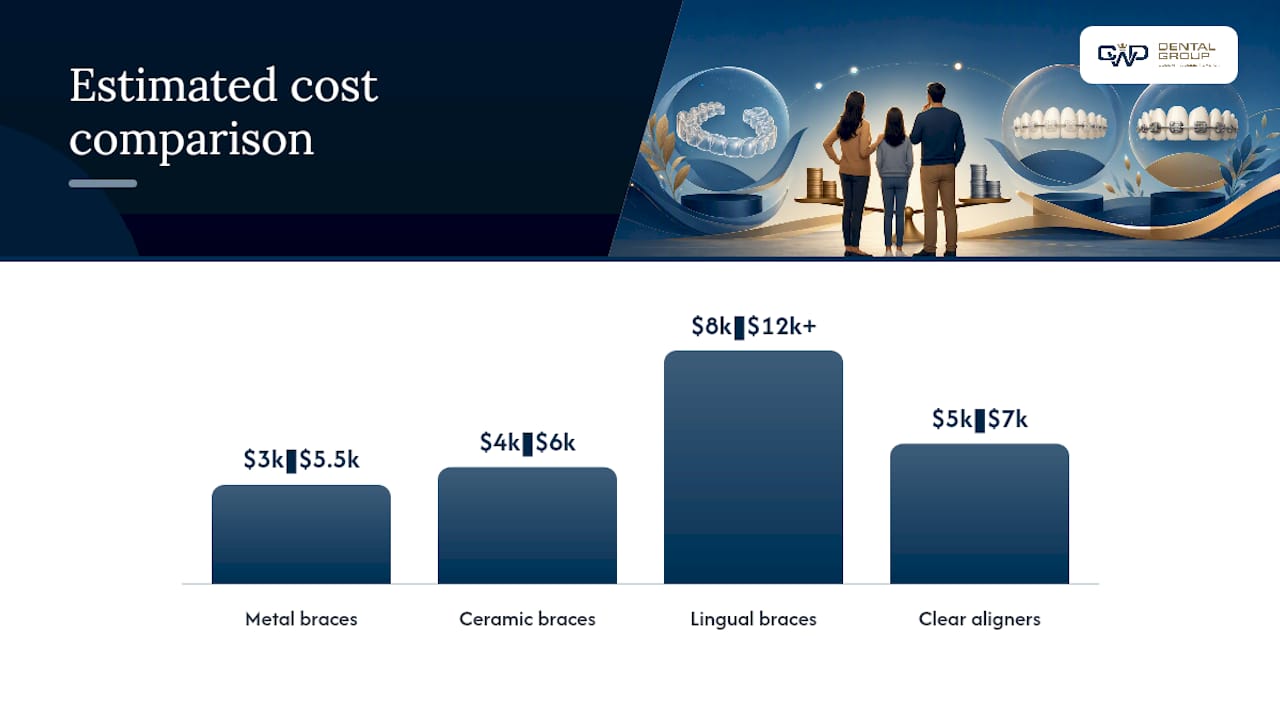
Cost varies by appliance type, case complexity, and geographic market. The ranges below reflect typical U.S. figures, not guarantees, and your teen's specific case may fall outside them.
| Appliance type | Typical U.S. cost range | Key cost drivers |
|---|---|---|
| Metal braces | $3,000–$5,500 | Case complexity, treatment length |
| Ceramic braces | $4,000–$6,000 | Bracket material, case complexity |
| Lingual braces | $8,000–$12,000+ | Placement difficulty, lab fees |
| Clear aligners (Invisalign Teen) | $5,000–$7,000 | Number of trays, case complexity |
Sources: RuCo Braces cost data.
How insurance works for orthodontics
Most dental insurance plans with orthodontic coverage include a lifetime orthodontic maximum, typically $1,000–$2,000 per covered person, though some employer plans go higher. That maximum applies once per lifetime, regardless of how many courses of treatment your teen has. Key things to verify with your insurer before starting:
- Is orthodontic coverage included in your plan, or is it a separate rider?
- What is the lifetime maximum, and has any of it been used?
- Is the orthodontist in-network? Out-of-network providers often still receive partial coverage, but your out-of-pocket share rises.
- Does coverage apply to clear aligners, or only to traditional braces?
- Can HSA or FSA funds be used for the remaining balance? (Generally yes, for orthodontic treatment.)
Financing options
Most orthodontic offices offer in-house monthly payment plans spread over the treatment period. Third-party medical credit options are also widely used. HSA and FSA funds can typically cover orthodontic fees not paid by insurance. Before treatment begins, ask for a written total-fee estimate that itemizes what is and isn't included (retainers, emergency visits, replacement aligners).
Daily care, foods to avoid, and sports protection
Both fixed braces and clear aligners require consistent daily attention. The consequences of skipping it, decalcification, cavities, and gum problems, can outlast the orthodontic treatment itself.
For fixed braces (metal, ceramic, lingual)
- Brush after every meal using a soft-bristle brush; angle the brush toward the gumline and around each bracket.
- Use a floss threader or orthodontic flosser to clean between teeth daily. Interdental brushes and floss threaders are particularly effective for cleaning around brackets and wires.
- Consider a water flosser as a supplement, not a replacement, for flossing.
- Continue professional cleanings every 6 months, or more frequently if the orthodontist recommends it.
Foods to avoid: Hard foods (ice, hard candy, raw carrots), sticky foods (caramel, gummy candy, taffy), chewy foods (bagels, tough meat), and anything that requires biting with front teeth (corn on the cob, whole apples). These break brackets and bend wires.
For clear aligners
- Remove aligners before eating or drinking anything other than water.
- Rinse aligners with cool water when removed; brush them gently with a soft toothbrush (no toothpaste, which can scratch the plastic).
- Never rinse or soak aligners in hot water, which warps the plastic.
- Brush and floss before reinserting trays to avoid trapping food against teeth.
Sports and instruments
For contact sports, an orthodontic mouthguard (available at sporting goods stores and through the orthodontist) fits over braces and protects both the appliance and soft tissue. With aligners, remove them before contact play and store them in their case, never in a pocket or wrapped in a napkin.
Wind instrument players typically need a short adjustment period with fixed braces. Aligners can be removed for practice, which many musicians prefer.
If something breaks
- Broken bracket: Call the orthodontist's office. If the bracket is still attached to the wire, leave it in place and cover any sharp edge with orthodontic wax. Most broken brackets are not emergencies but should be repaired within a few days.
- Poking wire: Use the eraser end of a pencil to gently push the wire flat, or cover it with wax. Call the office.
- Lost aligner: Contact the orthodontist immediately. Depending on where you are in the sequence, they may advise wearing the previous tray, moving to the next, or ordering a replacement. Never skip multiple trays without guidance.
Cwddentalgroup offers same-day emergency appointments for appliance problems, so Tallahassee families have a fast path to care when something goes wrong mid-treatment.
What happens after braces come off? Retainers explained
Retainers are not optional. Without them, teeth shift back toward their original positions, sometimes within weeks. Retention is a long-term commitment: most orthodontists recommend full-time wear for the first 3–6 months after debanding, followed by nights-only wear indefinitely.
Types of retainers
Fixed (bonded) retainer: A thin wire bonded to the back surfaces of the front teeth. Invisible, requires no daily decision-making, and works continuously. Requires careful flossing with a threader. Can last many years if maintained.
Removable clear retainer (Essix-style): A clear plastic tray similar in appearance to an aligner. Easy to clean, nearly invisible when worn, but depends on the teen actually wearing it.
Hawley retainer: A traditional wire-and-acrylic retainer. Durable and adjustable, but more visible than clear options.
Many orthodontists use a combination: a fixed retainer on the lower front teeth (where relapse is most common) and a removable clear retainer for the upper arch.
Pro Tip: Link retainer wear to an existing nightly habit, like brushing teeth before bed. Keep the retainer case on the bathroom counter next to the toothbrush. Teens who have a specific "retainer goes in after brushing" routine are far more consistent than those who treat it as a separate, optional step.
What to expect at an orthodontic consult
A proper first consult includes clinical records: photographs, panoramic and cephalometric X-rays, and digital scans or study models. No reputable orthodontist should give you a treatment plan or a timeline without these. The records are what allow an accurate diagnosis, not a visual estimate.
At a well-run consult, you should leave with:
- A clear diagnosis (what is being corrected and why)
- At least two treatment options with pros, cons, and realistic timelines for each
- A written total-fee estimate that includes retainers and emergency visits
- An explanation of the retention plan
- A description of risks and potential side effects (root resorption, decalcification, relapse)
- Financing options and insurance verification steps
- A clear next step to book treatment if you decide to proceed
Advanced diagnostic technology, including digital scans and cone-beam imaging, allows orthodontists to plan treatment with greater precision than traditional impressions alone.
Cwddentalgroup's patient-centered approach means teens are treated with the same attention to comfort and communication as adult patients. The practice's same-day emergency capability is particularly relevant during active orthodontic treatment, when a broken bracket or poking wire needs fast attention.
Look for these signals at any consult: the orthodontist takes records before recommending a plan, explains alternatives without pressure, and provides a written fee estimate. Credentials (board certification, AAO membership) should be visible or easy to confirm.
What actually matters when choosing teen orthodontics
Most parents walk into an orthodontic consult focused on cost and appearance. Those matter, but they're the wrong starting point. The right starting point is case complexity, because it determines which options are actually on the table for your teen's specific bite and crowding pattern. Aesthetics and cost are decisions you make within that narrowed field, not before it.
The other thing parents consistently underestimate is the compliance factor with aligners. Invisalign Teen is a genuinely good system for the right candidate, but "the right candidate" means a teen who will reliably wear trays 20–22 hours a day, every day, for the full treatment period. That's not a character judgment; it's a practical assessment. If you're uncertain, fixed braces deliver the result without that variable. The outcome is what matters, not the appliance.
Before the first consult, prepare your teen by framing it as a fact-finding visit, not a commitment. Bring a list of questions, your insurance card, and any previous dental records or X-rays. Let your teen voice their own preferences during the appointment. Orthodontists who work well with teenagers know how to involve them in the decision, and that buy-in makes a real difference in compliance throughout treatment.
Teen orthodontics at Cwddentalgroup in Tallahassee
Families in Tallahassee looking for a trusted local option for teen orthodontic care will find Cwddentalgroup offers Invisalign (including Invisalign Teen), braces, retainers, and the full range of follow-up support that active orthodontic treatment requires. What sets the practice apart for families mid-treatment is same-day emergency availability: when a bracket breaks the night before a school event or an aligner goes missing, you're not waiting a week for a callback.
To schedule a consultation, bring your teen's insurance card, any existing dental X-rays or records, and a short list of questions about their specific case. The team will take clinical records at the first visit and walk you through treatment options with realistic timelines and a written fee estimate before you commit to anything. Book a consultation or emergency appointment directly through the practice page.
Sources
- American Association of Orthodontists (AAO)
- Braces for Teens: Types, Timeline and Costs in 2026 — RuCo Braces
- What Braces Fix for Teens & Why They’re Worth It — Schimmel Orthodontics
- What Are The Best Braces Options For Teenagers?: A Complete Guide - Davis & Goldberg Orthodontics
This article is general information, not a substitute for advice from a qualified doctor. Consult a qualified healthcare professional about your own circumstances before acting on anything here.