

Interdental cleaning is defined as the daily removal of plaque and food debris from the spaces between teeth that a toothbrush cannot reach. These tight gaps, called interproximal spaces, cover roughly 40% of each tooth's surface. Leaving them uncleaned allows plaque to build up, which the American Dental Association identifies as a principal cause of gingivitis, tooth decay, and tartar formation. Dental authorities recommend cleaning these spaces at least once daily for all ages, including people with implants and orthodontic appliances. Understanding what is interdental cleaning explained properly is the first step toward a genuinely complete oral hygiene routine.
What is interdental cleaning, and why does it matter?
Interdental cleaning is the essential daily process of removing plaque and food debris from spaces between teeth that toothbrushes cannot reach. A standard toothbrush cleans the front, back, and biting surfaces of teeth. The sides of each tooth, where they contact their neighbors, stay untouched without a dedicated interdental tool.
Plaque is a sticky bacterial film. When it sits undisturbed between teeth, it hardens into tartar within 24–48 hours. Tartar cannot be removed by brushing alone. It requires professional scaling, which is exactly why dental cleanings prevent disease that home care alone cannot fully control.
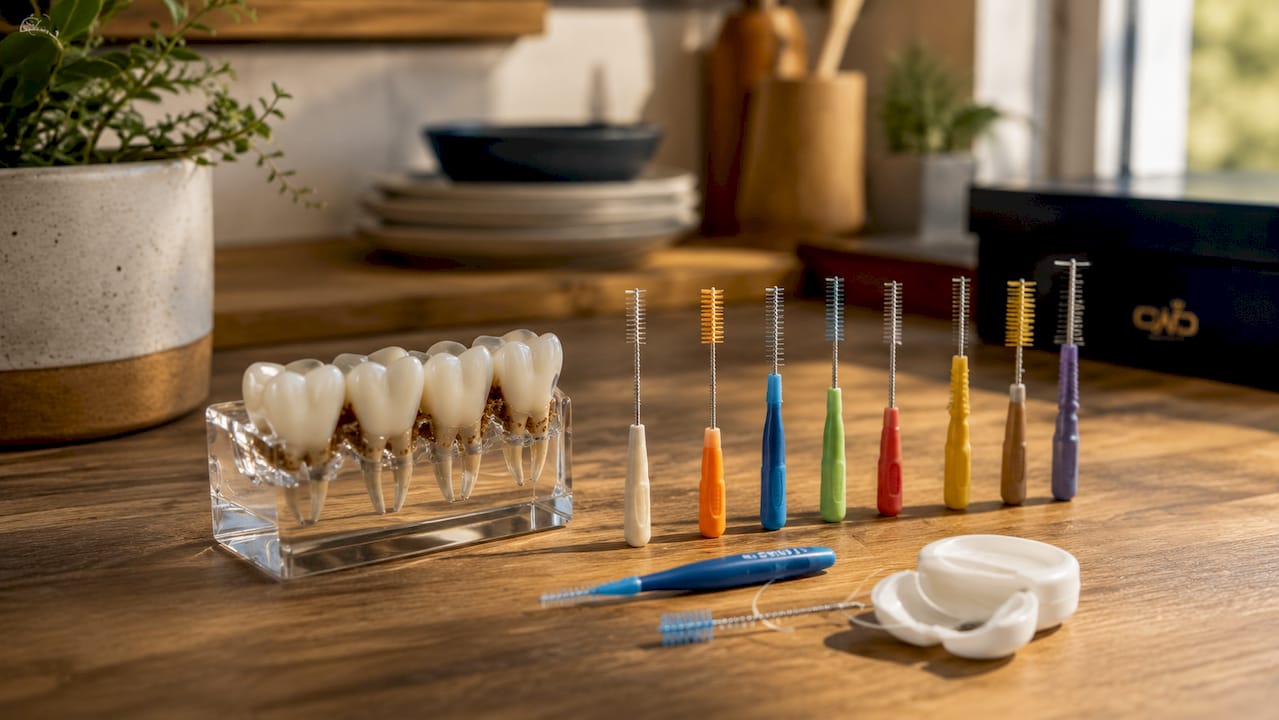
The consequences of skipping interdental cleaning are concrete. Gum disease begins with gingivitis, which causes redness, swelling, and bleeding. Left untreated, gingivitis progresses to periodontitis, a condition that destroys the bone supporting your teeth. Research also links periodontal disease to systemic health conditions including cardiovascular disease and diabetes.
What are the main interdental cleaning methods?
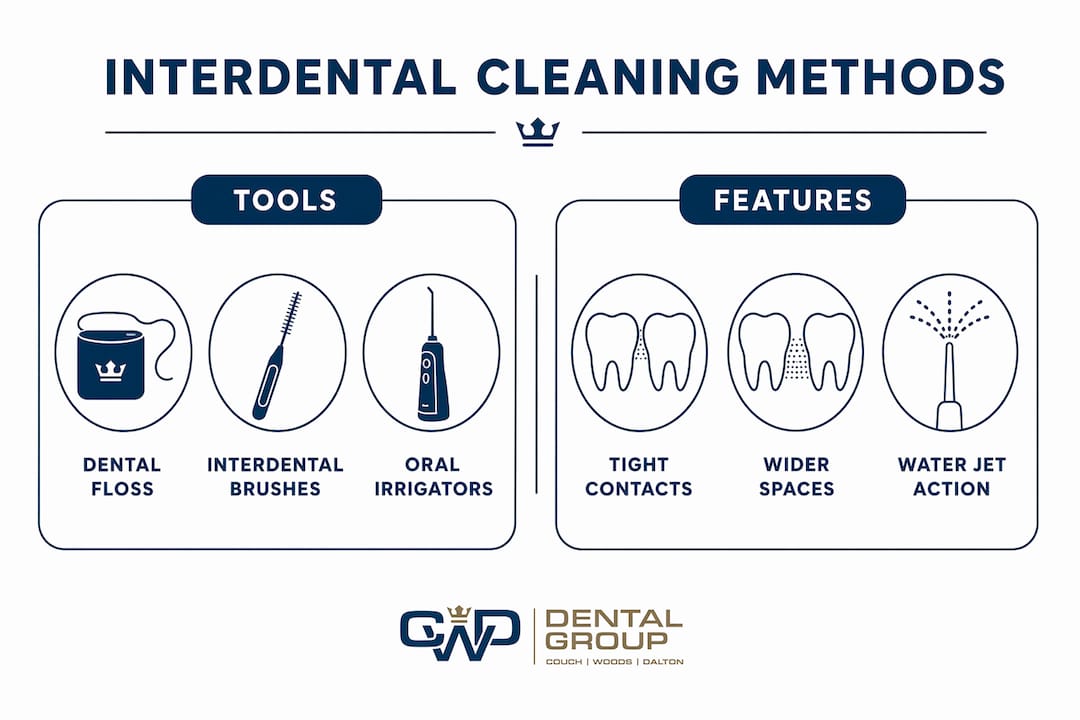
Three primary interdental cleaning methods exist: dental floss, interdental brushes, and oral irrigators. Each suits a different set of needs, and the right choice depends on your tooth spacing, dexterity, and personal preference.
Dental floss
Dental floss is the traditional standard for cleaning between teeth. It works by sliding a thin thread into the contact point between two teeth and curving it against each tooth surface to scrape away plaque. Floss reaches deep into the gum sulcus, the pocket where the gum meets the tooth, making it effective for tight contacts. The main drawback is technique sensitivity. Snapping floss into the gums or skipping the curving motion reduces its effectiveness significantly.
Interdental brushes
Interdental brushes are small, cone-shaped or cylindrical brushes on a wire handle. They fit into the open spaces between teeth and clean multiple surfaces simultaneously. An in vitro study showed interdental brushes achieved 81.2% (±18.3%) cleaning efficacy after powered toothbrushing. That figure outperforms manual picks and makes interdental brushes the preferred tool for most adults with normal to wider interdental spaces.
Oral irrigators
Oral irrigators use a pressurized stream of water to flush debris from between teeth and along the gumline. They do not remove plaque as thoroughly as brushes or floss, but they offer a practical option for people with limited manual dexterity, those wearing braces, or patients with dental implants. Dental professionals recommend tailoring tool choice to individual dexterity, with oral irrigators particularly suited to those who struggle with fine motor tasks.
Method comparison at a glance
| Method | Best for | Plaque removal | Ease of use |
|---|---|---|---|
| Dental floss | Tight contacts, gum sulcus | High with good technique | Moderate |
| Interdental brushes | Open spaces, most adults | High, consistent | Easy to moderate |
| Oral irrigators | Braces, implants, low dexterity | Moderate | Easy |
Pro Tip: Use interdental brushes as your primary tool and keep floss for tight contacts where a brush will not fit. This combination covers the widest range of spaces.
How to clean interdental spaces step by step
Proper technique matters more than the tool you choose. Effective cleaning comes from contact between the brush or floss and the tooth surface, not from force.
- Start at one side of your mouth. Adults typically have 12 to 14 interdental spaces that need cleaning. Beginning at the back upper right and working systematically prevents you from missing any gap.
- Clean before you brush. Using an interdental brush or floss before brushing loosens debris and allows the fluoride in your toothpaste to reach freshly cleaned surfaces. Cleaning after brushing washes away that protective fluoride.
- Select the right brush size. The brush should fit snugly without forcing. Start with the smallest size available and work up. A brush that requires force is too large and will damage the gum tissue.
- Use gentle, controlled strokes. Insert the brush and use 2–3 gentle in-and-out strokes per space. Do not scrub vigorously. The goal is contact, not abrasion.
- Rinse the brush between spaces. Rinsing removes collected debris and keeps the bristles effective throughout the session.
- Finish with fluoride toothpaste. Brush all tooth surfaces after interdental cleaning. Spit but do not rinse, so the fluoride stays on your teeth longer.
Pro Tip: Set a consistent time for interdental cleaning, such as right before your evening toothbrushing. Habit stacking it onto an existing routine dramatically improves long-term consistency.
Caring for your interdental tools
Interdental brushes require air-drying after rinsing and should be replaced every 1–2 weeks or when the bristles fray. Storing a wet brush in a closed case creates conditions for bacterial growth. Rinse thoroughly, shake off excess water, and store in a clean, ventilated container. Floss is single-use by design. Reusing a section of floss reintroduces bacteria to spaces you just cleaned.
What are the benefits of interdental cleaning beyond plaque removal?
The benefits of interdental cleaning extend well past keeping plaque in check. Consistent practice produces measurable improvements across several areas of oral and general health.
- Gingivitis prevention. Plaque between teeth is the primary trigger for gum inflammation. Removing it daily reduces bleeding, swelling, and the redness that signals early gum disease.
- Fresher breath. Trapped food debris and bacterial colonies between teeth are a leading cause of chronic bad breath. No amount of mouthwash neutralizes the source if debris stays in place.
- Tartar control. Plaque that is not removed hardens into tartar. Interdental cleaning breaks the cycle before tartar can form in the spaces a toothbrush never touches.
- Bone and gum preservation. Periodontal disease destroys the bone that holds teeth in place. Preventing the disease through daily cleaning protects the long-term structure of your mouth.
- Systemic health links. Research connects periodontal disease to increased risk of cardiovascular disease, diabetes complications, and respiratory conditions. Cleaning between teeth is not just a cosmetic habit.
"The best interdental cleaning method is the one you will actually use every single day. Adherence to any consistent method drives better oral health outcomes than occasional use of a theoretically superior tool." — American Dental Association
You can read more about why teeth need professional cleaning to understand how home interdental care and professional appointments work together to protect your gums and enamel.
How to select the right interdental cleaning tools
No single interdental device suits every person. Choosing the right tool requires an honest look at your own mouth and habits.
- Assess your space size. Tight contacts between teeth call for floss. Wider gaps, common in adults over 40 or after gum recession, work better with interdental brushes. Your dentist or hygienist can measure your spaces and recommend specific brush sizes.
- Consider your dexterity. Floss requires two hands and fine motor control. Interdental brushes with a handle are easier to maneuver. Oral irrigators require the least manual skill of all three methods.
- Account for special conditions. Braces create additional surfaces and wires that trap food. Floss threaders or oral irrigators work better in these cases. Dental implants have different surface textures that benefit from soft interdental brushes rather than metal-wired picks.
- Start simple. The best approach for beginners is the method they can use consistently every day. A basic interdental brush used daily beats a sophisticated technique used twice a week.
- Ask your dental team. A hygienist can show you exactly which size brush fits each gap in your mouth and demonstrate the correct angle for your specific tooth arrangement.
For a detailed breakdown of tools and how they fit into a complete routine, the daily oral hygiene routine guide from Cwddentalgroup covers each step with practical recommendations.
Key Takeaways
Consistent daily interdental cleaning, using the right tool for your specific tooth spacing and dexterity, is the single most effective way to prevent gum disease and tooth decay in the spaces a toothbrush cannot reach.
| Point | Details |
|---|---|
| Clean before brushing | Use interdental tools before toothpaste so fluoride reaches freshly cleaned surfaces. |
| Match the tool to your mouth | Tight contacts need floss; wider gaps benefit most from interdental brushes. |
| Technique beats force | Gentle 2–3 strokes per space outperform vigorous scrubbing and protect gum tissue. |
| Replace brushes regularly | Swap interdental brushes every 1–2 weeks to prevent bacterial buildup on frayed bristles. |
| Consistency is the priority | Daily use of any effective method produces better outcomes than occasional perfect technique. |
The habit nobody talks about getting right
Most people treat interdental cleaning as optional, something to do when food gets stuck. That framing is the core mistake. Gum disease does not hurt in its early stages. By the time bleeding or sensitivity appears, the inflammation has usually been building for months.
What I have found is that the biggest barrier is not the tools or the technique. It is the belief that brushing twice a day is enough. Brushing cleans roughly 60% of tooth surfaces. The remaining 40% sits between your teeth, untouched, every single night.
The second mistake I see constantly is forcing interdental brushes into spaces that are too tight. People assume more pressure means cleaner teeth. The opposite is true. Forcing a brush that is too large tears the gum tissue and creates the very inflammation you are trying to prevent. Start with the smallest size. If it slides through without resistance, try the next size up.
The third pitfall is inconsistency disguised as perfectionism. People skip a night because they do not have the "right" brush size or enough time to do it perfectly. A 90-second pass with whatever tool you have beats skipping entirely. Build the habit first, then refine the technique.
— Kayle
Cwddentalgroup supports your complete oral health
Cwddentalgroup provides personalized guidance on interdental cleaning tools and techniques as part of every routine checkup and hygiene visit in Tallahassee.

The team at Cwddentalgroup assesses your specific interdental spaces, recommends the right brush sizes, and demonstrates correct technique so you leave every appointment with a clear plan. For patients who need urgent attention, Cwddentalgroup offers same-day emergency dental care with no long wait times. Routine cleanings, cosmetic procedures, and emergency appointments are all available under one roof. Schedule a visit to get a personalized interdental cleaning assessment and a complete oral hygiene plan built around your needs.
FAQ
What is interdental cleaning?
Interdental cleaning is the daily practice of removing plaque and food debris from between teeth using tools like floss, interdental brushes, or oral irrigators. Toothbrushes cannot reach these spaces, making a dedicated interdental tool necessary for complete oral hygiene.
How often should you clean between your teeth?
Dental authorities recommend cleaning between your teeth at least once daily. Daily consistency is the primary recommendation for all ages, including people with implants and orthodontic appliances.
Are interdental brushes better than floss?
Interdental brushes achieve superior plaque removal for most adults with normal to wider interdental spaces, with research showing 81.2% cleaning efficacy. Floss remains the better choice for tight contacts where a brush cannot fit without force.
When is the best time to use interdental tools?
Use interdental brushes or floss before brushing your teeth, not after. Cleaning first loosens debris and allows fluoride from your toothpaste to reach the freshly cleaned surfaces between teeth.
How do I know which interdental brush size to use?
The correct size fits snugly between your teeth without requiring force to insert. Start with the smallest available size and increase gradually. A dental hygienist can measure your interdental spaces and recommend specific sizes for each gap in your mouth.