
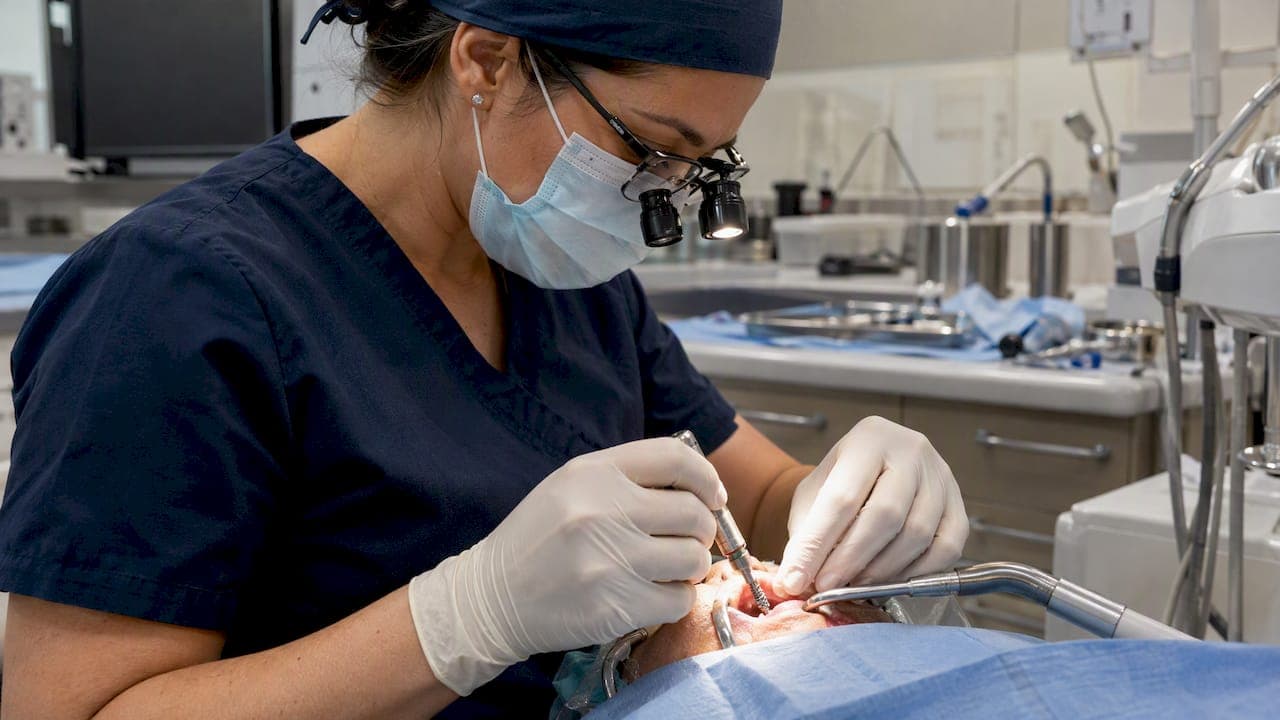
Immediate implant placement, often called Type 1 placement, means an implant goes into a tooth socket the same day a tooth is extracted. It works well in selected cases where the socket walls are intact and the implant can achieve strong initial stability, offering a shorter overall timeline and better preservation of gum and bone contour. The trade-off is a slightly higher technical demand and, in esthetic areas, a real risk of gum recession if the case is not chosen carefully.
TL;DR:
- Immediate placement requires intact socket walls, no active infection, enough bone beyond the root, and CBCT imaging to confirm anatomy and implant positioning.
- Same day provisional crowns generally require torque near 35 Ncm or an ISQ above 70, followed by a soft diet during early healing.
- A pooled review reported survival of about 94.9% for immediate implants versus 98.9% for delayed placement, although study quality varied.
- Thin gum tissue and a high smile line raise recession risk, so clinicians may favor early placement or connective tissue grafting in visible areas.
- Smoking, poorly controlled diabetes, and medications that affect bone healing can reduce predictability, even when the extraction socket appears suitable for immediate placement.
Table of Contents
- What immediate implant placement means and how timing categories differ
- Why same-day implants appeal to patients
- Who is a good candidate for immediate placement?
- Diagnostics and planning that come before treatment
- What happens during the extraction and implant visit
- When a same-day provisional crown is possible
- What the research says about outcomes and limits
- Risks, complications, and how they are managed
- Recovery timeline from surgery day to final crown
- How we evaluate immediate implant candidates at CWD Dental Group
- Balancing speed against predictability
- Schedule an implant evaluation with our team
- FAQ
- Sources
What immediate implant placement means and how timing categories differ
Dental professionals classify implant timing into four types. Type 1 is immediate placement, done at the same visit as extraction. Types 2 through 4 involve waiting periods that allow soft tissue (early placement) or both soft and hard tissue (delayed placement) to heal before the implant goes in.
The biologic reasoning behind immediate placement is straightforward: placing the implant right after extraction uses the existing socket walls for stability and limits the bone resorption that naturally follows tooth loss. Clinicians typically choose early or delayed placement instead when there is active infection, a damaged socket wall, or insufficient bone to anchor the implant securely.
- Type 1 (immediate): implant placed the same day as extraction, into the fresh socket.
- Type 2 (early, soft tissue healing): implant placed after 4 to 8 weeks, once gums have closed over.
- Type 3/4 (delayed): implant placed after months of bone healing, sometimes following a staged graft.
Why same-day implants appeal to patients
The biggest draw is time. Immediate placement collapses what would otherwise be separate healing and surgical phases into one visit, meaning fewer trips to the dental chair and a shorter path to a functioning tooth. It also helps preserve the natural contour of the ridge and surrounding gum tissue, since the implant fills the socket before significant bone collapse can occur.
- Fewer surgical procedures: one surgery instead of an extraction visit followed by a separate implant placement later.
- Better soft tissue and ridge preservation compared with letting a socket heal and resorb before placing an implant.
- No removable temporary tooth in many cases, since a fixed provisional crown can sometimes be attached the same day.
Immediate placement can reduce overall treatment time and the number of surgical interventions while helping preserve alveolar bone contour, according to clinical guidance from the ITI. That combination of fewer visits and a more natural-looking result is why many patients ask about it specifically when facing an extraction.
Who is a good candidate for immediate placement?
Candidacy comes down to the condition of the socket, the patient's overall health, and the complexity of the case. An intact buccal (outer) bone plate and enough bone beyond the root tip to anchor the implant are the baseline requirements for a stable, predictable result.
- Intact socket walls, especially the thin buccal plate, with adequate bone apical to the extraction site.
- No active infection, abscess, or significant periodontal disease at the extraction site.
- Favorable gum thickness and position, since thin tissue raises esthetic risk in visible areas.
Certain patient-level factors raise risk even when the local socket looks favorable: smoking, poorly controlled diabetes, and some medications that affect bone healing all reduce predictability. The ITI's SAC classification rates most immediate implant cases as complex, meaning they call for an experienced surgeon who can manage three-dimensional positioning precisely, since even small angulation errors can create lasting esthetic problems.
Pro Tip: Ask your dentist to show you your CBCT scan and explain where your implant will sit relative to the socket walls before you agree to immediate placement.
Diagnostics and planning that come before treatment
Before recommending immediate placement, your dental team needs a three-dimensional picture of the socket and surrounding bone, not just a two-dimensional X-ray. A preoperative CBCT scan is considered standard for assessing bone thickness, socket morphology, and the proximity of nearby anatomical structures or teeth.
The clinical exam adds information a scan cannot fully capture: gum thickness and position (gingival phenotype), any visible socket wall defects, and the health of adjacent teeth. Together, imaging and exam findings determine whether grafting will be needed and where the implant should sit.
Stability is measured, not guessed. Clinicians commonly look for:
- Insertion torque and resonance frequency analysis (ISQ) values that indicate the implant is locked firmly into bone.
- Confirmation that the apical and palatal bone beyond the socket is dense enough to support that stability.
- A decision on whether guided surgery, using a digital template, is warranted over free-hand placement in complex or esthetically visible cases.
Guided surgery tends to be recommended when the case involves tight spatial margins or a high esthetic stakes, since it improves the reproducibility of implant position compared with free-hand placement. Our guide to the same-day bone graft evaluation walks through how that same-day determination gets made.
What happens during the extraction and implant visit
The workflow for immediate placement follows a consistent sequence, though details shift based on the tooth's location and the socket's condition.
- The tooth is removed as atraumatically as possible, preserving the surrounding bone and gum architecture, followed by thorough debridement of the socket to clear infected or inflamed tissue.
- The implant is positioned three-dimensionally within the socket, accounting for the eventual crown's angle and the depth of the implant platform relative to the gumline.
- Any gap between the implant and the socket's buccal wall, known as the jump distance, is evaluated: when that space exceeds roughly 1 to 2 millimeters, a bone graft material and sometimes a membrane are placed to support the buccal bone and improve esthetic outcomes, a technique detailed in a PMC review of immediate implant placement.
- Soft tissue is managed either flapless, which tends to better preserve buccal bone, or with a small flap when more visibility or a connective tissue graft is needed; a provisional crown may then be designed and attached.
Pro Tip: If you have a thin or high smile line, ask whether a flapless approach with a connective tissue graft is feasible, since it tends to protect the gum line in visible areas.
For patients interested in the full mechanics of this sequence, our step-by-step implant process guide covers each stage in more depth.
When a same-day provisional crown is possible
Not every immediate implant gets a temporary crown attached the same day. That decision depends on whether the implant reaches strong enough primary stability at the time of placement, since loading an unstable implant with chewing forces can disrupt the bone-to-implant integration process.
- Guidance suggests insertion torque around 35 Ncm or higher, or an ISQ reading above 70, before considering same-day loading, based on research on stability thresholds.
- When those thresholds are met, the provisional crown is typically designed out of occlusion (not touching the opposing teeth) and screw-retained when possible, so it can be adjusted or removed without disturbing the implant.
- Patients are asked to follow a soft diet for about 6 to 8 weeks to avoid micromotion that could threaten the bone-to-implant bond.
When these criteria line up, immediate temporization helps avoid a removable temporary tooth and supports a more natural-looking gum profile while the final crown is planned.
What the research says about outcomes and limits
Systematic reviews generally find immediate implants perform well, but not always identically to implants placed after the socket has healed. A meta-analysis published in the Journal of Clinical Periodontology found pooled survival of roughly 94.9% for immediate implant placement compared with roughly 98.9% for delayed placement, though the authors note considerable variation in study quality across the pooled data.
Pooled analyses put immediate implant survival at approximately 94.9% versus about 98.9% for delayed placement, a gap small enough that case selection, not timing alone, appears to drive most outcomes, according to the same Journal of Clinical Periodontology meta-analysis.
- Esthetic risk is the more consistent finding: cases with thin gum tissue (biotype) and a high smile line show a higher rate of midfacial recession after immediate placement.
- Postoperative antibiotics appear linked to lower rates of early implant loss in some pooled studies, suggesting perioperative medical management plays a role in early survival.
- Grafting the buccal gap when needed, and choosing surgical technique carefully, both influence how closely immediate placement outcomes track delayed placement.
- Reviewers consistently flag that study quality varies and that longer-term randomized trials are still needed to confirm these differences hold over many years.
A biologically integrated implant is not automatically an esthetic success. Thin tissue and a high smile line predict a greater chance of visible gum recession even when the implant itself is stable, a point raised in a broader review of implant placement timing.
Risks, complications, and how they are managed
The main risks with immediate placement cluster around two issues: implant failure in the first few months and soft tissue recession that shows up later. Early implant loss is most often linked to infection at the site, insufficient primary stability at placement, or systemic risk factors like uncontrolled diabetes or smoking.
- Soft tissue recession in the front of the mouth is the complication patients notice most, and it is more likely with thin gum tissue; connective tissue grafting or choosing early (Type 2) placement instead can reduce that risk.
- Persistent infection, inadequate bone support, or very thin soft tissue are reasons a dentist may recommend staged grafting and delayed placement rather than proceeding immediately.
- Readers interested in non-surgical options for visible gum asymmetry or recession can review gummy smile treatment options from a partner clinic that specializes in esthetic soft-tissue care.
- Warning signs that call for prompt follow-up include increasing pain or swelling after the first few days, a loose-feeling implant or crown, pus or persistent bleeding, or a fever.
Choosing the right case from the start, backed by solid imaging and an honest look at a patient's health history, remains the most reliable way to avoid these complications.
Recovery timeline from surgery day to final crown
Recovery follows a fairly predictable arc, though individual healing speed and the need for grafting can shift the schedule.
- The first few days bring expected soreness, mild swelling, and specific hygiene instructions to protect the surgical site.
- Follow-up visits over the next 2 to 8 weeks check healing progress and adjust or maintain the provisional crown.
- The final crown is typically placed after about 3 to 6 months, once imaging confirms the implant has fully integrated with the surrounding bone, a timeline covered in our guide to single-tooth implant timing.
- Cases requiring grafting, or slower healing in individual patients, can extend that timeline beyond 6 months.
Long-term, implants need the same care as natural teeth: regular cleanings, routine checkups, and attention to any changes around the gum line.
How we evaluate immediate implant candidates at CWD Dental Group
We offer same-day emergency appointments that allow timely evaluation of whether a bone graft may be needed alongside implant placement. Our internal outcome data for immediate implants placed after extraction shows survival in the 94.9% to 98.4% range, consistent with what the broader research describes, and we typically guide patients toward a final crown within 3 to 6 months. Diagnostic workflow combines CBCT imaging with a hands-on exam, integrating surgical and prosthetic planning rather than treating them as separate steps.

Balancing speed against predictability
We lean toward immediate placement when the socket is clean, the bone is intact, and stability targets are clearly met. When any of those pieces are missing, staging the case protects the result more than it costs in time. Experience and diagnostics matter more than timeline preference, so we encourage every patient to weigh esthetic priorities against speed openly with their dentist before deciding.
— Kayle
Schedule an implant evaluation with our team
If you are facing an extraction and wondering whether same-day implant placement fits your situation, a same-day evaluation gives you a direct answer rather than months of uncertainty. We combine CBCT imaging, a clinical exam, and treatment planning in one visit, so you leave knowing whether immediate placement, grafting, or a staged approach makes sense for your case.

- CBCT-based imaging and a hands-on exam to assess socket condition and bone support.
- Same-day determination of bone graft needs alongside implant placement planning.
- Coordinated planning for provisional and final restorations, from extraction through the finished crown.
Visit our services page to see the full range of implant and restorative care we provide, or reach out through our emergency dental care page if you need a same-day appointment.
This article is general information, not a substitute for advice from a qualified doctor. Consult a qualified healthcare professional about your own circumstances before acting on anything here.
FAQ
Is immediate implant placement better than waiting?
It depends on the case rather than being universally better: immediate placement shortens treatment time and preserves bone contour, while pooled data show slightly lower survival for immediate placement compared with delayed placement in a systematic review. For many well-selected cases the difference is small enough that convenience and esthetics tip the decision.
What are the requirements for immediate implant placement?
Candidates generally need an intact socket wall, no active infection, adequate bone beyond the root tip, and primary stability that meets insertion torque or ISQ targets. Patient factors like smoking status, diabetes control, and gum tissue thickness also factor into the decision.
What are the downsides of immediate implant placement?
The main downside is a higher technical demand and a greater chance of visible gum recession in esthetic areas, particularly with thin gum tissue, as noted in a PMC review. Case selection and surgeon experience are the biggest factors in avoiding these outcomes.
How painful is implant placement surgery?
Most patients describe manageable soreness and mild swelling in the days following surgery rather than severe pain, and this typically improves within a week with standard aftercare. Following soft-diet and hygiene instructions during early healing helps keep discomfort limited and protects the surgical site.
Sources
- Immediate implant placement: clinical considerations — ITI Blog
- The effectiveness of immediate implant placement for single tooth replacement compared to delayed implant placement: A systematic review and meta-analysis — Journal of Clinical Periodontology
- Immediate placement of endosseous implants into the extraction sockets — PMC review