
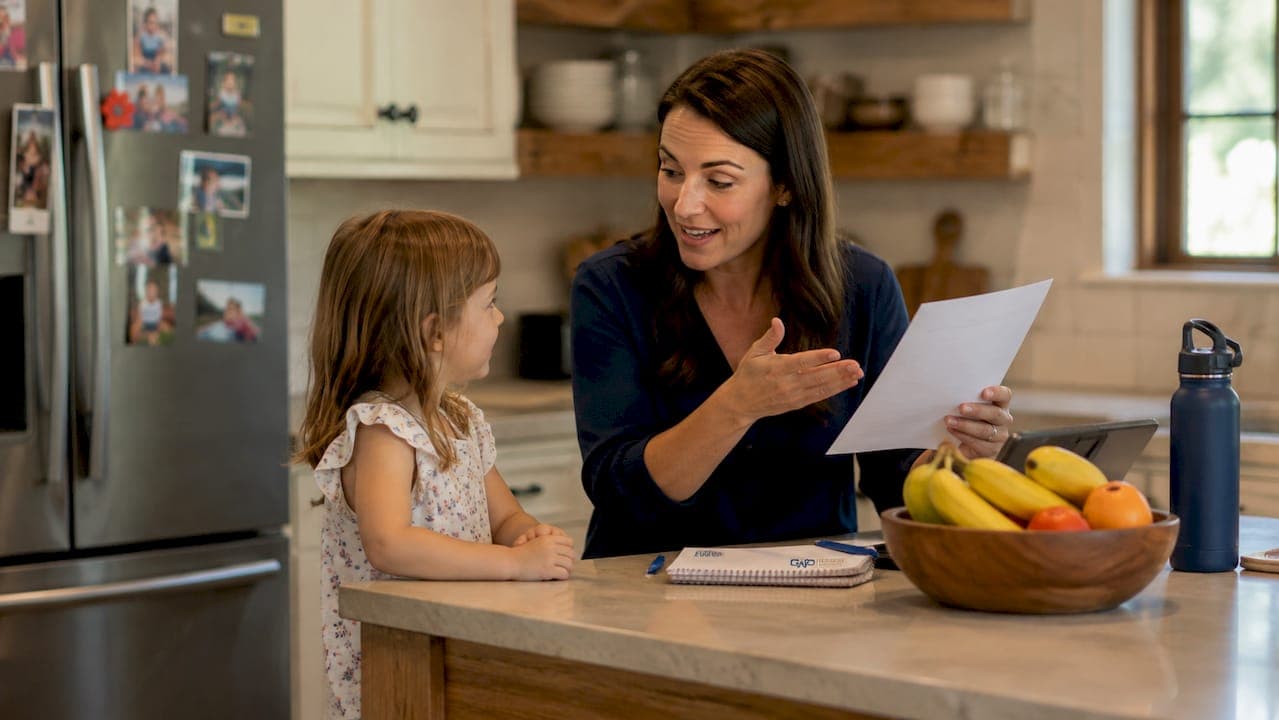
You can explain any common dental procedure to your child in one honest sentence that names what will happen, why, and one reassuring fact. That's the whole formula. Parents who use calm, specific language before appointments consistently see less resistance in the chair, because children fear the unknown far more than they fear mild discomfort.
Here are three scripts you can adapt right now:
- Toddler (ages 1–3): "We're going to see the tooth doctor. She'll count your teeth and tickle them clean. You get to sit in a cool chair that goes up and down."
- Preschooler (ages 3–5): "The dentist is going to look at your teeth with a tiny mirror and a little water squirter. It feels a little funny but not scary. You can hold my hand the whole time."
- School-age (ages 6–12): "The dentist is going to clean your teeth and check that they're growing right. If they find a spot that needs fixing, they'll put some sleepy juice on your gum first so you won't feel it. You're in charge of telling them if you need a break."
Quick prep checklist:
- Say what will happen (one sentence, specific)
- Say why it matters ("so your teeth stay strong")
- Name one reassuring fact ("the chair moves," "you get a sticker after")
- Use a calm, matter-of-fact tone, not a soothing or apologetic one
- Bring a comfort item from home
Pro Tip: Practice the script aloud before the appointment. Children pick up hesitation in your voice, and a rehearsed, steady delivery signals safety far more than the words themselves.
Table of Contents
- How to explain dental procedures to kids: a procedure-by-procedure guide
- How to talk about dental visits by age: scripts, dos and don'ts
- What to tell your child about pain, numbing, and sedation
- Practical day-of preparation: what to pack and what to say
- Simple aftercare instructions by procedure
- Why your tone matters more than your words: the research behind dental fear
- Key Takeaways
- The approach that actually works in the chair
- CWD Dental Group: pediatric and family care in Tallahassee
- Useful sources and further reading
How to explain dental procedures to kids: a procedure-by-procedure guide
Common pediatric dental procedures include exams and cleanings, fluoride varnish, sealants, fillings, crowns, extractions, sedation, and tongue or lip-tie revisions. Each one sounds clinical to an adult and completely foreign to a child. The table below gives you a child-friendly one-liner for each, what your child will likely see and feel, and a short parent script you can say in the waiting room.
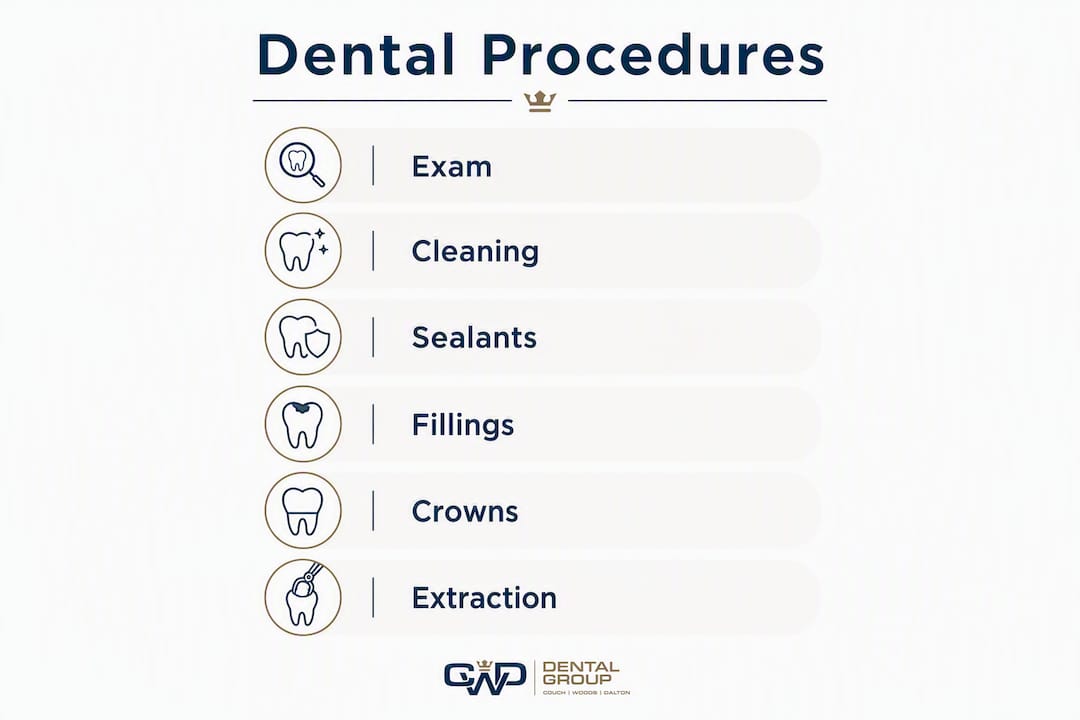
| Procedure | What your child sees/feels | Typical appointment steps | Parent script (say this) |
|---|---|---|---|
| Exam & cleaning | Bright light, small mirror, tickling sensation on teeth | Check-in → exam → polish → rinse → sticker | "The dentist counts your teeth and brushes off the sugar bugs." |
| Fluoride varnish | Sticky, slightly sweet coating painted on teeth; sets in seconds | After cleaning, small brush applies varnish; child avoids eating for 30 min | "They paint a special vitamin on your teeth to make them super strong." |
| Sealants | Liquid that hardens on back teeth; no needles, mild taste | Clean tooth → apply gel → rinse → paint sealant → cure with light | "They put a tiny shield on your back teeth so cavities can't sneak in." |
| Filling | Numbing gel, then pressure (not pain); whirring sound | Numbing → remove decay → fill → bite check | "They fix a tiny hole in your tooth. Your gum gets a little nap first." |
| Crown | Same numbing as filling; crown feels snug when placed | Numbing → shape tooth → fit crown → cement | "They put a little helmet on your tooth to protect it." |
| Extraction | Pressure and movement, not sharp pain after numbing | Numbing → loosen tooth → remove → gauze → prize | "They help a wiggly tooth come out so the grown-up tooth can move in." |
| Nitrous oxide sedation | Funny smell, floaty feeling, normal after a few minutes | Mask placed → breathe normally → procedure → mask removed | "You breathe special air that makes you feel relaxed and a little giggly." |
| Tongue/lip-tie revision | Quick snip; mild soreness for 1–2 days | Numbing → release → gauze → stretches explained | "The dentist frees a tiny tight spot so your tongue/lip can move better." |
Fluoride varnish is recommended every six months for most children, and every three months for those at higher cavity risk. It hardens quickly and is considered preventive care, often covered by insurance. For a detailed walkthrough of what happens during a routine teeth cleaning visit, the step-by-step breakdown helps younger children know exactly what to expect.
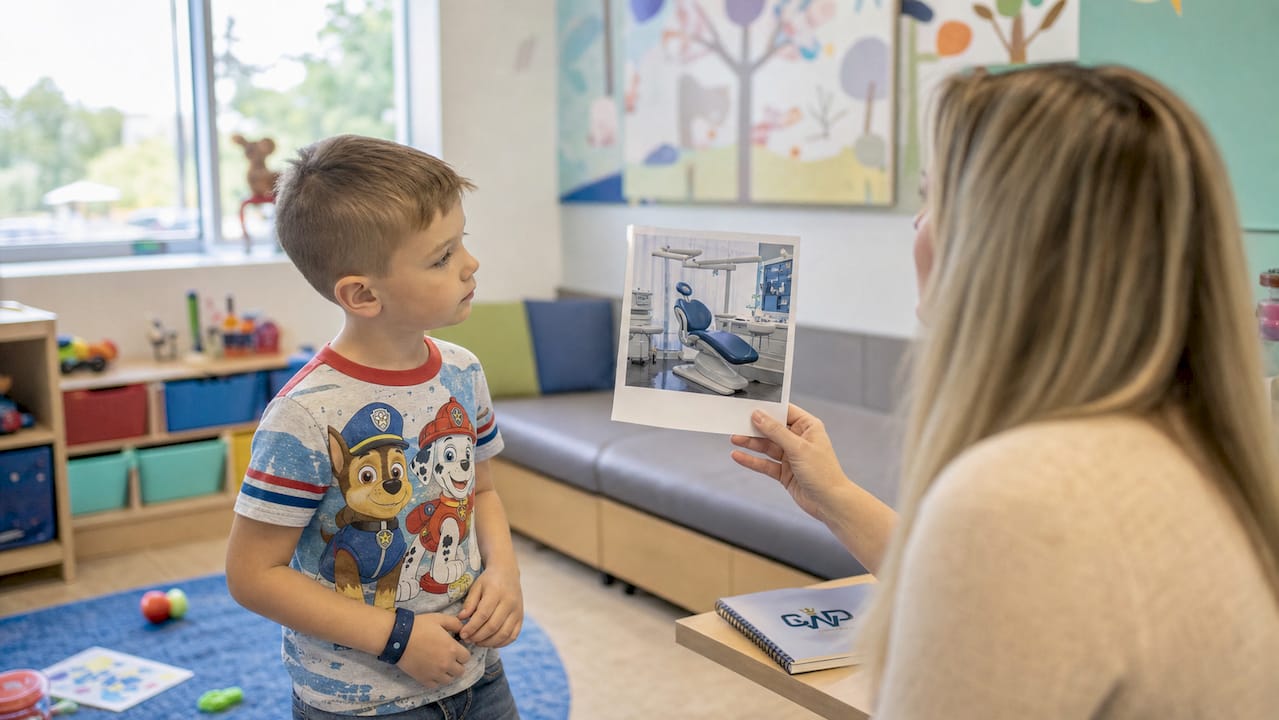
Pro Tip: Show your child a picture of the dental chair before the visit. Knowing the chair moves up and down turns a strange machine into something interesting rather than threatening.
How to talk about dental visits by age: scripts, dos and don'ts
Age shapes everything about how a child processes a dental visit. A two-year-old needs sensory reassurance. A ten-year-old wants to know the logic. Matching your language to your child's developmental stage is the single most effective preparation tool you have.
Age-by-age scripts
- Infant/toddler (under 3): Keep it sensory and brief. "We're going to the tooth doctor. She'll look in your mouth and count your teeth. It's quick." No backstory, no warnings.
- Preschool (3–5): Add one concrete detail. "The dentist has a tiny mirror and a little water squirter. She'll clean your teeth and you'll get to pick a prize from the treasure box."
- Elementary (6–10): Explain the why. "Dentists check that your teeth are growing in straight and that there are no spots where sugar is eating the tooth. If they find one, they fix it so it doesn't get bigger."
- Preteen (11–13): Be direct and respect their intelligence. "They'll clean your teeth, check for cavities, and probably talk about your bite. If anything needs work, they'll explain it to you first."
Phrases to avoid and what to say instead
Specific words trigger anxiety before a child ever sits in the chair. Swap these out:
- "Shot" → "sleepy juice for your gum" or "a tiny pinch that makes your tooth take a nap"
- "Drill" → "a tiny buzzing tool that cleans out the hole"
- "Pull" → "help the tooth come out" or "wiggle the tooth free"
- "It won't hurt" → "the dentist will make sure you're comfortable" (never promise painlessness)
- "Be brave" → "you can squeeze my hand if you want"
Avoid using the dentist as a threat ("if you don't brush, you'll have to get a shot"). That framing creates lasting fear and makes every future visit harder.
Tell-Show-Do at home
Tell-Show-Do is the standard behavioral technique in pediatric dentistry, and you can replicate it at home the night before an appointment. Tell your child what will happen. Show on a stuffed animal or doll using a toothbrush as a prop. Then gently do the same action on your child. Three minutes of this at home reduces the number of unknowns your child walks into the office with.
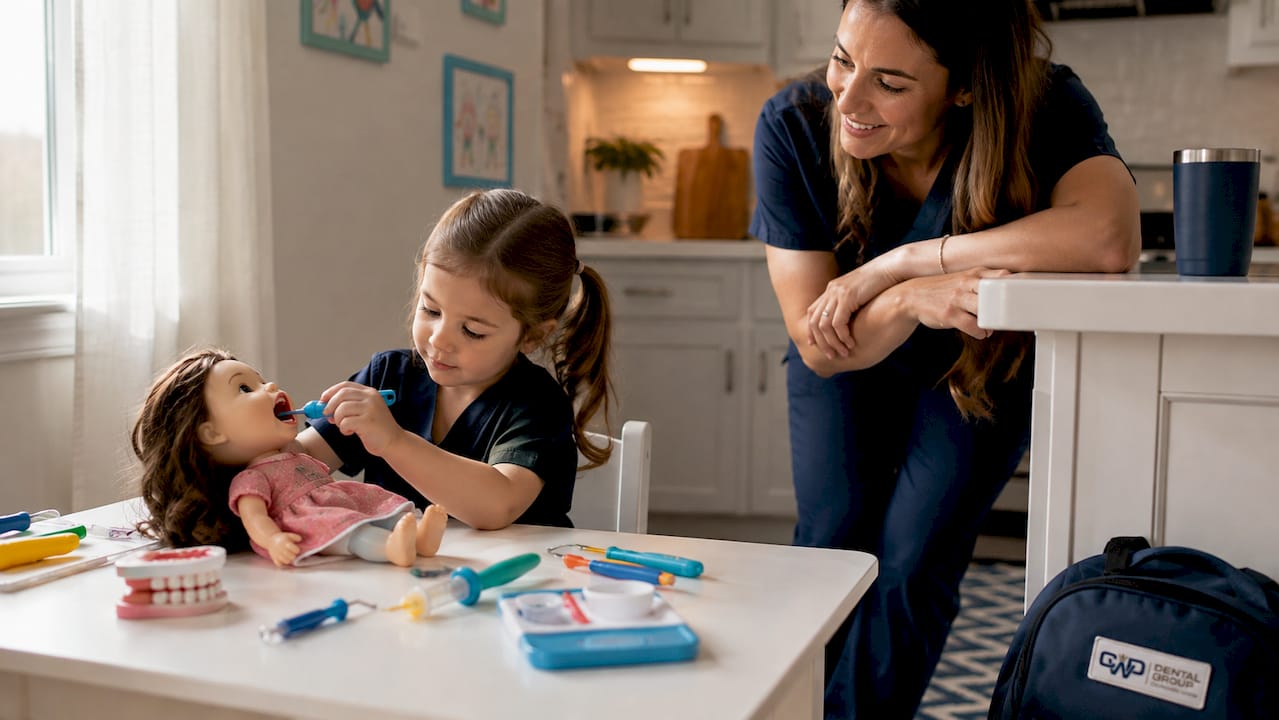
Pro Tip: Let your child be the "dentist" during the role-play. Children who practice being in control of the tool feel significantly less helpless when they're in the actual chair.
For age-appropriate dental care guidance beyond the appointment itself, building a consistent home routine reinforces everything you say before a visit.
What to tell your child about pain, numbing, and sedation
Honesty is the right policy here, with one important limit: don't overpromise. Telling a child "it won't hurt at all" destroys trust the moment they feel pressure or an odd sensation. Instead, describe what they will actually experience.
Child-friendly ways to explain numbing and anesthesia:
- Numbing gel: "The dentist puts a little jelly on your gum first. It tastes a little fruity and makes the gum go to sleep so you don't feel the next part."
- Local anesthesia: "There's a tiny pinch, like a mosquito bite, and then your tooth and gum go numb. You might feel pushing but not sharpness."
- Nitrous oxide: "You breathe through a little mask that smells like something sweet. It makes you feel floaty and calm. When the dentist is done, you breathe regular air and the floaty feeling goes away in a few minutes."
Sedation options, explained for parents:
Some children need sedation when behavioral techniques aren't enough or when a procedure is long or complex. Three main options exist:
- Nitrous oxide (laughing gas): lightest option, child stays awake and responsive, wears off quickly
- Oral conscious sedation: medication given before the appointment, child is drowsy but conscious, requires a recovery period
- General anesthesia: used for very young children, those with significant special needs, or extensive procedures; administered by an anesthesiologist in a clinical setting
Questions to ask your dental team before any sedation:
- What training and certifications does the provider have for pediatric sedation?
- What monitoring equipment is used during the procedure?
- What is the recovery plan, and who monitors my child afterward?
- What should my child eat or drink before the appointment?
- What are the signs of a reaction I should watch for at home?
Pro Tip: Write your questions down before the appointment. Parents who arrive with a written list get more complete answers and feel more confident going into the procedure.
According to the CDC, cavities are the most common chronic disease of childhood in the United States, affecting more than half of children ages 6–8 in their baby teeth. Understanding pain control options means children get the treatment they need without fear becoming the barrier.
Practical day-of preparation: what to pack and what to say
The morning of the appointment sets the emotional tone for everything that follows. A rushed, anxious departure communicates alarm even when your words are calm.
Morning-of checklist (in order):
- Make sure your child had a good night's sleep. Fatigue amplifies anxiety in children more than almost any other factor.
- Feed them a light meal beforehand (unless sedation requires fasting, in which case follow the office's instructions exactly).
- Arrive 10–15 minutes early. Rushing into a waiting room spikes cortisol for both of you.
- Let your child bring one comfort item: a stuffed animal, a small toy, or headphones with a favorite playlist.
- Confirm the sticker or small reward waiting at the end. Frame it as a normal part of the visit, not a bribe for enduring something terrible.
What to pack:
- Insurance card and any completed paperwork
- Comfort item from home
- Headphones (many children tolerate procedures better with music)
- A small snack for after (soft foods if a procedure is planned)
- A change of clothes for very young children
30-second script for the car ride:
"We're going to the dentist today. They're going to count your teeth and clean them. It takes about [X] minutes. When we're done, we're going to [simple reward]. You can hold my hand the whole time."
That's it. No elaboration, no "but don't worry," no lengthy reassurance. Lengthy reassurance signals that there is something to worry about.
Pro Tip: If your child asks "will it hurt?" answer honestly: "The dentist will make sure you're comfortable. If anything feels weird, you can tell them and they'll stop." That gives your child a sense of control, which is the real antidote to fear.
For a printable preventive visit checklist covering everything from paperwork to post-visit care, that resource covers the full appointment cycle.
Simple aftercare instructions by procedure
Recovery after a pediatric dental procedure is usually short. Most children bounce back within hours. The table below gives you the essentials.
| Procedure | Aftercare (1–2 key steps) | Back to normal |
|---|---|---|
| Exam & cleaning | Normal brushing that evening; avoid hard snacks for 30 min after fluoride varnish | Same day |
| Fluoride varnish | No eating or drinking for 30 minutes; avoid hard or crunchy foods for the rest of the day | Same day |
| Sealants | Avoid sticky or hard foods for 24 hours; normal brushing resumes immediately | Same day |
| Filling | Soft foods until numbness wears off (1–3 hours); avoid chewing on that side for the rest of the day | 1 day |
| Crown | Soft foods for 24 hours; avoid sticky candy that could pull the crown | 1–2 days |
| Extraction | Gauze pressure for 30–45 minutes; soft foods for 24–48 hours; no straws (suction disrupts clotting) | 2–3 days |
| Nitrous oxide | No restrictions; child can eat and resume normal activity immediately | Same day |
| Tongue/lip-tie revision | Gentle stretching exercises as instructed; soft foods for 1–2 days; mild soreness normal | 3–5 days |
Warning signs that need a call to the office:
- Fever above 101°F after an extraction or surgical procedure
- Bleeding that doesn't slow after 45 minutes of steady gauze pressure
- Severe or worsening pain 24 hours after a procedure (mild soreness is normal)
- Swelling that increases rather than decreases after the first day
- A crown or filling that feels significantly off when biting
Comfort tips:
- A cold compress on the cheek (10 minutes on, 10 off) reduces swelling after extractions.
- Soft foods like yogurt, applesauce, and scrambled eggs work for most post-procedure days.
- Resume normal brushing as soon as the office clears it, usually the same evening for most procedures.
Why your tone matters more than your words: the research behind dental fear
Children are remarkably good at reading adults. Research confirms that children pick up parental anxiety through tone and body language, and that a calm, matter-of-fact demeanor measurably reduces child fear during medical visits. The words you choose matter, but how you say them matters more.
The Tell-Show-Do method works precisely because it converts the unknown into the familiar. When a child has already seen the suction tool, heard the polisher, and felt the texture of prophy paste on a fingernail at home, the dental office stops being a place of surprises. Cooperation follows naturally.
The American Academy of Pediatrics recommends a child's first dental visit by their first birthday or within six months of the first tooth. Early visits build familiarity before a child is old enough to develop fear. Routine checkups every six months reinforce that the dental office is a normal, expected part of life, not an emergency destination.
Three expert-backed actions you can take before the next appointment:
- Practice neutral language. Say "the dentist will look at your teeth" rather than "it'll be fine, I promise." Reassurance-heavy language signals threat.
- Avoid the dentist as a threat. "If you don't brush, you'll need a filling" creates a fear association that outlasts childhood.
- Frame rewards as part of the visit. Presenting a prize as a normal, fun part of the appointment builds positive associations rather than signaling that the visit is something to be endured.
For broader dental tips for parents on building healthy habits at home, the connection between home routine and appointment-day behavior is direct.
Key Takeaways
Explaining dental procedures to kids works best when parents use specific, honest language, practice Tell-Show-Do at home, and model a calm demeanor from the moment the appointment is mentioned.
| Point | Details |
|---|---|
| Use honest, specific scripts | Name what will happen, why, and one reassuring fact — never promise a painless visit. |
| Match language to age | Toddlers need sensory details; school-age children respond to logic and a sense of control. |
| Tell-Show-Do at home | Practice with a stuffed animal the night before to remove unknowns before the appointment. |
| Fluoride every six months | The AAP recommends fluoride varnish every six months, or every three months for higher-risk children. |
| Cwddentalgroup for local families | CWD Dental Group in Tallahassee offers pediatric and family dental care, including same-day emergency appointments for urgent needs. |
The approach that actually works in the chair
There's a gap between what most dental prep articles recommend and what actually changes a child's experience. The advice to "stay calm" is correct but incomplete. What moves the needle is specificity.
Children don't fear the dentist. They fear not knowing what comes next. A parent who says "the dentist will look at your teeth" has done something, but a parent who says "she'll use a tiny mirror, a little water squirter, and a spinning brush that tastes like bubblegum" has done something far more useful. That level of detail converts a vague threat into a manageable sequence of events.
The other thing most articles understate is the cost of over-reassurance. When a parent says "it won't hurt, I promise" and the child then feels pressure or an odd sensation, the trust damage is real and it compounds over time. Children who've been overpromised become the teenagers who avoid the dentist entirely. Honest, specific language, even when it acknowledges mild discomfort, builds the kind of trust that keeps kids coming back.
The Tell-Show-Do technique isn't just a clinical tool. It's a philosophy: treat the child as a participant, not a patient to be managed. That shift in framing, from "get through the appointment" to "help my child understand what's happening," changes everything about how both parent and child walk into the office.
CWD Dental Group: pediatric and family care in Tallahassee
Families in Tallahassee who want a practice that takes the preparation work seriously will find that at CWD Dental Group. The team is built around patient comfort and accessibility, which means children aren't rushed through appointments and parents get real answers to their questions before anything begins.
CWD Dental Group offers pediatric and family dental care for patients of all ages, from first visits for toddlers through complex restorative work for adults. For families dealing with a dental emergency, same-day emergency appointments are available so urgent issues get addressed without a week-long wait. Whether your child needs a routine cleaning, a sealant, or a filling, the practice's approach centers on making the visit predictable and calm, exactly what the research says works.
To book an appointment or ask pre-visit questions about what your child's procedure will involve, contact CWD Dental Group directly through cwddentalgroup.com.
Useful sources and further reading
These are the sources cited in this article, along with a note on what each one covers:
- KidsHealth: Going to the Dentist — child-facing explanation of common procedures; useful for reading aloud with younger children
- HealthyChildren.org: Brushing Up on Oral Health — AAP guidance on first visits, fluoride varnish frequency, and early preventive care
- CDC: Oral Health Tips for Children — national data on childhood cavities and prevention strategies
- CWD Dental Group: Types of Pediatric Dental Treatments — Tallahassee-specific parent guide to children's dental treatments
- CWD Dental Group: Dental Care Routine for Kids — age-by-age home care routines to reinforce what happens at the office