

Cosmetic dentistry is defined as dental care focused on improving the appearance of teeth, gums, and smile, while restorative dentistry repairs or replaces damaged, decayed, or missing teeth to restore oral function. Understanding how cosmetic dentistry differs from restorative care is the first step toward making a confident treatment decision. The two fields overlap more than most patients realize. Treatments like crowns, implants, and bonding serve both aesthetic and functional goals. Cwddentalgroup sees this distinction play out daily in Tallahassee, where patients arrive unsure whether they need a cosmetic procedure, a restorative one, or both.
How cosmetic dentistry differs from restorative dentistry
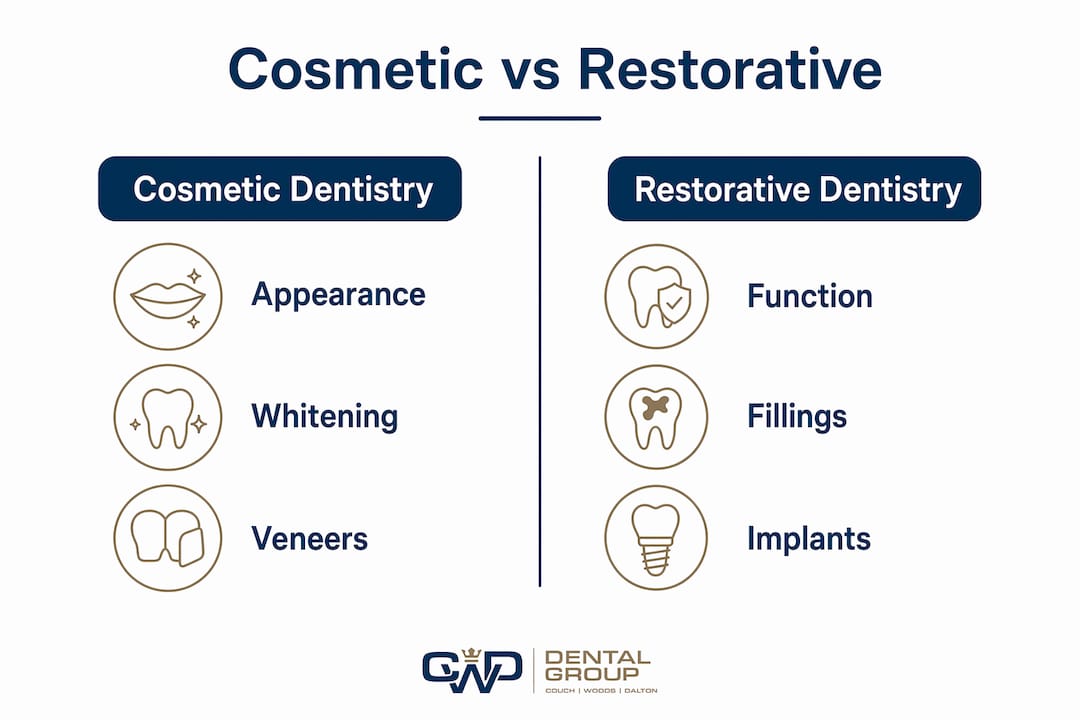
The core difference comes down to purpose. Cosmetic dentistry targets appearance. Restorative dentistry targets function and health. A dentist whitening your teeth is working cosmetically. A dentist placing a crown on a cracked molar is working restoratively. Both disciplines use similar tools and materials, but the clinical goal separates them.
Cosmetic dental procedures include teeth whitening, porcelain veneers, composite bonding, Invisalign, and gum contouring. Restorative dental treatments include fillings, crowns, bridges, dental implants, and dentures. A small cavity gets a filling because the tooth needs structural repair. Discolored teeth may get whitening or veneers because the patient wants a brighter smile.
The American Dental Association (ADA) recognizes restorative care as medically necessary treatment. Cosmetic procedures, by contrast, are generally classified as elective. That classification drives insurance coverage, treatment sequencing, and how dentists prioritize care.
What is cosmetic dentistry and what does it actually do?
Cosmetic dentistry improves the visual qualities of your smile. Procedures address color, shape, size, alignment, and spacing. The goal is a smile that looks healthy, balanced, and attractive.
Common cosmetic dental procedures include:
- Teeth whitening: Removes surface stains and brightens enamel, often in a single appointment.
- Porcelain veneers: Thin shells bonded to the front of teeth to correct chips, gaps, or discoloration.
- Composite bonding: Tooth-colored resin applied to repair minor chips or reshape teeth.
- Invisalign: Clear aligners that straighten teeth without metal brackets.
- Gum contouring: Reshapes the gum line to create a more even smile.
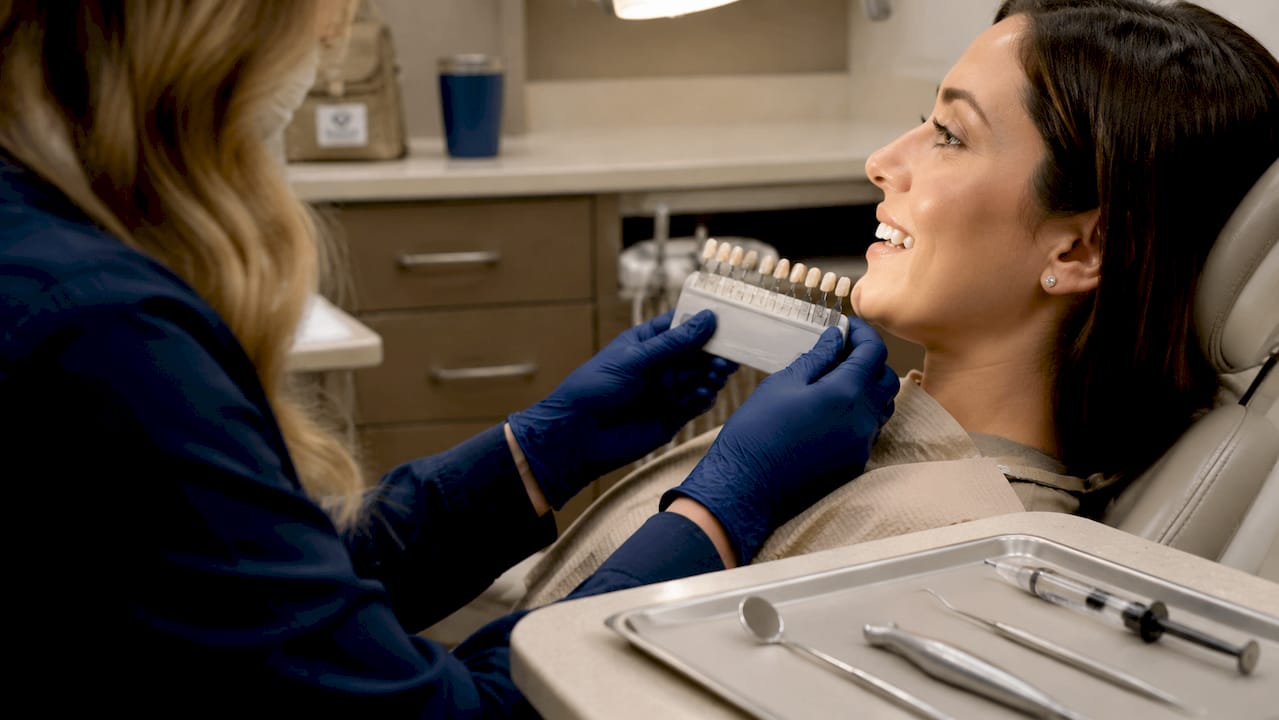
The process typically starts with a 30–60 minute consultation featuring digital photographs and imaging for personalized treatment planning. That upfront assessment prevents surprises and helps patients visualize results before committing.
The importance of cosmetic dentistry extends beyond appearance. Industry surveys show that 85–90% of patients report improved self-confidence after cosmetic dental procedures, with positive effects on social and professional outcomes. Confidence is a measurable health benefit, not a vanity metric.
Pro Tip: Ask your dentist for digital imaging before any cosmetic procedure. Seeing a simulated result helps you set realistic expectations and reduces the chance of disappointment after treatment.
Cosmetic procedures also improve oral hygiene by realigning teeth, which reduces plaque retention and gum inflammation. Straighter teeth are simply easier to clean. That hygiene benefit is a secondary gain most patients do not anticipate when they first book a cosmetic consultation.
What is restorative dentistry and why does it matter?
Restorative dentistry is defined by its clinical mission: repair damage, eliminate disease, and restore the mouth to full function. Its primary goal is restoring chewing, speaking, and oral health after damage or disease. Without restorative care, untreated decay spreads, bone deteriorates, and adjacent teeth shift.
Core restorative dental treatments include:
- Fillings: Remove decay and seal the tooth to prevent further damage.
- Crowns: Cap a damaged or weakened tooth to restore its shape and strength.
- Bridges: Replace one or more missing teeth by anchoring to adjacent teeth.
- Dental implants: Titanium posts surgically placed in the jawbone to support a crown or bridge.
- Dentures: Removable replacements for multiple missing teeth.
Restorative dentistry is frequently covered by insurance because it is medically necessary. That coverage distinction matters enormously when patients are weighing treatment options. A crown after a root canal is a restorative procedure. The same crown placed purely to improve a tooth's color is cosmetic.
Untreated tooth loss carries consequences beyond aesthetics. Bone loss in the jaw accelerates when teeth are missing, which changes facial structure over time. Restorative treatments interrupt that process and protect long-term oral health.
How do cosmetic and restorative dentistry overlap?
The boundary between cosmetic and restorative dentistry blurs constantly in modern practice. Crowns, implants, veneers, and bonding address health issues while improving appearance at the same time. A patient who gets an implant after tooth loss gains both a functional tooth and a natural-looking smile.
| Treatment | Restorative function | Cosmetic benefit |
|---|---|---|
| Dental implant | Replaces missing tooth, preserves jawbone | Looks and feels like a natural tooth |
| Porcelain crown | Protects cracked or weakened tooth | Matches surrounding tooth color |
| Composite bonding | Seals minor chips to prevent decay | Restores natural tooth shape |
| Invisalign | Corrects bite issues, reduces wear | Straightens and aligns smile |
Dental implants are the only tooth replacement option shown to preserve jawbone through functional stimulation after tooth loss. That makes them restorative at the structural level, even though patients often pursue them for cosmetic reasons. The label matters less than the outcome.
The ADA notes that a healthy smile supports systemic wellness. Cosmetic procedures that motivate better hygiene habits carry broad health benefits that extend well beyond the mouth. A patient who invests in veneers tends to brush and floss more carefully to protect that investment.
Pro Tip: If you are considering cosmetic work, ask your dentist to evaluate your bite and gum health first. Addressing underlying issues before cosmetic procedures protects your results and extends how long they last.
Advanced imaging technologies now support detailed treatment planning for both cosmetic and restorative cases, improving outcomes across the board. Digital scans replace traditional impressions and give dentists a precise view of bone structure, gum health, and tooth alignment before any procedure begins.
Insurance, cost, and what drives the decision
Cost and insurance coverage are the most practical factors separating cosmetic from restorative care. Restorative procedures are medically necessary and typically covered by dental insurance plans. Cosmetic procedures are elective and usually paid out of pocket.
Key financial considerations include:
- Insurance coverage: Fillings, crowns for structural damage, implants after tooth loss, and bridges are commonly covered. Whitening, veneers, and bonding for purely aesthetic reasons are not.
- Long-term value: Restorative work prevents more expensive problems later. A filling today costs far less than a crown or extraction later.
- Financing options: Many dental practices offer payment plans for cosmetic procedures, making elective treatments more accessible.
- Combined treatments: When a procedure serves both purposes, like a crown that repairs and beautifies, insurance may cover the restorative portion.
Patients researching dental coverage options should review their plan's definitions carefully. Insurers use specific language to classify procedures, and the same treatment can be coded differently depending on clinical justification. A dentist who documents medical necessity thoroughly gives patients the best chance of coverage.
The binary division between cosmetic and restorative dentistry is misleading in practice. Success is measured by improved function, reduced disease risk, or preserved structural health, regardless of the aesthetic label attached to the procedure.
How do you decide which dental approach fits your needs?
Choosing between cosmetic and restorative care, or a combination of both, follows a clear sequence. Most dentists use this order:
- Complete a full oral health exam. Your dentist assesses decay, gum disease, bite alignment, and bone health before recommending any treatment.
- Address restorative needs first. Dentists prioritize restorative work before cosmetic procedures to prevent underlying issues from compromising aesthetic results.
- Define your personal goals. Are you trying to fix a functional problem, improve your appearance, or both? Your answer shapes the treatment plan.
- Review imaging and treatment options. Digital photographs and scans help you understand what is possible and what each procedure involves.
- Consider your timeline and budget. Restorative work is often urgent. Cosmetic work can be phased over time to manage cost.
- Ask about combined approaches. Many patients benefit from treatments that deliver both functional repair and aesthetic improvement in a single procedure.
Treatment sequencing matters more than most patients realize. Placing veneers over a tooth with untreated decay guarantees failure. Restorative work to address decay or gum disease always precedes cosmetic enhancements for durability. A dentist who skips that sequence is cutting corners at your expense.
Key Takeaways
Cosmetic dentistry improves appearance while restorative dentistry repairs function, but modern treatments like implants, crowns, and bonding routinely deliver both outcomes in a single procedure.
| Point | Details |
|---|---|
| Core distinction | Cosmetic targets appearance; restorative targets function and structural health. |
| Overlapping treatments | Implants, crowns, and bonding serve both aesthetic and functional goals simultaneously. |
| Insurance coverage | Restorative care is typically covered by insurance; cosmetic procedures are usually elective and out of pocket. |
| Treatment sequence | Restorative work must come before cosmetic procedures to protect long-term results. |
| Patient confidence | Industry surveys show 85–90% of patients report improved self-confidence after cosmetic dental procedures. |
The line between cosmetic and restorative is less clear than you think
I have spent years watching patients arrive at dental consultations with a fixed idea of what they need. They want whiter teeth, so they ask about whitening. They have a cracked molar, so they assume they need a crown. What surprises most of them is how rarely the answer is that simple.
The most important shift in modern dentistry is the move toward integrated treatment planning. A good dentist does not ask "cosmetic or restorative?" They ask "what does this patient's mouth actually need, and how do we get there in the right order?" That question produces better outcomes every time.
Patients who understand this distinction make smarter decisions. They do not skip restorative work because they cannot see the problem. They do not dismiss cosmetic procedures as vanity when those procedures would genuinely improve their hygiene and confidence. The two fields are not competing. They are complementary.
My honest recommendation: go into any dental consultation with both questions ready. Ask what your mouth needs functionally, and ask what is possible aesthetically. The best treatment plans address both. Anything less is leaving value on the table.
— Kayle
Cwddentalgroup offers both cosmetic and restorative care in Tallahassee
Patients in Tallahassee do not have to choose between a practice that handles emergencies and one that offers cosmetic work. Cwddentalgroup provides the full range, from same-day emergency dental appointments for urgent restorative needs to advanced cosmetic procedures with personalized treatment planning.
Whether you need a filling, an implant, veneers, or a professional teeth cleaning to start fresh, Cwddentalgroup's team builds a treatment plan around your specific oral health status and goals. No long waits, no generic advice. Patients consistently highlight the staff's warmth and the practice's commitment to getting care right the first time. Contact Cwddentalgroup to schedule a consultation and find out exactly which approach fits your needs.
FAQ
What is the main difference between cosmetic and restorative dentistry?
Cosmetic dentistry improves the appearance of teeth, while restorative dentistry repairs damage and restores oral function. The primary goal separates them, though many modern treatments serve both purposes.
Does insurance cover cosmetic dental procedures?
Cosmetic procedures are typically elective and not covered by dental insurance. Restorative treatments are medically necessary and frequently covered, though coverage varies by plan and clinical documentation.
Can a single procedure be both cosmetic and restorative?
Yes. Dental implants, crowns, and composite bonding all address structural or functional problems while improving appearance. Insurance may cover the restorative portion of a dual-purpose treatment.
Should restorative work come before cosmetic procedures?
Dentists prioritize restorative work before cosmetic enhancements to prevent decay or gum disease from undermining aesthetic results. Skipping that sequence shortens the lifespan of cosmetic work.
How do I know which type of dental care I need?
A full oral health exam is the starting point. Your dentist evaluates decay, gum health, bite alignment, and bone structure before recommending cosmetic, restorative, or combined treatment.