

The most common cause of bleeding gums is plaque buildup along the gumline, which triggers gingivitis, an early and reversible form of gum inflammation. Occasional bleeding from a rough brushing session usually isn't serious. But bleeding that shows up every day, lasts more than two weeks, or comes with swelling and pain points to something that needs a dentist's attention, not just a softer toothbrush.
TL;DR:
- Daily plaque and tartar buildup are the primary causes of bleeding gums, with persistent bleeding often indicating gingivitis or more advanced periodontitis.
- Blood thinners, clotting disorders, vitamin deficiencies, pregnancy hormones, and mechanical irritation can cause bleeding independently of plaque presence.
- Mild bleeding from proper home care usually improves within three to five days, but ongoing or heavy bleeding requires professional evaluation.
- Untreated gum disease can lead to significant bone loss and tooth loss, making early intervention and professional cleaning essential.
- Regular dental visits, proper oral hygiene, and addressing systemic health issues are key to preventing long-term gum bleeding and damage.
Table of Contents
- Bleeding Gums Causes: Plaque, Gingivitis, and Periodontitis
- Other Common Causes: Medications, Systemic Conditions, and Local Factors
- How to Stop Bleeding Gums at Home
- When to See a Dentist or Doctor
- Professional Treatments for Bleeding Gums
- Preventing Bleeding Gums Long-Term
- What Untreated Gum Disease Looks Like
- What Clinicians Actually Prioritize With Bleeding Gums
- Get Your Gums Checked at CWD Dental Group
- Sources
- FAQ
Bleeding Gums Causes: Plaque, Gingivitis, and Periodontitis
Plaque is the sticky, colorless film of bacteria that forms on your teeth within hours of brushing. Left alone, it hardens into tartar (also called calculus) within a day or two, and tartar can only be removed with professional instruments, not a toothbrush. This buildup along the gumline is the most common cause of bleeding gums, and it's the first thing a dentist checks when a patient reports bleeding.
Here's the mechanism: bacteria in plaque release toxins that irritate gum tissue. Your body responds with inflammation, which brings more blood flow to the area and makes the small capillaries in your gums fragile and prone to breaking under light pressure. That's why a gentle pass with dental floss can draw blood when gums are inflamed but wouldn't touch healthy tissue.
This early stage is called gingivitis, and it's marked by red, swollen, tender gums that bleed easily. The encouraging part: gingivitis is fully reversible with consistent hygiene and a professional cleaning. Left untreated, though, it can progress to periodontitis, where inflammation spreads below the gumline and starts breaking down the bone and ligament anchoring your teeth. That damage doesn't reverse on its own.
- Plaque: soft bacterial film, removable with daily brushing and flossing
- Tartar: hardened plaque, removable only by a dental professional
- Gingivitis: reversible gum inflammation and the main driver of bleeding gums
- Periodontitis: advanced disease involving bone loss, not fully reversible
Other Common Causes: Medications, Systemic Conditions, and Local Factors
Not every case of bleeding gums traces back to plaque. Several medications and health conditions raise bleeding risk independently of how well you brush.
- Blood thinners: warfarin, aspirin, and similar anticoagulants reduce your blood's ability to clot, so gums bleed more easily even with mild irritation.
- Clotting disorders and blood cancers: conditions like leukemia or platelet disorders can cause spontaneous, heavy gum bleeding, often paired with unusual bruising or fatigue.
- Vitamin deficiencies: low vitamin C or vitamin K can weaken blood vessels and impair clotting.
- Hormonal shifts: pregnancy hormones increase blood flow to gum tissue, producing "pregnancy gingivitis" even in people with decent hygiene.
- Mechanical irritation: ill-fitting dentures, new orthodontic hardware, or recent dental work can rub gum tissue raw.
If you're on a blood thinner and notice more bleeding than usual, talk to your prescriber before changing your dose. Never stop a prescribed medication on your own to manage a dental symptom.
How to Stop Bleeding Gums at Home
Most mild, plaque-related bleeding responds well to a few days of consistent, gentle care. Here's what actually helps:
- Switch to a soft-bristled toothbrush and use short, gentle strokes rather than scrubbing.
- Floss once daily, curving the floss into a C-shape against each tooth instead of snapping it against the gumline.
- Rinse with warm salt water (about half a teaspoon of salt in eight ounces of water) to reduce inflammation.
- Apply light pressure with clean, damp gauze if a spot is actively bleeding.
- Skip alcohol-based mouthwashes and tobacco products until the irritation settles.
Bleeding that starts when you begin flossing regularly should ease up within three to five days if your technique is correct. If it doesn't, that's usually a sign of inflammation that home care alone won't fix, because only a professional cleaning removes hardened tartar.
Pro Tip: Keep a small mirror handy and check your gumline in daylight once a week. Catching redness or puffiness early is a lot easier than dealing with bleeding that's already established.
When to See a Dentist or Doctor
Certain signs mean it's time to stop self-treating and book an exam. Watch for:
- Bleeding that persists longer than a couple of weeks despite gentle brushing and flossing
- Heavy or spontaneous bleeding not tied to brushing
- Swollen, receding, or pus-filled gums
- Loose or shifting teeth
- Unexplained bruising, fatigue, or fever alongside gum symptoms
A dentist will typically perform a periodontal exam with pocket-depth charting, take X-rays if needed, and schedule a professional cleaning. If your history or symptoms suggest a systemic cause, they may order bloodwork or refer you to a physician. Catching this early prevents the kind of bone loss that periodontitis causes down the line.
Professional Treatments for Bleeding Gums
Once a dentist identifies the cause, treatment depends on how far the disease has progressed.
- Scaling and root planing: a deep cleaning that removes plaque and tartar from below the gumline and smooths root surfaces so gums can reattach.
- Localized periodontal therapy: targeted treatment, sometimes including antimicrobial applications, for pockets that aren't responding to cleaning alone.
- Extraction or periodontal surgery: reserved for teeth with significant bone loss or mobility that can't be saved with cleaning alone.
- Antibiotics: prescribed when there's active infection alongside gum disease.
- Medical coordination: if bloodwork or symptoms point to a clotting disorder or another systemic issue, your dentist will coordinate care with your physician or a hematologist.
Most patients with plaque-driven bleeding see real improvement within one or two cleanings, paired with better daily habits at home.
Preventing Bleeding Gums Long-Term
Prevention is less about any single trick and more about consistency. A short list of habits does most of the work:
- Brush twice a day for two minutes with a soft-bristled brush.
- Clean between teeth daily with floss or an interdental brush.
- Get a professional cleaning every six months, or more often if your dentist recommends it.
- Quit tobacco, which restricts blood flow to gum tissue and masks early bleeding.
- Eat a diet with enough vitamin C and vitamin K, and review any new medications with your dentist.
Stress deserves a mention too. It doesn't cause gum disease directly, but chronic stress can weaken your body's ability to fight the bacterial inflammation that drives gingivitis, which is one more reason sleep and stress management belong in an oral health conversation, not just a dental one.
Pro Tip: Set a recurring reminder for your six-month cleaning before you leave the appointment. People who book the next visit on the spot are far more likely to keep it.
What Untreated Gum Disease Looks Like
Left untreated, periodontitis destroys the bone and ligament holding your teeth in place, leading to loosening and eventual tooth loss. There's no clinically recognized "stage 4" label doctors use. Instead, severity is measured by how much attachment and bone have been lost, and advanced cases often need staged surgical treatment to stabilize.
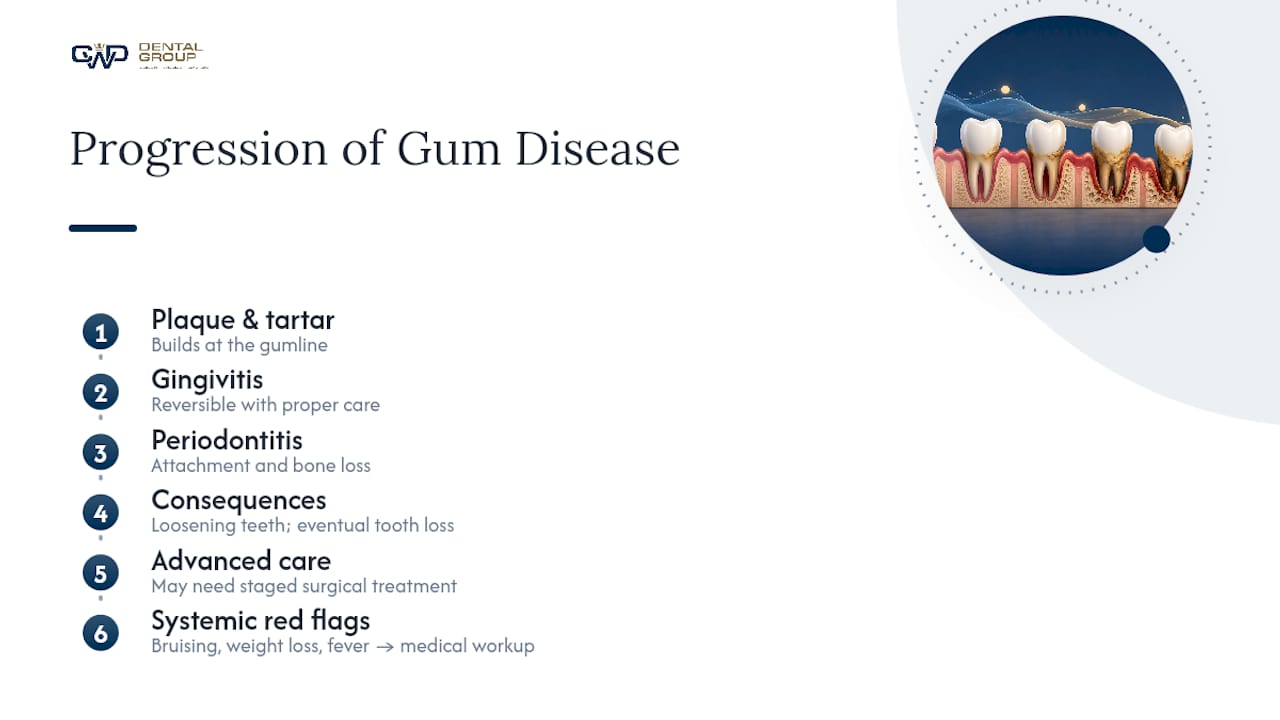
Watch for systemic red flags too: unexplained bruising, unintentional weight loss, or persistent fever alongside gum bleeding warrant a medical workup, not just a dental one. The reassuring flip side is that gingivitis, the stage most people are dealing with, is entirely reversible with proper care before any of this bone damage sets in.
What Clinicians Actually Prioritize With Bleeding Gums
Bleeding is treated as a signal, not a diagnosis. The first move is almost always plaque control and, if tartar has built up, a professional cleaning. Most patients see steady improvement within a couple of weeks of consistent care, though advanced cases sometimes need staged procedures rather than a quick fix. Don't wait out bleeding that lingers. Prompt evaluation is what keeps a reversible problem reversible.
— Kayle
Get Your Gums Checked at CWD Dental Group
Bleeding gums that don't clear up in a week or two deserve a real exam, not another new toothbrush. Dental practices often offer routine exams, professional cleanings, and emergency dental appointments to address persistent or heavy bleeding promptly.

If your gums bleed heavily, won't stop, or come with swelling and pain, that's the kind of thing Cwddentalgroup's emergency dentist team handles the same day rather than making you wait a week for an opening. For routine bleeding tied to plaque buildup, a standard exam and cleaning is usually enough to turn things around, and you can see the provider behind that care on Dr. Chance Dalton's profile. Either way, the next step is the same: schedule a visit and get your gums looked at before a minor irritation turns into something that costs you a tooth.
Sources
- Bleeding gums — MedlinePlus Medical Encyclopedia
- Bleeding Gums: Causes & Treatment — Cleveland Clinic
- Gingivitis — Mayo Clinic
This article is general information, not a substitute for advice from a qualified doctor. Consult a qualified healthcare professional about your own circumstances before acting on anything here.
FAQ
When should I worry about bleeding gums?
Worry if bleeding lasts more than two weeks, happens without brushing or flossing, or comes with swelling, pus, loose teeth, or unexplained bruising. Those signs call for a dental or medical exam rather than more home care.
How do I get my gums to stop bleeding?
Switch to a soft-bristled brush, floss gently once a day, and rinse with warm salt water; bleeding from plaque irritation typically improves within three to five days. If it doesn't ease up, a professional cleaning is likely needed to remove tartar that home care can't touch.
What is the main cause of bleeding gums?
Plaque buildup along the gumline is the main cause, leading to gingivitis, an inflammation that makes gum tissue fragile and prone to bleeding. Medications, vitamin deficiencies, and hormonal changes can also contribute.
What is a "Stage 4" gum infection?
There's no official "stage 4" classification in dentistry. Periodontitis severity is instead measured by how much bone and gum attachment has been lost, and advanced cases can require surgery to prevent further tooth loss.