
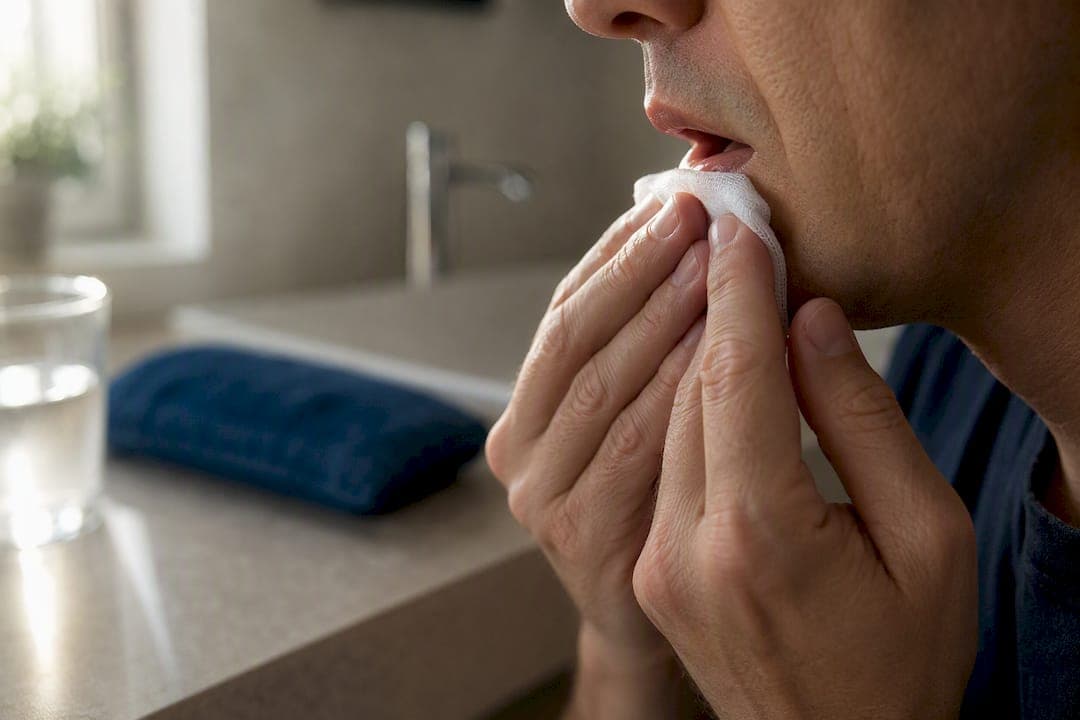
If your mouth is bleeding right now, fold a piece of clean, damp gauze (or a steeped black tea bag) and bite down on it with steady pressure for a sufficient period, no peeking. A cold compress against the outside of your cheek helps too.
- Pressure first, always. Don't rinse or spit repeatedly.
- Hold for the full recommended time without checking.
- If it hasn't slowed by then, call CWD Dental Group or head to urgent care.
Pro Tip: Tannins in black tea act as a mild astringent that helps blood vessels constrict, which is why dentists often mention it as a kitchen-cabinet backup when gauze isn't handy.
According to Cleveland Clinic, gentle brushing, flossing, and saltwater rinses handle most minor cases, but persistent bleeding past two weeks needs a dental exam.
Key Takeaways
Controlling dental bleeding at home comes down to uninterrupted pressure for 15 to 20 minutes, followed by close attention to whether it slows, and quick escalation if it doesn't.
| Point | Details |
|---|---|
| Apply steady pressure first | Bite down on damp gauze or a black tea bag for 15 to 20 minutes without checking underneath. |
| Use cold compress as backup | Press it against the outside of the cheek to constrict vessels and reduce swelling. |
| Watch for red flags | Fainting, pus, fever, or bleeding that resumes after proper pressure signals a bigger problem. |
| Protect the clot afterward | Skip hard foods, smoking, and alcohol for 24 to 48 hours while tissue heals. |
| Escalate when home care fails | CWD Dental Group offers same-day emergency appointments for bleeding that won't stop. |
This article is general information, not a substitute for advice from a qualified doctor. Consult a qualified healthcare professional about your own circumstances before acting on anything here.
Table of Contents
- How Do You Stop Dental Bleeding at Home Step by Step?
- What Home Remedies Actually Help With Bleeding Gums?
- What Causes Bleeding Gums, and When Should You Worry?
- How Do You Prevent Bleeding Gums From Coming Back?
- When Should You See an Emergency Dentist Instead of Waiting?
- Sources
How Do You Stop Dental Bleeding at Home Step by Step?
Most oral bleeding, whether it's a cut lip, an extraction site, or gums that won't quit after flossing, responds to the same basic sequence. The trick isn't some secret remedy. It's doing the boring part correctly: applying pressure and leaving it alone.
- Sit upright and lean slightly forward. This keeps blood from pooling in your throat and lets you see what you're dealing with.
- Rinse once, gently, with cool water if there's debris in your mouth, then stop rinsing.
- Fold clean gauze into a thick pad (or use a black tea bag soaked in warm water and squeezed out) and place it directly over the bleeding spot.
- Bite down or press firmly and hold for the recommended duration. Set a timer. Do not lift the gauze to check.
- Apply a cold compress to the outside of your cheek near the site in short intervals. This constricts blood vessels and cuts down on swelling.
- Check once, calmly. If bleeding has slowed to a trickle or stopped, leave it be. If it's still flowing heavily, repeat with fresh gauze.
Steady, uninterrupted pressure matters because your body needs a stable window to form a clot. Repeatedly checking underneath the gauze disrupts that clot before it can set, which is the single most common reason home bleeding control fails. The cold compress isn't just for comfort. Constricted vessels bleed less, plain and simple.
If bleeding continues after an appropriate duration of proper, unbroken pressure, that's your signal to escalate rather than try another home fix.
What not to do: skip vigorous rinsing, avoid spitting forcefully, and put off smoking until the area has healed. Smoking impairs healing and worsens gum bleeding, and it's one of the fastest ways to undo the progress you just made holding pressure.
If you're on a blood thinner like warfarin or a daily aspirin regimen, or you have a known clotting disorder, give yourself more time. Bleeding may take longer to slow even when you're doing everything right. That's expected, but if it's still steady after 30 minutes, don't keep waiting it out at home. Call an emergency dentist or get to an ER.

What Home Remedies Actually Help With Bleeding Gums?
Once heavy bleeding has slowed, a few kitchen and pharmacy staples can support healing. Not everything on the internet earns its reputation, though, so here's what's worth your time.
- Saltwater rinse: mix half a teaspoon of salt in 8 ounces of warm water and swish gently. Use this after active bleeding has stopped, not while a clot is still forming, since swishing too soon can knock it loose.
- Black tea bag compress: steep a bag, let it cool slightly, and press it against the site. The tannic acid works as a natural astringent.
- Diluted hydrogen peroxide: some people rinse briefly with a heavily diluted mix to cut bacteria, but it needs to stay diluted and should never be swallowed.
- Clove oil: a small dab on inflamed gum tissue can numb discomfort short term, though it won't stop active bleeding on its own.
Alcohol-based mouthwashes can dry out already-irritated gum tissue and make inflammation worse, so reach for an alcohol-free rinse until things settle down.
Skip anything marketed as a miracle cure. Turmeric paste and oil pulling show up constantly in home-remedy roundups, but there's no solid clinical evidence behind either one for stopping active bleeding. Green tea's antioxidants have some limited, suggestive research for reducing oral inflammation generally, which is a far cry from a first-aid tool.
What Causes Bleeding Gums, and When Should You Worry?
Bleeding gums usually trace back to something ordinary. Gingivitis and periodontitis top the list, followed by brushing too hard, ill-fitting dentures rubbing against tissue, hormonal shifts during pregnancy, and straightforward trauma like a bitten cheek or a chipped tooth. Blood-thinning medications and low vitamin C or K levels can also make gums bleed more easily than they otherwise would.
Most of that is manageable at home. A shorter list of symptoms means something else is going on:
- Bleeding that won't slow after 30 minutes of correct pressure — call an emergency dentist or go to the ER.
- Fainting, dizziness, or trouble breathing — call 911.
- Pus, fever, or a persistent bad taste or odor — signs of infection; contact a dentist same day.
- Bleeding that restarts every time you remove pressure, even briefly — this points to a clotting problem that needs evaluation, not more gauze.
A peer-reviewed review of periodontal disease mechanisms notes that untreated inflammation can progress to tissue breakdown, which is exactly why persistent bleeding shouldn't be brushed off as routine.
How Do You Prevent Bleeding Gums From Coming Back?
Once bleeding stops, the next 24 to 48 hours matter almost as much as the first 20 minutes did. Stick to soft foods, skip anything hard or crunchy that could disturb the clot, and hold off on alcohol and smoking while tissue heals.
- Switch to an extra-soft toothbrush and use light circular motions instead of scrubbing back and forth.
- Floss gently, easing the floss between teeth rather than snapping it against the gumline.
- Get 75 mg of vitamin C daily if you're a woman, or 90 mg if you're a man, since deficiency is a genuinely common, overlooked cause of bleeding gums.
- Stay hydrated and skip alcohol until the tissue has fully healed.
- If bleeding is tied to plaque buildup and keeps recurring, ask about scaling and root planing at your next visit.
Book a routine exam if bleeding shows up more than occasionally, even if it stops on its own each time. Recurring bleeding is data, not just an inconvenience.
When Should You See an Emergency Dentist Instead of Waiting?
Some situations move past home care entirely, requiring immediate attention from an emergency dentistry specialist. Get to an emergency dentist or ER if bleeding soaks through gauze repeatedly, continues past 30 minutes of proper pressure, or comes with fainting, shortness of breath, or visible facial swelling that's getting worse by the minute.
- A dentist or ER team will examine the site, may use local hemostatic agents or sutures for a deep wound, and can prescribe medication if needed.
- If a bleeding disorder seems likely, they'll refer you for further medical workup rather than treat it as routine.
- Bring a list of current medications (especially blood thinners), photos of the injury if you have them, and ID.
- CWD Dental Group offers same-day emergency appointments for exactly this kind of situation, so you're not stuck waiting days for care that can't wait.
A Quick Note From Kayle
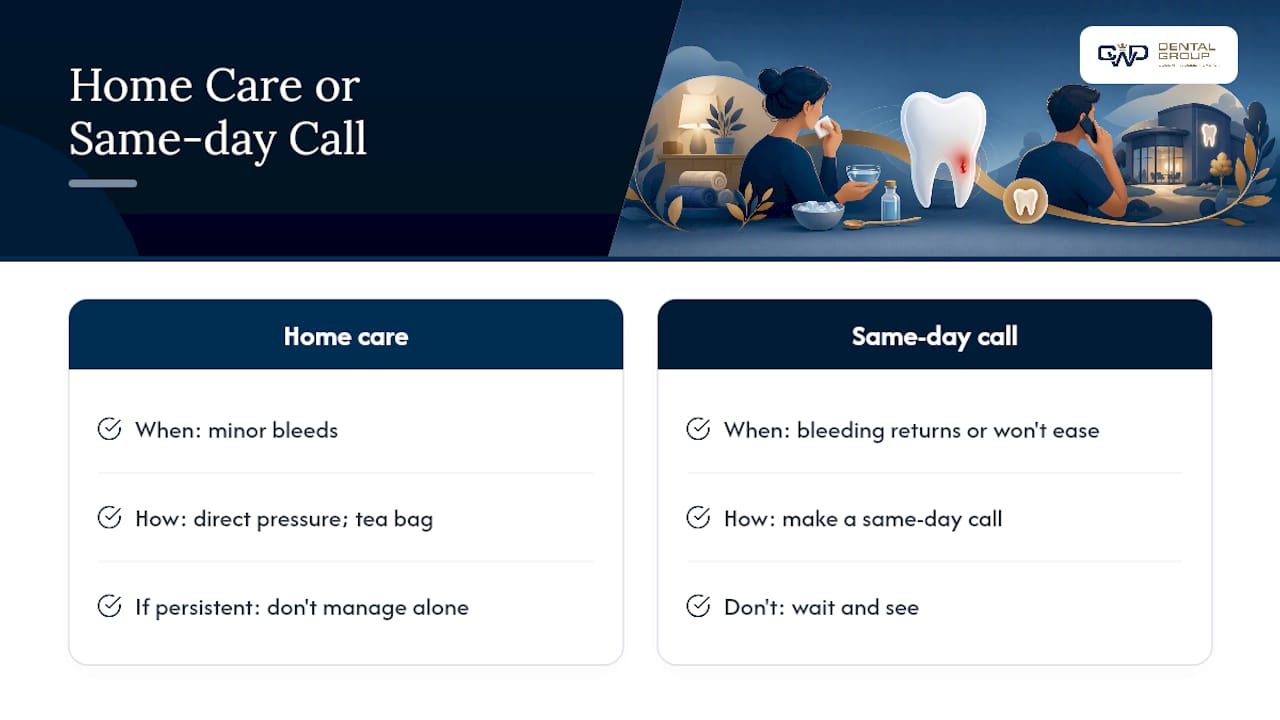
Home pressure and a tea bag handle most minor bleeds. But bleeding that keeps returning, or won't ease after real effort, isn't something to keep managing on your own. That's a same-day call, not a wait-and-see.
If Bleeding Doesn't Stop, Same-Day Care Is a Phone Call Away
Home first aid handles the vast majority of dental bleeding, but not all of it. When pressure and time aren't enough, you need somewhere that can see you the same day, not next Tuesday.

CWD Dental Group in Tallahassee keeps same-day slots open specifically for this: active bleeding, a knocked-out tooth, a suspected fracture, or gum bleeding that won't quit. The team can apply local hemostatic care, suture a wound, manage same-day pain, or handle an extraction if that's what the exam calls for, without the multi-day wait a lot of practices ask patients to sit through. If you're dealing with a bleeding disorder or take blood thinners, bring your medication list and they'll factor that into treatment on the spot.
If home measures aren't working, book a same-day emergency dental visit rather than waiting it out overnight.
Sources
- Mouth and Dental Injuries: At-Home Treatments, How To Handle Dental Emergencies — WebMD
- Bleeding gums — Cleveland Clinic
- Periodontal (Gum) Disease and Smoking — CDC
- NCBI PMC article (periodontal disease review)