
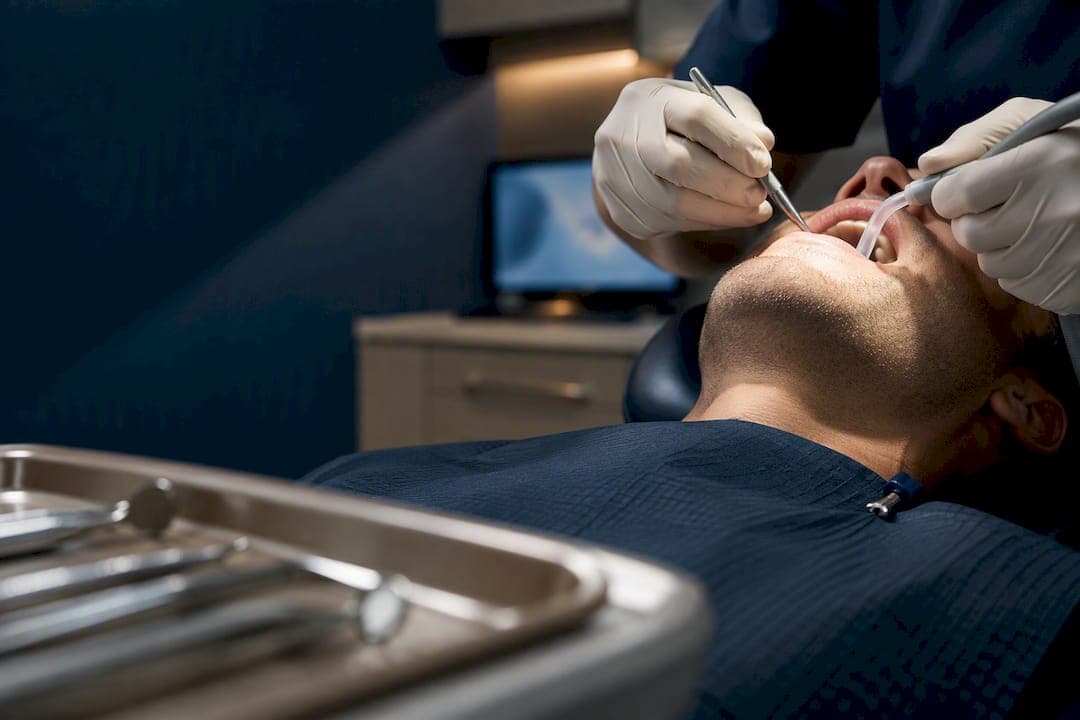
Antibiotics are not automatic for a tooth infection. They are indicated when there is fever, facial swelling, spreading infection, or a weakened immune system. For a localized abscess in an otherwise healthy adult, the fix is dental treatment, not a pill, so the real priority is getting seen fast. If you notice trouble breathing, swallowing, or rapidly worsening swelling, treat that as an emergency and get care immediately.
TL;DR:
- Antibiotics are reserved for spreading infections, facial swelling, fever, or immunocompromised patients, not routine abscess treatment in healthy adults.
- In typical cases, amoxicillin is the first-line antibiotic, but resistance or allergy shifts treatment to amoxicillin-clavulanate or clindamycin, respectively.
- Deep, systemic infections require emergency hospital IV antibiotics like piperacillin-tazobactam or meropenem, combined with surgical drainage.
- Short antibiotic courses paired with prompt dental procedures are sufficient; prolonged use signals unresolved source issues.
- Immediate emergency care is crucial for signs like difficulty breathing, rapid swelling, or high fever, which demand urgent hospital intervention.
Table of Contents
- Which Antibiotics Do Dentists Prescribe for a Tooth Infection?
- When Is Definitive Dental Treatment More Important Than Antibiotics?
- How Are Antibiotics Dosed for a Tooth Infection?
- What Side Effects and Risks Come With These Antibiotics?
- Can You Manage a Tooth Infection at Home, and What Are the Red Flags?
- Do Pregnancy, Immune Conditions, or Allergies Change the Approach?
- Where Same-Day Emergency Dental Care Fits In
- Why Prompt Treatment Beats Relying on Antibiotics Alone
- Get Same-Day Relief From a Tooth Infection
- Sources
- FAQ
Which Antibiotics Do Dentists Prescribe for a Tooth Infection?
Amoxicillin is usually the first call. It's a penicillin, it covers the bacteria that cause most dental abscesses, and it's cheap, well tolerated, and dosed easily. Penicillin V potassium works on the same principle and shows up often in older treatment charts, though most dentists now reach for amoxicillin because it absorbs better and needs fewer daily doses.
Plain amoxicillin doesn't always finish the job. Some oral bacteria produce an enzyme called beta-lactamase that breaks down penicillin before it can work. When a dentist suspects that resistance pattern, or the infection looks stubborn, the prescription shifts to amoxicillin-clavulanate (sold under the brand Augmentin), which pairs amoxicillin with a compound that blocks that enzyme. Metronidazole gets added to the mix, too, usually alongside penicillin rather than alone, because it targets anaerobic bacteria (the kind that thrive in oxygen-poor spaces like a dying tooth's pulp) that amoxicillin doesn't touch well by itself.
Penicillin allergy changes the whole plan. Clindamycin is the standard substitute, and it has a real advantage: it penetrates bone tissue effectively, which matters when the infection involves the jaw. Azithromycin is another alternative, generally reserved for patients who can't tolerate clindamycin, though resistance patterns and dosing guidance vary by regimen and a dentist will weigh that before choosing it.
Severe, deep-space infections are a different category entirely. If the swelling threatens the airway or spreads into fascial spaces of the neck, oral antibiotics won't cut it. Hospital-based IV regimens using piperacillin-tazobactam, meropenem, or cefoxitin come into play, usually alongside emergency surgical drainage.
Antibiotic options dentists consider, by scenario:
- Uncomplicated abscess, no allergy: amoxicillin, often first-line.
- Suspected resistant bacteria or slow response: amoxicillin-clavulanate, sometimes with metronidazole added.
- Confirmed penicillin allergy: clindamycin, with azithromycin as a secondary option.
- Severe or spreading infection with systemic symptoms: broader IV coverage in a hospital setting.
A number worth remembering: a short course of antibiotics for several days is typically enough when used correctly, as an add-on to a dental procedure rather than a stand-alone fix. Longer courses tend to signal that something else, usually the underlying tooth, still needs attention.
When Is Definitive Dental Treatment More Important Than Antibiotics?
The American Dental Association's clinical guideline is blunt about it: dentists should not prescribe oral antibiotics as a routine add-on to conservative dental treatment for most pulpal and periapical infections in patients who are otherwise healthy. The guideline reserves antibiotics for cases with systemic involvement, such as fever or malaise, or where treatment can't be delivered promptly.
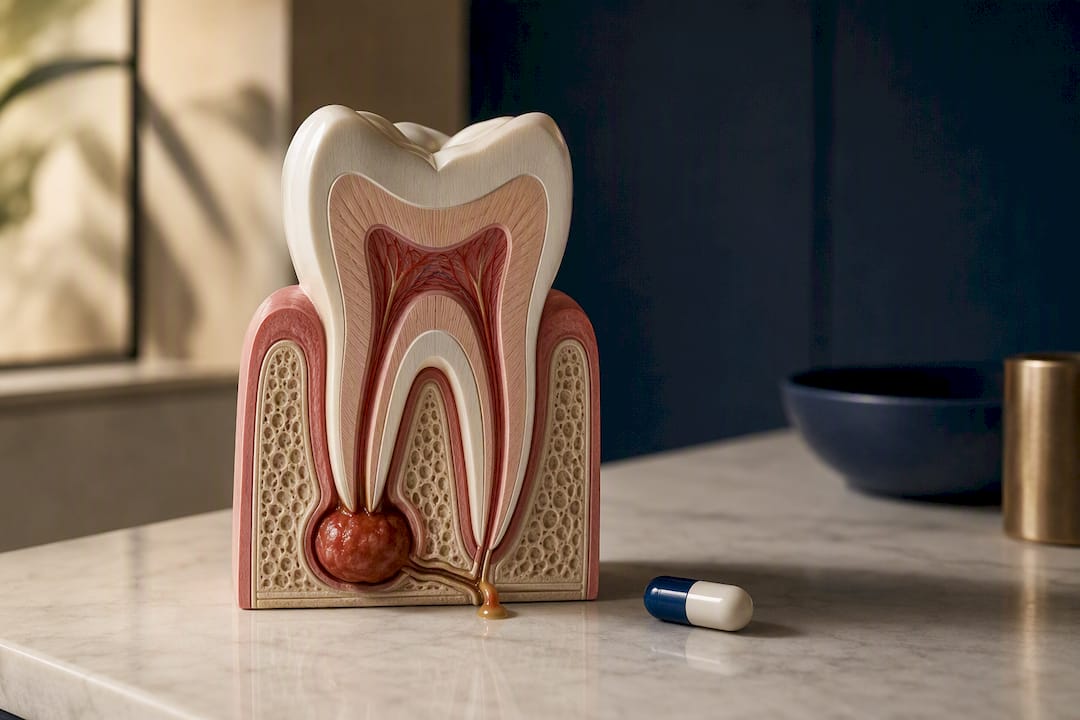
There's a physical reason antibiotics alone tend to fail here. Once the pulp inside a tooth dies, blood flow to that space collapses. Antibiotics travel through the bloodstream, so a drug that can't reach the infection's actual source can't clear it, no matter how well it's chosen or dosed.
The Cleveland Clinic puts it plainly for patients: antibiotics can help stop an infection from spreading, but they won't remove what's causing it. A dental procedure, drainage, root canal therapy, or extraction, is what actually treats the source.
So when do antibiotics actually belong in the picture? A handful of scenarios justify them: visible facial or neck swelling that's spreading, a fever, general malaise that suggests the infection has moved past the tooth itself, an immunocompromised patient whose body can't mount a normal defense, or a situation where a patient genuinely cannot get to a dentist right away and needs a bridge until they can. Mayo Clinic's guidance draws the same line: antibiotics for spreading infection or a weakened immune system, but not as a default for an isolated abscess that can be drained or removed promptly.
That distinction reshapes how you should think about a prescription. If a dentist looks at your swollen jaw and says "let's get this drained first," that's not a dodge. It's the guideline working as intended.
How Are Antibiotics Dosed for a Tooth Infection?
Dosing follows fairly standard patterns once a drug is chosen, though the exact numbers and duration depend on the infection's severity and your medical history. These are typical oral regimen examples cited in clinical antimicrobial reviews, not a substitute for what your dentist actually prescribes:
- Amoxicillin: commonly 500 mg taken three times daily.
- Penicillin V potassium: dosed on a similar multiple-times-daily schedule, typically for adults without penicillin allergy.
- Amoxicillin-clavulanate: often 875/125 mg taken twice daily when broader coverage is needed.
- Metronidazole: frequently 500 mg three times daily, usually paired with a penicillin rather than used alone.
- Clindamycin: the standard fallback for penicillin allergy, dosed multiple times a day.
- Azithromycin: sometimes prescribed with a loading dose on day one followed by a lower daily dose, though it's used more cautiously given resistance trends.
Most oral courses run short, often a matter of days rather than weeks, once paired with the actual dental procedure that resolves the infection. A course that keeps getting extended without a procedure attached is a sign to ask more questions, not necessarily to worry.
Escalation happens when the infection doesn't respond, when swelling spreads toward the eye, floor of the mouth, or neck, or when a patient shows systemic signs like a high fever or confusion. At that point, care typically moves to a hospital setting for IV antibiotics and surgical drainage, sometimes combined with agents like piperacillin-tazobactam or meropenem for severe, deep-space infections. That's not a step anyone should try to manage from a waiting room. It's an emergency department decision.
What Side Effects and Risks Come With These Antibiotics?
Most people tolerate dental antibiotics without much trouble, but a few effects show up often enough to expect them. Nausea, upset stomach, and diarrhea are the most common complaints across nearly every drug on this list, and they're usually manageable by taking the medication with food (check the specific instructions, since some regimens want an empty stomach).
- Mild rash or itching can signal a low-grade allergic reaction worth mentioning to your dentist.
- Hives, facial swelling, throat tightness, or difficulty breathing after a dose are signs of anaphylaxis, a medical emergency that needs 911 or an ER visit immediately, not a wait-and-see approach.
- Severe, watery diarrhea that develops during or after a course, especially with clindamycin, can signal Clostridioides difficile infection, a serious gut condition that sometimes follows antibiotic use and needs prompt medical attention.
- Persistent yeast infections or thrush can follow a course of antibiotics, particularly broader-spectrum ones.
The C. difficile risk is part of a bigger reason dentists don't hand out antibiotics casually. Every unnecessary course adds pressure toward antimicrobial resistance, a public health problem the World Health Organization tracks closely, and the ADA's own stewardship guidance pushes dentists to reserve antibiotics for cases that genuinely need them.
Pro Tip: Write down every medication and supplement you're taking before your dental appointment, including birth control and blood thinners. Several common antibiotics interact with them, and mentioning it upfront saves a phone call later.
Can You Manage a Tooth Infection at Home, and What Are the Red Flags?
Home care buys you comfort, not a cure. Warm saltwater rinses, over-the-counter pain relievers like ibuprofen or acetaminophen, a cold compress against the outside of your face, and avoiding chewing on the affected side all help you get through the wait for a dental appointment, a point MedlinePlus makes plainly for patients researching options.
None of that clears the infection. Antibiotics, even when prescribed, mainly stop bacteria from spreading further while the underlying problem, usually a dead or dying tooth, still needs a dentist to drain, treat, or remove it. Skipping that step and relying on medication alone is one of the most common reasons infections come back.
Certain symptoms mean you stop waiting and act immediately:
- Difficulty breathing or swallowing.
- Swelling that's spreading quickly across your face, under your jaw, or down your neck.
- A high fever, chills, or a general feeling that something is seriously wrong with your whole body, not just your mouth.
- Your eye starts swelling shut or your vision changes.
- Confusion, rapid heartbeat, or extreme fatigue alongside facial swelling.
Any of those warrants a call to 911 or a trip to the emergency room, not a scheduled dental visit. Recognizing these signs early is often what separates a routine extraction from a hospital admission.
Do Pregnancy, Immune Conditions, or Allergies Change the Approach?
Pregnancy narrows the antibiotic list rather than expanding it. Amoxicillin and penicillin V are generally considered acceptable choices during pregnancy, but the decision should always run through both your dentist and your obstetrician together, since dosing and drug selection can shift based on trimester and other medications.
Immunocompromised patients, whether from chemotherapy, diabetes, an organ transplant, or another condition, get a lower threshold for systemic antibiotics. A localized-looking infection that a healthy adult could manage with drainage alone might justify antibiotics sooner in someone whose body can't fight it off as effectively, and escalation to broader coverage tends to happen faster too.
A true penicillin allergy, confirmed rather than suspected, shifts treatment toward clindamycin or azithromycin. If you're not sure whether a past reaction was a real allergy or just an unrelated rash, ask about allergy testing or a specialist referral before assuming you need to avoid an entire drug class permanently.
Where Same-Day Emergency Dental Care Fits In
Guideline-driven care means the antibiotic prescription is often secondary to the procedure that actually removes the infection's source. That's exactly where a same-day appointment matters most: the faster a dentist can drain an abscess, start root canal therapy, or extract a failing tooth, the less antibiotics have to do the heavy lifting alone.
Some dental practices offer same-day emergency appointments specifically for situations like this, so patients aren't stuck waiting days while swelling and pain build. If you're trying to figure out whether what you're feeling qualifies as urgent, the dental abscess symptoms guide and the emergency dentist overview both walk through what to expect before you arrive.
Why Prompt Treatment Beats Relying on Antibiotics Alone
The biggest misconception I see repeated online is that a prescription equals a cure. It doesn't, and treating antibiotics as the finish line instead of a bridge to actual dental treatment is how minor infections turn into emergency room visits. Guideline-driven care exists because it works better than reflexive prescribing, not because it's more cautious for its own sake.
If you're calling a dental office with a swollen jaw, say exactly what's happening: when the pain started, whether swelling is spreading, any known drug allergies, and whether you have a fever. That level of detail helps a dentist decide in minutes whether you need antibiotics, an urgent procedure, or both. And if any red-flag symptom shows up, difficulty breathing, rapid swelling, high fever, don't wait for a callback. Same-day emergency care exists for exactly that moment.
— Kayle
Get Same-Day Relief From a Tooth Infection
A tooth infection doesn't wait for a convenient appointment slot, and neither should your care. Same-day emergency appointments can provide real dental treatment, including drainage, root canal therapy, and extractions, delivered the same day symptoms turn urgent instead of days later.
That matters because, as covered above, antibiotics alone rarely resolve an infection sitting inside a dead tooth. What actually ends it is a procedure, and getting that procedure fast limits how much damage the infection does in the meantime. Dental teams may evaluate swelling, pain, and systemic symptoms on arrival and move straight into treatment rather than a multi-day wait. If you're dealing with facial swelling, a throbbing tooth, or pain that's getting worse by the hour, check the emergency dentist page or browse the full range of services to see what's available, then call to get seen the same day.
Sources
- Antimicrobial management of dental infections: Updated review - NCBI Bookshelf
- Antibiotics for Tooth Infections - Cleveland Clinic
- Tooth abscess - Diagnosis & treatment - Mayo Clinic
- Antimicrobial management of dental infections: Updated review - PMC
FAQ
Do I Always Need Antibiotics for a Tooth Infection?
No. The ADA guideline recommends against routine antibiotics for most localized infections in healthy adults, favoring drainage, root canal therapy, or extraction instead. Antibiotics come into play when there's fever, spreading swelling, or a weakened immune system.
What Is the Best Antibiotic for a Tooth Infection?
Amoxicillin is usually the first choice because it's effective, affordable, and easy to dose. When resistance is suspected or coverage needs to be broader, dentists often switch to amoxicillin-clavulanate or add metronidazole.
What Should I Take if I'm Allergic to Penicillin?
Clindamycin is the standard alternative for a confirmed penicillin allergy, largely because it penetrates bone tissue well. Azithromycin is a secondary option some dentists use, though its selection depends on resistance concerns and the specific case.
Can a Tooth Infection Go Away Without Antibiotics?
Yes, if the source is treated directly. Draining an abscess, completing a root canal, or extracting the tooth removes the actual infection, which antibiotics alone typically cannot do since blood flow to a dead tooth's pulp is cut off.
How Much Does Emergency Dental Care Cost at Cwddentalgroup?
Pricing for emergency visits and procedures isn't published online and depends on the treatment needed. Current details are available directly through the services page or by contacting the office.