

When a tooth cracks at 10 PM or an abscess flares on a Sunday, you have more options than just waiting until Monday morning. After hours dental care options in the U.S. include urgent care dental offices, walk-in dental clinics, teledentistry platforms, and hospital emergency rooms, each suited to different levels of severity.
Here is a quick snapshot of what is available:
- Urgent care dental offices: Same-day or evening appointments for pain, broken teeth, and infections
- Walk-in dental clinics: No appointment needed; useful for moderate emergencies
- Teledentistry: 24/7 virtual consultations for triage, pain guidance, and prescriptions
- Hospital ERs: Stabilization only; they do not perform fillings or crowns
- Your primary dentist's after-hours line: Often the fastest path to real triage instructions
Knowing which option fits your situation can mean the difference between saving a tooth and losing one.
Table of Contents
- What does after hours dental care actually mean?
- Common dental emergencies and what to do right now
- What after hours dental care options are available in the U.S.?
- How do you find and prepare for after hours dental care?
- How Cwddentalgroup handles after hours emergency care
- What does after hours dental care cost, and does insurance cover it?
- What should you expect during an after hours emergency dental visit?
- What after hours dental care cannot always fix
- Key Takeaways
- Cwddentalgroup is Tallahassee's answer to after hours dental pain
What does after hours dental care actually mean?
After hours dental care refers to any dental service provided outside a practice's standard weekday schedule, typically before 8 AM, after 5 PM, on weekends, or on holidays. It covers everything from a quick phone triage to a full emergency extraction at midnight.
The need for these services is real and growing. Nearly 2 million patients visit emergency rooms annually for non-traumatic dental problems, largely because they cannot find immediate dental care elsewhere. ERs can prescribe antibiotics and pain relievers, but they do not fix the underlying problem.
Not every after-hours dental problem is a true emergency. Dentists generally split these situations into two categories:
- True dental emergencies: Uncontrolled bleeding, severe infection with facial swelling, knocked-out teeth, or broken facial bones. These need care within the hour.
- Urgent but non-emergency issues: Severe toothache, lost filling, cracked crown, or a broken tooth with no bleeding. These need same-day or next-day attention but are not life-threatening.
The distinction matters because it determines where you go. A true emergency may warrant an ER visit for stabilization, while an urgent issue is better handled by an after-hours emergency dentist who can actually treat the tooth.
Only 26% of U.S. states have specific mandates for after-hours emergency dental coverage, which explains why access varies so dramatically depending on where you live.
Common dental emergencies and what to do right now
Most after-hours dental crises fall into a handful of categories. Research shows that severe toothache (acute pulpitis), broken teeth, and lost restorations account for the majority of urgent dental calls, and 63% of patients seen by on-call dentists are treated within one hour.

Severe toothache: Rinse with warm water, floss gently to remove any trapped food, and take an over-the-counter pain reliever such as ibuprofen or acetaminophen. Apply a cold compress to the outside of your cheek. Never place aspirin directly against your gum tissue; it burns.
Broken or chipped tooth: Save any broken pieces, rinse your mouth with warm water, and apply gauze if there is bleeding. A cold compress on the cheek reduces swelling. Get to a dentist as soon as possible; tooth pain urgency increases when the nerve is exposed.
Knocked-out tooth: Pick it up by the crown, not the root. Rinse it gently without scrubbing. Try to reinsert it in the socket; if that is not possible, store it in milk or a saline solution. The Cleveland Clinic notes that a dentist has the best chance of saving a knocked-out tooth when it is returned to its socket within one hour.
Dental abscess: Rinse with a mild saltwater solution several times to ease pain and draw infection toward the surface. Do not ignore an abscess. Left untreated, the infection can spread to your jaw, neck, or airway.
Lost filling or crown: Press sugarless gum into the cavity temporarily, or use over-the-counter dental cement. Bring the crown with you to your appointment.
Pro Tip: Call your dentist's after-hours line before going anywhere. Many practices use answering services or emergency voicemail to provide triage instructions and connect you directly with an on-call dentist, which can save you a costly ER trip.
What after hours dental care options are available in the U.S.?
The landscape of after-hours dentistry has expanded considerably. More dental clinics are adding evening and weekend hours specifically to handle cases that would otherwise end up in hospital ERs.
Urgent care dental offices are the gold standard for after-hours treatment. These practices offer extended hours, same-day appointments, and the ability to perform actual dental work: extractions, temporary restorations, abscess drainage, and more. Unlike an ER, they treat the problem rather than just managing symptoms.
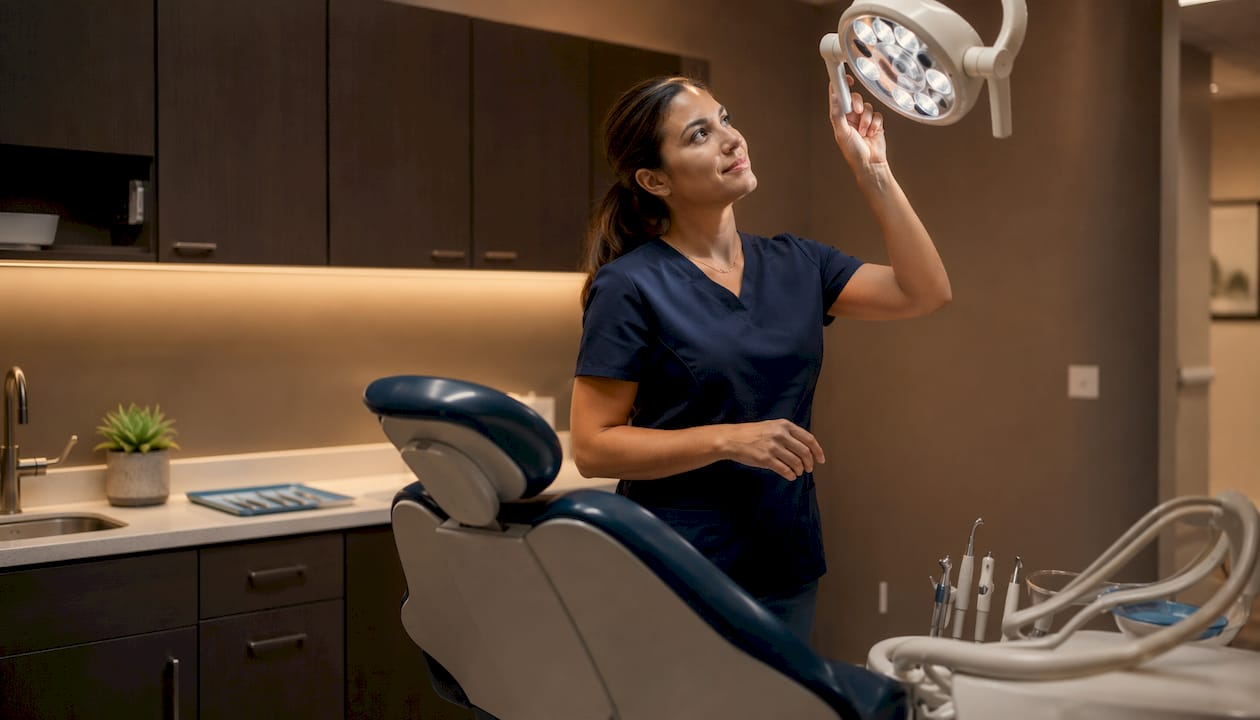
Walk-in dental clinics operate similarly to urgent care medical centers. No appointment is required, and they handle a broad range of moderate emergencies. Wait times vary, but they are generally shorter than an ER and far more equipped for dental work.
Teledentistry has become a genuinely useful first step. Virtual platforms offer around-the-clock consultations where a licensed dentist can assess your situation, prescribe antibiotics or pain medication, and direct you to the right level of in-person care. This is especially valuable in rural areas where an after-hours dental office may be an hour away.
Hospital ERs are the option of last resort for dental issues. Medical ERs do not perform restorative dental work; they provide palliative care and refer patients to dentists for definitive treatment. They are appropriate when you have uncontrolled bleeding, severe facial swelling that is closing your airway, or broken facial bones.
One practical consideration: booking a last-minute dental appointment has gotten easier with digital platforms that show real-time availability, including after-hours slots.
How do you find and prepare for after hours dental care?
Speed matters in a dental emergency, so knowing where to look before a crisis hits is worth the five minutes it takes.
- Search online platforms: Zocdoc allows filtering for dentists with after-hours availability by location and emergency type, showing real-time appointment slots.
- Call your primary dentist first: Even after hours, many practices route calls to an on-call dentist or answering service that can triage your situation and potentially see you that night.
- Check provider credentials: Look for a licensed general dentist or oral surgeon with verifiable credentials and recent patient reviews that specifically mention emergency responsiveness.
- Prepare your information: Have your insurance card, a list of current medications, and any known allergies ready before you call or walk in. This speeds up intake considerably.
- Know your dental home: Patients with an established dental home, a primary practice that knows their history, get faster and better after-hours care. Establishing a dental home reduces inappropriate ER visits by providing continuity of care with accessible after-hours contact.
Pro Tip: Save your dentist's after-hours number in your phone now, not when you are in pain at midnight. Most practices that offer emergency coverage list a separate emergency line on their website or voicemail.
Dental care does not have to be hard to fit into your schedule. Many practices now offer extended hours specifically because dental care fits busy schedules better than most people expect.
How Cwddentalgroup handles after hours emergency care
Cwddentalgroup, based in Tallahassee, Florida, takes a patient-first approach to emergency dental care that goes beyond the typical "call back during business hours" response. The practice offers same-day emergency appointments, which means patients with acute pain, broken teeth, or infections are seen quickly rather than told to wait.
The team at Cwddentalgroup covers a full range of urgent treatments: pain relief, abscess drainage, temporary and permanent restorations, and advanced restorative procedures for more complex cases. That breadth matters when you do not know exactly what you are dealing with at 7 PM on a Friday.
The practice's reputation is built on exactly this kind of responsiveness. Patients consistently highlight the team's professionalism and the warmth of the experience, which is not something you expect when you are calling in a panic about a cracked molar. For anyone in the Tallahassee area looking for a trusted emergency dentist, Cwddentalgroup's combination of same-day access and experienced clinicians sets a high bar.
What does after hours dental care cost, and does insurance cover it?
Cost is one of the first things people worry about when a dental emergency hits outside regular hours. The honest answer: it depends on where you go and what you need, but a dental office is almost always cheaper than an ER.
A localized emergency visit plus an extraction at a dental office typically runs $200–$1,200. An ER visit for the same complaint can escalate into a multi-day hospital stay costing far more, and the ER still will not fix the tooth. After-hours dental offices often charge a modest after-hours or emergency fee on top of standard procedure costs, but the total is usually far lower than hospital care.
Insurance coverage for after-hours dental care varies. Most dental insurance plans cover emergency exams and medically necessary procedures regardless of when they occur, but they may not cover the after-hours surcharge. Call your insurer before your visit if time allows. Medicaid covers emergency dental services for adults in some states, though coverage varies widely by state. Many after-hours dental practices also offer transparent flat-rate pricing or payment plans for uninsured patients.
What should you expect during an after hours emergency dental visit?
Walking into an after-hours dental visit is not dramatically different from a regular appointment, but the pace is faster and the focus is narrower.
The dentist will take a brief medical history, ask about your symptoms and when they started, and likely take X-rays to assess the extent of the problem. From there, the goal is to relieve pain, stop any active infection, and stabilize the tooth. You may receive a temporary restoration, an antibiotic prescription, or a referral for a follow-up procedure during regular hours.
Expect to spend 30–90 minutes depending on the complexity of the issue. Bring your insurance information and a list of any medications you take. If you are anxious, mention it when you call ahead; many practices offer nitrous oxide or other comfort options even for emergency visits.
What after hours dental care cannot always fix
After-hours dental care is excellent at managing acute pain and stopping active problems from getting worse. It is not always the right setting for complex, multi-step procedures.
Treatments like full root canals, dental implants, complex extractions involving impacted wisdom teeth, and extensive crown work typically require follow-up appointments during regular hours with proper equipment and lab support. An after-hours visit will address the immediate crisis, but the definitive fix often comes later.
This is why same-day dental appointments matter so much for continuity. The best after-hours providers document everything from the emergency visit and coordinate directly with your regular dentist, so nothing falls through the cracks between the late-night visit and the follow-up.
Teledentistry has the same limitation: a virtual consultation can prescribe medication and guide your next steps, but it cannot perform a procedure. Think of it as a triage tool, not a treatment.
Key Takeaways
After hours dental care options range from same-day urgent dental offices to teledentistry triage, and choosing the right one quickly can save both your tooth and your wallet.
| Point | Details |
|---|---|
| Know your options before a crisis | Urgent care dental offices, walk-in clinics, teledentistry, and ERs each serve different severity levels. |
| Act within one hour for knocked-out teeth | Dentists have the best chance of saving a tooth when it is returned to its socket within one hour. |
| ERs treat symptoms, not teeth | Medical ERs provide palliative care but do not perform fillings, crowns, or restorations. |
| Only some states mandate coverage | After-hours emergency dental coverage requirements vary widely, making a dental home critical for reliable access. |
| Cwddentalgroup offers same-day emergency care | Tallahassee patients get same-day appointments, pain relief, and full restorative follow-up at Cwddentalgroup. |
Cwddentalgroup is Tallahassee's answer to after hours dental pain
When you need a dentist after hours in Tallahassee and you want someone who will actually fix the problem, not just hand you a prescription and send you home, Cwddentalgroup is the practice to call. Same-day emergency appointments mean no waiting until the next available slot opens up three days from now. The team handles everything from acute pain relief to complex restorations, all in one place, with a patient experience that patients describe as genuinely reassuring rather than rushed.
Whether you are dealing with a cracked tooth, a throbbing abscess, or a lost crown on a Friday evening, Cwddentalgroup's experienced team is ready to see you. Visit the emergency dental care page to learn about same-day availability, or schedule your visit directly online right now.