
Tooth color shapes how other people judge your age, health, and approachability within seconds of you smiling, and it shapes how confident you feel about smiling in the first place. That's why tooth color matters for smiles more than most people realize. Researchers who study social perception find lighter, whiter teeth read as younger and healthier, while darker or discolored teeth read as older and less well cared for. Here's what matters most:
- Social perception: Lighter teeth get rated as more attractive and younger across age groups and genders.
- Psychological effect: Feeling good about your smile is tied to self-esteem and how often you smile in public.
- Practical action: Not every discoloration needs the same fix. Some respond to whitening; others need a dentist.
The rest of this guide covers what causes different shades, what the research actually found, and which treatments fit which problem.
Key Takeaways
Tooth color drives snap judgments about age and health in others, and drives how confident you feel smiling, so matching the right treatment to the actual cause of discoloration matters more than chasing the whitest shade possible.
| Point | Details |
|---|---|
| Color signals age and health | Lighter teeth get rated more attractive and younger across genders and age groups in social perception research. |
| Confidence ties to self-esteem | Feeling good about your smile is linked to higher self-esteem and more willingness to smile in public. |
| Match treatment to cause | Surface stains respond to whitening; intrinsic discoloration usually needs bonding, veneers, or internal bleaching. |
| Watch for red flags | Sudden single-tooth darkening, pain, or swelling needs prompt dental evaluation, not home whitening. |
| CWD Dental Group offers evaluation | Same-day emergency visits and cosmetic consultations help match the right fix to the actual cause. |
This article is general information, not a substitute for advice from a qualified doctor. Consult a qualified healthcare professional about your own circumstances before acting on anything here.
Table of Contents
- What Tooth Color Actually Is (and How Dentists Measure It)
- What Different Tooth Colors Usually Mean
- What the Research Says About Tooth Color and Attractiveness
- Which Treatment Fixes Which Problem
- Everyday Habits That Prevent Staining
- When a Color Change Means You Should See a Dentist
- How Shade Selection and Skin Tone Work Together
- Sources
What Tooth Color Actually Is (and How Dentists Measure It)
Every tooth is a translucent layer of enamel sitting over a yellowish core called dentin. That layering is why your natural tooth color isn't a flat white. It's a gradient, usually darker near the gumline and lighter toward the biting edge, because enamel thins out at the root and thickens at the tip.
Dentists describe color using three parameters: value (how light or dark a shade is), hue (the actual color family, like yellow or gray), and chroma (how saturated that hue looks). Shade guides like VITA and VITAPAN break these into standardized tabs a dentist holds against your teeth to find a match.
- Value affects perception the most. A shade that's simply lighter tends to look more noticeably improved than one where only the hue shifted.
- This is why two people can have very different natural hues and both look healthy, as long as the value sits in a normal range.
- It's also why whitening treatments target value first, not hue.
What Different Tooth Colors Usually Mean
Not all discoloration comes from the same source, and the color itself is a decent clue to the cause.
- Yellow: Usually surface staining from coffee, tea, wine, or tobacco, sometimes combined with naturally thinner enamel that lets more dentin show through.
- Brown: Often deeper extrinsic staining, or in some cases fluorosis from childhood fluoride exposure.
- Gray or bluish: Frequently linked to tetracycline antibiotic exposure during tooth development, or aging dentin that's darkened over decades.
- Green or black: Usually specific bacterial staining or heavy tartar buildup along the gumline.
- One tooth darker than the rest: Often a sign of internal trauma, a dying nerve, or a previous root canal that's changed the tooth's internal structure.
The broader split dentists use is extrinsic discoloration (surface stains you can often polish or whiten away) versus intrinsic discoloration (color changes inside the tooth structure itself, caused by genetics, medication, or injury). Whitening gel works on the surface. It does very little for a problem that started inside the dentin.
Pro Tip: If one tooth suddenly darkens on its own, especially after a bump to the mouth, don't wait for whitening to fix it. Get it checked. Sudden single-tooth darkening usually means something is happening inside the tooth, not on its surface.
What the Research Says About Tooth Color and Attractiveness
People judge tooth color faster than most other facial features, and the data backs that up with real numbers. A peer-reviewed study on tooth color and social judgment found that lighter, whitened teeth were consistently rated as more attractive and belonging to younger people, across both age groups and genders in the sample. Darker teeth pulled the opposite ratings, even when everything else about the face stayed the same.
That effect isn't just about how strangers see you. A study on dental confidence and well-being found that confidence in your own smile predicts higher self-esteem, and that people who feel self-conscious about their teeth tend to smile less and pull back from social situations. One analysis on tooth appearance and quality of life found that people who whitened or straightened their teeth reported feeling more comfortable smiling afterward.
- Whiter/lighter teeth: rated more attractive, younger, healthier.
- Darker/discolored teeth: rated older, less healthy, in some cases less trustworthy.
- Dental confidence: tied to self-esteem and willingness to smile in public.
None of this is absolute. Cultural context and individual taste still shape what looks "right" on a given face, but the overall pattern shows up again and again in the research.
Which Treatment Fixes Which Problem
Not every discoloration calls for the same treatment, and picking the wrong one wastes money and time.
- In-office whitening: Fast, dentist-supervised, best for surface stains from food, drink, or tobacco. Results in one visit, but doesn't touch intrinsic color.
- Take-home trays: Slower than in-office treatment, but more gradual and gentler on sensitive teeth. Good for maintaining results between visits.
- Microabrasion: Removes a thin surface layer to reduce mild white or brown mottling, often from fluorosis.
- Composite bonding: A tooth-colored resin applied directly to mask discoloration or chips. Affordable and fast, but stains over time and needs occasional touch-ups.
- Porcelain veneers: Thin shells bonded over the front of the tooth. Handles deep intrinsic discoloration that whitening can't reach, with a longer-lasting, stain-resistant result.
- Crowns: Used when the tooth has structural damage along with color issues, not just a cosmetic problem.
- Internal bleaching: Applied inside a tooth after root canal treatment, since dentin color changes after nerve death respond poorly to surface whitening.
Whitening handles most surface stains well. For structural or medication-related discoloration, a restorative approach like veneers or bonding tends to give more predictable, longer-lasting results than repeated whitening cycles. If you're comparing your options, a rundown of teeth whitening methods and expected results is worth reading before you commit to a treatment plan.
Everyday Habits That Prevent Staining
Most staining is preventable, or at least slowable, with a few consistent habits.
- Brush with fluoride toothpaste twice daily and floss once, since plaque buildup traps staining pigments against enamel.
- Rinse with water or use a straw after coffee, tea, red wine, or dark sodas to limit contact time with your teeth.
- Quit smoking or using tobacco products. Tobacco tar is one of the fastest, deepest staining agents there is.
- Skip abrasive whitening toothpaste used daily long-term. It can wear enamel thin and cause sensitivity without much added whitening benefit.
- Stick to over-the-counter whitening products with ADA-recognized peroxide concentrations, and stop if you notice persistent sensitivity.
For maintenance, most people benefit from a professional cleaning every six months and a whitening touch-up every six to twelve months depending on diet and habits. If stains keep coming back faster than that, it's worth a conversation with your dentist about what's driving the recurring staining and whether a different approach makes more sense long-term.
When a Color Change Means You Should See a Dentist
Most discoloration is cosmetic. Some isn't, and waiting can cost you the tooth.
- One tooth suddenly darker than the rest, especially after any injury to the mouth.
- Pain, throbbing, or sensitivity that accompanies the color change.
- Swelling in the gum near the discolored tooth.
- Visible pitting, holes, or dark spots that look like decay rather than surface stain.
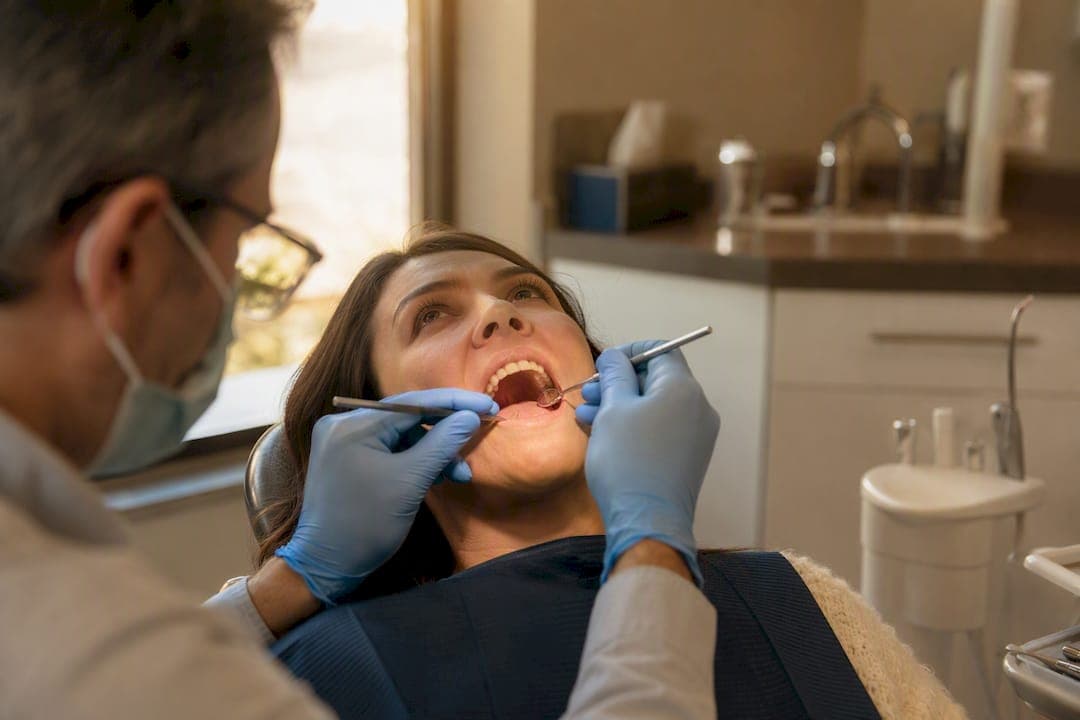
A dentist typically starts with a visual exam and an X-ray to check what's happening beneath the surface. If any of these signs show up, get evaluated promptly instead of waiting to see if it resolves on its own.
How Shade Selection and Skin Tone Work Together
Getting a natural result isn't just about picking the whitest shade on the guide. Dentists typically evaluate shade under natural daylight, compare it against a physical shade guide, and increasingly cross-check with digital photography or a mockup try-in before committing to a final color.
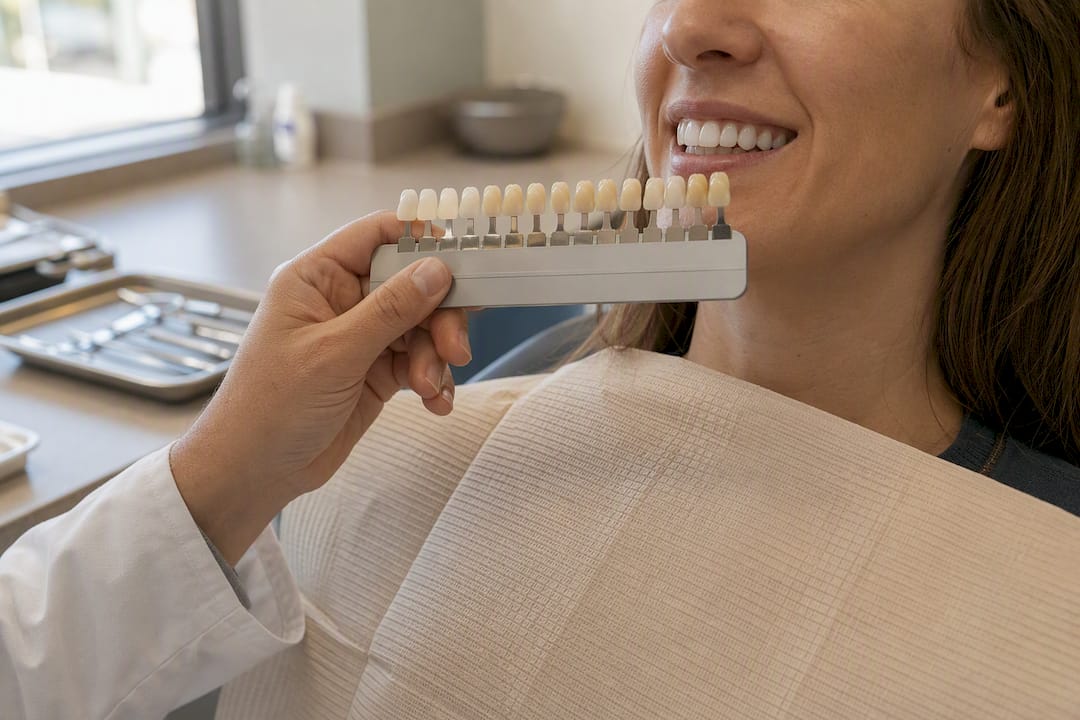
One clinical study on skin complexion and tooth shade found an inverse relationship between skin complexion and ideal tooth value in its sample, meaning shade selection benefits from factoring in someone's complexion rather than applying one shade to everyone. That said, a separate controlled study on tooth shade and skin tone found that brighter tooth shades boosted perceived smile attractiveness regardless of skin tone, so brightness still matters broadly even as harmony fine-tunes the result.
Pro Tip: Bring a few daylight photos of your current smile to your consultation and ask about a mockup or try-in restoration before finalizing your shade. It's the easiest way to avoid an overly bright, chalky-looking result.
A clinician's balance: health first, natural aesthetics second
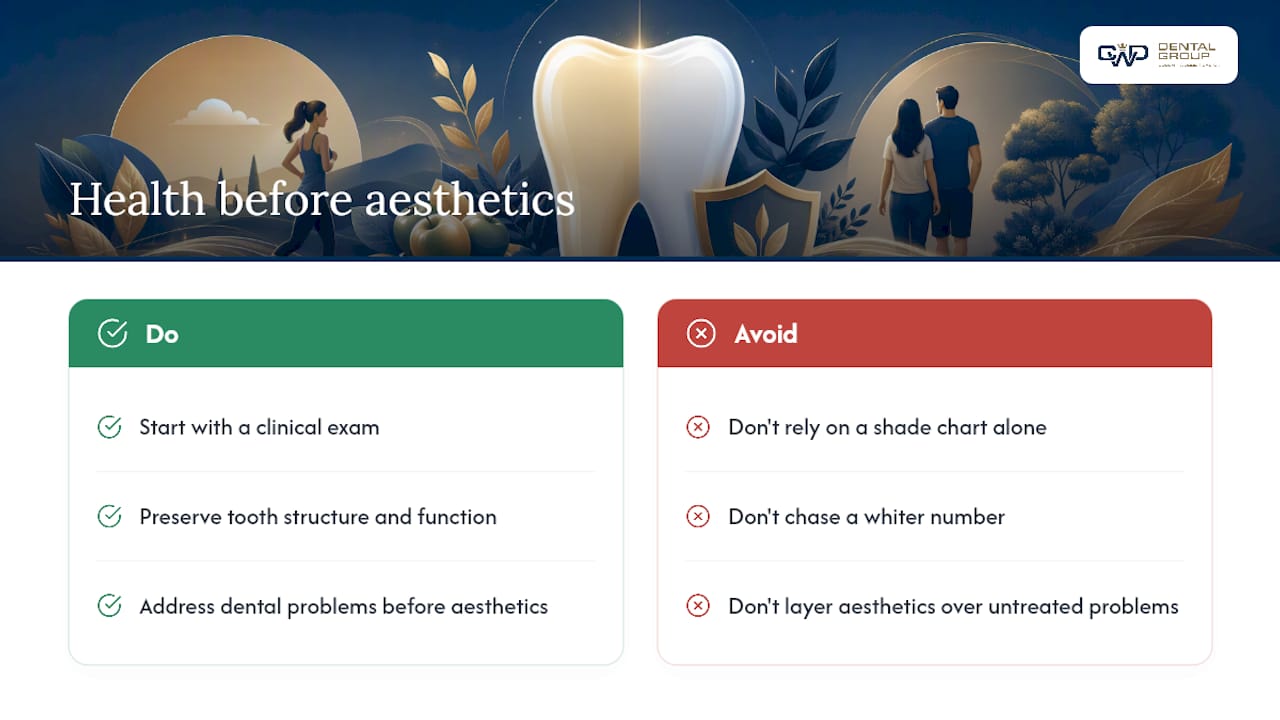
Any cosmetic conversation about tooth color should start with a clinical exam, not a shade chart. Aesthetic choices need to preserve tooth structure and function, not just chase a whiter number on a guide. Confidence in your smile matters, but it should be built on a healthy foundation, not layered over a problem no one addressed first.
Get your smile evaluated at CWD Dental Group
If a tooth has changed color suddenly, or you're just tired of stains that keep coming back no matter what toothpaste you buy, a real evaluation beats guessing. CWD Dental Group offers same-day emergency appointments for sudden color changes tied to pain or injury, plus whitening consultations, bonding, and veneer options for stains that won't budge on their own.

A same-day visit means you're not sitting on a discolored, possibly damaged tooth for weeks waiting for an opening. If a single tooth has darkened suddenly or you're dealing with any pain alongside it, book an emergency evaluation right away. For a routine whitening consult, cosmetic bonding, or veneer discussion, you can schedule a visit and get a shade plan built around your actual teeth and skin tone, not a generic chart.
Sources
- The impact of tooth colour on the perceptions of age and social judgements
- Dental confidence and subjective well-being in young adults. The mediating role of self-esteem - PMC
- Evidence to Suggest That Teeth Act as Human Ornament
- The relationship of tooth shade and skin tone and its influence on the smile attractiveness
Recommended
- The Myth of Permanent Teeth Whitening: What You Need to Know — CWD Dental Group
- Don't Just Wish for a Good Cosmetic Dentist, Find One: Your Local Search Made Easy — CWD Dental Group
- Teeth Stain Removal Dentist 2025: Radiant Smiles — CWD Dental Group
- Cosmetic and Advanced Dentistry: Unlock Your Perfect Smile 2025 — CWD Dental Group