

Regular family dental visits save money by preventing expensive procedures before they become necessary. Routine preventive care, including cleanings and exams, costs between $75 and $200 per person. A root canal with a crown runs $1,000–$2,500 or more. That gap is why why family dental visits save money is one of the most financially important decisions a household can make. Families who skip checkups often face emergency bills, restorative cycles, and lost workdays. Families who show up twice a year spend far less over time.
Why family dental visits save money: the real cost comparison
The financial case for regular dental visits is straightforward. Routine preventive care costs $150–$400 per person annually. A single extraction with a replacement implant can exceed $4,000. That is a tenfold difference for a problem that a $150 cleaning might have prevented.
Untreated cavities do not stay small. A cavity caught early needs a filling, which costs $100–$300. Left alone, that same cavity can reach the nerve and require a root canal, a crown, and potentially an extraction. Each step up the treatment ladder multiplies the bill.
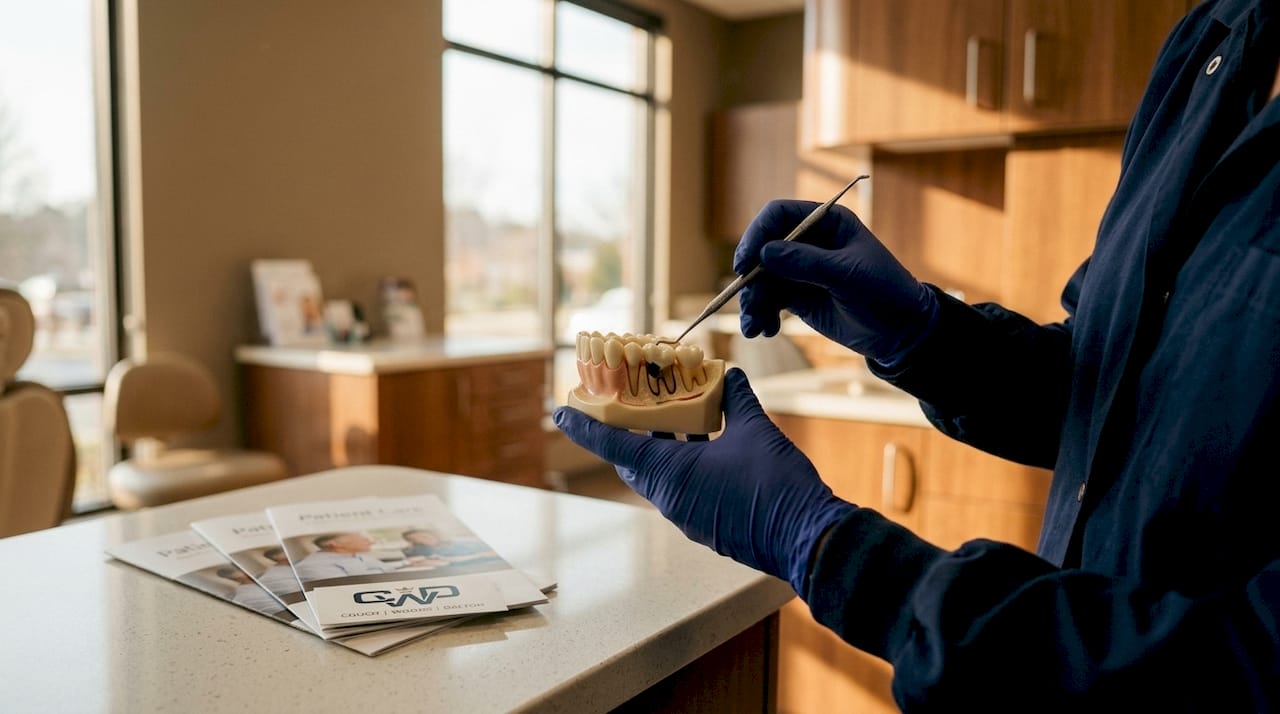
Gum disease follows the same pattern. Early-stage gingivitis responds to a professional cleaning and better brushing habits. Advanced periodontitis requires deep cleaning procedures, antibiotics, and sometimes surgery. Emergency dental treatments can exceed thousands of dollars and arrive with no warning.
Pro Tip: Keep a simple family dental log. Record each visit date, what was found, and what was treated. Patterns in that log tell you where your family's biggest risks are, so you can ask targeted questions at the next checkup.
Here is a quick cost comparison to put the numbers in perspective:
| Treatment | Approximate Cost |
|---|---|
| Routine exam and cleaning | $75–$200 |
| Dental filling | $100–$300 |
| Dental sealants (per tooth) | $30–$60 |
| Root canal and crown | $1,000–$2,500+ |
| Tooth extraction with implant | $4,000+ |
The table makes the math undeniable. Spending $150 twice a year is a fraction of what one emergency procedure costs.
How do preventive dental visits actually save money over time?
Prevention works because dental problems are almost always silent at first. Dental pain signals advanced decay. By the time a tooth hurts, the damage is already significant. Regular checkups catch decay, cracks, and early gum disease before any symptom appears.
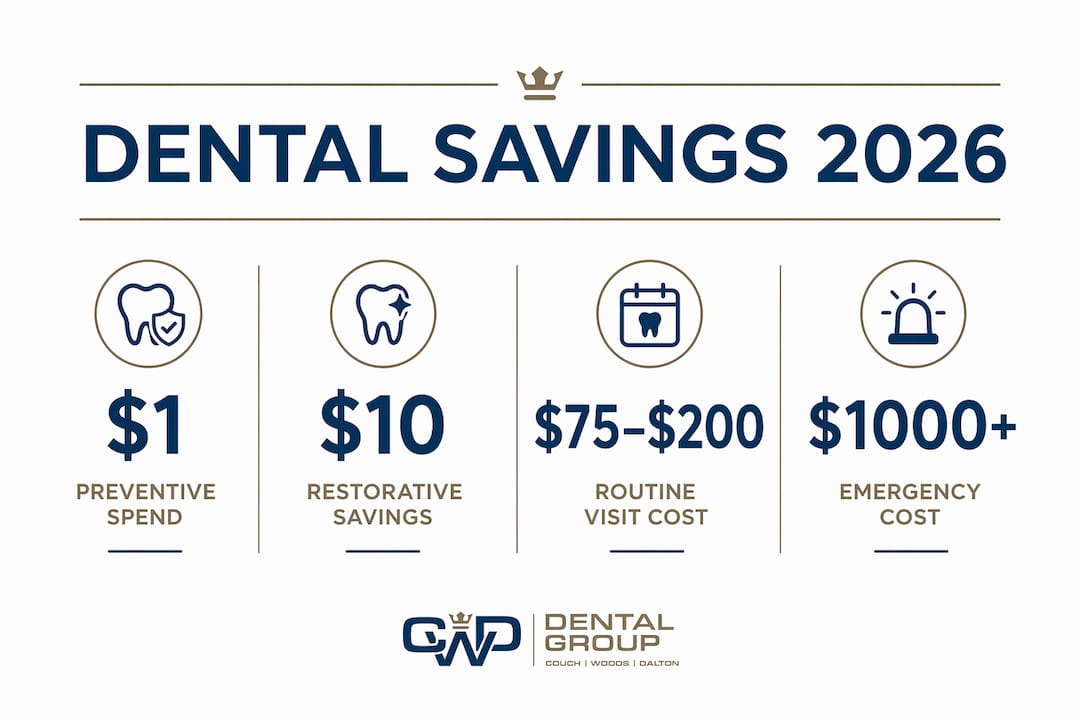
The economics of this are well established. Every $1 spent on preventive care saves approximately $10 in restorative and emergency treatment costs. Dental professionals call this the "rule of ten," and it holds across age groups and income levels.
Professional cleanings remove tartar buildup that brushing cannot reach. That buildup is the primary driver of gum disease. Removing it twice a year keeps the gum tissue healthy and avoids the costly restorative cycle that periodontitis triggers.
Regular monitoring also catches systemic issues early. Dentists screen for oral cancer, jaw problems, and bite misalignment during routine exams. Catching any of these early means simpler, cheaper treatment.
- Exams detect cavities before they reach the nerve
- Cleanings remove tartar and reduce gum disease risk
- X-rays reveal problems hidden below the gumline
- Oral cancer screenings catch abnormalities at treatable stages
- Bite assessments prevent jaw and tooth wear from compounding
Pro Tip: Schedule all family members on the same day. Clustering family appointments cuts lost work and school time in half and makes it far easier to keep everyone on a consistent schedule.
What specific preventive treatments save families the most?
Certain treatments deliver outsized savings, especially for children. Dental sealants cost $30–$60 per tooth and reduce childhood fillings by 30–50%. Sealants are thin plastic coatings applied to the chewing surfaces of back teeth, where most cavities form. One sealant application protects a tooth for years.
Fluoride treatments strengthen enamel and make teeth more resistant to acid attacks from food and bacteria. They are quick, inexpensive, and covered by most insurance plans for children. The cost of a fluoride treatment is a small fraction of what a single filling costs.
Establishing a dental home early for children lowers anxiety and reduces lifetime dental expenses. Children who visit the dentist regularly from a young age develop better hygiene habits and experience fewer costly treatments as adults. The investment in early visits pays dividends for decades.
Here is a ranked list of the most cost-effective preventive treatments for families:
- Biannual professional cleanings. Most dental insurance covers two cleanings per year at 100%. This is the single highest-return preventive service available.
- Dental sealants for children. A $30–$60 sealant prevents a $200–$300 filling. For a child with four back teeth, that is a significant saving.
- Fluoride treatments. Low cost, fast application, and proven cavity prevention make fluoride one of the best values in dentistry.
- Dental X-rays. Annual or biannual X-rays catch decay and bone loss that no visual exam can detect, preventing expensive surprises.
- Oral cancer screenings. Included in most routine exams at no extra charge, these screenings catch abnormalities when treatment is still straightforward.
For a deeper look at what these services include, preventive dentistry services for families covers the full range of options available at most practices.
How do dental membership plans and payment options help families save?
Dental insurance does not work for every family. Annual maximums, waiting periods, and deductibles can make traditional insurance frustrating and expensive. In-house dental membership plans eliminate those drawbacks entirely. Members pay a flat annual fee and receive immediate access to preventive care and discounts on restorative work.
In-house membership plans save families $321–$474 annually on preventive services alone. Family plans typically range from $1,200–$1,600 per year and cover two cleanings and X-rays in full, plus 15–20% discounts on restorations. There are no claim forms, no waiting periods, and no annual maximums to worry about.
For families without insurance, a membership plan is the most direct path to affordable, predictable dental care. The math is simple: pay a known annual fee and avoid unpredictable emergency bills.
- No deductibles or waiting periods before coverage begins
- Predictable annual cost makes budgeting straightforward
- Immediate discounts on fillings, crowns, and other restorative work
- Covers the preventive visits that prevent the expensive procedures
- No claim denials or coverage disputes
Flexible financing options also exist for major treatments. Many practices offer payment plans that spread the cost of crowns, implants, or orthodontics over months. Understanding your options before a dental emergency hits is far better than scrambling for financing under pressure. The family dental budget guide for 2026 breaks down how to plan for both routine and unexpected dental costs.
Preventive care reduces emergency visits that are costly and unpredictable. Combining a membership plan with consistent checkups is the most effective financial strategy a family can adopt.
Key Takeaways
Regular family dental visits save money because preventive care costs a fraction of what emergency and restorative treatment costs, and consistent monitoring stops small problems from becoming expensive ones.
| Point | Details |
|---|---|
| Prevention beats treatment on cost | Routine visits cost $75–$200; a root canal with a crown runs $1,000–$2,500 or more. |
| The rule of ten applies | Every $1 spent on preventive care saves approximately $10 in restorative costs. |
| Sealants deliver strong ROI | A $30–$60 sealant prevents a $200–$300 filling, especially for children's back teeth. |
| Membership plans cut costs for uninsured families | In-house plans save $321–$474 annually and eliminate deductibles and waiting periods. |
| Clustering appointments saves time and money | Booking all family members on the same day reduces missed work and keeps everyone on schedule. |
What I've learned from watching families skip checkups
Most families who avoid the dentist are not being careless. They are managing tight schedules, tight budgets, and a general belief that if nothing hurts, nothing is wrong. That belief is the most expensive mistake in family dental care.
I have seen this pattern repeat itself. A family skips two years of checkups to save money. Then one parent needs a root canal and a crown. The bill wipes out what they "saved" and then some. The stress of an emergency appointment, the pain, the lost workday, none of that shows up in the cost comparison, but it is real.
What actually works is treating dental visits the way you treat car maintenance. You do not wait for the engine to fail before changing the oil. You follow a schedule because you know the math. The same logic applies to teeth.
Early detection before symptoms is the entire point of preventive care. It is not about perfection. It is about staying ahead of problems that will cost far more to fix later. Families who internalize that idea spend less, stress less, and keep their teeth longer.
— Kayle
Cwddentalgroup: family dental care and emergency services in Tallahassee
Cwddentalgroup serves families across Tallahassee with a full range of preventive and emergency dental services. Whether your family needs routine cleanings, dental sealants for kids, or an urgent same-day appointment, Cwddentalgroup's team is ready without the long wait times that make dental care frustrating.
Cwddentalgroup also offers membership plan options that give uninsured families immediate access to preventive care and discounts on restorative work. No waiting periods, no claim forms, and no surprises. For families who need urgent care, the emergency dentist services at Cwddentalgroup provide same-day appointments backed by a team known for warmth and professionalism. Schedule your family's next visit and put the rule of ten to work for your household budget.
FAQ
How much does a routine family dental visit cost?
Routine preventive care costs $75–$200 per person per visit. Annual costs per person typically run $150–$400, covering two cleanings and X-rays.
What dental treatments are most expensive to avoid?
Root canals with crowns cost $1,000–$2,500 or more, and tooth extractions with implants can exceed $4,000. Both are largely preventable with regular checkups.
Are dental sealants worth the cost for kids?
Dental sealants cost $30–$60 per tooth and reduce childhood fillings by 30–50%. They are one of the highest-return preventive treatments available for children.
What is a dental membership plan and how does it save money?
A dental membership plan is an annual fee that covers preventive care and provides discounts on restorative work. Membership plans save families $321–$474 annually and eliminate deductibles and waiting periods.
How often should families schedule dental checkups?
Most dental guidelines recommend two visits per year for both children and adults. Most dental insurance covers two cleanings annually at 100%, making biannual visits the financially smart standard.